Liveaboard Diving FAQ
Quick Answers Hub

Liveaboard Diving FAQ

Every question we get — about cost, safety, certification, equipment, destinations and life on board — answered in one place. Click any card for the detailed answer.

01Category

Liveaboard Basics

What a liveaboard is, how a typical week runs, and why it's the best way to dive remote sites.

What does a typical day on a liveaboard look like?

What does a typical day on a liveaboard look like?

Wake-up around 6am, briefing, dive, breakfast, dive, lunch, dive, snack, sunset or night dive, dinner, log the day, sleep while the boat repositions.

Find your perfect liveaboard
How many people are on a liveaboard?

How many people are on a liveaboard?

Most liveaboards carry 12–26 guests with 8–16 crew. Small yachts take 8–10 divers, the largest steel vessels take up to 32.

Find your perfect liveaboard
How far does a liveaboard travel each night?

How far does a liveaboard travel each night?

Usually 20–80 nautical miles overnight at 8–10 knots. Long crossings to remote sites like Darwin or Cocos can take 14–36 hours.

Find your perfect liveaboard
Is a liveaboard worth the money compared to a dive resort?

Is a liveaboard worth the money compared to a dive resort?

If you plan to dive three or more times a day and want offshore sites, yes. Priced per dive, a liveaboard is usually cheaper than a resort once you add up dive packages, hotel and transfers.

Find your perfect liveaboard
What happens if the weather is bad during my liveaboard trip?

What happens if the weather is bad during my liveaboard trip?

The captain reroutes to sheltered sites or shortens crossings. Trips are almost never cancelled mid-week, and the diving usually continues with a changed site list.

Find your perfect liveaboard
What is a liveaboard?

What is a liveaboard?

A liveaboard is a small dive-focused cruise vessel where you sleep, eat, and dive from the same boat for typically 5–10 nights, with 3–4 guided dives per day.

Find your perfect liveaboard
How many dives per day on a liveaboard?

How many dives per day on a liveaboard?

Most operators run 3–4 day dives plus optional night dives. A 7-night trip delivers 18–28 dives.

Find your perfect liveaboard
How long does a liveaboard trip last?

How long does a liveaboard trip last?

Standard trips run 6–8 nights. Short charters start at 3 nights; remote expedition trips run 10–14 nights.

Find your perfect liveaboard
What's the difference between a liveaboard and a cruise ship?

What's the difference between a liveaboard and a cruise ship?

Liveaboards carry 12–32 guests and exist solely for diving. Cruise ships carry thousands and treat diving as a side activity. Dive groups, equipment, and itineraries are radically different.

Find your perfect liveaboard
Do you sleep on the boat every night?

Do you sleep on the boat every night?

Yes — that's the whole point. The boat anchors at protected sites overnight so you wake up at the next dive site.

Find your perfect liveaboard
Who is a liveaboard trip for?

Who is a liveaboard trip for?

Liveaboards suit certified divers (OWD+) who want maximum bottom time at remote sites. Solo travelers, couples, photographers, families with teen divers and pro divers all thrive on board.

Find your perfect liveaboard

02Category

Experience & Certification

Required certifications, recommended experience levels, and what to do if you're newly certified.

How many dives should I have before my first liveaboard?

How many dives should I have before my first liveaboard?

Around 20–25 logged dives and Advanced Open Water is a comfortable starting point for easy destinations. Current-heavy expedition trips ask for 50–100 dives.

Find your perfect liveaboard
Can I get certified on a liveaboard?

Can I get certified on a liveaboard?

Some boats offer Open Water and Advanced courses on board, but availability is limited. Advanced, Nitrox and specialty courses are far more common than entry-level certification.

Find your perfect liveaboard
Can non-divers or snorkellers join a liveaboard?

Can non-divers or snorkellers join a liveaboard?

Usually yes, often at a reduced rate. Snorkellers do well in the Maldives, Raja Ampat and Egypt; expedition boats with strong current are a poor fit.

Find your perfect liveaboard
Do I need a refresher course if I haven't dived in a year?

Do I need a refresher course if I haven't dived in a year?

Yes — most operators require a refresher or a supervised check dive if your last dive was more than 6–12 months ago, and it makes the first day far more enjoyable.

Find your perfect liveaboard
Do I need to be a certified diver?

Do I need to be a certified diver?

Yes — Open Water (PADI/SSI/RAID/CMAS) is the minimum. Advanced Open Water + 25 logged dives is recommended for most destinations.

Find your perfect liveaboard
Can a beginner go on a liveaboard?

Can a beginner go on a liveaboard?

Yes, in beginner-friendly destinations with calm protected waters and easy reef sites. Advanced expedition destinations typically require 50+ logged dives.

Find your perfect liveaboard
Do I need Nitrox certification?

Do I need Nitrox certification?

Not required, but highly recommended. Nitrox lets you do longer, safer repetitive dives — essential when you're diving 4 times a day.

Find your perfect liveaboard
What's the minimum dives needed for expedition destinations?

What's the minimum dives needed for expedition destinations?

Most expedition operators require Advanced Open Water + Nitrox + 50 logged dives, with some boats raising the bar to 100+ dives plus recent current-diving experience.

Find your perfect liveaboard
Will there be other beginners on board?

Will there be other beginners on board?

Mainstream tropical destinations attract mixed-level groups. Expedition destinations attract experienced divers only.

Find your perfect liveaboard

03Category

Cost & Booking

Pricing breakdowns, hidden fees, when to book, and how to find the best value.

Which are the cheapest liveaboard destinations?

Which are the cheapest liveaboard destinations?

Egypt's Red Sea is the best value worldwide, roughly $110–190 per night. Thailand, the Philippines and parts of Indonesia follow; Galápagos and Cocos are the most expensive.

Find your perfect liveaboard
Are liveaboards all-inclusive?

Are liveaboards all-inclusive?

The price covers cabin, all meals, snacks, soft drinks, tanks, weights and guided dives. Nitrox, alcohol, park fees, gear rental, crew tips and transfers are usually extra.

Find your perfect liveaboard
What is the cheapest time of year to book a liveaboard?

What is the cheapest time of year to book a liveaboard?

Shoulder season and the start of the rainy season deliver the biggest savings, often 20–35% below peak. Last-minute cabins 4–8 weeks out are the other big discount window.

Find your perfect liveaboard
How much cash should I bring on a liveaboard?

How much cash should I bring on a liveaboard?

Budget $300–700 per person for a week: tips, Nitrox, park fees, drinks and rental. Many boats take cards, but some remote vessels are cash-only.

Find your perfect liveaboard
How much does a liveaboard cost?

How much does a liveaboard cost?

From around $1,200 (budget tier, 7 nights) to $7,500+ (remote expedition trips, 10 nights). Average mid-range trip: $2,500–$4,500 for 7 nights all-inclusive.

Find your perfect liveaboard
What's NOT included in liveaboard prices?

What's NOT included in liveaboard prices?

Flights, marine park fees ($80–$400), Nitrox ($100–$250), rental gear, alcoholic drinks, crew tips (8–12%), and insurance.

Find your perfect liveaboard
How much should I tip the crew?

How much should I tip the crew?

8–12% of the trip price, paid in cash at the end. Industry standard worldwide.

Find your perfect liveaboard
When should I book a liveaboard?

When should I book a liveaboard?

6–12 months ahead for peak season at popular destinations. 2–4 months for shoulder season. Last-minute deals exist 4–8 weeks out.

Find your perfect liveaboard
Can I pay in instalments?

Can I pay in instalments?

Yes — most operators take 25–30% deposit at booking and the balance 60–90 days before departure. Blue Rides supports staged payments.

Find your perfect liveaboard
Do liveaboards offer single cabins?

Do liveaboards offer single cabins?

Yes, but with a 50–100% supplement on most boats. Some operators run 'no single supplement' weeks — worth asking about.

Find your perfect liveaboard

04Category

Safety & Health

Onboard safety, medical considerations, seasickness, decompression, and emergency protocols.

Do liveaboards carry emergency oxygen and first aid?

Do liveaboards carry emergency oxygen and first aid?

Yes. Reputable liveaboards carry emergency oxygen, a full first-aid kit, an AED on many vessels, and crew trained in oxygen provision and rescue.

Find your perfect liveaboard
What happens if there's a diving emergency at sea?

What happens if there's a diving emergency at sea?

The crew administers oxygen and first aid immediately, contacts a dive-medicine hotline by satellite, and arranges evacuation by boat, helicopter or coastguard to the nearest chamber.

Find your perfect liveaboard
Can I go on a liveaboard with asthma, diabetes or on medication?

Can I go on a liveaboard with asthma, diabetes or on medication?

Often yes, with a dive-fitness assessment from a dive physician. Well-controlled asthma and diabetes are frequently cleared; you must declare them on the medical form.

Find your perfect liveaboard
How can I avoid getting seasick on a liveaboard?

How can I avoid getting seasick on a liveaboard?

Start medication the night before, pick a low mid-ship cabin, stay on deck watching the horizon, keep eating light, and stay hydrated. Most people adapt within 24–48 hours.

Find your perfect liveaboard
Is liveaboard diving safe?

Is liveaboard diving safe?

Yes, when you book with a vetted operator. Reputable boats carry oxygen, AEDs, sat-phones, EPIRBs, and crew with current EFR/CPR/Rescue certifications.

Find your perfect liveaboard
Do I need dive insurance?

Do I need dive insurance?

Highly recommended (often required). DAN, DiveAssure, and DAN Europe offer travel + chamber-evacuation cover from $50–$200/year.

Find your perfect liveaboard
What about decompression sickness on multi-day trips?

What about decompression sickness on multi-day trips?

Dive computers + Nitrox + conservative profiles + a no-fly window of 18–24 hours after the last dive minimise risk. Crews enforce safety stops on every dive.

Find your perfect liveaboard
Will I get seasick on a liveaboard?

Will I get seasick on a liveaboard?

Most liveaboards anchor in sheltered bays at night. Long open-ocean crossings can be rough — bring patches or pills if you're prone to motion sickness.

Find your perfect liveaboard
Do liveaboards have a doctor on board?

Do liveaboards have a doctor on board?

Most don't. They carry first-aid, oxygen, AEDs, and sat-phones for evacuation. Larger expedition vessels in remote regions sometimes carry an MD.

Find your perfect liveaboard

05Category

Equipment & Gear

What to bring, what's provided, rental quality, and gear-specific tips for liveaboards.

What should I pack for a liveaboard trip?

What should I pack for a liveaboard trip?

Dive gear, exposure suit, computer plus backup, two swimsuits, warm layer for evenings, reef-safe sunscreen, medication, adapters, dry bag and a soft-sided luggage bag.

Find your perfect liveaboard
Can I rent dive equipment on a liveaboard?

Can I rent dive equipment on a liveaboard?

Yes — BCD, regulator, wetsuit, computer, fins and torches are rentable on almost every boat, typically $15–40 per item per day or $120–250 per week.

Find your perfect liveaboard
Do I need my own dive computer for a liveaboard?

Do I need my own dive computer for a liveaboard?

Yes — almost all operators require a personal dive computer for repetitive multi-day diving. Rental units are available, but owning one you understand is far safer.

Find your perfect liveaboard
How much luggage allowance do I need for dive gear?

How much luggage allowance do I need for dive gear?

A full set of dive gear weighs 15–22 kg. Budget 30 kg total checked baggage and carry your regulator, computer, mask and camera in hand luggage.

Find your perfect liveaboard
Should I bring my own dive gear?

Should I bring my own dive gear?

Mask, computer, and exposure suit at minimum. If you own a regulator and BCD you trust, bring them. Rental quality varies by operator.

Find your perfect liveaboard
What wetsuit thickness do I need?

What wetsuit thickness do I need?

Tropical waters: 3mm shorty or full. Warm-temperate waters in winter: 5mm + hooded vest. Cold-water destinations: 7mm or drysuit.

Find your perfect liveaboard
Is Nitrox available on liveaboards?

Is Nitrox available on liveaboards?

Most modern boats offer Nitrox membrane fills for $100–$250 per week. A few high-end operators include Nitrox in the price.

Find your perfect liveaboard
Can I bring underwater camera gear?

Can I bring underwater camera gear?

Yes — most boats have dedicated camera tables with charging stations, rinse tanks, and storage. Confirm voltage (110V vs 220V) before you pack.

Find your perfect liveaboard
Are tanks always 12L aluminium?

Are tanks always 12L aluminium?

Standard is 12L AL80. Many boats also offer 15L steel tanks (often free) and twin-set/sidemount options for technical divers.

Find your perfect liveaboard

06Category

Travel & Logistics

Flights, transfers, visas, luggage, currency, and the practical side of getting to your boat.

What time do you board a liveaboard, and when do you disembark?

What time do you board a liveaboard, and when do you disembark?

Boarding is usually mid to late afternoon on day one; disembarkation is early morning on the last day, typically between 7 and 9am.

Find your perfect liveaboard
How long should I wait before flying after my last dive?

How long should I wait before flying after my last dive?

Minimum 18 hours after repetitive multi-day diving, and 24 hours is the conservative standard most liveaboards build into the itinerary.

Find your perfect liveaboard
Should I arrive a day before the liveaboard departs?

Should I arrive a day before the liveaboard departs?

Yes. One night before departure protects against flight delays and lost luggage, and it is the single cheapest insurance you can buy for a liveaboard trip.

Find your perfect liveaboard
Where do I store my suitcase during the liveaboard trip?

Where do I store my suitcase during the liveaboard trip?

Soft bags fold flat and are stored in your cabin or a crew store room. Hard suitcases are awkward — most operators ask you to bring soft luggage or leave the case at your hotel.

Find your perfect liveaboard
Are flights included in the liveaboard price?

Are flights included in the liveaboard price?

No, never. You arrange flights to the embarkation port separately.

Find your perfect liveaboard
What if my flight is delayed and I miss the boat?

What if my flight is delayed and I miss the boat?

Travel insurance with trip-interruption cover is essential. Most operators won't refund missed embarkation, but they may help arrange transfer to the boat at the next port.

Find your perfect liveaboard
Do I need a visa for liveaboard destinations?

Do I need a visa for liveaboard destinations?

Depends on destination and your nationality. Many tropical destinations offer visa-on-arrival; others require pre-arranged e-visas plus park entry permits. Always check current rules before booking.

Find your perfect liveaboard
How do I get from the airport to the boat?

How do I get from the airport to the boat?

Most operators include port transfers (or speedboat/seaplane transfers in remote atolls). Confirm at booking — some smaller charters require own arrangements.

Find your perfect liveaboard
Can I extend my trip with a land stay?

Can I extend my trip with a land stay?

Yes, and we recommend it. Add a few days pre- or post-trip to acclimatise to the time zone, absorb flight delays, and explore the embarkation country before flying home.

Find your perfect liveaboard

07Category

Destinations & Marine Life

Where to dive for which marine life, seasons, and how destinations compare.

Which liveaboard destination is best for first-timers?

Which liveaboard destination is best for first-timers?

Egypt's northern Red Sea, the Bahamas, Belize and Thailand's Similans. Warm calm water, short crossings, good visibility, mild current and excellent value.

Find your perfect liveaboard
Where are the best liveaboard destinations to dive with manta rays?

Where are the best liveaboard destinations to dive with manta rays?

The Maldives (Hanifaru and Baa Atoll), Socorro in Mexico, Komodo, Raja Ampat and Yap. Each has a distinct season and a different manta experience.

Find your perfect liveaboard
Which liveaboard destination has the best wreck diving?

Which liveaboard destination has the best wreck diving?

Truk Lagoon for the world's greatest wreck fleet, Egypt for the Thistlegorm and Abu Nuhas, Bikini Atoll for technical-level warships, and Scapa Flow for cold-water history.

Find your perfect liveaboard
How do I choose a liveaboard destination by month?

How do I choose a liveaboard destination by month?

Match the month to the marine life: Maldives December–April, Galápagos June–November for whale sharks, Raja Ampat November–March, Egypt year-round, Socorro November–May.

Find your perfect liveaboard
Which destination has the best diving?

Which destination has the best diving?

Subjective — the answer depends on what you want to see. The Coral Triangle wins for biodiversity, the Eastern Pacific for big animals, the Indian Ocean for mantas and whale sharks, and the Red Sea for wrecks and offshore shark pinnacles.

Find your perfect liveaboard
Where can I dive with sharks?

Where can I dive with sharks?

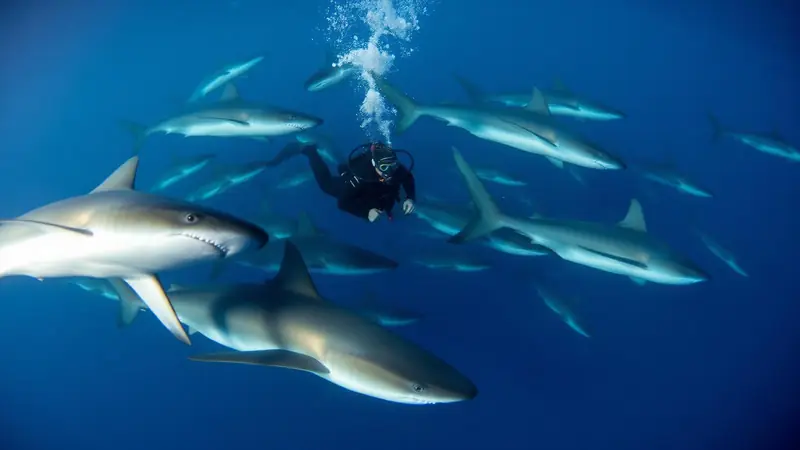
Different shark species favor different regions: tiger sharks and great hammerheads in the Caribbean, schooling hammerheads on Eastern Pacific seamounts, whale sharks in the Indian Ocean and Coral Triangle, bull sharks on Pacific reefs, and oceanic whitetips in the Red Sea.

Find your perfect liveaboard
Which destination is best for coral reefs?

Which destination is best for coral reefs?

The Coral Triangle (Indonesia, Philippines, Solomon Islands) holds the densest coral biodiversity on Earth — over 75% of all known hard coral species in a single region.

Find your perfect liveaboard
Best destination for macro photography?

Best destination for macro photography?

The Coral Triangle muck-diving sites in Indonesia and the Philippines — frogfish, blue-ringed octopus, mimic octopus, pygmy seahorses, and hundreds of nudibranch species.

Find your perfect liveaboard
What's the warmest year-round liveaboard destination?

What's the warmest year-round liveaboard destination?

Tropical destinations across the Indian Ocean, Coral Triangle and Caribbean stay 27–30°C all year — ideal for divers who want to dive in nothing more than a 3mm.

Find your perfect liveaboard

08Category

Onboard Life

Cabins, food, Wi-Fi, daily rhythm, social dynamics, and what to expect during the week.

Can liveaboards cater for vegetarian, vegan or allergy diets?

Can liveaboards cater for vegetarian, vegan or allergy diets?

Yes — declare dietary needs at booking and most galleys handle vegetarian, vegan, gluten-free, halal and allergy requirements well. Severe allergies need written confirmation.

Find your perfect liveaboard
Do liveaboard cabins have private bathrooms?

Do liveaboard cabins have private bathrooms?

Most modern liveaboards have en-suite cabins with private shower and toilet. Budget boats and some older wooden vessels use shared bathrooms — always check the cabin plan.

Find your perfect liveaboard
What is there to do between dives on a liveaboard?

What is there to do between dives on a liveaboard?

Eat, nap, sunbathe, read, edit photos, socialise, fill your logbook, join marine-life talks, and on many itineraries take island walks or snorkel from the tender.

Find your perfect liveaboard
Can I charge devices and use a hairdryer on a liveaboard?

Can I charge devices and use a hairdryer on a liveaboard?

Cabins have 1–2 outlets at 110V or 220V for charging. High-draw appliances like hairdryers are usually banned because they overload the boat's inverter.

Find your perfect liveaboard
Is there Wi-Fi on liveaboards?

Is there Wi-Fi on liveaboards?

Most modern boats offer Starlink or satellite Wi-Fi (often included or $5–$20/day). Coverage in remote areas can still be limited.

Find your perfect liveaboard
What food is served on liveaboards?

What food is served on liveaboards?

Buffet-style meals 3 times daily plus snacks between dives. International menus with local touches. Vegetarian, vegan, gluten-free, and allergies accommodated with advance notice.

Find your perfect liveaboard
Can I drink alcohol on board?

Can I drink alcohol on board?

On most boats yes, after the last dive. Some destinations (Maldives, Red Sea) are stricter — alcohol may be paid extra or BYOB.

Find your perfect liveaboard
What's the dress code on a liveaboard?

What's the dress code on a liveaboard?

Casual to the extreme. T-shirts, shorts, swimwear, light layers for evenings. One smart-casual outfit for the captain's farewell dinner is plenty.

Find your perfect liveaboard
Is there a hot tub, sundeck or massage on board?

Is there a hot tub, sundeck or massage on board?

Mid-range and luxury vessels yes. Budget boats focus on dive operations.

Find your perfect liveaboard

09Category

Booking, Payment & Cancellation

How far ahead to book, what payment options exist, refund rules, group discounts and travel insurance.

How do I book a liveaboard, step by step?

How do I book a liveaboard, step by step?

Pick destination and dates, choose vessel and cabin, submit a request, we confirm availability with the operator, you pay a deposit, then the balance 60–90 days before departure.

Find your perfect liveaboard
What is the typical liveaboard cancellation policy?

What is the typical liveaboard cancellation policy?

Deposits are usually non-refundable. Cancelling 90+ days out often loses only the deposit; inside 60 days most operators charge 50–100% of the trip price.

Find your perfect liveaboard
What if the itinerary changes or sites are swapped?

What if the itinerary changes or sites are swapped?

Captains can change sites for weather, safety or park restrictions. Published itineraries are indicative, not contractual, and changes do not normally entitle you to a refund.

Find your perfect liveaboard
Can I book a liveaboard as a single traveller without paying a supplement?

Can I book a liveaboard as a single traveller without paying a supplement?

Yes — many operators offer a guaranteed share option that pairs you with a same-gender diver, so you pay the standard per-person rate with no single supplement.

Find your perfect liveaboard
How far in advance should I book a liveaboard?

How far in advance should I book a liveaboard?

Popular routes (Galápagos, Socorro, Raja Ampat peak season) book out 9–18 months ahead. Mainstream Maldives and Red Sea trips can often be found 2–4 months out.

Find your perfect liveaboard
What payment methods do you accept?

What payment methods do you accept?

Credit/debit card via Stripe, SEPA bank transfer (with discount), and direct bank transfer for vessels in regions where card processing is restricted.

Find your perfect liveaboard
Is my deposit refundable?

Is my deposit refundable?

Refund policy depends on how far before departure you cancel. Most operators offer a full refund minus a small processing fee if cancelled 90+ days out.

Find your perfect liveaboard
What happens if the trip gets cancelled by the operator?

What happens if the trip gets cancelled by the operator?

You get a full refund or a free reschedule to an equivalent trip. We help you rebook and assist with any flight-change costs.

Find your perfect liveaboard
Can I transfer my booking to another person or date?

Can I transfer my booking to another person or date?

Yes — name changes are usually free up to 30 days before departure. Date changes depend on availability and the operator's policy.

Find your perfect liveaboard
Do you offer travel insurance?

Do you offer travel insurance?

We don't sell insurance directly but strongly recommend specialized dive travel insurance covering trip cancellation, medical evacuation, and DAN dive accident coverage.

Find your perfect liveaboard
Are there hidden fees I should know about?

Are there hidden fees I should know about?

The published price covers cabin, meals and standard dives. Mandatory extras (port fees, marine park fees, fuel surcharges) are listed transparently before booking. Optional add-ons include nitrox, gear rental, and Wi-Fi.

Find your perfect liveaboard
Do I get a discount for group bookings or full-charter?

Do I get a discount for group bookings or full-charter?

Yes — group rates kick in at 4-6 guests booked together. Full-cabin and full-boat charters get 10-25% discounts on standard pricing.

Find your perfect liveaboard

10Category

Travel Logistics & Pre-Trip Prep

Visas, flights, vaccinations, dive medicals, baggage allowance and what to pack for a smooth liveaboard arrival.

Do I need travel insurance as well as dive insurance?

Do I need travel insurance as well as dive insurance?

Yes — they cover different risks. Dive insurance covers chamber treatment and evacuation; travel insurance covers cancellation, delays, baggage and non-diving medical costs.

Find your perfect liveaboard
What passport validity and entry documents do I need?

What passport validity and entry documents do I need?

Six months' passport validity beyond your return date and two blank pages is the safe standard. Check visa, onward-ticket and any health-entry rules for your specific destination.

Find your perfect liveaboard
How do I get to remote liveaboard embarkation ports?

How do I get to remote liveaboard embarkation ports?

Most trips need an international flight plus a domestic connection — Malé, Sorong, Hurghada, Cabo, San Cristóbal. Allow a buffer day and book the domestic leg with generous baggage.

Find your perfect liveaboard
How should I prepare physically for a liveaboard week?

How should I prepare physically for a liveaboard week?

Build basic cardio fitness, practise buoyancy and air consumption locally, get a dive medical if required, sleep well before travel, and hydrate seriously from day one.

Find your perfect liveaboard
Do I need a visa for liveaboard destinations?

Do I need a visa for liveaboard destinations?

Most liveaboard destinations offer visa-on-arrival or e-visa for EU/US/UK passports. Egypt, Indonesia, Philippines and Maldives are easy. Galápagos requires Ecuador entry rules.

Find your perfect liveaboard
When should I arrive before embarkation?

When should I arrive before embarkation?

Always arrive at least one full day before embarkation. Flight delays + missed boat = lost trip. For long-haul destinations, two days is safer.

Find your perfect liveaboard
What vaccinations or health prep do I need?

What vaccinations or health prep do I need?

Routine vaccines (tetanus, hepatitis A) are recommended everywhere. Yellow fever for some destinations. Malaria prophylaxis for parts of Indonesia, PNG and Africa.

Find your perfect liveaboard
Can I fly the day after my last dive?

Can I fly the day after my last dive?

DAN recommends 18 hours after a single dive and 24 hours after multi-day diving. Most liveaboards end diving the day before disembarkation to allow this.

Find your perfect liveaboard
What's the baggage allowance for dive gear on flights?

What's the baggage allowance for dive gear on flights?

Most international airlines allow 23kg checked + carry-on. Dive gear is heavy — many divers add a second checked bag (€60-150). Some airlines offer dive-gear allowance.

Find your perfect liveaboard
Do I need a dive medical certificate?

Do I need a dive medical certificate?

All divers complete a self-declaration medical form. If you answer 'yes' to any condition, you need a doctor-signed certificate (less than 12 months old).

Find your perfect liveaboard
What travel adapters and currency should I bring?

What travel adapters and currency should I bring?

Most boats use Type C/F (European) or Type A/B (US) outlets at 110-220V. Bring a universal adapter. Carry USD/EUR cash for tips, marine park fees, and on-board extras.

Find your perfect liveaboard

11Category

Solo Travelers & Group Dynamics

Single supplements, sharing cabins, the social atmosphere on board, age range, and what to expect when traveling alone.

Are liveaboards good for couples, including when one doesn't dive?

Are liveaboards good for couples, including when one doesn't dive?

Yes. Double cabins are standard, and non-diving partners do well on itineraries with snorkelling, island stops and deck space — less so on remote expedition trips.

Find your perfect liveaboard
Can children go on a liveaboard?

Can children go on a liveaboard?

Many operators accept children from 10–12 with junior certification, and some run family charters. Minimum ages, supervision rules and depth limits vary by vessel.

Find your perfect liveaboard
How do I charter a whole liveaboard for my group?

How do I charter a whole liveaboard for my group?

Full charters need 12–26 divers depending on the vessel, book 12–18 months ahead, and typically earn a 5–15% discount plus one free place for the organiser.

Find your perfect liveaboard
What happens if I don't get along with my cabin mate?

What happens if I don't get along with my cabin mate?

Tell the cruise director privately. On boats with spare capacity they will move one of you; if the boat is full they mediate. Genuine conflicts are rare.

Find your perfect liveaboard
Is a liveaboard good for solo travelers?

Is a liveaboard good for solo travelers?

Excellent — liveaboards are one of the most social travel formats. You eat, dive and unwind with the same 12-30 people for a week. Solo divers consistently rate liveaboards as the best way to meet like-minded travelers.

Find your perfect liveaboard
What is a single supplement and how much does it cost?

What is a single supplement and how much does it cost?

A single supplement is the extra fee for occupying a twin cabin alone. Typically 30-70% above the per-person twin rate.

Find your perfect liveaboard
Can I share a cabin with another solo traveler?

Can I share a cabin with another solo traveler?

Yes — most operators offer 'guaranteed share' bookings where they pair you with another solo guest of the same gender. You get the per-person twin rate.

Find your perfect liveaboard
What's the typical age range on a liveaboard?

What's the typical age range on a liveaboard?

Most guests are 30-65, with a heavy concentration in the 40-55 range. Younger backpackers favor budget destinations. Premium destinations skew 45+.

Find your perfect liveaboard
Is the vibe social or quiet?

Is the vibe social or quiet?

Varies by boat and destination. Caribbean and Red Sea trips tend to be lively and social. Galápagos, Cocos and expedition trips are quieter and more focused on diving.

Find your perfect liveaboard
Do I need to bring a dive buddy?

Do I need to bring a dive buddy?

No — every dive is led by a divemaster who handles buddy assignments. Solo divers are paired with other solo divers or with experienced groups who welcome a third buddy.

Find your perfect liveaboard

12Category

Photography & Videography

Camera tables, charging stations, rinse tanks, post-processing space and Wi-Fi for image backups on board.

What camera settings work best for liveaboard reef diving?

What camera settings work best for liveaboard reef diving?

Shoot manual: 1/125–1/250s, f/8–f/13 for wide-angle with strobes, ISO 200–400, and shoot raw. Go slower shutter and wider aperture for available-light blue water.

Find your perfect liveaboard
How do I fly with an underwater camera and housing?

How do I fly with an underwater camera and housing?

Carry the camera bodies, lenses, housing ports and all batteries in hand luggage. Check the housing body, strobes, arms and tray in padded luggage, and keep watt-hour ratings handy.

Find your perfect liveaboard
What do I need to shoot good underwater video on a liveaboard?

What do I need to shoot good underwater video on a liveaboard?

Continuous video lights rather than strobes, a wide lens, a stable two-handed tray, red filters for available-light depth, and a lot of storage — 1–2TB per week.

Find your perfect liveaboard
What is the etiquette for underwater photographers on a liveaboard?

What is the etiquette for underwater photographers on a liveaboard?

Don't chase animals, don't crowd another photographer's subject, keep off the reef, respect the guide's time limits, and never move critters for a better shot.

Find your perfect liveaboard
Should I buy or rent an underwater strobe setup for my first trip?

Should I buy or rent an underwater strobe setup for my first trip?

Rent or borrow for your first trip to learn what you actually need. Buy once you know your style — a decent two-strobe setup runs $1,200–2,500 and lasts years.

Find your perfect liveaboard
Do liveaboards have a dedicated camera table?

Do liveaboards have a dedicated camera table?

Most modern liveaboards have a dedicated camera table on the dive deck with padded mats, freshwater rinse tanks, and 110V/220V outlets for charging strobes and batteries.

Find your perfect liveaboard
Where do I charge camera batteries?

Where do I charge camera batteries?

Cabins have 1-2 outlets for personal charging. The camera table area has additional outlets for strobes and battery banks. Bring extension cords and a power strip.

Find your perfect liveaboard
Is the on-board Wi-Fi fast enough for image backups?

Is the on-board Wi-Fi fast enough for image backups?

Wi-Fi on most boats is for messaging and email only. Premium boats with Starlink offer fast enough speeds for cloud backups. Always carry physical backup drives.

Find your perfect liveaboard
Is there space on board to edit photos and videos?

Is there space on board to edit photos and videos?

Yes — most boats have a salon with tables suitable for laptop editing. Premium photo boats have dedicated editing rooms with 4K monitors and color-calibrated lighting.

Find your perfect liveaboard
Can I rent underwater camera gear on board?

Can I rent underwater camera gear on board?

Most boats don't rent professional underwater camera systems. A few specialized photo operators rent compact systems and GoPros.

Find your perfect liveaboard

Why Liveaboards Are the Best Way to Dive — and How Blue Rides Helps You Choose Yours

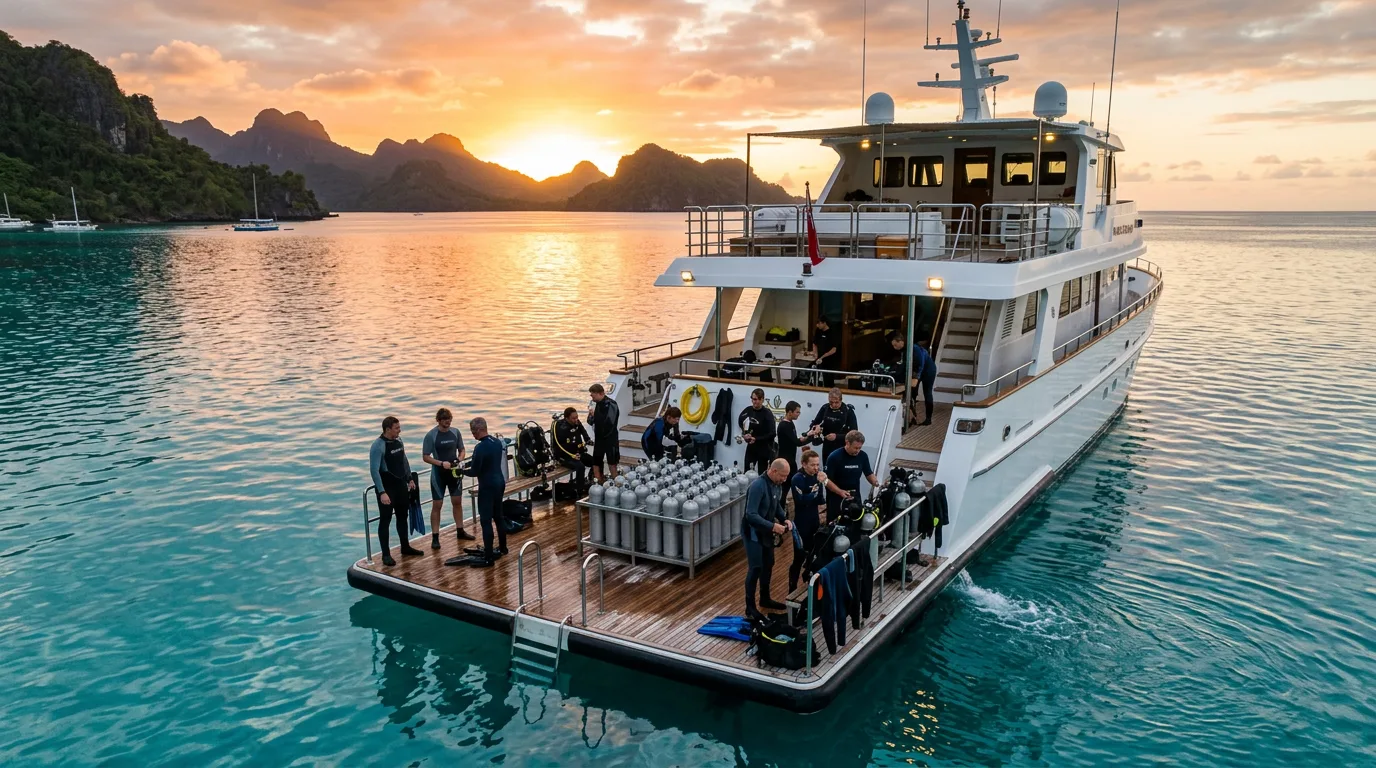
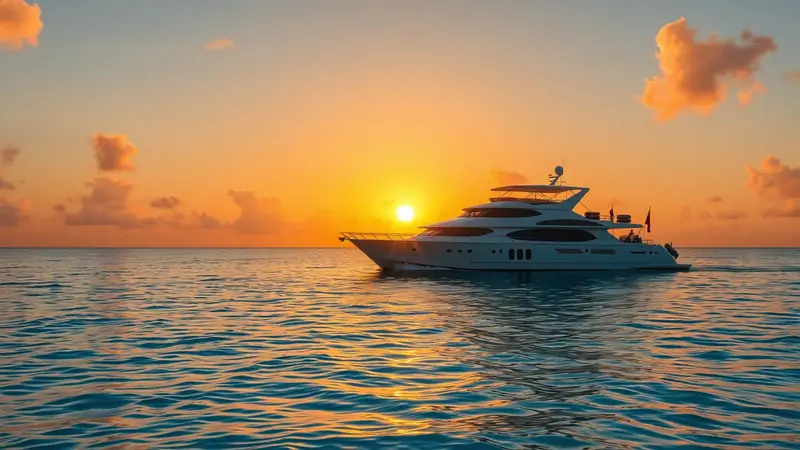
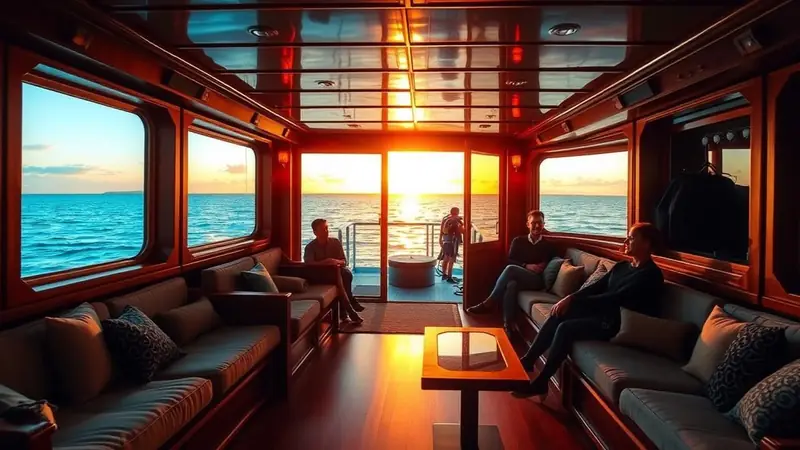
A liveaboard is a small, dive-focused vessel that becomes your floating home for the entire trip — your hotel, your restaurant, and your dive base in one. Instead of commuting from a beach hotel to a different reef every morning, you sleep at the dive site, dive at sunrise before anyone else arrives, and let the boat carry you overnight to the next world-class location. For experienced and curious divers alike, the liveaboard format is the most efficient, most rewarding, and most adventurous way to explore the underwater world.

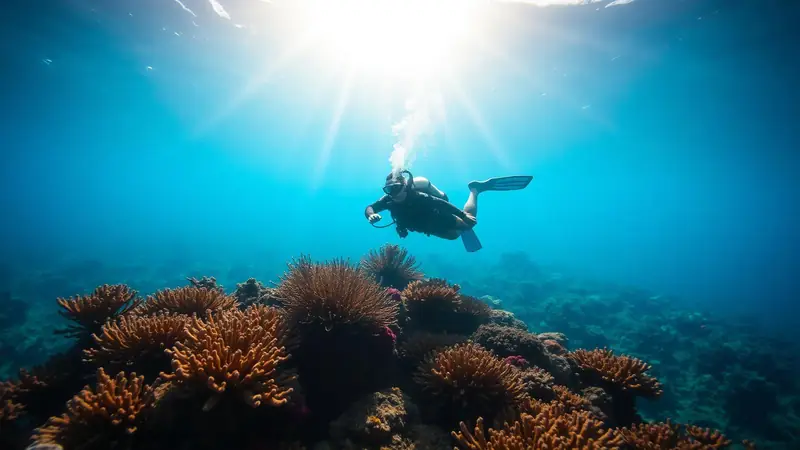
The reason liveaboards exist is simple: the planet's most spectacular dive sites — the Galápagos, Raja Ampat, the Brothers Islands, Cocos, Socorro, the Maldives' central atolls, Komodo, Tubbataha — are too remote to reach by day boat. A liveaboard lets you dive these places three to four times a day for an entire week, with all logistics handled for you. No transfers, no traffic, no missed sites because they were too far from shore. Just diving, eating, sleeping, and waking up at the next reef.

This FAQ hub is built to answer every question a diver — whether brand-new or with 5,000 logged dives — has before booking a liveaboard trip. Across 12 thematic categories and more than 40 long-form guides, we cover certifications, costs, safety, equipment, photography setups, destinations, marine life, onboard life, payment options and travel logistics. Every answer is written by working dive professionals, updated for current vessel standards and pricing, and fully searchable. If you've ever wondered "do I need Nitrox?", "how much should I tip the crew?", "is a liveaboard right for me?", or "what's the difference between a Maldives and a Red Sea trip?" — the answer is here.

Blue Rides exists for one reason: to make it easier for divers to find the right liveaboard for their level, budget, and travel style. The global liveaboard fleet is large, fragmented and inconsistently presented across hundreds of operator websites. Our role is to compare every vetted vessel side by side, surface the practical details (cabin layout, dive deck, Nitrox availability, crew ratio, food quality, last-minute deals), and let you book transparently with a best-price guarantee. We are an independent agent — never an operator — which means we have no incentive to push one boat over another. Our incentive is your trust and your next trip.

Use this FAQ hub before you start comparing boats. Read the basics if you've never been on a liveaboard. Read the safety section if you have any concerns about depth, currents or seasickness. Read the cost section if you want to understand exactly what's included and where hidden fees can appear. Read the destinations section to match marine life and travel season to your calendar. Once you've narrowed your priorities, head to our liveaboards page and use the filters — destination, month, certification level, max budget — to see only the boats that fit. Every vessel listing links back to relevant FAQ answers, so you can keep researching as you compare.

Liveaboards are not a one-size product. The same word covers a $1,500 four-night Egypt charter on a 16-guest budget vessel and a $14,000 ten-night Antarctica expedition on a polar-rated 25-guest research ship. There are family-friendly Maldives boats, hardcore expedition vessels for shark diving in Cocos, photographer-focused yachts in Raja Ampat with dedicated camera rooms, technical and rebreather-equipped boats for deep wreck diving in Truk Lagoon, and intimate sailing yachts for couples in Indonesia's Banda Sea. Matching the right boat to the right diver is the single biggest factor in trip satisfaction — and the single hardest thing for a first-time customer to do alone. That is exactly the gap this hub, and Blue Rides as a whole, is built to close.

By the time you finish reading the relevant sections of this FAQ, you should know what level of diver the trip is built for, what to expect from a typical day on board, what to budget, what to pack, what questions to ask the operator, and how to spot a vessel that will deliver the trip you actually want. From there, the booking part is easy. Browse our liveaboards, save favorites to your shortlist, and reach out to the team if you'd like a personal recommendation. Diving the world's best sites is closer than most travelers realize — this hub is the first step.

Ready to book your trip?

Compare 300+ vetted liveaboards across 35+ destinations — best price guarantee, expert support, flexible payments.

Find your perfect liveaboard