The Coral Triangle muck-diving sites in Indonesia and the Philippines, frogfish, blue-ringed octopus, mimic octopus, pygmy seahorses, and hundreds of nudibranch species.
Macro photography (small subject, close-up imaging) requires destinations with high concentrations of weird, photogenic critters and sandy or muck bottoms where you can hover stably. Three destinations dominate global macro photography rankings.
Lembeh Strait, Sulawesi, Indonesia. The undisputed capital of muck diving. Sites like Police Pier, Hairball, Critter Hunt and Nudi Falls offer hairy frogfish, mimic octopus, blue-ringed octopus, mandarin fish, flamboyant cuttlefish, pygmy seahorses, and dozens of nudibranch species on every dive. Bottom is dark sand interspersed with rubble — perfect for macro composition. Land-based diving from Lembeh resorts is the standard approach; some liveaboards include Lembeh on combined Lembeh + Bunaken + Bangka itineraries. Best months: year-round, with August to November being peak.
Anilao, Philippines. Anilao is the macro photography destination for serious shooters in Asia. Sites like Secret Bay, Mainit and Twin Rocks rival Lembeh for nudibranch diversity (Anilao has documented over 600 nudibranch species), and add specialties like blackwater diving (drifting at night over deep water photographing pelagic larvae). Land-based from Batangas. Best months: November to May.
Banda Sea (between Sulawesi and Maluku, Indonesia)
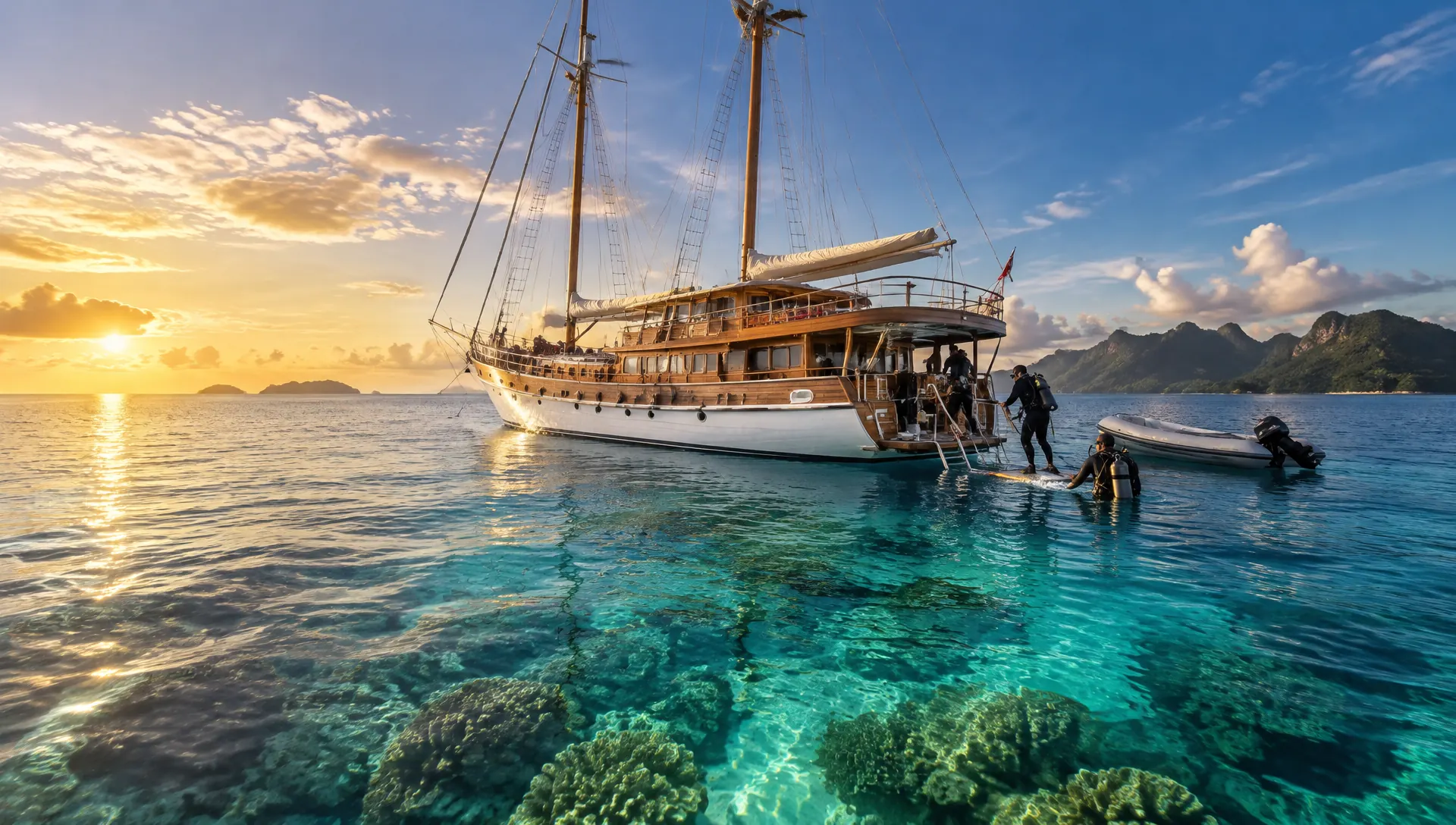
Liveaboard-only access to remote sites with both macro (Ambon Bay's psychedelic frogfish, Buano's mantis shrimp) and big-fish encounters (hammerheads at Suanggi, schooling fusiliers at Manuk). 10-12 night liveaboards from Ambon to Sorong combine the best of macro and biodiversity.
Honorable mentions
Bunaken National Park (Sulawesi) has wall diving with macro on the wall. Tulamben (Bali) has the USS Liberty wreck plus macro sites (Seraya Secrets). Komodo (Indonesia) southern sites have macro plus current-fed schooling fish. Maluku and Halmahera have less-dived macro sites with similar species to Lembeh. Romblon (Philippines) is the macro alternative to Anilao for divers seeking smaller crowds.
Equipment for macro
A 60mm or 100mm macro lens is the standard. Dual strobes mounted close to the housing for extreme close-ups. A focus light to assist with autofocus on small subjects. Diopters or wet macro lens adaptors to extend close-focus range. A torch or magnifier for spotting critters.
Diving technique
Buoyancy is everything. Macro photographers spend long surface intervals practicing perfect mid-water hovering and three-finger contact with sandy bottoms. Dedicated macro guides know the territory of every flamboyant cuttlefish and blue-ringed octopus and will spot subjects you'd never find alone.
