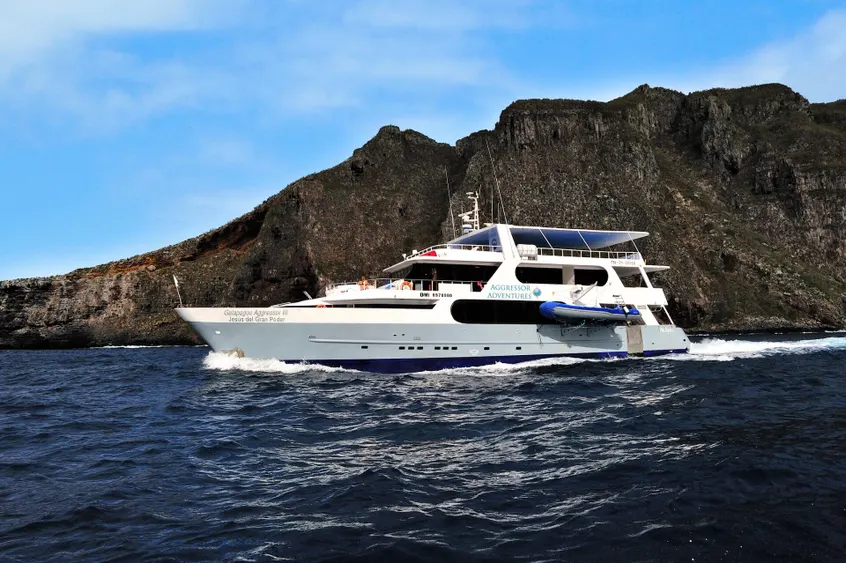
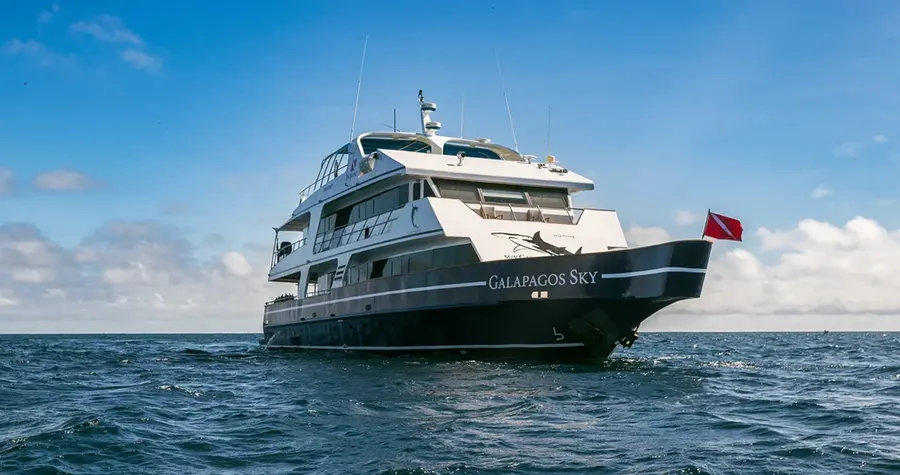
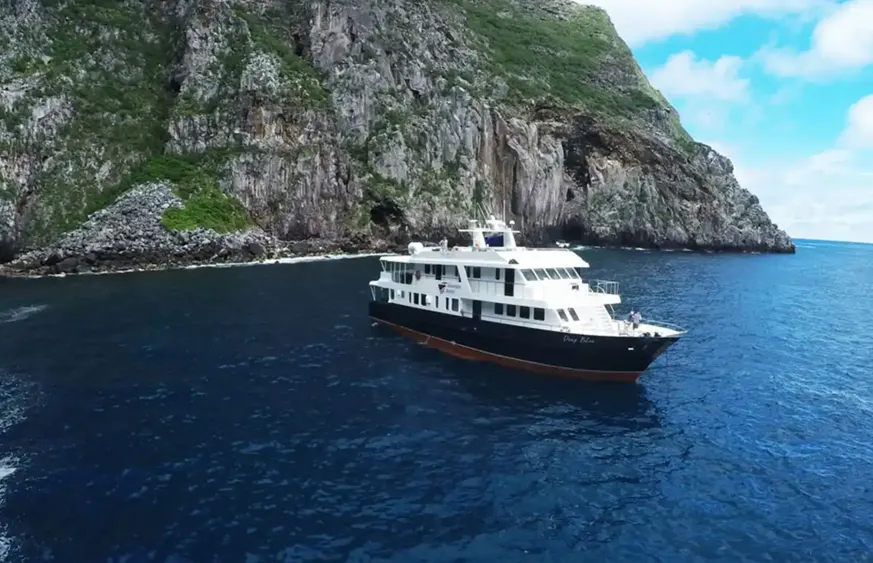
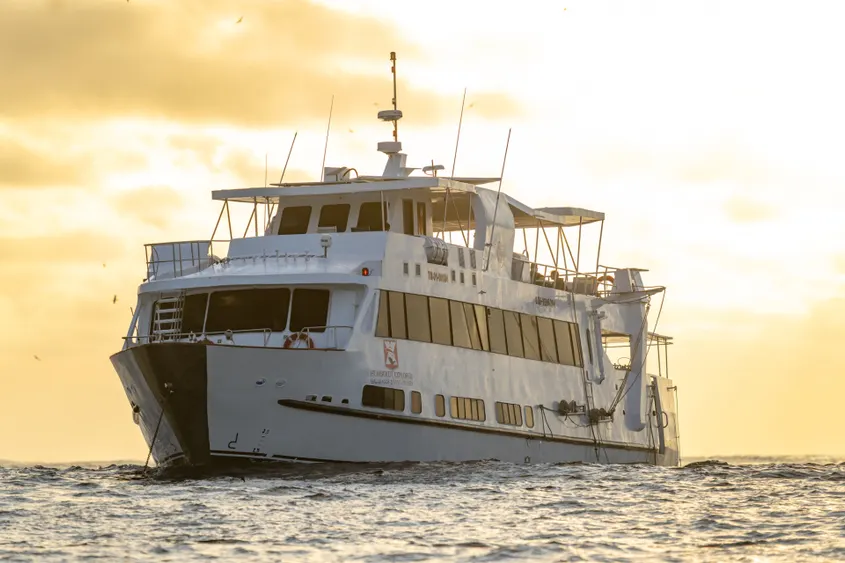
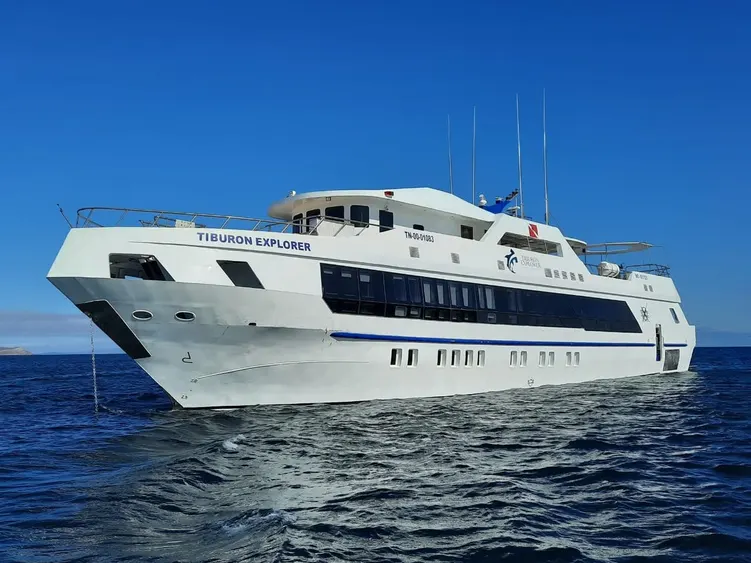
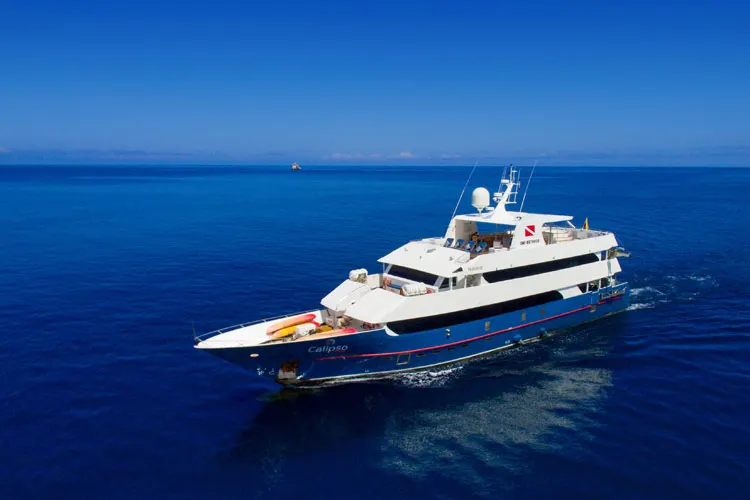
Calipso: Exploring the Galápagos' unique marine biodiversity aboard a 35.7-meter liveaboard.
Device for Drying Hair
USB Power Points
Internal Digital Safe
4.8(182 reviews)
16 guestsfrom $819/day
Diving in the Pacific: wrecks, walls and scalloped hammerheads
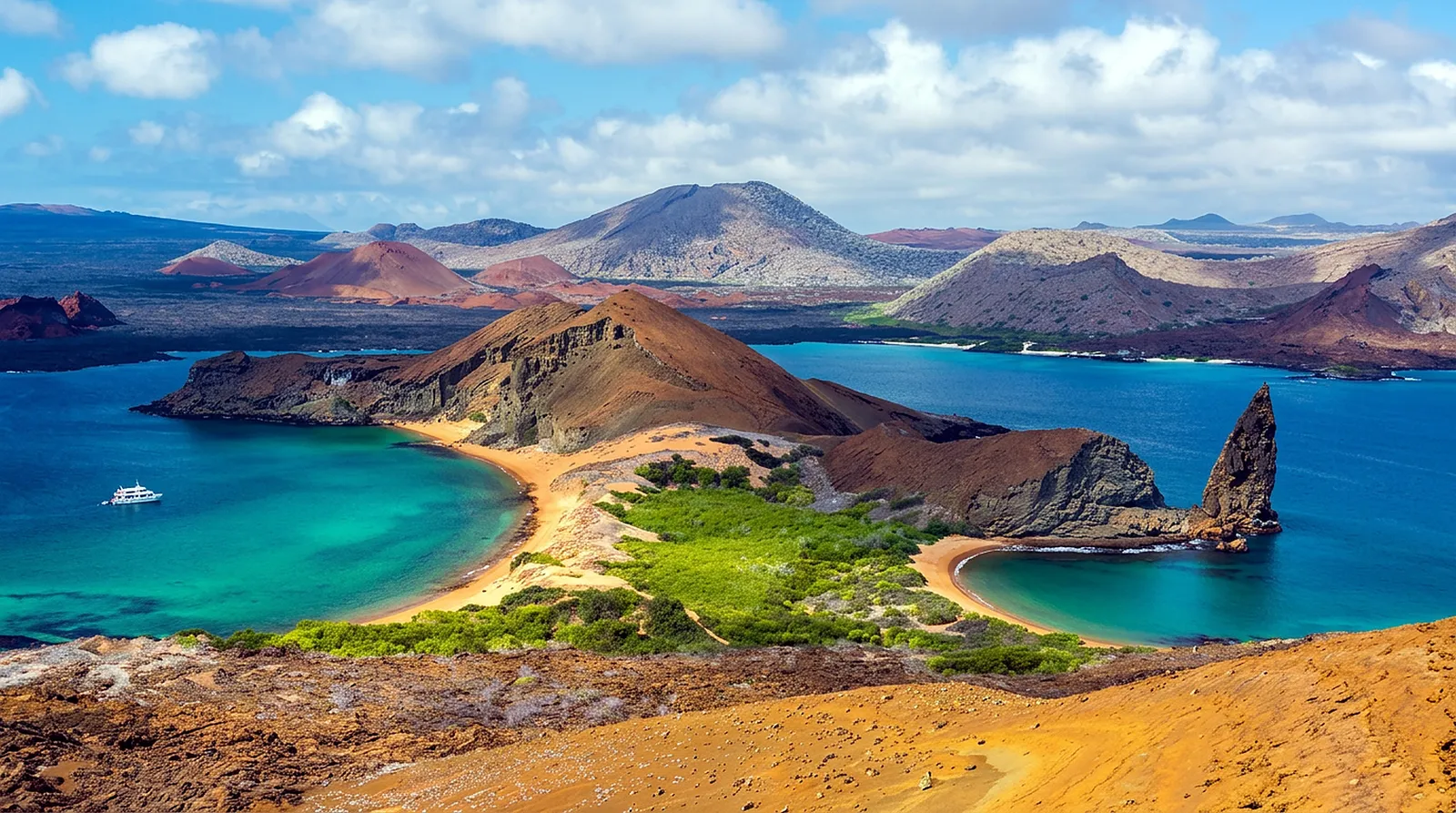
Diving in the Galápagos is an immersion into a living evolutionary laboratory, a place where cold, nutrient-rich currents collide to create an ecosystem unlike any other. This remote archipelago is a crucible of marine biodiversity, where penguins swim with tropical fish and unique endemic species thrive. For serious divers, a Galápagos liveaboard is non-negotiable; it is the only way to reach the legendary, isolated islands of the far north and experience the full intensity of this UNESCO World Heritage site.
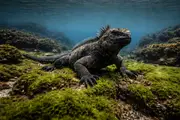
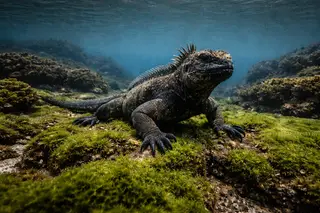
The itinerary centers on the world-renowned Darwin and Wolf Islands, often cited among the best dive sites Galápagos has to offer. Here, at sites like Darwin's Arch, divers are met with staggering schools of scalloped hammerhead sharks, often numbering in the hundreds. The sheer volume of life is breathtaking, with Galápagos sharks, silky sharks, and eagle rays patrolling the blue. Further west, at Isabela Island's Cabo Douglas, you can witness the surreal sight of marine iguanas feeding on algae underwater, a
Why dive a liveaboard in Galápagos
From legendary wrecks and thriving reefs to close-up encounters with iconic marine life, this destination offers the experiences divers dream about. Warm, clear waters and well-organized liveaboard routes make it easy to explore the best sites. These are the highlights that keep divers coming back year after year.
Hammerhead schools
Hundreds of hammerhead sharks at Darwin and Wolf Islands
Endemic species
Marine iguanas, Galápagos penguins, and flightless cormorants
Whale shark season
Reliable whale shark encounters June to November
UNESCO protected
World Heritage site with strict conservation protocols
Who a liveaboard in the Pacific suits — and who it doesn't
Galápagos is a cold, current-driven big-animal destination — operators set hard experience minimums for good reason.
Beginners
Not a beginner destination
Liveaboards to Wolf and Darwin typically require Advanced certification and 50 to 100 logged dives; beginners are limited to day trips around Santa Cruz.
Matching areas:Santa Cruz day sitesNorth Seymour
Advanced divers
Advanced, 50 to 100 dives, current and surge experience
Wolf and Darwin mean negative entries, reef hooks in strong current, surge and water from roughly 18 to 26 °C depending on season.
Matching areas:DarwinWolfCabo Marshall
Deep and technical
Deep, Nitrox; the archipelago is remote
Deep blue-water hangs off Darwin and cold thermoclines are routine, but Galápagos is a marine reserve with strict rules and a long evacuation chain — Nitrox and conservative profiles, not technical depth chasing.
Matching areas:DarwinWolfRoca Redonda
Photo and video
Wide-angle only, strobes fight the current
Scalloped hammerhead schools, whale sharks at Darwin between roughly June and November, marine iguanas and Galápagos sea lions.
Matching areas:DarwinWolfFernandina
Best time to dive in Galápagos
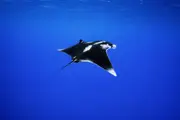
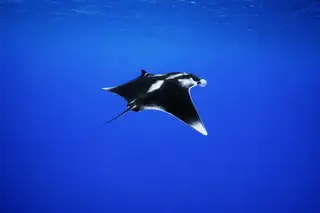
Galápagos diving is excellent year-round but is split into two distinct seasons defined by water temperature and marine life. The cooler, nutrient-rich season from June to November is the best time for whale sharks at Darwin's Arch and peak hammerhead action. The warmer season from January to May brings calmer seas, better visibility, and more frequent encounters with manta rays and playful sea lions.
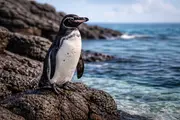
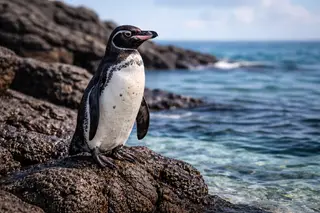
The Galápagos marine life is legendary, headlined by massive schools of scalloped hammerheads and endemic species found nowhere else. Divers can expect to see Galápagos sea lions, Galápagos penguins, and the world's only marine iguanas year-round. From June to November, the chances of encountering giant whale sharks at Darwin's Arch are high, while mola mola also appear in the cold, upwelling-rich waters.
Use this calendar as a guide: the highlighted months show when your chances are usually best. Wildlife follows its own rhythm, so sightings are never guaranteed — but we hope this makes planning a little easier. The seasonal rhythm of the Galápagos is driven by its currents, with the cool season from June to November attracting whale sharks and massing hammerhead schools. Conversely, the warm season from January to May offers calmer waters ideal for manta ray and playful sea lion encounters.
Species
Jan
Feb
Mar
Apr
May
Jun
Jul
Aug
Sep
Oct
Nov
Dec
Scalloped Hammerhead
Scalloped Hammerhead
★
★
★
★
★
★
★
★
★
★
★
★
Whale Shark
Whale Shark
★
★
★
★
★
★
Marine Iguana
Marine Iguana
★
★
★
★
★
★
★
★
★
★
★
★
Galápagos Sea Lion
Galápagos Sea Lion
★
★
★
★
★
★
★
★
★
★
★
★
Oceanic Manta Ray
Oceanic Manta Ray
★
★
★
★
★
★
★
★
★
★
★
★
Galapagos Penguin
Galapagos Penguin
★
★
★
★
★
★
★
★
★
★
★
★
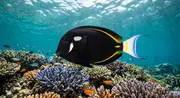
Velvet Surgeonfish
Velvet Surgeonfish
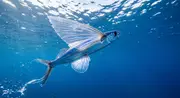
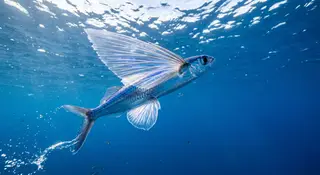
Flying Fish
Flying Fish
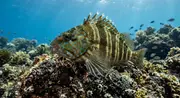
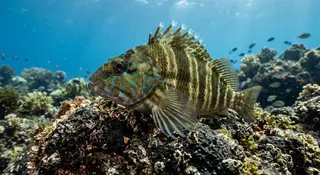
Giant Hawkfish
Giant Hawkfish
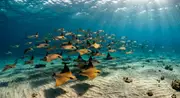
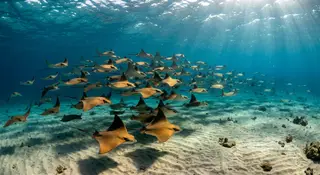
Golden Cownose Ray
Golden Cownose Ray
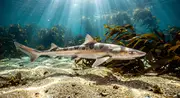
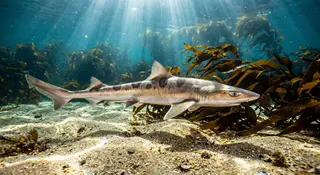
Houndshark
Houndshark
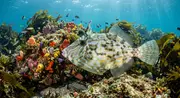
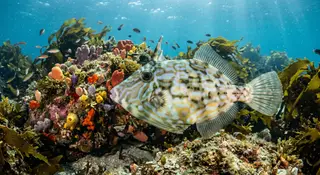
Leatherjacket
Leatherjacket
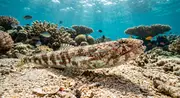
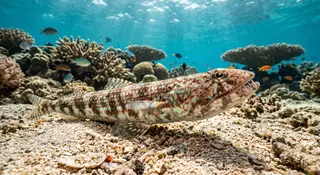
Lizardfish
Lizardfish
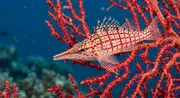
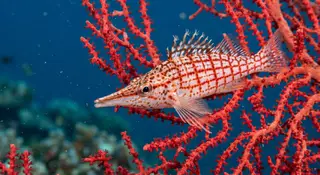
Longnose Hawkfish
Longnose Hawkfish
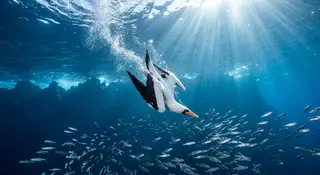
Nazca Booby
Nazca Booby
★
Peak Season
Present
Rare/Absent
Darwin's Arch and Wolf Island: the best dive sites in Galápagos
The archipelago's most famous dive sites, Darwin’s Arch and Wolf Island, are remote northern outposts accessible only by liveaboard. These sites are world-renowned for their staggering biomass of sharks, including immense schools of scalloped hammerheads and seasonal whale sharks. Other key sites visited by boat include Cabo Douglas, where you can dive with marine iguanas, and the cold-water walls of Punta Vicente Roca.
The Plaza Islands, specifically South Plaza Island, are a noteworthy diving location within the Galápagos archipelago, recognized for offering a suitable experience for less seasoned divers. Situated near Santa Cruz Island, these islands are characterized by their volcanic origins, featuring dramatic topography both above and below the water.
Diving around Plaza Islands typically involves exploring sites where marine life thrives amidst underwater structures. The depth range makes it accessible for various certification levels, contributing to its appeal. The dive experience is often part of an island-hopping itinerary, allowing for exploration of both terrestrial and marine environments.
While the general Galápagos region is renowned for its rich biodiversity, Plaza Islands provide opportunities to encounter a variety of species, though specific marine life details for the dive site itself are not detailed in the provided sources. However, the wider Galápagos waters are home to sea lions, a diverse range of sharks, rays, and sea turtles.
The practical diving experience at sites like Plaza Islands is often considered appropriate for less experienced divers. It is typically offered as a day trip from central islands, allowing divers to combine underwater exploration with other land-based activities.
Volcanic island topographyLess experienced diver suitabilityIsland-hopping itinerary inclusionGalápagos marine life encounters
The Caves, located at San Cristóbal, offers a unique underwater adventure, blending skill and direct contact with the Galápagos archipelago's rich biodiversity. This site is renowned for its spectacular rock formations and abundant marine life, providing the sensation of exploring a hidden aquatic realm. It stands out as one of the top destinations for cave diving in the region, accessible after a short boat ride.
Divers begin by following a line from the surface into the impressive cave system, where light filters through the rock walls, creating a mystical tunnel effect. After exploring the caves, the dive continues around the site, revealing a vibrant ecosystem. A typical dive day here might also include a second dive at Tijeretas Wall, another iconic San Cristóbal site featuring vertical walls covered in marine life.
While specific seasonality for marine life at The Caves isn't detailed, the Galápagos generally hosts year-round sightings of reef sharks, sea turtles, rays, and playful sea lions. Barracudas, pufferfish, moray eels, lobsters, octopuses, and various starfish and sea urchins are commonly encountered. On the surface, blue-footed boobies, frigatebirds, and pelicans add to the wildlife experience.
Due to the maximum depth of 35 meters and the complexity of entering the caves, this site requires divers to hold an Advanced Open Water license and have at least 8 previous dives. Practical considerations include maintaining precise buoyancy, following a guideline within the caves, and respecting bottom times, often with a dive light due to limited natural light inside. Experience with current or drift diving is beneficial for navigating the conditions.
Mystical cave tunnelsSpectacular rock formationsReef sharksPlayful sea lionsMoray eels and lobstersBarracuda schoolsSea turtles
Cape Douglas offers a truly distinctive dive experience on the northwestern side of Fernandina Island in the Galápagos archipelago. Fernandina stands as one of the planet's most pristine environments, hosting an active shield volcano and remaining free from invasive species, which has fostered remarkable evolutionary adaptations among its wildlife.
The dive site features a volcanic seabed characterized by rocky outcrops, with depths extending up to approximately 33 meters. While the deeper sections are home to species like red-lipped batfish and seahorses, the primary focus for many divers is the shallower waters, between 5 and 10 meters, where the iconic marine iguanas are frequently encountered. Divers typically explore different areas across two dives, allowing for observation of both the deeper benthic life and the unique shoreline inhabitants.
This location is celebrated not for large pelagic encounters, but for its unparalleled opportunity to witness endemic species found nowhere else. You can expect to observe marine iguanas grazing on algae underwater, flightless cormorants hunting, and Galápagos penguins. Sea lions, fur seals, and sea turtles are also common sightings, making for a fascinating display of adapted marine life.
Diving here often involves a tender drop-off, with guides timing dives to maximize encounters with marine iguanas. While currents are generally moderate, surge can be present in shallower zones. The water is notably cooler than other Galápagos sites, and good buoyancy control is essential to navigate the varied topography and respect the delicate ecosystem.
Daphne Major is an extinct tuff cone in the central Galápagos, known more for its birdlife and excellent snorkeling rather than traditional scuba diving. Unlike its smaller counterpart, Daphne Minor, which is a dedicated dive site, Daphne Major itself does not have visitor landing sites or specific scuba routes. Its rim rises approximately 400 feet above sea level, defining its stark, treeless landscape.
The underwater environment around Daphne Major features a variety of tropical fish, green turtles, various ray species, and sharks, particularly enjoyed by snorkelers. The area is also notable for the seabirds that frequently hunt in its nutrient-rich waters.
While specific dive profiles are not detailed for Daphne Major, the nearby waters provide a vivid underwater experience for those exploring from a boat. The marine activity supports a rich ecosystem, drawing diverse species.
Access to the vicinity of Daphne Major is typically part of broader Galápagos itineraries, often included as an opportunity for panga rides or snorkeling excursions. Its significance lies in its role as a crucial ecological zone and a scenic point of interest within the archipelago.
Excellent snorkeling opportunitiesDiverse tropical fish speciesGreen turtle sightingsVariety of ray speciesShark encountersAbundant seabird activityScenic volcanic topography
Bucket-list dives worth booking early
A Galápagos liveaboard trip is defined by experiences that are unique on the planet, such as watching hundreds of scalloped hammerheads school in the blue at Darwin and Wolf Islands. Observing marine iguanas graze on algae at Cabo Douglas and the constant, joyful interactions with playful Galápagos sea lions complete this ultimate dive adventure. During the right season, you might also swim with giant whale sharks near Darwin's Arch.
The remote northern islands of Darwin and Wolf are famous for massive schools of scalloped hammerhead sharks. During the cold season, nutrient-rich currents attract hundreds of hammerheads that gather at cleaning stations along volcanic walls — one of the most breathtaking encounters in the diving world.
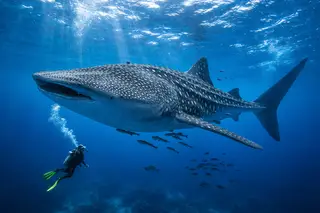
The waters around Darwin's Arch attract some of the largest whale sharks on Earth, with females often exceeding 12 meters. During the cold season, these gentle giants cruise through the nutrient-rich currents in open water — offering once-in-a-lifetime encounters for lucky divers.
Found nowhere else on Earth, Galapagos marine iguanas are the world's only ocean-going lizards. Watch them dive to the seafloor to graze on algae growing on volcanic rocks — a truly unique underwater spectacle that fascinated Darwin himself over 190 years ago.
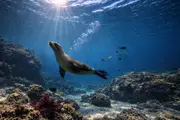
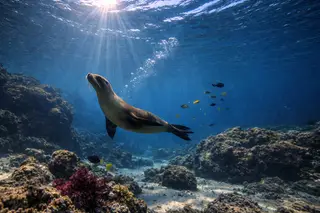
Galapagos sea lions are the archipelago's most charismatic residents. Curious and playful, they love to swim alongside divers, spinning, blowing bubbles and making eye contact. Pups are especially bold, turning every dive into an interactive underwater dance — pure joy beneath the waves.
Read more
Above water: climate, shore trips and extra costs
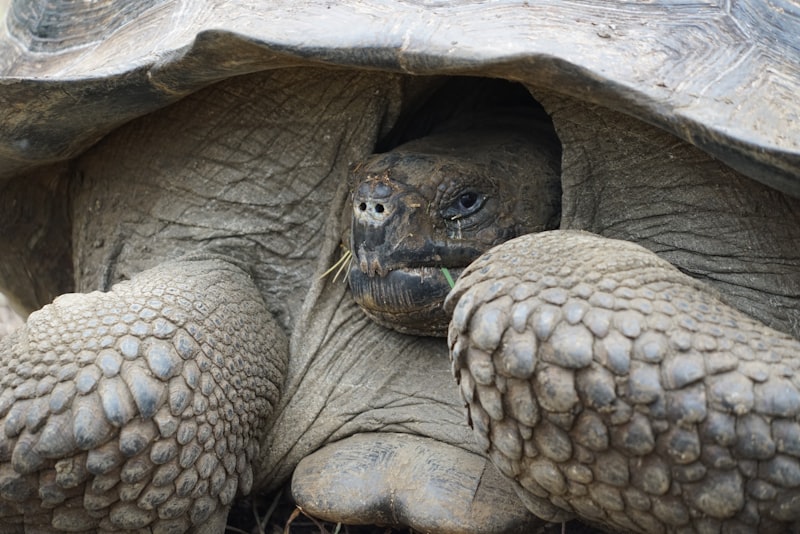
Beyond the world-class diving, Galápagos offers unforgettable land-based wildlife encounters on every itinerary. Most trips include shore excursions to walk among giant tortoises in the Santa Cruz highlands or observe the unique courtship dance of blue-footed boobies. You can also visit the Charles Darwin Research Station to learn about the archipelago’s vital conservation efforts for its endemic species.
Giant Tortoise Highlands
Walk among the iconic giant tortoises in their natural habitat in the Santa Cruz highlands. These gentle giants can weigh over 400 kg and live more than 150 years in the wild.
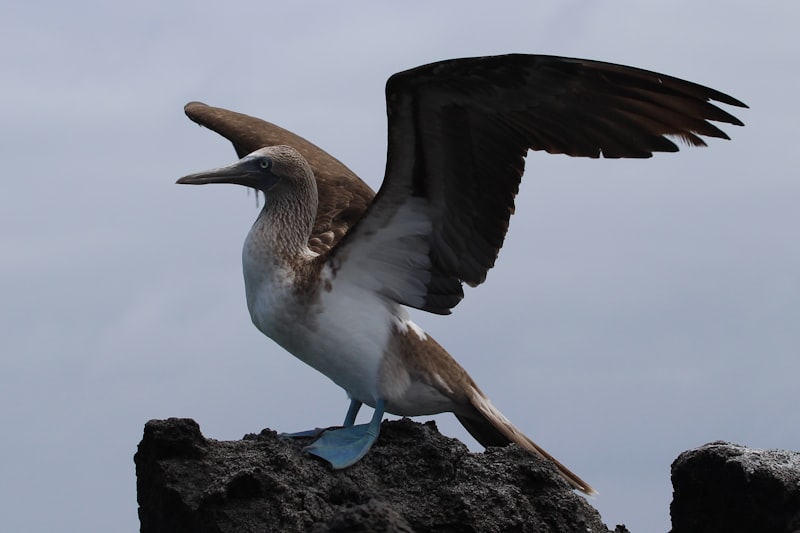
Blue-Footed Booby Colonies
Observe the famous blue-footed boobies performing their hilarious courtship dance, lifting their vivid blue feet to attract mates. North Seymour and Española islands offer the best sightings.
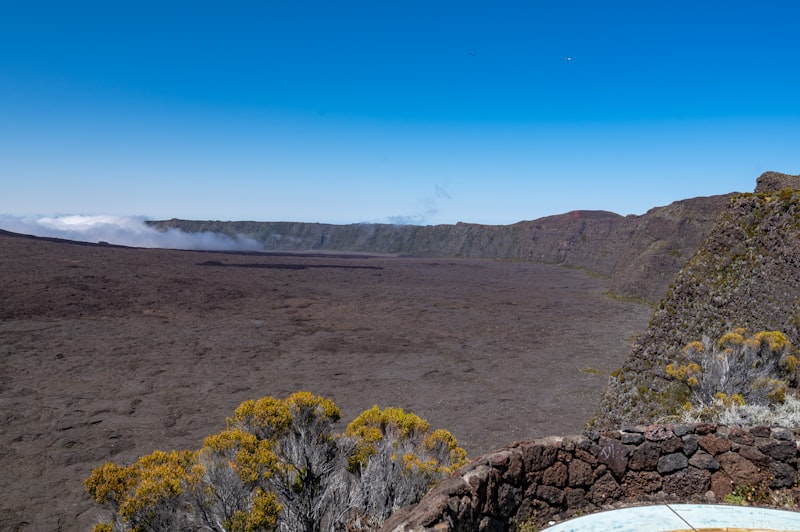
Volcanic Landscape Hiking
Hike across dramatic volcanic terrain on Isabela and Santiago islands. Walk through lava tunnels, along crater rims, and across surreal moonscapes formed by relatively recent eruptions.
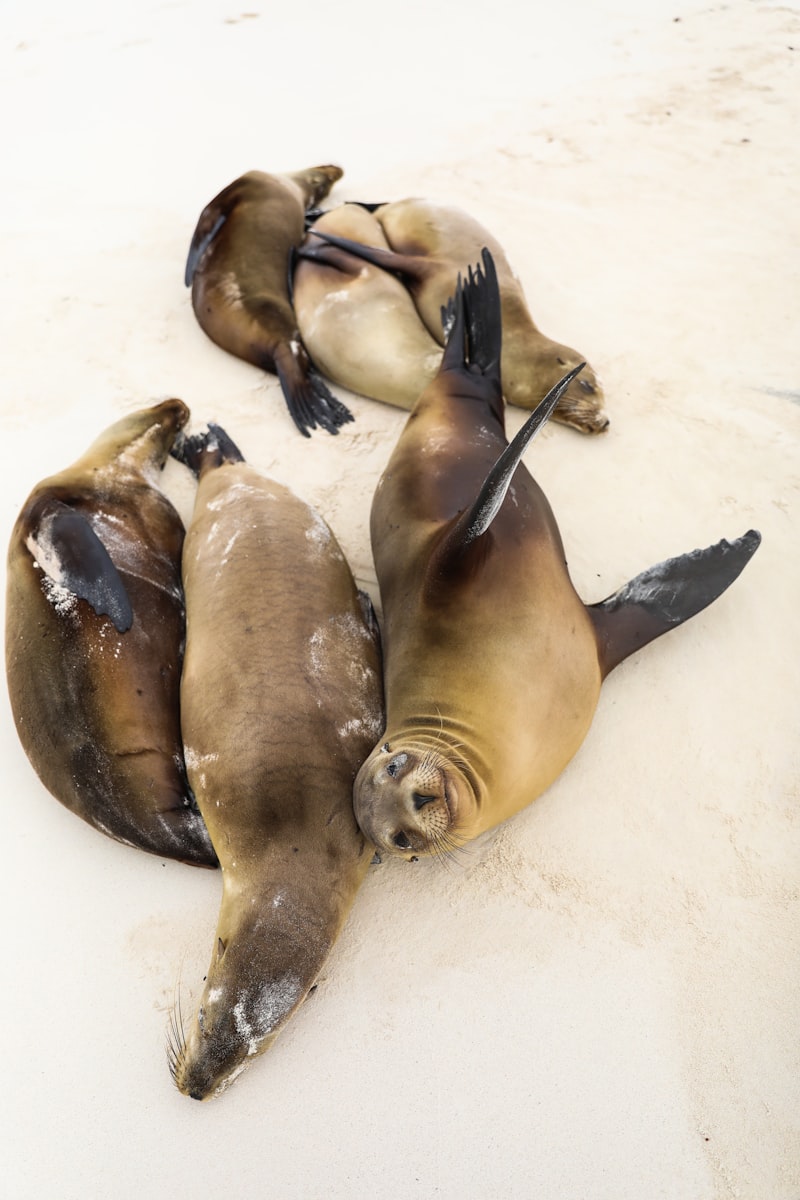
Sea Lion Beach Encounters
Share the beach with playful Galápagos sea lions on San Cristóbal. These charismatic animals bask on the sand, body-surf in the waves, and often approach visitors with amusing curiosity.
What a liveaboard in Galápagos costs
The calendar below shows how liveaboard prices shift month by month, so you can see exactly when your money goes furthest. We want every diver to get the best possible value, which is why we highlight the seasons that balance great conditions with the fairest rates.
Galápagos is a premium, expedition-level dive destination, and its pricing reflects the strict national park controls and remote logistics. Liveaboard trips typically range from $500 to $900 per day, making it one of the most expensive dive destinations globally. Prices vary depending on the vessel's level of luxury and the season, with limited capacity keeping demand and costs consistently high.
$612–$937
per day liveaboard
$200–$400
per 2-tank dive trip
$100–$350
hotel per night
Prices reflect typical costs for mid-range to premium options. Budget alternatives may be available.
Getting to Baltra and San Cristóbal: flights and transfers
Reaching your Galápagos liveaboard requires a two-step journey, starting with an international flight to Quito or Guayaquil in Ecuador. From there, you must take a domestic flight to either Baltra (GPS) or San Cristóbal (SCY) in the islands. Most nationalities do not need a visa but must acquire a Galápagos Transit Control Card, and transfers from the airport to your departure port are typically included.
Insider tips
🚢
Book liveaboards during shoulder season (Jun or Dec) for lower rates
Frequently asked questions about Galápagos liveaboards
How much does a Galapagos liveaboard trip cost in 2026?
While specific prices for 2026 vary by vessel, Galapagos is a premium, bucket-list destination due to strict regulations and a small fleet of permitted boats. When budgeting, remember to include essential cash costs like the national park fee and crew tips, which typically range from $300-$500 per guest per week. It's always best to check with a booking agent like Blue Rides for precise, up-to-date pricing on the trip you're interested in.
When is the best time to dive in Galapagos for whale sharks and hammerheads?
For the legendary big animal encounters, plan your trip during the cool/dry season from June to November. This is when the cold upwellings attract hundreds of schooling hammerheads and giant whale sharks, with peak whale shark sightings from July to October. Just be prepared for colder water (17-23°C) and potentially rougher seas.
Do I need to be an advanced diver for a Galapagos liveaboard?
Yes, absolutely. Due to strong currents, cold water, and deep dive profiles, you must have an Advanced Open Water certification with a minimum of 50 logged dives. Many operators even require 100+ dives and proof of recent experience in cold water or strong currents to ensure your safety and enjoyment.
What big marine animals can you see on a Galapagos liveaboard?
Galapagos is the theater of giants! A liveaboard gives you the best chance to see massive schools of scalloped hammerheads, bus-sized whale sharks (in season), and an abundance of Galapagos sharks, silky sharks, and eagle rays. You may also encounter huge oceanic sunfish (mola mola), manta rays, sea lions, and even the unique Galapagos penguin.
Why are Wolf and Darwin Islands famous for diving?
The remote northern islands of Wolf and Darwin are the main event, and a liveaboard is the only way to reach them. They are legendary because they host one of the largest concentrations of sharks on the planet. This is where you'll witness the famous walls of schooling hammerheads and other pelagics congregating at current-swept cleaning stations.
What special dive gear should I pack for a Galapagos liveaboard?
Proper exposure protection is critical; a 7mm wetsuit or semi-dry, along with a hood, gloves, and boots, is standard even in the warmer season. Because of the strong currents, a reef hook, a personal surface marker buoy (SMB), and a dive computer are mandatory. A good dive torch is also highly recommended for peering into dark volcanic overhangs.
Which port do Galapagos liveaboards depart from?
Most Galapagos liveaboard itineraries that focus on the premier dive sites of Wolf and Darwin begin and end on the islands themselves, typically departing from ports on Baltra Island or Santa Cruz Island. You will fly from mainland Ecuador (Quito or Guayaquil) to meet your vessel. Your naturalist guide will usually meet you at the airport to transfer you directly to the boat.
Galápagos compared with other liveaboard destinations
Honest, in-depth comparisons to help you decide between destinations, certifications, equipment and dive styles.
Choosing between a liveaboard and a land-based dive trip is the most fundamental decision divers face when planning a serious diving holiday. The right answer depends on your priorities: maximum dive count and access to remote sites favor liveaboards; beach time, family flexibility and lower cost favor land-based resorts. Both formats have evolved significantly in the last decade, and the line between them has blurred — luxury dive resorts now offer multi-day expedition trips, while many liveaboards include topside excursions and even spa days.
This guide compares the two formats across every meaningful dimension: cost per day, dives per day, marine life access, comfort, social dynamics, family-friendliness, and travel logistics. We'll also cover the hybrid models (resort + day-charter, or 'safari boat' itineraries) that try to capture the best of both worlds.
If you're certified, in love with diving and want to maximize bottom time, a liveaboard is almost always the better choice — you can clock 25+ dives in a week and reach sites no day boat can. If you're traveling with non-divers, prefer land-based comfort, or want flexibility to take days off, a resort wins. We'll get into all the nuances below.
Galápagos and Cocos Island sit at the apex of pelagic diving on planet Earth. Both are remote, both demand long open-ocean crossings, and both deliver the kind of shark and big-animal encounters most divers only see in documentaries. Choosing between them isn't a question of which is 'better' — it's about which form of extreme rewards your time, budget and tolerance for rough seas.
Galápagos sits 1,000 km off the coast of Ecuador, with a unique mix of tropical and cold-water species fed by the Cromwell and Humboldt currents. The northern islands of **Darwin and Wolf** are the headline act: schooling scalloped hammerheads in the hundreds, whale sharks (mostly pregnant females) cruising through from June to November, and reliable encounters with Galápagos sharks, silkies and even orcas. Closer to Santa Cruz, marine iguanas graze underwater, sea lions buzz divers, and mola mola hover in cooler thermoclines.
Cocos Island, 550 km off Costa Rica, is smaller, wetter and even more shark-focused. It's a UNESCO World Heritage Site with no permanent population beyond park rangers. Hammerhead schools are the main draw, but Cocos delivers on tiger sharks, marbled rays, silvertips and the legendary nighttime whitetip feeding frenzies at Manuelita Garden. The crossing from Puntarenas takes 32–36 hours each way — enough to claim several days of your trip — and seas can be punishing.
This guide compares price, marine life, dive difficulty, certification requirements and trip logistics so you can decide which open-ocean expedition to book first.
Scuba diving opens up a breathtaking world hidden just beneath the surface, an activity enjoyed by millions globally. For the vast majority, this means recreational diving. Governed by agencies like PADI and SSI, recreational diving is defined by its limits: no deeper than 40 meters (130 feet), always having a direct path to the surface, and staying within no-decompression limits. This framework allows divers to explore vibrant coral reefs, shipwrecks, and kelp forests with relatively simple equipment and training, focusing on enjoyment and safety within a well-established comfort zone.
On the other end of the spectrum lies technical (or tec) diving. Often seen as the 'extreme sport' of the scuba world, tec diving is explicitly about going beyond recreational limits. This means diving deeper than 40 meters, planning for mandatory decompression stops on ascent, or penetrating far into overhead environments like caves or complex wrecks. Agencies such as Technical Diving International (TDI), Global Underwater Explorers (GUE), and PADI's TecRec arm provide the highly specialized training required for these demanding dives.
The fundamental difference is one of philosophy. Recreational diving prioritizes risk avoidance by staying within strict, pre-defined boundaries. Technical diving, in contrast, is about risk mitigation. Tec divers intentionally plan to enter situations that would be emergencies for recreational divers, but they do so with extensive training, meticulous planning, redundant equipment systems, and specialized breathing gases. It's a calculated approach to exploring environments that are otherwise inaccessible.
This distinction isn't just about numbers and gear; it’s about mindset and motivation. While a recreational diver might be thrilled by the colorful reefs of the Red Sea, a technical diver might be drawn to the challenge of exploring a deep, historic wreck like the Britannic off the coast of Greece. Understanding the differences in limits, equipment, training, and risk is crucial for any diver considering where their underwater journey might lead next.