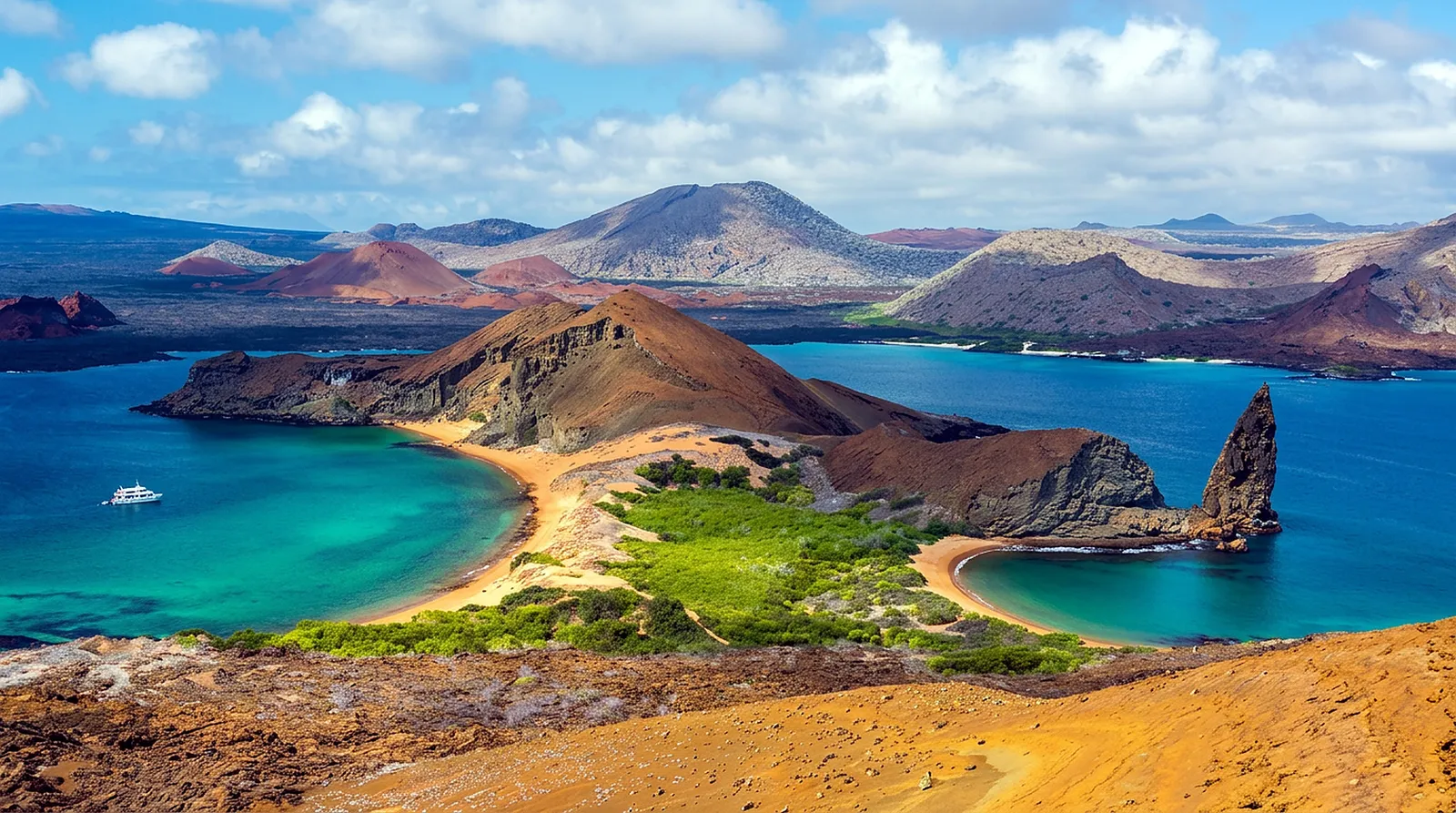
Conditions in April
So, you’re thinking about diving the Galápagos in April? Smart move! This month marks a sweet spot, a transition period that often offers the best of both worlds. The colder, nutrient-rich waters of the dry season are starting to give way to the warmer, clearer conditions of the wet season. This means you can often expect both incredible pelagic action and improved visibility. In April, historical mean daily air-temperature minima and maxima at San Cristóbal (Galápagos) are 22.4–29.6 °C (72–85 °F) (1951–1966). These are coastal station averages, not offshore forecasts.
Long-term average sea temperatures in April: about 26 °C (78 °F) around Puerto Ayora (Santa Cruz). While some parts might still hold onto cooler pockets, particularly around Wolf and Darwin, the overall trend is warming. Visibility is on the upswing compared to the colder months, often offering very clear water, especially in the more sheltered sites. Currents, famously a hallmark of Galápagos, are still present and can be strong, particularly around the northern islands. This isn’t a place for the faint-hearted when it comes to currents, so be prepared for some exhilarating drift dives.
What you will see
Oh, where to even begin with Galápagos in April! This month is prime time for encountering the big stuff. You have excellent chances of being eyeball-to-eyeball with schools of hammerhead sharks, especially around our legendary northern outposts. Think hundreds of silvertip, Galápagos, and white-tip reef sharks too. The transitional waters are still packed with nutrients that attract these apex predators. Don't be surprised to spot curious Galápagos sea lions dancing around you, and who could forget the marine iguanas, often seen foraging on the seabed or sunning themselves on the rocks?
Manta rays are also frequently sighted in April as the waters get warmer, gliding gracefully through the blue. You might encounter oceanic manta rays with their impressive wingspans, particularly around cleaning stations. April is also a good month to spot mobula rays in large aggregations. For those with a keen eye, the macro life here is surprisingly vibrant, with many endemic species of nudibranchs, seahorses, and blennies tucked away in the coral and rock crevices. While whale sharks are most reliably sighted during the cool season between July and November, an occasional encounter is sometimes possible. Keep your eyes peeled for dolphins, sunfish, and even occasional pilot whales passing through.
Top dive sites this month
Without a doubt, your itinerary in April must include Wolf Island and Darwin Island. These two northern jewels are simply non-negotiable. At Wolf – particularly sites like The Landslide and Shark Bay – you'll be immersed in walls of schooling hammerheads, often accompanied by Galápagos sharks, silky sharks, and enormous schools of fish. Darwin's Arch, even without the actual arch now, still provides unparalleled action at Darwin's Reef. This spot is renowned for its consistent presence of massive hammerhead schools, often swirling majestically in the current, and frequent sightings of huge Galápagos sharks. Keep an eye out for opportunistic whale sharks here too, though peak encounters occur later in the year.
Beyond the sheer pelagic abundance of the north, make sure your trip includes diving around Isabela Island. Sites like Vicente Roca Point offer incredible experiences with endemic Galápagos penguins and occasional sea horses, while sunfish (Mola mola) are sometimes possible though more typically observed later in the year. The cooler upwellings here provide a unique mix of marine life. For robust action and a change of scenery, visit Kicker Rock (Leon Dormido) near San Cristóbal. Here you'll find impressive geological formations and a robust population of hammerheads, white-tip reef sharks, eagle rays, and playful sea lions. It's a fantastic site that complements the sheer grandeur of Wolf and Darwin without the day-long journey.
Practical tips for your trip
Given the transitional water temperatures, packing the right wetsuit is key for comfort. While some might brave it with a 5mm, I’d highly recommend a 7mm wetsuit, possibly with a hooded vest, especially if you tend to get cold or plan on doing multiple dives a day. The added warmth will allow you to fully enjoy those longer bottom times. Galápagos diving, particularly at Wolf and Darwin, involves strong currents and deep dives, so this destination is definitively best suited for experienced, advanced divers. You should be comfortable with drift diving, deploying an SMB, and managing varying conditions. Beginners might find the challenges overwhelming and could struggle to fully appreciate the unique environment.
Liveaboard availability in April tends to be pretty good, as it's not quite peak season for whale sharks yet, but demand is always high for Galápagos. Book well in advance to secure your spot on a reputable vessel. What to pack? Besides your dive gear, bring reef-safe sunscreen, a wide-brimmed hat, sunglasses, and layers of clothing for varying air temperatures. A good quality underwater camera is a must – you'll want to capture every moment! Be aware that marine park regulations are strict, and respecting the wildlife is paramount. Maintain a respectful distance from all animals, both above and below the water. Finally, expect to be amazed; Galápagos truly is a bucket-list destination that rarely disappoints.
Regional notes
Each note applies only to the named region, not to the whole country.
- Puerto Ayora (Santa Cruz): Average sea temperature 25.6 °C (78 °F)