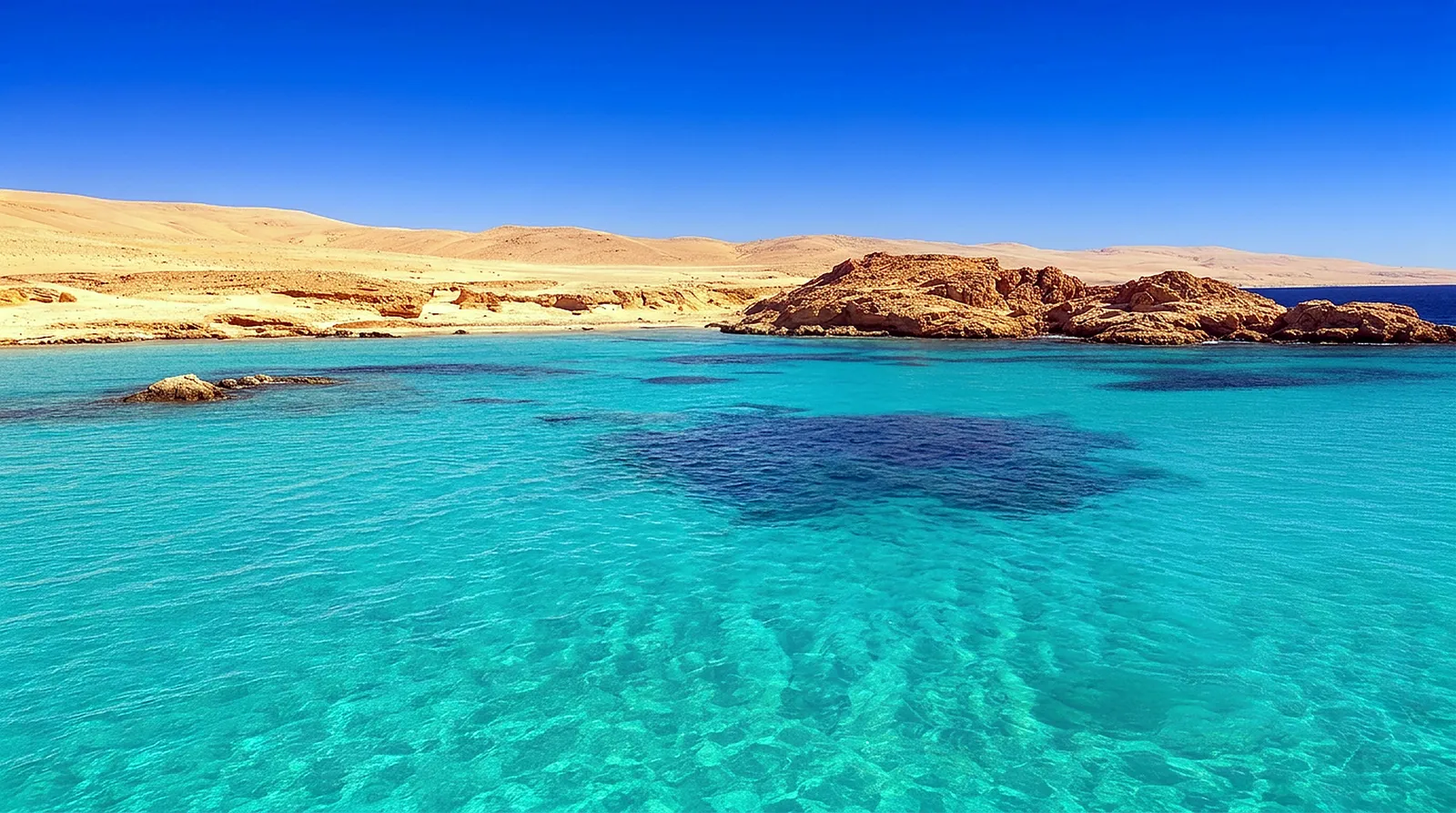
Conditions in April
April in Egypt marks a beautiful transition, as the Red Sea starts shaking off its winter chill and embraces warmer weather. You'll find surface temperatures steadily climbing, making it incredibly comfortable topside for sunbathing between dives. On the coast, long-term averages at Hurghada airport for April run from about 18 °C (64 °F) at night to about 29 °C (84 °F) during the day; individual days can be warmer or cooler. This means smoother sailing on your liveaboard and more accessible dive sites, especially those exposed reefs in the open sea. While not perfectly glassy every day, the chances of encountering choppy conditions are significantly reduced compared to the winter months.
Underwater, the Red Sea in April is a delightful experience. Long-term average sea temperatures in April are about 23 °C (73 °F) around Hurghada in the north and about 24 °C (75 °F) around Marsa Alam in the south. This means you can comfortably wear a 3mm wetsuit, although some might prefer a 5mm for longer dives or if you tend to get cold easily. Visibility remains consistently excellent, one of the Red Sea's defining features. Visibility in the Egyptian Red Sea is often very good, but it changes with wind, swell and plankton, so it varies from site to site and day to day. Currents, while always a factor in certain areas, are generally manageable and predictable, often providing exhilarating drift dives without being overly challenging. It’s a fantastic time to explore a wide range of dive sites without the extreme heat of summer or the cooler temperatures and stronger winds of winter.
What you will see
April is a fantastic time for pelagic encounters in the Egyptian Red Sea. With increasing water temperatures and plankton blooms (which are still substantial but not overwhelming), the big stuff starts to show up more frequently. While oceanic whitetip sharks are more typically seen later in the year, particularly around peak months like October and November, sightings are occasionally possible around offshore reefs like the Brothers and Daedalus. Grey Reef Sharks are also common residents here, patrolling the reef edges. Hammerhead sharks are more typically encountered in summer, though occasional sightings can occur in the deeper blue around these remote pinnacles. Keep a keen eye out during your safety stops!
Beyond the sharks, you'll be treated to a vibrant reef ecosystem. Reef fish are abundant and colorful, and this is a great time to observe schooling barracuda and tuna. Napoleons are often seen cruising the reefs, and giant moray eels peek from their coral hideouts. While manta rays are rare in the Egyptian Red Sea, occasional sightings can occur roughly between May and October around certain offshore reefs. For macro enthusiasts, there’s still plenty to discover; nudibranchs, ghost pipefish (if you have a good spotting guide), and various small crustaceans are present year-round, adding intricate detail to your dives.
Top dive sites this month
For April, your liveaboard itinerary should definitely focus on the southern and central Red Sea to maximize your chances of encountering the best conditions and marine life. The Brothers Islands (Big Brother and Little Brother) are an absolute must. These two remote pinnacles are renowned for their incredible shark action, including Oceanic Whitetips and Grey Reef Sharks, fantastic wall diving, and two spectacular shipwrecks (the Numidia and Aida II) on Big Brother. The slightly warmer waters in April make the exposed boat journey more comfortable and the diving more enjoyable.
Another essential destination is Daedalus Reef. Located even further offshore, Daedalus is a true pelagic magnet. Its sheer walls plunge into the blue, providing hunting grounds for sharks (hammerheads are mainly seen in summer, though occasional sightings can occur, never guaranteed), large tuna, and schooling reef fish. The unique lighthouse at its center adds to the remote allure. Finally, Elphinstone Reef is another iconic site that shines in April. Known for occasional Oceanic Whitetips (especially around the north and south plateaus, though peak season is October–November) and stunning Gorgonian fans, it's a thrilling dive that consistently delivers vibrant reef life and pelagic encounters.
Practical tips for your trip
With long-term average sea temperatures of about 23 °C (73 °F) around Hurghada in the north and about 24 °C (75 °F) around Marsa Alam in the south, a 3mm full wetsuit is a common choice, but how warm you need to be depends on you and on how many dives you do. If you tend to get cold easily, or plan on doing multiple dives a day, a 5mm suit will provide ample warmth. This month is generally suitable for all levels of divers. Beginners will appreciate the calmer seas and good visibility, while experienced divers will find plenty of thrilling drift dives and pelagic encounters at the offshore reefs. However, note that some of the top sites like the Brothers and Daedalus are exposed and can have challenging currents at times, making them more suitable for advanced divers or those with a few dives under their belt.
Liveaboard availability in April tends to pick up as the season transitions from winter to summer. It's a popular month, so booking your liveaboard well in advance is highly recommended to secure your preferred dates and boat. What to pack? Beyond your standard dive gear, bring lighter clothing for topside as the weather is warm, but also a light jacket or hoodie for evenings on deck. Sun protection is crucial – a wide-brimmed hat, sunglasses, and reef-safe sunscreen are non-negotiable. Don't forget your camera gear; the Red Sea's visibility and marine life offer incredible photo opportunities. Be aware that while generally stable, April can occasionally still surprise with some wind, so a little flexibility in your expectations for specific dive sites is always a good idea, though experienced liveaboard captains will always find the best options.
Regional notes
Each note applies only to the named region, not to the whole country.
- Hurghada (northern Red Sea): Average sea temperature 22.9 °C (73 °F)
- Marsa Alam (southern Red Sea): Average sea temperature 23.9 °C (75 °F)