Nautilus Belle Amie
Explore Mexico's Pacific marvels aboard a luxurious, custom-built dive vessel.
- En-Suite bathrooms
- Aircon Cabins
- Warm Water Showers
4.8(2048 reviews)
32 guestsfrom $249/day
 Free dive insuranceincluded with every booking
Explore Mexico's Pacific marvels aboard a luxurious, custom-built dive vessel.
4.8(2048 reviews)
Brand-new custom-built liveaboard for Socorro, Sea of Cortez & Baja California expeditions
4.8(27 reviews)
Choice of 3 itineraries year-round with BBQ on board
4.6(2026 reviews)
Discover Mexico's pelagic giants aboard a vessel with a legendary past.
4.5(186 reviews)
Superior Naturalist Voyages and Elite Diving in Mexico's Pacific — Socorro and Guadalupe
4.4(105 reviews)
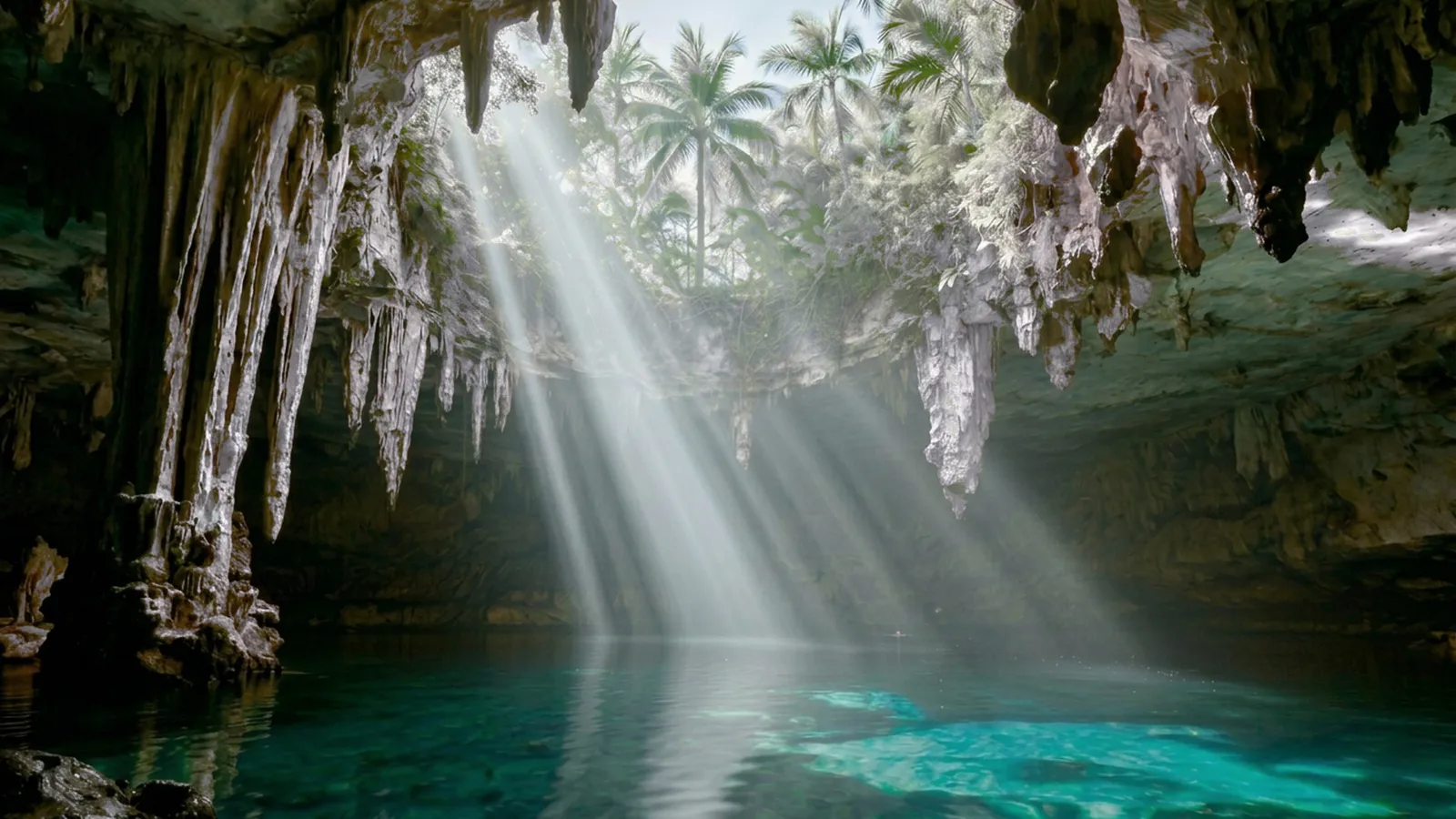
The Revillagigedo Archipelago — usually called Socorro — lies roughly 390 km south of Cabo San Lucas. Its volcanic walls and offshore pinnacles rise from deep Pacific water, creating cleaning stations where giant oceanic mantas approach divers closely.
This is expedition diving rather than a resort extension: trips normally spend a full day crossing each way and combine San Benedicto, Socorro and Roca Partida. Dolphins, several shark species and seasonal humpback whales make every itinerary wildlife-led.
The protected archipelago consists of San Benedicto, Socorro, Roca Partida and Clarión. Most standard itineraries concentrate on the first three because Clarión lies much farther west; the final order is decided at sea according to swell, current and the most recent wildlife reports.
Underwater, the attraction is not coral density but topography and pelagic traffic. Divers work volcanic ridges, cleaning stations and pinnacles surrounded by deep water, then make blue-water safety stops while the skiff and liveaboard track the group. That combination explains both the remarkable encounters and the experience requirement.
Choose the route that fits your experience and dream encounters — each region has its own season, character and story.
Four remote volcanic islands turn an open-ocean crossing into Mexico's most celebrated big-animal expedition.
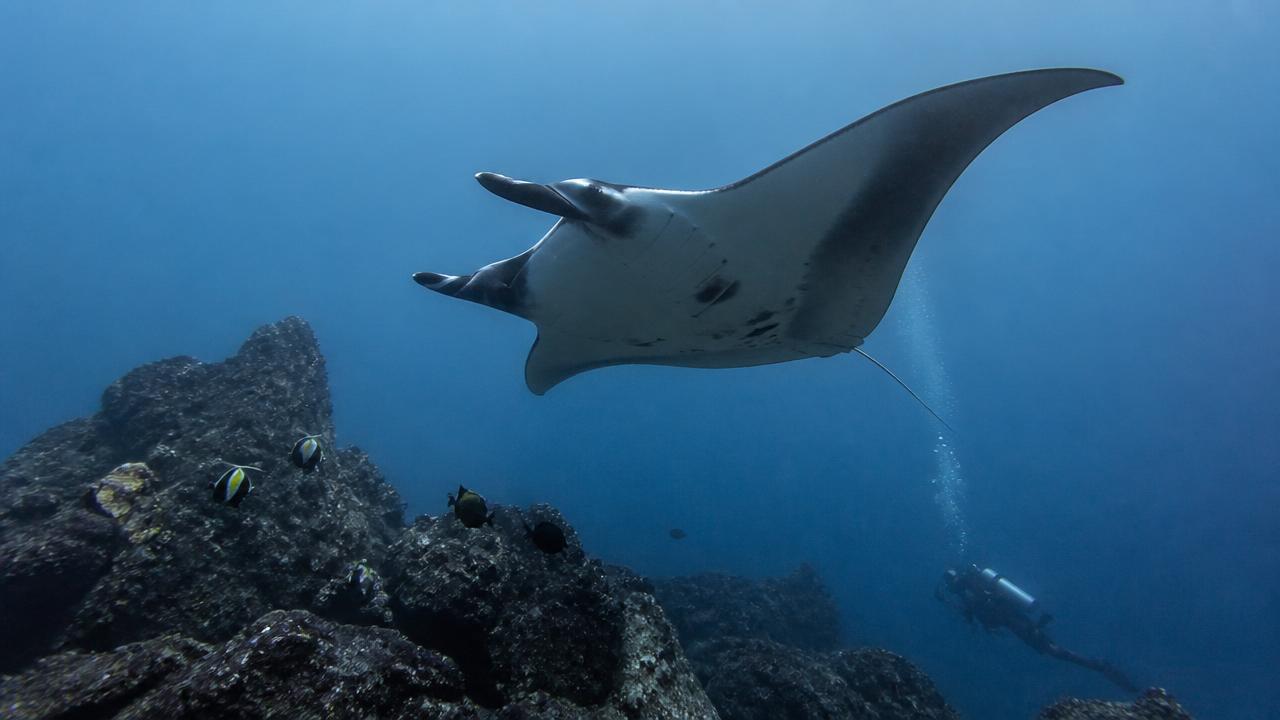
The Boiler and Cabo Pearce are globally important cleaning stations where mantas may circle calm divers. Patient groups can spend much of a dive watching mantas circle the same rock rather than chasing a brief pass. Divers who remain calm and stationary are often rewarded with repeated close passes as the mantas loop back to the station.
Giant oceanic mantas make Socorro one of the world's signature big-animal routes.
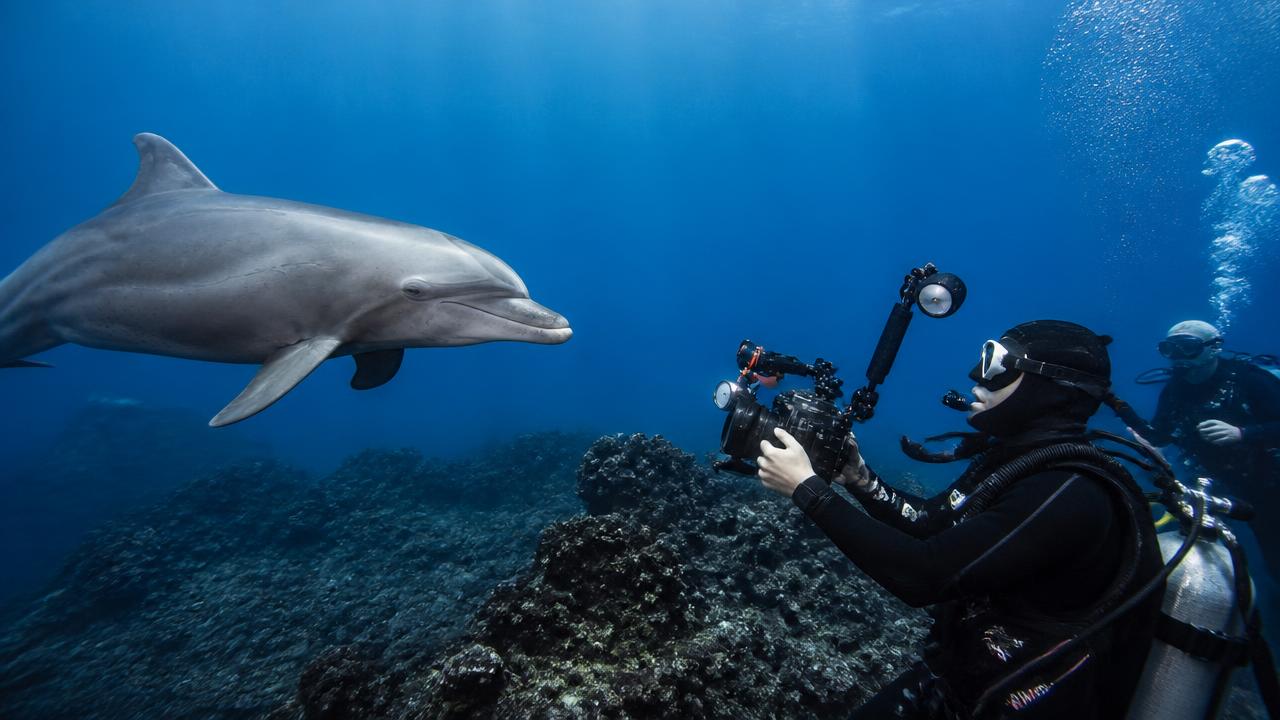
Resident dolphins are regularly encountered around Socorro and sometimes choose to interact with dive groups. Cabo Pearce is particularly associated with close bottlenose-dolphin encounters, although behaviour changes from day to day. These encounters are wild and unstructured; the dolphins decide whether to approach, making each sighting feel genuinely special.
Wild bottlenose dolphins are frequently encountered around the volcanic islands.
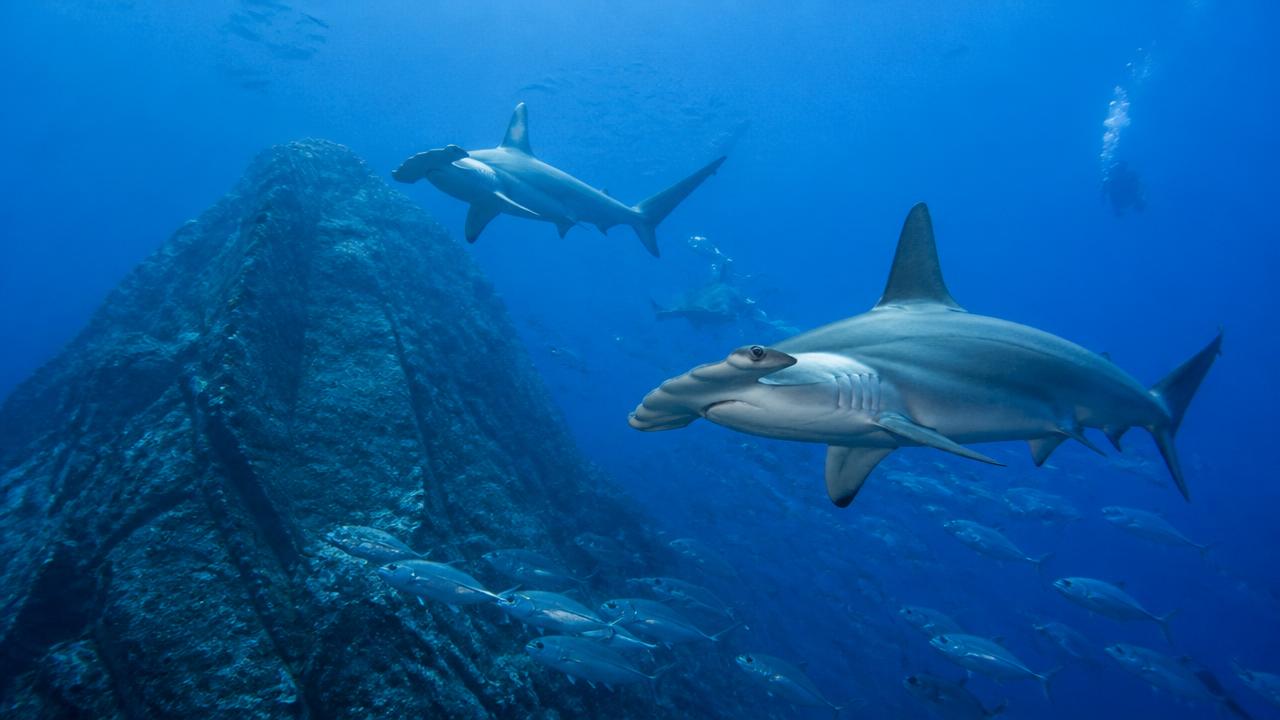
This isolated volcanic pinnacle concentrates tuna, jacks, sharks and schooling fish in open Pacific water. Different islands and water temperatures favour different sharks, so a full circuit gives better variety than a single-site trip. Roca Partida is often dived in blue water with no bottom reference, so excellent buoyancy and surface awareness are essential.
Roca Partida rises almost vertically from deep Pacific water.
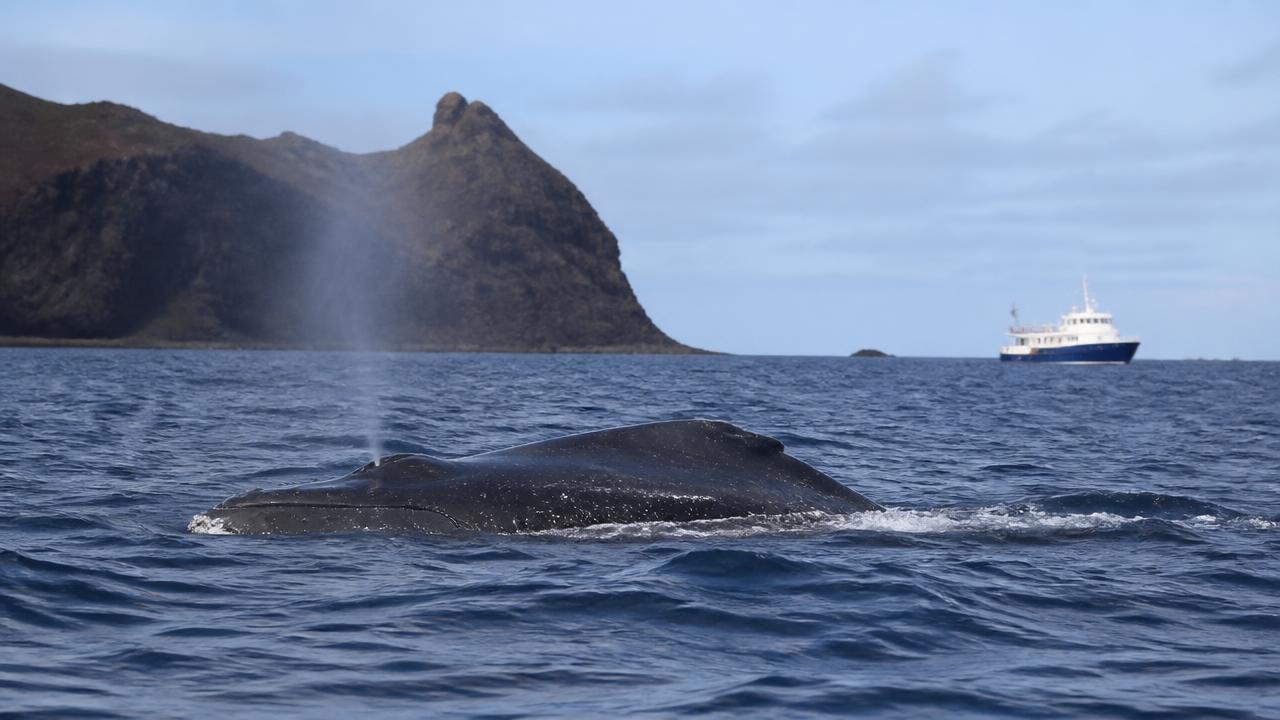
From January into March, migrating humpbacks add songs underwater and possible sightings between dives. Its sheer walls, shallow balconies and shark-filled blue water make it visually unlike the larger volcanic islands. Surface breaches and distant blows add drama to surface intervals, while underwater song can travel for kilometres on a quiet dive.
Humpbacks migrate through the archipelago during the winter season.
Choose the Socorro Islands itinerary that matches your experience, season and wildlife priorities. Route names can look similar while covering different ports, sites and sea conditions, so compare the actual daily programme rather than the headline alone.
San Benedicto manta cleaning stations, Socorro's Cabo Pearce and the walls of Roca Partida
negative entries, open-ocean swell, current and blue-water safety stops
November–May; warmest at the beginning and end of the season
The three core islands during the humpback migration, with underwater song and possible surface sightings
cooler water, exposed skiff entries and a 24-hour Pacific crossing
January–March; humpbacks migrate through the archipelago
The Boiler, El Cañón and Cabo Pearce with more time at the principal manta and dolphin sites
repeated blue-water dives, negative entries and no sheltered shore alternative
November–May; site order follows swell and recent sightings
Roca Partida's sheer walls plus San Benedicto ridges for Galápagos, hammerhead and silky sharks
exposed swell, current, blue-water ascents and demanding skiff pickups
November–May; shark mix and water temperature change through the season
Operator rules vary, but the practical guidance below helps you choose a route you can enjoy safely.
| Route | Certification | Logged dives | Conditions | Gear |
|---|---|---|---|---|
| Classic Revillagigedo | Advanced Open Water recommended | 30+ recommended | Open-ocean pinnacles at 18–35 m, 15–30 m visibility, moderate to strong current and frequent swell | DSMB; nitrox recommended where available |
| Socorro whale season | Advanced Open Water recommended | 30+ recommended | Cooler water (21–24 °C) around 18–35 m, 12–25 m visibility, plankton-rich with surge and current | DSMB; nitrox recommended where available |
| San Benedicto & Socorro focus | Advanced Open Water recommended | 30+ recommended | Exposed ridges and cleaning stations at 15–30 m, 15–30 m visibility, current varies with tide and moon | DSMB; nitrox recommended where available |
| Roca Partida & offshore pinnacles | Advanced Open Water recommended | 30+ recommended | Sheer walls into deep blue water, 20–35 m visibility, strong current and negative entries in swell | DSMB; nitrox recommended where available |
Socorro is a permit-controlled marine reserve, and wildlife, current and swell determine the daily plan. Treat named sites as an intended expedition outline rather than a guaranteed sequence. The operator's published minimum, check-dive assessment and safety rules always take precedence.
These are the sites that define a Socorro Islands liveaboard itinerary. Compare their topography, conditions and location against the daily programme rather than assuming every regional cruise visits the same places.
Socorro has a defined November-to-May expedition season. Water cools through winter while humpbacks arrive, then warms again in spring; manta and shark diving remains the central attraction throughout the operating window.
Nov–Dec
26–28 °CThe season opens with warmer water and returning liveaboards. Giant oceanic mantas, dolphins and several shark species are active, while the Pacific crossing can still carry long swell.
Jan–Mar
23–26 °CThe coolest period coincides with migrating humpback whales. Underwater song and surface sightings are possible; a 5–7 mm suit and hood suit repetitive diving.
Apr–May
24–27 °CLate-season water gradually warms, visibility can be excellent and manta, dolphin and shark encounters remain strong. May crossings become less predictable as summer weather approaches.
Jun–Oct
27–30 °CMost operators stop sailing because tropical storms, swell and the long exposed crossing reduce reliability. These months should not be treated as a normal Socorro liveaboard season.
Roca Partida, San Benedicto and Socorro Island are fully exposed to Pacific swell, and captains change the sequence according to wind and current. Expect negative entries, blue-water safety stops and skiff pickups; choose the month mainly by preferred water temperature and humpback interest rather than expecting calm seas.
Plan a Socorro Islands liveaboard around the encounters that matter most to you. The bars show stronger historical windows, not promises, and the location line explains where each animal is normally sought.
Peak bars show historically stronger encounter windows; shoulder months can still produce excellent dives, while wild-animal encounters are never guaranteed.
Socorro expeditions sail from the southern tip of Baja California. The airport is in San José del Cabo, while the boat and the long Pacific crossing begin in Cabo San Lucas.
Cabo San Lucas Marina
The standard embarkation point for Revillagigedo expeditions. Most boats board in the afternoon before starting the roughly 24-hour crossing to San Benedicto.
San José del Cabo Airport (SJD)
The main international gateway, around 45 km from Cabo San Lucas. Shared or private road transfers commonly take 45–75 minutes, depending on traffic.
San José del Cabo
A quieter pre-cruise base close to the airport. Staying here works well with a separate marina transfer, but confirm the operator's exact pickup area and time.
Cabo San Lucas
The most convenient overnight base before boarding, with the marina, hotels and dive shops close together. Arrive at least one day early because the boat cannot wait for a delayed flight.
There are no day boats or island airports in the Revillagigedo Archipelago. The outward and return Pacific crossings can be rough, and weather may change the island order, so protect both ends of the trip with hotel nights, suitable travel insurance and enough time before any onward flight.
Trade the mainland for wild Pacific horizons, giant mantas and shark-filled blue water. Compare current departures and find the expedition cabin that brings this remote archipelago within reach.
Socorro Islands liveaboards
Expedition pricing reflects long crossings, fuel and protected-area logistics.
A cabin, meals, tanks, weights, guides and the scheduled dives are normally included; exact inclusions vary by boat.
Budget separately for flights, transfers, marine-park or port fees, nitrox, rental gear, gratuities and any required hotel nights.
Prices move with season, cabin type, trip length and remaining availability. Open a departure for the final operator breakdown.
The calendar below shows how liveaboard prices shift month by month, so you can see exactly when your money goes furthest. We want every diver to get the best possible value, which is why we highlight the seasons that balance great conditions with the fairest rates.
$230–$430
per day liveaboard
Prices reflect typical costs for mid-range to premium options. Budget alternatives may be available.
Compare Socorro Islands with its country overview and other strong liveaboard regions.
Explore our expedition vessels and find your perfect trip to Socorro Islands