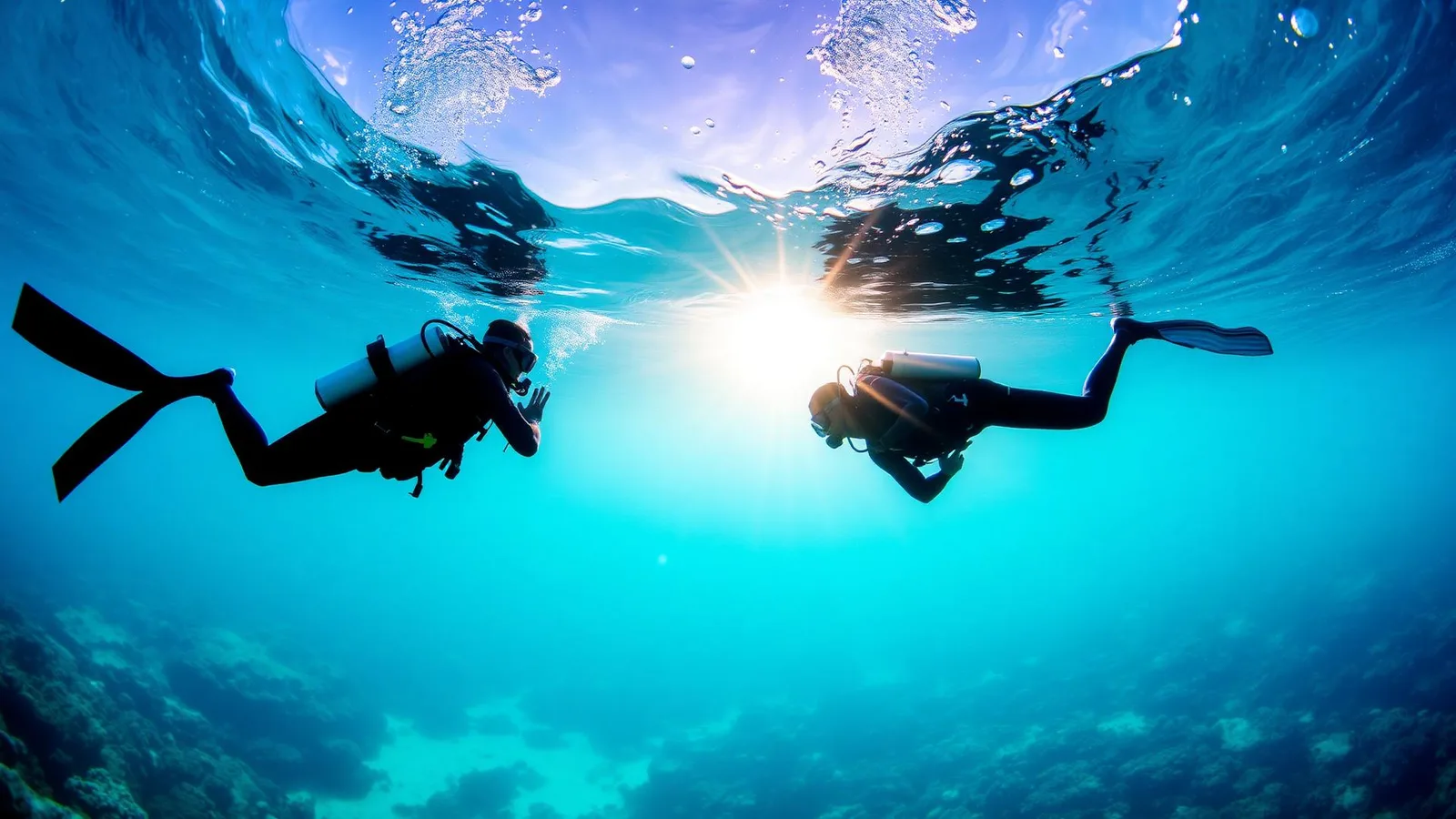
Diving comparisons
Marine animals, destinations, equipment, certifications, agencies and diving styles, compared side by side.
From marine animals and dive destinations to equipment, certifications, training agencies, diving styles and trip experiences: this is our comparison guide. Every guide puts two options side by side and explains the real differences in plain language, what they cost, who they suit and what you actually get. Use them as a shortcut to skip hours of forum reading and pick what fits your diving.
Marine Life
Manta Ray vs. Stingray: A Diver's Guide to Two Very Different Rays
Manta rays and stingrays are both rays, flattened, cartilaginous relatives of sharks, and that is roughly where the similarity ends. A manta is a filter-feeding giant of the open water with a wingspan that can exceed five metres and no stinging barb at all. A stingray is a bottom-dwelling ambush feeder, usually well under two metres across, that carries one or more venomous spines on its tail. For divers the practical difference is where and how you meet them. Mantas are the reason you hang motionless at a cleaning station in Raja Ampat or drift a channel in the Maldives. Stingrays are what you find when you slow down over a sand flat, look for the outline of a buried disc and wait for it to lift off in a cloud of silt. This guide breaks down the identification cues that actually work underwater, the behaviour to expect from each, and which liveaboard regions give you the best odds of a proper encounter with either.
Read comparisonBottlenose Dolphin vs Humpback Whale: Which Liveaboard Adventure is for You?
When planning a liveaboard adventure focused on marine megafauna, two iconic species often capture the imagination: the agile Bottlenose Dolphin and the majestic Humpback Whale. While both offer incredible underwater encounters, their behaviors, habitats, and the nature of interaction they provide differ significantly. Understanding these distinctions is key to choosing the perfect liveaboard itinerary that aligns with your diving and wildlife viewing aspirations. From the acrobatic displays of dolphins in warmer, shallower waters to the awe-inspiring presence of whales in nutrient-rich oceans, each promises an unforgettable experience. This comparison will delve into the specifics of encountering these magnificent creatures on a liveaboard, highlighting the best seasons, typical interactions, and the general logistics involved. Whether you dream of swimming alongside playful pods or witnessing the powerful breaches of a leviathan, Blue Rides is here to guide you through the nuances of each encounter. Prepare to discover which marine marvel truly calls to your adventurous spirit.
Read comparisonDugong vs. Green Turtle: Your Ultimate Liveaboard Encounter
As expert dive-travel editors at Blue Rides, we know you're always seeking extraordinary marine life encounters. Two of the ocean's most captivating, yet distinctly different, megafauna often top divers' wish lists: the elusive dugong and the graceful green sea turtle. While both offer unforgettable underwater interactions, their habitats, behaviors, and the dive experiences required to find them vary significantly. This side-by-side comparison will equip you with all the factual details you need to decide which incredible creature aligns best with your next liveaboard adventure. From their preferred ecosystems and dietary habits to the best seasons and dive conditions for encounters, we'll break down everything you need to know. Understanding these differences is key to planning a successful and rewarding dive trip. Whether you're drawn to the serene, herbivorous dugong or the majestic, long-lived green turtle, let's explore how to best experience these marine wonders from the comfort of a premium liveaboard.
Read comparisonHawksbill Turtle vs. Leatherback Turtle: A Diver's Guide
As a liveaboard diver, encountering sea turtles is often a highlight, but not all turtles are created equal. The Hawksbill and Leatherback turtles, while both majestic marine reptiles, offer stark contrasts in appearance, behavior, and the types of dive environments where you're likely to spot them. Understanding these differences can enrich your dive experience and help you appreciate the incredible biodiversity of our oceans. Hawksbills are the quintessential coral reef inhabitants, renowned for their intricate, overlapping scutes and a diet focused on sponges. They are typically found in shallower, vibrant reef ecosystems, making them a common and delightful sight for many divers. Their smaller size and agility allow them to navigate complex reef structures with ease, often providing extended viewing opportunities. In contrast, the Leatherback turtle is a true ocean wanderer, the largest of all sea turtles, and uniquely adapted to cold, deep waters. Their soft, leathery carapace and specialized diet of jellyfish mean they frequent pelagic environments, often far from coastal reefs. Spotting a Leatherback is a rare and awe-inspiring event, a testament to the vastness and mystery of the open ocean. This comparison will delve into their distinct characteristics, habitats, and conservation statuses, arming you with the knowledge to better appreciate these incredible creatures on your next Blue Rides liveaboard adventure.
Read comparisonLeatherback Turtle vs. Loggerhead Turtle: A Liveaboard Diver's Guide
For liveaboard divers, encountering sea turtles is often a highlight, and two of the most iconic species are the Leatherback and Loggerhead. While both are magnificent marine reptiles, they possess distinct characteristics, behaviors, and habitats that make each encounter unique. Understanding these differences can enhance your appreciation and improve your chances of spotting them on your next dive adventure. Leatherbacks, the largest of all sea turtles, are true ocean wanderers, known for their unique leathery shell and incredible deep-diving abilities. Loggerheads, on the other hand, are recognized by their large heads and powerful jaws, perfectly adapted for crushing mollusk shells. Their geographical distributions, dietary preferences, and even their nesting habits differ significantly, offering varied opportunities for observation depending on your chosen liveaboard destination. This side-by-side comparison will delve into the specifics of these two fascinating species, providing essential facts for liveaboard enthusiasts. From identification tips to their preferred environments, we'll equip you with the knowledge to distinguish between them and understand where your best chances lie for a memorable underwater encounter.
Read comparisonGreen Turtle vs. Loggerhead Turtle: A Liveaboard Diver's Guide
As a liveaboard diver, encountering marine turtles is often a highlight of any trip. Among the most commonly sighted and universally beloved species are the Green Turtle and the Loggerhead Turtle. While both are magnificent reptiles, they possess distinct characteristics that differentiate them, from their physical appearance and dietary preferences to their preferred habitats and behaviors. Understanding these differences not only enriches your underwater observations but also helps you appreciate the unique ecological roles each species plays within their marine environments. From the sleek, herbivorous Green Turtle grazing on seagrass beds to the powerful, carnivorous Loggerhead crushing shellfish, their lives offer a fascinating glimpse into the ocean's intricate food web. Knowing what to look for can transform a casual sighting into a truly informed and memorable encounter. This guide, designed for Blue Rides' discerning liveaboard guests, will provide a side-by-side comparison, highlighting the key features that distinguish these two iconic turtle species. We'll delve into their identifying marks, typical behaviors, and the best liveaboard destinations where you're most likely to observe them in their natural glory.
Read comparisonSailfish vs Mako Shark: Which Pelagic Predator Will You Encounter on Your Liveaboard?
As expert dive-travel editors at Blue Rides, we understand the thrill of encountering apex predators in their natural habitat. For many liveaboard divers, the dream encounter involves powerful, fast-moving pelagic species. Two such magnificent creatures often spark intense interest: the Sailfish and the Mako Shark. While both are renowned for their speed and predatory prowess, they offer distinctly different liveaboard experiences. This in-depth comparison will dissect the key characteristics, habitats, and encounter opportunities for both Sailfish and Mako Sharks. Understanding these differences is crucial for planning your next liveaboard adventure, ensuring you align your expectations with the realities of diving with these incredible marine animals. From their unique hunting strategies to their preferred environments, we'll provide the factual insights you need to make an informed decision. Whether you're drawn to the acrobatic displays of a Sailfish or the raw power of a Mako Shark, this guide will help you determine which of these pelagic giants best suits your diving aspirations.
Read comparisonSailfish vs. Blue Marlin: A Deep Dive into Pelagic Encounters
For the avid diver and big game enthusiast, the allure of encountering powerful pelagic species like the Sailfish and Blue Marlin is undeniable. These apex predators represent the pinnacle of ocean wildlife, known for their incredible speed, size, and elusive nature. While both are highly sought-after, understanding their distinct behaviors, habitats, and the best times and places to encounter them is crucial for planning your ultimate liveaboard adventure. This comprehensive comparison by Blue Rides delves into the specific marine life experiences associated with pursuing Sailfish and Blue Marlin. We'll explore their preferred environments, typical encounter scenarios, and the broader ecosystems they inhabit, providing you with the factual insights needed to choose the liveaboard trip that aligns perfectly with your marine life aspirations. Whether you dream of witnessing a bait ball attacked by Sailfish or the majestic presence of a Blue Marlin, this guide will illuminate the path to your next unforgettable underwater journey.
Read comparisonMola Mola vs. Sperm Whale: A Deep Dive into Pelagic Giants
When planning a liveaboard adventure, encountering iconic marine life is often at the top of a diver's wish list. Two truly magnificent, yet vastly different, pelagic species that capture the imagination are the Mola Mola, or Ocean Sunfish, and the formidable Sperm Whale. While both are denizens of the deep, their habitats, behaviors, and the nature of encounters vary significantly, offering distinct experiences for liveaboard guests. Understanding these differences is key to choosing the right itinerary and preparing for your dream dive. The Mola Mola, a bizarre and gentle giant, is often sought after for its unique appearance and the thrill of seeing such an unusual creature. In contrast, the Sperm Whale, a symbol of the ocean's raw power and intelligence, represents a rare and awe-inspiring encounter, typically involving snorkeling rather than scuba. This comparison will break down the essential aspects of encountering these two pelagic titans, from their typical environments and the best times to see them, to the specific challenges and rewards each presents for liveaboard guests. Whether you're drawn to the enigmatic sunfish or the majestic whale, this guide will help you navigate your choices.
Read comparisonMola Mola vs. Oceanic Manta Ray: Your Ultimate Liveaboard Guide
As expert dive-travel editors at Blue Rides, we know that encountering iconic marine life is often the highlight of any liveaboard trip. Two of the most sought-after giants of the ocean are the enigmatic Mola Mola (ocean sunfish) and the majestic Oceanic Manta Ray. While both offer incredible underwater experiences, they present distinct diving scenarios, preferred habitats, and behavioral patterns that divers should understand before planning their next adventure. This comprehensive guide provides a factual, side-by-side comparison to help you decide which of these magnificent creatures you'd rather seek out on your next liveaboard. From their unique biology and preferred environments to the best times and locations to encounter them, we'll equip you with the knowledge to make an informed choice. Understanding their differences is key to maximizing your chances of a truly unforgettable dive experience.
Read comparisonPilot Whale vs. Sperm Whale: A Liveaboard Diver's Guide
For the discerning liveaboard diver, encountering large marine mammals is often the pinnacle of an underwater adventure. Among the ocean's most charismatic megafauna are the Pilot Whale and the Sperm Whale, two species that, while both cetaceans, offer distinctly different encounter experiences and require varying approaches in terms of liveaboard planning. Pilot Whales, known for their social pods and curious nature, often present opportunities for close interactions, particularly in certain regions. They are toothed whales, though often mistaken for larger dolphins due to their sleek, dark appearance and active surface behaviors. Sperm Whales, on the other hand, are the largest toothed predators on Earth, renowned for their immense size, unique forehead, and incredible deep-diving capabilities. Their encounters are often more fleeting, but no less awe-inspiring. This guide will delve into the factual differences between these two fascinating species, highlighting the best liveaboard destinations, optimal seasons, and the specific considerations for divers hoping to witness these giants of the deep. Understanding these distinctions is crucial for planning your next Blue Rides liveaboard, ensuring you choose an itinerary that aligns with your marine mammal encounter aspirations.
Read comparisonBottlenose Dolphin vs. Spinner Dolphin: Your Liveaboard Encounter Guide
As expert dive-travel editors at Blue Rides, we understand your desire for unforgettable marine encounters. Among the ocean's most charismatic creatures, dolphins consistently top the list for many divers and snorkelers. While both Bottlenose and Spinner Dolphins are intelligent, social, and captivating, they offer distinct experiences for those hoping to witness them in their natural habitat. This side-by-side comparison delves into the nuances of these two fascinating species, from their physical characteristics and behaviors to their preferred environments. Understanding these differences is key to optimizing your chances of a truly magical interaction during your next liveaboard adventure. Whether you dream of playful surface acrobatics or a more serene underwater observation, knowing what sets these dolphins apart will help you plan your ideal trip. We'll explore where and when you're most likely to encounter each species, what makes their interactions unique, and how liveaboards can provide unparalleled access to these incredible marine mammals. Get ready to dive deep into the world of Bottlenose and Spinner Dolphins.
Read comparisonOrca vs. Bottlenose Dolphin: A Liveaboard Encounter Guide
For many liveaboard enthusiasts, encountering marine megafauna is the ultimate goal. When it comes to intelligent, social, and captivating cetaceans, two species often top the wish list: the majestic Orca (Orcinus orca) and the charismatic Bottlenose Dolphin (Tursiops truncatus). While both are highly intelligent marine mammals, they occupy distinct ecological niches and offer very different liveaboard experiences. Understanding these differences is key to planning your perfect underwater adventure. Are you dreaming of witnessing a powerful apex predator in cooler, nutrient-rich waters, or do you envision playful interactions with agile, acrobatic dolphins in warmer, clearer seas? This guide will break down the essential characteristics of each, helping you decide which incredible creature aligns best with your liveaboard aspirations. From their physical attributes and social structures to their preferred habitats and the types of encounters you can expect, we'll provide a thorough side-by-side comparison. Blue Rides is here to help you navigate the options and book a liveaboard that brings you face-to-face with the marine life you've always dreamed of.
Read comparisonOrca vs. Blue Whale: Which Liveaboard Encounter is For You?
As expert dive-travel editors at Blue Rides, we understand the allure of encountering the ocean's most magnificent creatures. Among the titans of the deep, the Orca (Orcinus orca) and the Blue Whale (Balaenoptera musculus) stand out as aspirational sightings for any marine enthusiast. While both are apex predators in their respective niches, their behaviors, habitats, and the logistics of observing them differ significantly. Understanding these distinctions is crucial for planning your ultimate liveaboard adventure. Orcas, often mislabeled as 'killer whales,' are actually the largest members of the dolphin family, renowned for their intelligence, complex social structures, and diverse hunting strategies. Blue Whales, on the other hand, are the largest animals on Earth, filter-feeding giants that traverse vast oceanic distances. Your choice between seeking out these incredible species will depend heavily on your preferred environment, desired interaction, and willingness to travel to remote, often challenging, locations. This side-by-side comparison will equip you with the factual insights needed to decide whether an Orca or Blue Whale liveaboard encounter aligns best with your dive and travel aspirations. We'll delve into everything from prime viewing seasons and typical encounter styles to the specific liveaboard experiences Blue Rides offers for each.
Read comparisonSperm Whale vs. Blue Whale: Your Ultimate Liveaboard Encounter
For the discerning dive traveler, encountering the ocean's giants is often the pinnacle of a liveaboard experience. Two of the most iconic and awe-inspiring cetaceans are the Sperm Whale, a deep-diving predator with the largest brain on Earth, and the Blue Whale, the largest animal to have ever lived. While both are magnificent, their behaviors, habitats, and the nature of encounters they offer differ significantly, making each a unique target for your next underwater adventure. Understanding these distinctions is crucial when planning a liveaboard trip focused on whale encounters. Do you seek the thrill of a deep-sea hunter, often found in nutrient-rich, cooler waters, or the humbling presence of a filter-feeding behemoth, typically sighted in areas of high productivity? Your choice will influence not only the destination but also the best time to travel, the type of liveaboard vessel, and the overall experience you can expect. This comprehensive guide provides a side-by-side comparison, delving into their biology, behavior, and the practicalities of encountering them on a liveaboard. We'll help you navigate the options to ensure your dream whale encounter becomes a reality.
Read comparisonSperm Whale vs. Orca: Which Apex Predator Will You Encounter on a Liveaboard?
For the discerning dive traveler, encountering apex marine predators in their natural habitat is often the pinnacle of a liveaboard experience. Two of the ocean's most iconic and powerful hunters are the Sperm Whale (Physeter macrocephalus) and the Orca (Orcinus orca), each offering a uniquely thrilling and awe-inspiring interaction. While both are intelligent, social marine mammals, their biology, hunting strategies, and preferred environments differ significantly. Understanding these distinctions is crucial for planning your dream liveaboard adventure, whether you're drawn to the deep-diving majesty of the Sperm Whale or the coordinated hunting prowess of the Orca. This comprehensive comparison will delve into the specifics of each species, outlining the best liveaboard destinations, optimal seasons, required experience levels, and what you can expect from an encounter. Prepare to discover which of these incredible creatures aligns best with your next unforgettable Blue Rides journey.
Read comparisonHumpback Whale vs. Antarctic Minke Whale: A Liveaboard Encounter Guide
For liveaboard enthusiasts and marine life aficionados, encountering whales in their natural habitat is often a bucket-list experience. Two magnificent species that frequently capture the imagination are the Humpback Whale and the Antarctic Minke Whale. While both are baleen whales, offering incredible opportunities for observation, they present distinct characteristics and liveaboard experiences. This comprehensive guide from Blue Rides delves into the specifics of each species, providing a side-by-side comparison to help you understand their differences in size, behavior, habitat, and the best ways to encounter them on a liveaboard trip. Whether you're drawn to the acrobatic displays of Humpbacks or the elusive grace of Minkes, understanding their unique traits will enhance your planning. We'll cover everything from their physical attributes and migratory patterns to the prime locations and seasons for liveaboard expeditions, ensuring you're well-equipped to choose your next unforgettable underwater adventure.
Read comparisonHumpback Whale vs. Southern Right Whale: Your Liveaboard Encounter
As an expert dive-travel editor for Blue Rides, I'm often asked about the best whale encounters. Two majestic leviathans frequently top divers' wish lists: the acrobatic Humpback Whale and the robust Southern Right Whale. While both offer incredible experiences, understanding their distinct characteristics, behaviors, and prime viewing locations is crucial for planning your ultimate liveaboard adventure. This side-by-side comparison will delve into the factual differences between these magnificent cetaceans, from their physical attributes and migratory patterns to their typical interactions with humans and the best liveaboard destinations to witness them. Whether you're dreaming of breaching Humpbacks in Tonga or curious Southern Rights off Argentina, we'll help you discern which encounter aligns best with your diving aspirations. Prepare to explore the nuances that define these iconic species, ensuring you make an informed decision for your next unforgettable journey beneath the waves. Let's dive into the details to help you choose your perfect whale-watching liveaboard.
Read comparisonHumpback Whale vs. Gray Whale: Which Liveaboard Expedition is for You?
Embarking on a liveaboard journey to witness the world's largest mammals is an unparalleled experience. When it comes to iconic baleen whales, the Humpback and the Gray Whale often top the list for divers and wildlife enthusiasts. While both offer incredible encounters, their behaviors, habitats, and the nature of the liveaboard trips to see them differ significantly. Understanding these distinctions is key to choosing the perfect expedition for your interests and experience level. Are you drawn to the acrobatic displays and haunting songs of the Humpback, or the intimate, inquisitive nature of the Gray Whale in its calving lagoons? This detailed comparison will guide you through the unique aspects of each whale, the best times and places to encounter them, and what to expect from a liveaboard experience dedicated to these magnificent creatures. We'll delve into everything from their migratory patterns and feeding habits to the specific liveaboard offerings, helping you make an informed decision for your next unforgettable marine adventure.
Read comparisonHumpback Whale vs. Orca: Which Liveaboard Encounter is For You?
As a diver or marine enthusiast, the dream of encountering majestic cetaceans in their natural habitat often tops the bucket list. Two of the ocean's most iconic and awe-inspiring predators, the Humpback Whale and the Orca, offer vastly different yet equally unforgettable liveaboard experiences. While both are powerful marine mammals, their behaviors, habitats, and the nature of encounters vary significantly, shaping the ideal liveaboard trip for different preferences. Choosing between a Humpback Whale or an Orca liveaboard isn't just about picking a species; it's about selecting an adventure that aligns with your desired level of interaction, the type of environment you wish to explore, and the specific behaviors you hope to witness. From the acrobatic displays of Humpbacks in tropical waters to the strategic hunting prowess of Orcas in colder, nutrient-rich seas, each offers a unique window into the marine world. This comprehensive guide from Blue Rides will break down the key distinctions, helping you decide which incredible journey best suits your dive travel aspirations.
Read comparisonHumpback Whale vs. Sperm Whale: A Liveaboard Encounter Guide
For any marine enthusiast, encountering a whale in its natural habitat is an unparalleled experience. Two of the ocean's most iconic leviathans, the Humpback Whale and the Sperm Whale, offer distinct and equally awe-inspiring opportunities for liveaboard adventurers. While both are colossal mammals, their behaviors, habitats, and the logistics of observing them differ significantly, making each encounter unique. This guide delves into a side-by-side comparison, providing you with the factual insights needed to choose your next unforgettable liveaboard journey. From the acrobatic displays of the Humpback to the deep-diving mystery of the Sperm Whale, we'll explore their characteristics, the best times and locations for encounters, and what you can expect from a Blue Rides liveaboard experience tailored to these magnificent creatures. Whether you dream of witnessing a Humpback breach or listening to the unique clicks of a Sperm Whale, understanding these differences will help you plan the ultimate marine wildlife adventure.
Read comparisonMobula Ray vs. Eagle Ray: Your Ultimate Liveaboard Guide
As expert dive-travel editors for Blue Rides, we understand your passion for encountering magnificent marine life. Among the most sought-after experiences are close-up interactions with the ocean's elegant flyers: Mobula Rays and Eagle Rays. While both are cartilaginous fish belonging to the order Myliobatiformes, they possess distinct characteristics, behaviors, and preferred habitats that shape the liveaboard experiences designed to find them. Often mistaken for each other, these pelagic beauties offer unique thrill to divers. Mobula Rays, known for their acrobatic breaches and massive schooling aggregations, present a spectacle unlike any other. Eagle Rays, with their distinct spotted patterns and graceful, solitary glides, offer a more intimate, serene encounter. Understanding these differences is key to choosing the liveaboard adventure that best aligns with your diving aspirations. This comprehensive guide will delve into a side-by-side comparison, highlighting their physical attributes, behaviors, and the prime locations and seasons to witness them. We'll equip you with the knowledge to discern between these incredible creatures and plan your next unforgettable Blue Rides liveaboard journey.
Read comparisonEagle Ray vs. Stingray: A Diver's Guide to Distinguishing These Majestic Rays
As an expert dive-travel editor for Blue Rides, I'm often asked about the fascinating marine life divers can encounter on our premium liveaboard trips. Among the most frequently confused, yet distinctly different, creatures are the Eagle Ray and the Stingray. While both belong to the superorder Batoidea, a group of cartilaginous fish related to sharks, their appearances, behaviors, and preferred habitats offer unique experiences for underwater enthusiasts. Understanding the nuances between these two magnificent rays not only enriches your dive experience but also helps you appreciate the incredible biodiversity of our oceans. From their distinct body shapes and swimming styles to their feeding habits and typical environments, Eagle Rays and Stingrays present different photographic opportunities and behavioral observations. This comprehensive guide will break down the key differences, helping you confidently identify each species on your next liveaboard adventure. Whether you're a seasoned diver or just starting your underwater journey, knowing what to look for will undoubtedly enhance your appreciation for these graceful denizens of the deep.
Read comparisonOceanic Manta Ray vs. Mobula Ray: A Diver's Guide
As an expert dive-travel editor for Blue Rides, we often get asked about the magnificent manta and mobula rays that grace our oceans. While both are cartilaginous fish belonging to the family Mobulidae, they possess distinct characteristics and inhabit different niches, making each encounter unique and unforgettable for divers. Understanding these differences is crucial for planning your ideal liveaboard trip. Whether you dream of gliding alongside the colossal Oceanic Manta Ray or witnessing the breathtaking synchronized ballets of Mobula Rays, knowing what sets them apart will help you target the perfect destination and time of year. This comparison will delve into their physical attributes, behaviors, habitats, and the best liveaboard experiences to increase your chances of a truly epic encounter. Prepare to explore the fascinating world of these gentle giants and their smaller, equally captivating cousins, ensuring your next Blue Rides liveaboard adventure is tailored to your specific ray-encounter aspirations.
Read comparisonBull Shark vs. Oceanic Whitetip: A Liveaboard Diver's Guide
For many liveaboard divers, encountering large pelagic sharks is the ultimate thrill. Among the most sought-after are the Bull Shark and the Oceanic Whitetip Shark, two formidable apex predators with distinct characteristics and preferred habitats. While both are powerful and impressive, their behaviors, ideal diving conditions, and the destinations where you're most likely to encounter them differ significantly. Understanding these differences is crucial for planning your next liveaboard adventure. Are you drawn to the robust, often coastal Bull Shark, known for its powerful build and adaptability to fresh and saltwater, or the sleek, open-ocean wanderer, the Oceanic Whitetip, famous for its inquisitive nature and distinctive white-tipped fins? This guide will break down everything you need to know to decide which shark encounter is right for your next Blue Rides expedition. We'll delve into their unique traits, preferred environments, and the best liveaboard itineraries to maximize your chances of a memorable and safe interaction with these incredible marine creatures.
Read comparisonTiger Shark vs. Orca: A Liveaboard Diver's Ultimate Showdown
For the intrepid liveaboard diver, few encounters rival the thrill of coming face-to-face with an apex predator. The ocean's top-tier hunters, Tiger Sharks and Orcas, offer vastly different yet equally profound experiences. While both command immense respect and awe, their habitats, behaviors, and the logistics of encountering them via liveaboard are distinct. Tiger Sharks, often dubbed the 'garbage cans of the sea' due to their indiscriminate diet, are solitary, opportunistic hunters found in tropical and subtropical waters worldwide. Their distinctive striped patterns and powerful, deliberate movements make them a captivating subject for underwater photographers and thrill-seekers alike. Liveaboard trips specifically target known aggregation sites, offering reliable opportunities for observation, often in baited situations. Orcas, or Killer Whales, are the ocean's largest dolphins, renowned for their complex social structures, sophisticated hunting techniques, and immense intelligence. Found in all oceans, from polar to tropical, their migratory patterns and often elusive nature make encounters less predictable but incredibly rewarding. Liveaboard experiences focusing on Orcas often involve surface viewing and snorkeling, with diving opportunities more opportunistic and dependent on local regulations and pod behavior.
Read comparisonTiger Shark vs. Mako Shark: Apex Predators of the Ocean
For avid divers and marine enthusiasts, encountering apex predators in their natural habitat is often a pinnacle experience. The ocean's top hunters, the Tiger Shark (Galeocerdo cuvier) and the Mako Shark (Isurus oxyrinchus), offer distinctly different, yet equally thrilling, liveaboard encounters. While both are powerful and majestic, understanding their unique characteristics, behaviors, and preferred environments is crucial for planning your dream dive trip. Tiger Sharks, known for their distinctive stripes and broad, blunt snouts, are formidable, opportunistic hunters found in tropical and subtropical waters. They are often associated with reef systems and coastal areas, making them accessible to divers in specific regions. Mako Sharks, on the other hand, are the ocean's speed demons, recognized for their sleek, torpedo-shaped bodies and incredible agility. They are pelagic, preferring open ocean environments, which presents a different set of challenges and rewards for those seeking an encounter. This comparison will delve into the specifics of these magnificent creatures, helping you decide which shark encounter aligns best with your diving aspirations and experience. From their physical attributes and hunting strategies to the best liveaboard destinations and dive conditions, we'll provide a comprehensive overview to guide your next Blue Rides adventure.
Read comparisonTiger Shark vs. Oceanic Whitetip Shark: Your Liveaboard Dive Guide
For many liveaboard divers, the allure of encountering large pelagic sharks is a primary motivator. Among the most sought-after are the formidable Tiger Shark and the enigmatic Oceanic Whitetip Shark. While both are apex predators of tropical and subtropical waters, they offer distinctly different diving experiences, habitats, and behavioral patterns. Understanding these differences is key to planning your ultimate shark diving liveaboard adventure. This comparison will delve into their unique characteristics, preferred environments, and the best liveaboard destinations where you can encounter these magnificent creatures, helping you decide which shark experience aligns best with your diving aspirations. From the shallow, reef-associated encounters with Tiger Sharks in the Bahamas to the deep, open-ocean thrill of Oceanic Whitetips in the Red Sea or Pacific, each species promises an unforgettable underwater interaction. Let's explore what sets these two iconic sharks apart.
Read comparisonTiger Shark vs. Bull Shark: Which Apex Predator Will You Encounter on Your Liveaboard?
As expert dive-travel editors at Blue Rides, we understand your quest for thrilling encounters with the ocean's most formidable creatures. The Tiger Shark (Galeocerdo cuvier) and the Bull Shark (Carcharhinus leucas) frequently top divers' wish lists, renowned for their power, presence, and often, their challenging habitats. Both are apex predators, but they offer distinctly different liveaboard experiences. This in-depth comparison will dissect their key characteristics, preferred environments, and the best liveaboard itineraries to maximize your chances of a truly unforgettable encounter. While both demand respect and offer incredible photographic opportunities, understanding their nuances is crucial for planning your next dive adventure. Let's dive into the details to help you decide which magnificent shark will be the star of your next underwater story.
Read comparisonGreat Hammerhead vs. Galapagos Shark: Which Liveaboard Dive is for You?
When planning a liveaboard dive adventure focused on iconic shark encounters, two formidable predators frequently top divers' wish lists: the majestic Great Hammerhead and the powerful Galapagos Shark. Both offer thrilling underwater experiences, but they inhabit different environments and present distinct diving challenges and rewards. Understanding these differences is key to choosing the perfect liveaboard itinerary for your shark-centric ambitions. Great Hammerheads, with their unmistakable cephalofoil heads, are often sought after for their sheer size and unique appearance. They are typically found in specific, often remote, locations during particular seasons, requiring dedicated expeditions to witness their impressive presence. These dives can be exhilarating, often involving strong currents and deeper profiles to maximize encounter opportunities. Conversely, Galapagos Sharks, while perhaps less visually dramatic than their hammerhead counterparts, are robust and curious apex predators commonly found in tropical and subtropical waters, particularly around oceanic islands. They are known for their bold behavior and can offer consistent, close-up encounters, often in shallower, more accessible dive sites. This comparison will help you discern which of these magnificent sharks aligns best with your diving preferences and experience level.
Read comparisonGreat Hammerhead vs Thresher Shark: Liveaboard Encounters
For avid divers, encountering large pelagic sharks is often the pinnacle of a liveaboard adventure. Among the most sought-after species are the majestic Great Hammerhead and the elegant Thresher Shark. While both offer unforgettable underwater experiences, they present distinct characteristics, behaviors, and require different approaches for successful sightings. Understanding these differences is crucial for planning your next shark-centric liveaboard trip. From their unique physiologies – the hammerhead's distinctive cephalofoil versus the thresher's elongated caudal fin – to their preferred habitats and hunting strategies, each shark promises a unique interaction. This comparison will delve into their key attributes, helping you decide which incredible predator tops your must-see list. Whether you dream of witnessing a hammerhead aggregation or observing a thresher's whip-like hunting technique, Blue Rides is here to guide you to the ultimate liveaboard experience tailored to your shark diving ambitions.
Read comparisonGreat Hammerhead vs. Scalloped Hammerhead: Your Liveaboard Dive Guide
For many divers, encountering a hammerhead shark is a pinnacle experience. These iconic predators, with their distinctive cephalofoil heads, are a testament to the ocean's incredible biodiversity. However, not all hammerheads are created equal, especially when it comes to planning a liveaboard adventure. The two most sought-after species for divers are the Great Hammerhead (Sphyrna mokarran) and the Scalloped Hammerhead (Sphyrna lewini), each offering unique challenges and rewards. Understanding the key differences between these magnificent creatures – from their preferred habitats and migratory patterns to their size and behavior – is crucial for maximizing your chances of a successful encounter. This comparison will delve into the specifics of each species, helping you decide which hammerhead experience aligns best with your diving aspirations and skill level. Whether you dream of massive solitary giants or schooling spectacles, Blue Rides is here to guide you to your perfect hammerhead liveaboard.
Read comparisonWhale Shark vs. Great Hammerhead: Which Liveaboard Adventure is For You?
When planning a premium liveaboard diving experience, encountering iconic pelagic species often tops the wish list. Two of the most sought-after giants of the ocean are the majestic Whale Shark and the enigmatic Great Hammerhead. While both offer unforgettable underwater encounters, they present distinct diving experiences, requiring different considerations for your trip. Whale Sharks, the largest fish in the sea, are filter feeders known for their gentle nature and impressive size. Encounters typically involve snorkeling or slow-paced diving alongside these magnificent creatures, often in nutrient-rich waters. Great Hammerheads, on the other hand, are powerful predators, instantly recognizable by their unique cephalofoil head, and are usually sought out by more experienced divers in specific locations where their schooling or hunting behaviors can be observed. This side-by-side comparison by Blue Rides will delve into the specifics of diving with Whale Sharks versus Great Hammerheads, examining everything from prime locations and best seasons to required experience levels and typical liveaboard trip characteristics. Understanding these differences will help you choose the ultimate liveaboard adventure that aligns with your diving aspirations and skill set.
Read comparisonWhale Shark vs. Sperm Whale: Which Giant Will You Encounter on a Liveaboard?
As an expert dive-travel editor for Blue Rides, I often help divers navigate the incredible diversity of marine life encounters available on liveaboard trips. Two of the ocean's most iconic giants, the whale shark and the sperm whale, offer vastly different yet equally awe-inspiring experiences. While both are massive, their biology, behavior, and the nature of encounters with them are fundamentally distinct. Whale sharks, the largest fish in the sea, are gentle filter feeders, known for their docile nature and often predictable migratory patterns. They are a primary draw for many dive expeditions, offering opportunities for close, often shallow-water interactions in tropical and subtropical regions. Their sheer size combined with their peaceful demeanor makes them a bucket-list encounter for divers of all experience levels. Sperm whales, on the other hand, are the largest toothed predators and the deepest diving mammals. Encounters with these enigmatic leviathans are far less common and typically involve freediving or snorkeling from boats, as their deep-diving habits make scuba encounters rare. They represent a more elusive and challenging, yet incredibly rewarding, wildlife experience, often sought by seasoned ocean enthusiasts looking for a truly unique interaction with a highly intelligent and powerful marine mammal.
Read comparisonWhale Shark vs Mola Mola: Your Liveaboard Dive Guide
As expert dive-travel editors at Blue Rides, we're often asked about the ultimate marine encounters. Two of the ocean's most iconic, yet vastly different, gentle giants frequently top divers' wish lists: the majestic Whale Shark and the enigmatic Mola Mola (Ocean Sunfish). Both offer unforgettable underwater experiences, but their habitats, behaviors, and the conditions required to encounter them differ significantly. Whale Sharks, the largest fish in the sea, are filter feeders renowned for their docile nature and impressive size. Encounters with these gentle giants often involve snorkeling or slow-paced diving in warm, nutrient-rich waters. Mola Molas, on the other hand, are the heaviest bony fish, known for their peculiar disc-like shape and sun-bathing habits. Encountering them typically requires specific conditions, often in cooler, current-swept waters where they ascend from the deep for cleaning. This side-by-side comparison will help you understand the nuances of diving with Whale Sharks versus Mola Molas, guiding you toward the liveaboard adventure that best suits your diving style and marine life aspirations. We'll delve into their characteristics, preferred environments, and the best liveaboard destinations to increase your chances of a truly epic encounter.
Read comparisonWhale Shark vs. Humpback Whale: Your Ultimate Liveaboard Guide
Embarking on a liveaboard dive trip offers unparalleled opportunities to encounter some of the ocean's most magnificent creatures. Among the most sought-after experiences are swimming alongside the gentle giants of the sea: the colossal whale shark and the majestic humpback whale. While both promise unforgettable moments, they offer distinct experiences, appealing to different preferences and expectations. Understanding the fundamental differences between these two iconic marine animals – from their biology and behavior to the best times and places to encounter them – is crucial for planning your dream dive vacation. This guide provides a detailed, factual comparison to help you decide which incredible creature you'd rather share the ocean with on your next Blue Rides liveaboard. Whether you're drawn to the serene, plankton-feeding whale shark or the acrobatic, vocal humpback whale, preparing with the right information ensures a more rewarding and responsible interaction. Let's dive into the specifics.
Read comparisonWhale Shark vs. Oceanic Manta Ray: Your Liveaboard Guide
When planning a luxury dive liveaboard, encountering iconic megafauna is often at the top of diver wish lists. Two of the most sought-after experiences involve swimming alongside the gentle giants of the ocean: the majestic Whale Shark and the graceful Oceanic Manta Ray. Both offer unparalleled underwater encounters, but their behaviors, habitats, and the dive experiences they provide are distinctly different. Understanding these differences is key to choosing the perfect liveaboard adventure. Are you dreaming of a rare, awe-inspiring moment with the world's largest fish, or do you envision multiple, elegant ballets with one of the ocean's most intelligent elasmobranchs? This guide will break down everything you need to know, from their biology and feeding habits to the best liveaboard destinations and ideal diving conditions. Blue Rides specializes in connecting discerning divers with premium liveaboard experiences tailored to their desires. Whether your heart is set on the spotted behemoth or the winged wonder, this comparison will help you navigate the options and ensure your next dive trip is truly unforgettable.
Read comparisonWhale Shark vs. Reef Manta Ray: Your Liveaboard Dive Guide
For many divers, encountering majestic megafauna is the ultimate liveaboard dream. Standing at the pinnacle of these encounters are the gentle giants of the ocean: the Whale Shark and the Reef Manta Ray. While both are filter feeders and offer awe-inspiring experiences, they present distinct opportunities for liveaboard adventurers. Understanding the nuances between these two incredible creatures – from their preferred habitats and feeding behaviors to the best times and locations to encounter them – is crucial for planning your perfect dive trip. This comprehensive guide will break down the key differences, helping you decide whether the world's largest fish or the ocean's graceful aerialist should be at the top of your liveaboard bucket list. We'll delve into everything from their physical characteristics and migratory patterns to the ideal diving conditions and liveaboard itineraries that maximize your chances of a truly unforgettable encounter with either the magnificent Whale Shark or the elegant Reef Manta Ray.
Read comparisonReef Manta Ray vs Mobula Ray: Your Ultimate Liveaboard Encounter Guide
For many divers, encountering majestic rays is a pinnacle experience, and both Reef Manta Rays and Mobula Rays offer breathtaking underwater spectacles. While often grouped under the umbrella term 'manta,' these incredible elasmobranchs possess distinct characteristics, behaviors, and preferred habitats that shape the dive experience. Understanding the nuances between these two genera is crucial for planning your ideal liveaboard adventure. Whether you dream of graceful, solitary gliders or massive, schooling aggregations, knowing what sets them apart will help you target the perfect destination and time of year for your bucket-list encounter. This guide will meticulously break down their differences, from physical attributes and feeding habits to geographical distribution and the best liveaboard opportunities. We'll delve into the specifics that define each ray, ensuring you're well-equipped to choose the liveaboard trip that promises the most unforgettable interactions with these magnificent ocean giants.
Read comparisonReef Manta Ray vs. Oceanic Manta Ray: The Ultimate Liveaboard Guide
For any dive enthusiast, encountering a manta ray is a bucket-list experience. These majestic cartilaginous fish, belonging to the genus Mobula, are renowned for their graceful movements and impressive size. However, not all mantas are created equal. The two recognized species, the Reef Manta Ray (Mobula alfredi) and the Oceanic Manta Ray (Mobula birostris), offer distinct diving experiences due to their differing habitats, behaviors, and physical characteristics. Understanding the nuances between these two magnificent creatures is crucial for planning your ideal liveaboard adventure. While both are filter feeders and pose no threat to humans, their preferred environments dictate where and how you'll encounter them. From the shallow, nutrient-rich coral reefs favored by their reef-dwelling cousins to the vast, open ocean expanses where the oceanic giants roam, your choice of destination and dive strategy will vary significantly. This comprehensive guide will break down the key differences between Reef and Oceanic Manta Rays, providing you with the factual insights needed to choose the perfect liveaboard trip to witness these incredible animals in their natural habitats. Whether you dream of intimate encounters on a cleaning station or thrilling drifts in the blue, knowing your manta will enhance your dive planning.
Read comparisonGrey Reef Shark vs Blacktip Reef Shark: Your Liveaboard Dive Guide
For many divers, encountering sharks is a highlight of any liveaboard trip. Two of the most commonly encountered and often confused species in tropical Indo-Pacific waters are the Grey Reef Shark and the Blacktip Reef Shark. While both are quintessential reef inhabitants, they possess distinct characteristics, behaviors, and preferred habitats that can influence your dive experience. Understanding these differences is key to appreciating the unique encounters each species offers. From their physical appearance and typical schooling patterns to their roles within the reef ecosystem, a closer look reveals that these aren't just 'sharks' but fascinating, individual predators. This guide will help you differentiate between them and enhance your next liveaboard adventure, whether you're seeking the bold presence of the Grey Reef or the more cautious nature of the Blacktip.
Read comparisonGrey Reef Shark vs Whitetip Reef Shark: Your Liveaboard Dive Guide
For many divers, encountering sharks is the pinnacle of a liveaboard trip. The thrill of seeing these apex predators in their natural environment is unparalleled. While both the Grey Reef Shark and the Whitetip Reef Shark are common sights in tropical Indo-Pacific waters, they offer distinct experiences for underwater enthusiasts. Understanding their unique characteristics, habitats, and behaviors can significantly enhance your dive planning and appreciation. As expert dive-travel editors at Blue Rides, we've compiled a comprehensive, factual comparison to help you differentiate between these fascinating species. From their physical appearance and preferred depths to their hunting strategies and typical interactions with divers, we'll delve into what makes each shark special. This guide will empower you to identify them confidently and choose liveaboard itineraries that maximize your chances of encountering your preferred species, ensuring an unforgettable underwater adventure.
Read comparisonWhitetip Reef Shark vs Blacktip Reef Shark: Your Liveaboard Dive Guide
As expert liveaboard travelers, you're constantly seeking thrilling encounters with the ocean's most captivating creatures. Among the most frequently spotted and often confused sharks are the Whitetip Reef Shark and the Blacktip Reef Shark. While both are quintessential inhabitants of tropical coral reefs, they possess distinct characteristics, behaviors, and preferred habitats that discerning divers will appreciate understanding. This comprehensive guide from Blue Rides will delve into the nuances that differentiate these two fascinating species. We'll explore their physical traits, typical behaviors, and the best liveaboard destinations where you're most likely to encounter them. Knowing the difference enhances your dive experience, allowing you to better appreciate the intricate biodiversity of the underwater world and confidently identify these magnificent predators. Prepare to sharpen your identification skills and discover which shark might be the star of your next liveaboard adventure. Whether you're a seasoned shark enthusiast or a curious beginner, this comparison will equip you with the knowledge to distinguish between these two reef residents.
Read comparisonCaribbean Reef Shark vs Blacktip Reef Shark: Your Liveaboard Dive Guide
As expert dive-travel editors at Blue Rides, we know that encountering sharks is often a highlight for liveaboard divers. Two of the most commonly encountered and frequently confused species are the Caribbean Reef Shark and the Blacktip Reef Shark. While both are fascinating apex predators, they exhibit distinct characteristics, preferred habitats, and behavioral patterns that can influence your dive experience. Understanding these differences is key to appreciating each encounter and identifying them correctly underwater. From their physical appearance and typical size to their geographical distribution and favored environments, a closer look reveals that these sharks, though superficially similar, offer unique insights into marine ecosystems. This comparison will help you distinguish between these magnificent creatures and guide you towards liveaboard destinations where you're most likely to encounter them. Whether you're a seasoned shark enthusiast or hoping for your first close-up, knowing what to look for will enrich your dive. We'll delve into their identifying features, typical behavior, and the best liveaboard itineraries for encountering each species, ensuring you're well-prepared for your next underwater adventure.
Read comparisonNurse Shark vs. Lemon Shark: A Liveaboard Diver's Guide
As a liveaboard diver, encountering sharks is often a highlight, and two species frequently on divers' wish lists are the Nurse Shark and the Lemon Shark. While both are fascinating inhabitants of tropical and subtropical waters, they present distinct characteristics and behaviors that make each encounter unique. Understanding these differences is key to appreciating their roles in the marine ecosystem and knowing what to expect on your next dive. From their preferred habitats and feeding strategies to their typical interactions with divers, Nurse Sharks and Lemon Sharks offer contrasting experiences that cater to different interests and dive styles. This comparison will delve into the specifics of each species, providing you with the essential knowledge to identify them, understand their typical environments, and plan your liveaboard adventure to maximize your chances of a memorable encounter with these incredible elasmobranchs.
Read comparisonThresher Shark vs. Blue Shark: Which Pelagic Encounter Awaits You on a Liveaboard?
As an expert dive-travel editor for Blue Rides, we understand your desire for extraordinary underwater encounters. When it comes to pelagic sharks, the Thresher Shark and the Blue Shark offer distinctly different, yet equally thrilling, liveaboard experiences. Both are iconic species, but their habitats, behaviors, and the dive conditions required to see them vary significantly. Thresher Sharks are renowned for their incredibly long, whip-like caudal fin, which they use to stun prey. These elusive creatures are primarily found in specific locations where they frequent cleaning stations at dawn. Blue Sharks, on the other hand, are true oceanic wanderers, recognized by their slender, elegant bodies and vibrant blue coloration, often encountered in open ocean environments. This side-by-side comparison will equip you with the factual insights needed to choose your next liveaboard adventure, whether you dream of witnessing a Thresher's hunting prowess or swimming alongside the graceful Blue Shark in the deep blue.
Read comparisonMako Shark vs. Thresher Shark: Your Liveaboard Diving Guide
As expert dive-travel editors for Blue Rides, we know that encountering apex predators is often a pinnacle of any liveaboard adventure. Among the most sought-after are the sleek, powerful Mako shark and the enigmatic, long-tailed Thresher shark. While both are pelagic species, offering thrilling encounters, their behaviors, preferred habitats, and the best ways to observe them differ significantly. Understanding these distinctions is key to planning your ultimate shark diving expedition. Whether you're drawn to the lightning-fast hunting prowess of the Mako or the graceful, whip-like tail of the Thresher, knowing where and when to go will maximize your chances of a truly unforgettable experience. This guide will break down everything you need to know, from their physical characteristics to the ideal liveaboard conditions for each. Prepare to explore the unique world of these magnificent sharks. We'll provide a thorough side-by-side comparison, highlighting the prime liveaboard destinations, seasonal considerations, and dive experiences tailored to each species, ensuring you book the perfect trip with Blue Rides.
Read comparisonMako Shark vs Blue Shark: A Liveaboard Diver's Guide
As expert dive-travel editors at Blue Rides, we understand your passion for encountering magnificent marine life. Among the ocean's most captivating predators, the Mako and Blue Sharks stand out as thrilling targets for pelagic enthusiasts. Both are incredible species, yet they offer distinct diving experiences, habitats, and behavioral patterns that savvy liveaboard travelers should understand. This comprehensive guide will break down the key differences between the Mako Shark and the Blue Shark, helping you decide which incredible pelagic encounter is right for your next liveaboard adventure. From their physical characteristics and hunting styles to their preferred environments and the best times to spot them, we'll equip you with the knowledge to plan an unforgettable dive trip. Whether you're drawn to the lightning-fast Mako or the graceful, open-ocean Blue Shark, understanding their unique traits is crucial for a successful and rewarding liveaboard experience. Let's dive into the details and discover which of these oceanic marvels will grace your logbook.
Read comparisonManta Ray vs Eagle Ray: How to Tell Them Apart Underwater
Manta rays and eagle rays are two of the most photographed pelagic species in tropical diving, and two of the most commonly confused. Both are large, graceful and frequent open-water encounters that punctuate a dive trip. But they belong to different families, eat different food, behave differently and live in different parts of the ocean. Understanding the difference deepens every encounter and helps you log accurately. **Manta rays** belong to the genus *Mobula* (recently reclassified). Two species are most relevant: the **reef manta** (*Mobula alfredi*, up to 4 m wingspan) and the **oceanic manta** (*Mobula birostris*, up to 7 m wingspan). Mantas are filter feeders, swimming with their mouths open through plankton clouds and zooplankton blooms. Their wide cephalic lobes (the curled appendages at the front of the head) funnel water into the mouth. **Eagle rays** are smaller (typically 1.5–3 m wingspan) and belong to the family Myliobatidae. The **spotted eagle ray** (*Aetobatus narinari*) is the most commonly seen species, with a distinctive white-spotted dark dorsal surface and a long, whip-like tail bearing one or more venomous spines. Unlike mantas, eagle rays have a fleshy, duck-like snout and feed on hard-shelled invertebrates (clams, shrimp) in sandy areas, crushing prey with flat tooth plates. This guide explains how to identify each species at a glance, where to find them, their behavior and the best liveaboard destinations for reliable encounters.
Read comparisonWhale Shark vs Basking Shark: Comparing the Ocean's Two Largest Filter Feeders
Both are the gentle giants of the sea, colossal filter feeders that pose no threat to divers. But they live in different oceans, look strikingly different up close, and are seen on very different liveaboard itineraries. Here is how to tell them apart and where to find them.
Read comparisonGreat White Shark vs Tiger Shark: Comparing the Ocean's Two Most Famous Apex Predators
Two of the most iconic predators in the ocean, both feared, both misunderstood. Great whites and tiger sharks are different beasts in almost every way: where they live, how they hunt, and what it feels like to dive with them. Here is the side-by-side breakdown for divers.
Read comparisonHammerhead vs Bull Shark: Comparing Two of Diving's Most Sought-After Predators
Schooling hammerheads and chunky bull sharks dominate the bucket lists of pelagic divers. They share warm tropical waters but behave like opposites: one cruises in shimmering hundred-strong schools, the other patrols solo in murky river mouths. Here is the side-by-side comparison for divers.
Read comparisonHumpback Whale vs Blue Whale: How the Ocean's Two Most Famous Cetaceans Compare
The largest animal that has ever lived on Earth and the most acrobatic singer of the deep, blue whales and humpbacks are both baleen rorquals, but they are dramatically different in size, behavior and how divers encounter them.
Read comparisonOrca vs Pilot Whale: Comparing Two of the Ocean's Most Social Toothed Predators
Both orcas and pilot whales are members of the dolphin family Delphinidae, large, deeply social, and breathtaking to encounter. But one is the apex predator of the entire ocean, and the other is a deep-diving squid hunter with one of the largest brains on the planet. Here is the comparison.
Read comparisonGreen Turtle vs Hawksbill Turtle: How to Identify the Two Most Common Reef Turtles
On almost any tropical reef dive you will see a sea turtle gliding past. Most of the time it is one of these two: a green turtle grazing seagrass or a hawksbill picking sponges from coral. They are easy to confuse from a distance and easy to identify up close.
Read comparisonOctopus vs Cuttlefish: Comparing Two of the Reef's Most Intelligent Cephalopods
Both are cephalopods, soft-bodied, color-changing, eight-armed (or ten-armed) marvels with the largest brains of any invertebrates. But they live in different ways, hunt differently, and divers usually encounter them in very different conditions. Here is the side-by-side.
Read comparisonMoray Eel vs Conger Eel: How to Tell the Tropical and Temperate Eels Apart
From the warm reefs of the Red Sea to the cold rocky walls of Cornwall, eels emerge from holes to investigate divers. The two most commonly seen, morays in the tropics, congers in temperate seas, look superficially similar but belong to completely different families and have telltale differences.
Read comparisonClownfish vs Damselfish: How the Reef's Two Best-Known Pomacentrids Compare
Clownfish and damselfish belong to the same family, Pomacentridae, and yet most divers would never confuse them. Clownfish live in spectacular partnership with stinging anemones; damselfish are scrappy reef territorialists. Here is what to look for.
Read comparisonDestinations
Antarctica vs. Galápagos: Which Liveaboard Adventure is Right for You?
When it comes to truly extraordinary liveaboard expeditions, Antarctica and the Galápagos Islands stand as titans, each offering a dive experience unlike any other on Earth. Both destinations promise unparalleled wildlife encounters and breathtaking landscapes, but they cater to very different types of adventurers and divers. Understanding these distinctions is crucial for planning your dream trip. Antarctica beckons with its pristine, icy wilderness, offering a chance to witness majestic icebergs, curious penguins, and a surprisingly vibrant cold-water ecosystem. It's a destination for the truly intrepid, where the elements play a significant role and every moment feels like an exploration into the unknown. Conversely, the Galápagos Islands, a UNESCO World Heritage site, are a living laboratory of evolution, renowned for their fearless and endemic species both above and below the waves. Here, divers can expect exhilarating drifts through strong currents, surrounded by schooling hammerheads, manta rays, and a myriad of unique marine life in warmer, more accessible waters. This comparison will help you navigate the unique appeals and practical considerations of these two iconic liveaboard destinations.
Read comparisonPortugal vs. Turkey: A Liveaboard Diver's Guide
When planning your next liveaboard adventure, the choice of destination is paramount. Portugal, with its Atlantic allure, and Turkey, bridging Europe and Asia with its Mediterranean and Aegean coasts, both offer unique underwater experiences. While Portugal boasts dramatic underwater landscapes, historic wrecks, and pelagic encounters, Turkey entices with ancient ruins submerged beneath azure waters, vibrant reef ecosystems, and a rich cultural tapestry. This comprehensive guide from Blue Rides delves into the specifics of liveaboard diving in these two distinct regions. We'll explore everything from the typical marine life you can expect to encounter and the best times to visit, to the practicalities of trip length, cost, and accessibility. Whether you're a seasoned wreck diver or seeking tranquil reef explorations, understanding the nuances of each destination is key to choosing your perfect liveaboard. Our aim is to provide factual, side-by-side insights to help you make an informed decision. Prepare to discover which destination aligns best with your diving aspirations, ensuring your Blue Rides liveaboard experience is nothing short of extraordinary.
Read comparisonTurkey vs. Egypt Liveaboard: Aegean Charms or Red Sea Wonders?
Deciding between a liveaboard adventure in Turkey or Egypt presents a thrilling dilemma for any diver. Both destinations offer unique underwater landscapes, rich histories, and distinct diving experiences, yet they cater to different preferences and skill levels. Turkey, with its Aegean and Mediterranean coasts, promises a blend of ancient history, archaeological sites, and a more temperate marine environment, often characterized by caverns, walls, and a variety of smaller, endemic species. Egypt, on the other hand, is synonymous with the vibrant, coral-rich ecosystems of the Red Sea. Its legendary wrecks, abundant pelagic life, and consistently warm, clear waters have cemented its reputation as a world-class diving hotspot. This comparison aims to dissect the key differences, from marine biodiversity and wreck diving opportunities to logistical considerations and ideal diving seasons, helping you pinpoint which liveaboard journey aligns best with your diving aspirations and travel style.
Read comparisonAustralia vs Fiji Liveaboard: Your Ultimate Dive Destination Showdown
Choosing your next liveaboard destination can be a thrilling yet challenging decision, especially when comparing two world-renowned dive powerhouses like Australia and Fiji. Both offer unparalleled underwater experiences, from vibrant coral reefs to encounters with iconic megafauna, but they cater to slightly different preferences and budgets. Australia, home to the immense Great Barrier Reef and the remote Coral Sea, promises grand-scale biodiversity, dramatic drop-offs, and encounters with large pelagics. Its liveaboard offerings often focus on extended expeditions to pristine, offshore sites, appealing to divers seeking adventure and vast, untouched ecosystems. Fiji, the 'Soft Coral Capital of the World,' presents a different kind of allure with its kaleidoscopic reefs, abundant reef sharks, and warm, inviting waters. Its liveaboards often navigate through archipelagos, offering a blend of exhilarating drift dives and serene reef exploration, perfect for those who appreciate vibrant colors and a more intimate island-hopping experience.
Read comparisonSaudi Arabia vs. Maldives Liveaboard: Your Next Dive Adventure
Choosing your next liveaboard destination can be a thrilling yet challenging task, especially when comparing two vastly different, yet equally enticing, Red Sea and Indian Ocean powerhouses: Saudi Arabia and the Maldives. Both offer unparalleled underwater experiences, but cater to distinct preferences and diving styles. Saudi Arabia, a relative newcomer to the international dive scene, is rapidly gaining recognition for its pristine, unexplored reefs, dramatic topography, and unique historical wrecks. Its Red Sea coastline promises untouched marine ecosystems, often with fewer divers, offering a sense of pioneering discovery. Expect vibrant soft corals, large pelagic encounters, and a chance to dive sites rarely seen by others. The Maldives, on the other hand, is a well-established dive mecca, renowned for its luxurious liveaboard offerings, predictable pelagic action, and breathtaking atoll diving. Its warm, clear waters are a playground for manta rays, whale sharks, and an abundance of reef fish. While more frequented, the sheer scale of its dive sites ensures incredible experiences. This comparison will help you navigate the nuances of each destination to find your perfect liveaboard match.
Read comparisonDjibouti vs Egypt: Which Liveaboard Adventure Awaits You?
Choosing your next liveaboard destination in the Red Sea region can be a thrilling dilemma, especially when faced with two distinct yet equally captivating options: Djibouti and Egypt. Both offer unparalleled diving experiences, but cater to different preferences and priorities. Djibouti, often considered the 'hidden gem' of the Red Sea, is renowned for its unique geological formations, pristine waters, and seasonal encounters with whale sharks. It’s a destination for adventurous divers seeking untouched reefs and a truly off-the-beaten-path experience. Egypt, on the other hand, is a well-established diving powerhouse, famous for its vibrant coral reefs, dramatic drop-offs, and iconic historical wrecks. With a more developed tourism infrastructure and a wider range of liveaboard options, it appeals to divers looking for variety, accessibility, and a blend of natural beauty with historical intrigue.
Read comparisonSeychelles vs Madagascar: Liveaboard Diving Showdown
Choosing between the Seychelles and Madagascar for your next liveaboard adventure presents a delightful dilemma for any discerning diver. Both Indian Ocean gems promise unparalleled underwater experiences, yet they offer distinct flavors of marine biodiversity, dive conditions, and overall travel ambiance. The Seychelles, a classic luxury destination, is renowned for its pristine granite formations, vibrant coral gardens, and a consistent parade of pelagic life. Its established liveaboard infrastructure caters to a broad range of preferences, from comfortable budget-friendly options to opulent luxury yachts. Madagascar, on the other hand, offers a more rugged, off-the-beaten-path appeal, blending unique terrestrial biodiversity with largely unexplored dive sites. Its waters are a haven for macro enthusiasts and those seeking encounters with larger migratory species, often in less crowded environments. While the liveaboard fleet might be smaller and more adventurous, the rewards are immense, promising a truly immersive experience both above and below the surface. This side-by-side comparison aims to equip you with the factual insights needed to decide which of these incredible destinations aligns best with your diving aspirations, budget, and desired travel style. Let's dive into the details to uncover the unique allure of each.
Read comparisonMicronesia vs French Polynesia: The Ultimate Liveaboard Dive-Off
When it comes to choosing your next unparalleled liveaboard adventure, Micronesia and French Polynesia often emerge as top contenders, each promising a distinct and unforgettable experience beneath the waves. Both regions are synonymous with pristine waters and vibrant marine ecosystems, yet they cater to different diving aspirations and preferences. Micronesia, a vast expanse of islands in the western Pacific, is renowned for its historical wreck diving, particularly in places like Chuuk Lagoon, offering a unique blend of history and marine biology. French Polynesia, on the other hand, conjures images of luxurious overwater bungalows and dramatic volcanic landscapes, but beneath its turquoise surface lies an equally compelling underwater world. Famed for its pelagic encounters and healthy coral reefs, it provides a different kind of thrill. This side-by-side comparison aims to equip you with the detailed insights needed to navigate the nuances of these two incredible destinations, ensuring you select the perfect liveaboard journey for your diving style and desires.
Read comparisonMicronesia vs. Papua New Guinea: Liveaboard Dive Showdown
Choosing between Micronesia and Papua New Guinea for your next liveaboard adventure presents a delightful dilemma for serious divers. Both regions offer unparalleled underwater experiences, yet they cater to slightly different preferences and dive styles. Micronesia, a vast expanse of islands in the western Pacific, is globally renowned for its exceptional wreck diving, particularly in Truk Lagoon, alongside vibrant coral reefs and pelagic encounters. Papua New Guinea, on the other hand, a land of extraordinary cultural diversity and rugged landscapes, boasts some of the world's most pristine and biodiverse coral reefs, often referred to as the 'Amazon of the Seas.' Its diving is characterized by untouched ecosystems, unique macro life, and dramatic topography. This comparison will delve into the specifics, helping you decide which of these remote and spectacular destinations best aligns with your diving aspirations, from marine life encounters and wreck exploration to logistical considerations and overall liveaboard experience.
Read comparisonSolomon Islands vs Papua New Guinea: The Ultimate Liveaboard Showdown
Choosing between the Solomon Islands and Papua New Guinea for a liveaboard dive trip can be a delightful dilemma for any experienced diver. Both destinations are renowned for their pristine, remote reefs, incredible biodiversity, and rich historical significance, offering experiences far removed from the crowded dive sites of more popular regions. They represent the pinnacle of adventurous diving in the Coral Triangle, promising encounters with unique marine life and unparalleled underwater landscapes. While sharing a common thread of exceptional diving, each destination boasts distinct characteristics that cater to different preferences. The Solomon Islands are often celebrated for their prolific WWII wreck diving and vibrant soft corals, alongside diverse reef ecosystems. Papua New Guinea, on the other hand, is a macro photographer's dream, famous for its muck diving and endemic species, combined with stunning coral gardens and dramatic topography. Understanding these nuances is key to selecting the perfect liveaboard adventure for your next unforgettable journey.
Read comparisonCayman Islands vs. Honduras: Your Liveaboard Dive Showdown
Choosing your next liveaboard adventure in the Caribbean can be a delightful dilemma, especially when considering two iconic destinations like the Cayman Islands and Honduras. Both offer exceptional underwater experiences, but cater to slightly different preferences and dive styles. The Cayman Islands, comprising Grand Cayman, Cayman Brac, and Little Cayman, are renowned for their pristine visibility, dramatic wall dives, and world-class infrastructure. It’s a destination often associated with ease of access and consistently excellent conditions, making it a favorite for divers seeking a polished, comfortable experience. Conversely, Honduras, particularly the Bay Islands of Roatán, Utila, and Guanaja, offers a more rugged, adventurous vibe with its vibrant reef systems, unique marine life encounters, and a reputation for affordability, especially for those looking to extend their stay or combine diving with other activities. While both are situated in the warm waters of the Caribbean, their distinct characteristics in terms of marine biodiversity, dive site types, and overall travel experience warrant a closer look to help you decide which liveaboard journey best suits your diving aspirations.
Read comparisonCayman Islands vs. Belize: Your Liveaboard Dive Showdown
Choosing your next liveaboard destination can be a thrilling challenge, especially when comparing two Caribbean giants like the Cayman Islands and Belize. Both offer spectacular underwater experiences, but they cater to slightly different preferences and diving styles. The Cayman Islands, renowned for its dramatic wall dives, pristine visibility, and iconic Stingray City, presents a more polished, accessible diving experience. Belize, on the other hand, boasts the second-largest barrier reef in the world, the legendary Blue Hole, and a more rugged, biodiverse appeal. Its liveaboard itineraries often combine diverse dive sites, from shallow coral gardens to deep, mysterious atolls, offering a broader spectrum of exploration. This side-by-side comparison will help you dissect the nuances of each destination, from marine life encounters and dive conditions to trip logistics and costs, ensuring you pick the perfect liveaboard adventure for your skill level and diving aspirations.
Read comparisonTurks & Caicos vs. Bahamas: Your Ultimate Liveaboard Dive Showdown
Choosing between the Turks & Caicos and the Bahamas for your next liveaboard dive adventure can be a delightful dilemma. Both archipelagos boast crystal-clear Caribbean waters, abundant marine life, and world-class dive sites, yet they offer distinct experiences tailored to different preferences and skill levels. Blue Rides is here to help you navigate these vibrant destinations, ensuring you pick the perfect liveaboard for your underwater dreams. From the dramatic walls of the Turks & Caicos to the shark-filled waters and blue holes of the Bahamas, each destination promises unforgettable encounters. We'll delve into the specifics, comparing everything from the best time to visit and the marine species you're likely to encounter, to the practicalities of trip length, pricing, and accessibility. Whether you're a seasoned diver seeking thrilling drifts or a newer enthusiast looking for vibrant reefs, understanding these differences is key to planning your ideal liveaboard trip.
Read comparisonCuba vs. Dominican Republic: Your Next Liveaboard Adventure
Choosing between Cuba and the Dominican Republic for a liveaboard dive trip presents a delightful dilemma for Caribbean enthusiasts. Both nations offer unique underwater experiences, steeped in rich history and vibrant culture, yet they cater to different preferences and dive profiles. Cuba, particularly its Jardines de la Reina archipelago, is renowned for its pristine, protected marine park status, offering encounters with large pelagics and an untouched ecosystem. Its liveaboard operations are often more focused on conservation and a raw, unspoiled diving experience, with access to areas largely inaccessible by day boats. Conversely, the Dominican Republic, while less known for its liveaboard scene, provides a diverse range of diving, from vibrant coral reefs to fascinating shipwrecks, particularly around areas like Silver Bank for humpback whale encounters. Its dive infrastructure is generally more developed, offering a blend of resort-based and dedicated dive operations. This comparison will delve into the specifics of each destination, helping you decide which Caribbean gem aligns best with your liveaboard diving aspirations, from marine life encounters to logistical considerations and overall dive experience.
Read comparisonMexico vs. Bahamas: Which Liveaboard Adventure Awaits You?
Choosing between a liveaboard adventure in Mexico or the Bahamas presents a delightful dilemma for even the most seasoned diver. Both destinations offer world-class diving, but their unique geographical features, marine ecosystems, and logistical considerations cater to different preferences and experience levels. Mexico, particularly its Pacific coast and the Revillagigedo Archipelago, is renowned for its large pelagic encounters and dramatic underwater topography, often requiring a more robust diving skill set. Conversely, the Bahamas, with its crystal-clear shallow reefs, vibrant wrecks, and consistent shark encounters, provides a more accessible and varied experience, appealing to a broader range of divers, from beginners to advanced. This comparison will delve into the specifics of each destination, helping you pinpoint which liveaboard journey aligns perfectly with your diving aspirations, budget, and desired level of adventure. We'll break down everything from the best time to visit and the marine life you can expect to encounter, to typical trip lengths and the overall diving experience.
Read comparisonMexico vs. Dominican Republic: Your Liveaboard Dive Destination
Choosing your next liveaboard adventure involves weighing diverse factors, from the vibrant marine ecosystems to the logistical ease of travel. Mexico and the Dominican Republic, both premier dive destinations in the Americas, offer distinct underwater experiences that cater to different preferences and skill levels. Mexico, renowned for its vast Pacific and Caribbean coasts, presents an unparalleled diversity, from the pelagic giants of Baja California to the intricate reef systems of the Yucatán Peninsula. Its liveaboard offerings are extensive, focusing on big animal encounters and remote, pristine dive sites. Conversely, the Dominican Republic, nestled in the heart of the Caribbean, provides a more intimate dive experience, often characterized by colorful coral reefs, historical wrecks, and an abundance of macro life. While its liveaboard fleet is smaller, it offers unique access to specific dive regions and a different flavor of Caribbean diving. This comparison will help you navigate the nuances and decide which destination aligns best with your dream dive vacation.
Read comparisonMexico vs Cuba: Liveaboard Diving Showdown
Choosing your next liveaboard destination can be a thrilling challenge, especially when weighing two iconic Caribbean and Pacific powerhouses like Mexico and Cuba. Both offer distinct underwater experiences, rich cultural encounters, and diverse marine ecosystems, but cater to different preferences and diving styles. Mexico, renowned for its vibrant Pacific waters, the unique cenotes of the Yucatán, and the rich biodiversity of the Sea of Cortez, presents a broad spectrum of diving opportunities. From pelagic encounters with great white sharks and schooling hammerheads to intricate coral reefs and ancient cave systems, Mexico appeals to divers seeking variety and adventure. Its well-developed tourism infrastructure and numerous liveaboard options make it an accessible and popular choice. Cuba, on the other hand, offers a glimpse into a remarkably preserved marine environment, largely untouched by mass tourism. Its protected Jardines de la Reina (Gardens of the Queen) marine park is a jewel, known for its pristine coral reefs, abundant shark populations, and healthy ecosystems. A liveaboard trip to Cuba is not just a dive vacation; it's an immersive journey into a unique cultural landscape, often characterized by a more rustic and intimate experience. This comparison will help you navigate the nuances and decide which destination best aligns with your liveaboard aspirations.
Read comparisonGalápagos vs. French Polynesia: Liveaboard Dive Showdown
When it comes to world-class liveaboard diving, the Galápagos Islands and French Polynesia stand out as two of the most iconic and aspirational destinations. Both offer unparalleled underwater experiences, but they cater to different preferences and skill levels. Understanding the nuances of each can help you choose the perfect dive adventure. The Galápagos, a UNESCO World Heritage site, is renowned for its fearless and unique endemic species, a testament to its isolation and evolutionary history. Diving here is an encounter with nature's raw power and biodiversity, often characterized by strong currents and large pelagic encounters. French Polynesia, on the other hand, conjures images of pristine lagoons, vibrant coral gardens, and a more relaxed pace, though its outer atolls like Fakarava and Rangiroa offer thrilling drift dives with dense shark populations. This comparison will delve into the specifics, helping you decide which of these incredible liveaboard journeys is right for your next aquatic escapade.
Read comparisonGalápagos vs. Costa Rica: Liveaboard Diving Showdown
Choosing your next liveaboard adventure between the Galápagos Islands and Costa Rica's Cocos Island is a thrilling dilemma for any serious diver. Both destinations are iconic, renowned for their exceptional pelagic encounters and unique underwater ecosystems, yet they offer distinct experiences tailored to different preferences and skill levels. The Galápagos, a UNESCO World Heritage site, is a volcanic archipelago globally celebrated for its unparalleled biodiversity, both above and below the water. Its isolation has fostered endemic species found nowhere else on Earth, making every dive a journey into a living laboratory of evolution. Liveaboards here typically navigate strong currents to reach remote, nutrient-rich dive sites. Costa Rica, on the other hand, is famous for Cocos Island, a remote oceanic island often dubbed 'the world's most beautiful island' by Jacques Cousteau. This national park is a magnet for large pelagic species, particularly schooling hammerheads, drawn by its seamounts and deep-water currents. While the journey to Cocos is substantial, the rewards for experienced divers are immense, promising unforgettable encounters with megafauna.
Read comparisonBali vs. Raja Ampat: The Ultimate Liveaboard Dive Showdown
Choosing your next liveaboard destination in Indonesia can be a delightful dilemma, especially when considering two titans like Bali and Raja Ampat. While both offer unparalleled underwater experiences, they cater to different preferences, skill levels, and budgets. Bali, often dubbed the 'Island of the Gods,' provides a vibrant cultural backdrop alongside diverse diving, easily accessible and generally more budget-friendly. On the other hand, Raja Ampat, located in West Papua, is globally recognized as the epicenter of marine biodiversity, offering an almost mythical diving experience. Known for its pristine coral reefs, abundant fish life, and remote, untouched beauty, it represents the pinnacle of Indonesian liveaboard diving. This comprehensive comparison, crafted by the dive-travel experts at Blue Rides, will help you navigate the nuances of each destination, from marine encounters and dive conditions to logistics and overall experience, ensuring you pick the perfect liveaboard adventure for your next trip.
Read comparisonBali vs Komodo Liveaboard: Where Should Your Next Dive Adventure Be?
Indonesia, an archipelago boasting unparalleled biodiversity, offers divers a myriad of choices. Among its most celebrated destinations for liveaboard adventures are the vibrant island of Bali and the rugged, pristine Komodo National Park. While both promise exceptional underwater experiences, they cater to different preferences and skill levels. Bali, often dubbed the 'Island of the Gods,' is renowned for its cultural richness, volcanic landscapes, and a diverse range of dive sites, from macro paradises to wreck dives. It's a fantastic entry point for divers, offering accessible sites and a vibrant topside experience. Komodo, on the other hand, is a UNESCO World Heritage Site famous for its iconic Komodo dragons and, more importantly for divers, its strong currents, pristine coral reefs, and an abundance of pelagic life. This comparison will delve into the specifics of each destination, helping you understand their unique characteristics, diving conditions, marine inhabitants, and logistical considerations. By examining key criteria side-by-side, you'll be better equipped to choose the liveaboard experience that perfectly aligns with your diving aspirations and travel style.
Read comparisonKomodo vs. Maldives Liveaboard: Your Ultimate Dive Destination Showdown
Deciding between Komodo and the Maldives for your next liveaboard dive trip can be a delightful dilemma. Both destinations offer unparalleled underwater experiences, but they cater to different preferences and skill levels. Komodo, nestled within Indonesia's Lesser Sunda Islands, is a wild, rugged frontier renowned for its strong currents, diverse topography, and the iconic Komodo Dragon. It's a destination that promises exhilarating drift dives, kaleidoscopic coral reefs, and a high chance of encountering large pelagics. Conversely, the Maldives, an archipelago of 26 atolls in the Indian Ocean, epitomizes luxury and serene beauty. Its calm, warm waters, abundant reef fish, and consistent sightings of manta rays and whale sharks make it a dream for many divers. While both offer world-class liveaboard experiences, understanding their distinct characteristics is key to choosing the perfect adventure for you. This comparison will help you navigate the unique appeals of each, from marine life encounters to typical trip costs and necessary diving experience.
Read comparisonKomodo vs. Philippines: The Ultimate Liveaboard Showdown
When planning an unforgettable liveaboard dive trip, two destinations frequently rise to the top of every diver's wish list: Komodo, Indonesia, and the Philippines. Both offer unparalleled underwater experiences, but they cater to different preferences, skill levels, and budgets. Understanding their unique characteristics is key to selecting the perfect adventure for you. Komodo, renowned for its dramatic volcanic landscapes and the iconic Komodo dragons, boasts a marine environment shaped by powerful currents that deliver nutrient-rich waters, fostering an incredible diversity of large pelagic species and vibrant coral reefs. It’s a destination that often appeals to experienced divers seeking thrilling drift dives and encounters with apex predators. The Philippines, an archipelago of over 7,000 islands, presents a more varied diving landscape. From the macro wonders of Anilao and Dauin to the thresher sharks of Malapascua and the WWII wrecks of Coron, it offers a kaleidoscope of diving experiences suitable for a wider range of divers, often with calmer conditions and a focus on biodiversity in smaller, more intimate ecosystems. This detailed comparison will help you navigate the nuances and decide which incredible destination best suits your dive dreams.
Read comparisonRaja Ampat vs. Philippines: Which Liveaboard Adventure Awaits You?
Choosing your next liveaboard destination can be a thrilling yet challenging decision, especially when comparing two of the world's most biodiverse marine ecosystems: Raja Ampat, Indonesia, and the Philippines. Both offer unparalleled underwater experiences, but they cater to slightly different preferences and diving styles. This guide will help you navigate their unique offerings, from the sheer abundance of species in Raja Ampat to the diverse macro and pelagic encounters across the Philippine archipelago. Our aim is to provide a factual, side-by-side comparison, detailing key aspects such as marine life, best diving seasons, typical trip lengths and costs, accessibility, and the general diving conditions you can expect. Whether you're a seasoned diver seeking pristine coral gardens and endemic species or looking for thrilling drift dives and diverse critter hunting, understanding these differences is crucial for planning your perfect liveaboard trip. By the end of this comparison, you'll have a clearer picture of which destination aligns best with your diving aspirations, ensuring your Blue Rides liveaboard experience is nothing short of extraordinary.
Read comparisonPhilippines vs Maldives Liveaboard: Your Ultimate Dive Destination Showdown
Choosing between the Philippines and the Maldives for your next liveaboard adventure can be a delightful dilemma. Both destinations promise unparalleled underwater experiences, but they cater to different preferences and offer distinct diving landscapes. The Philippines, an archipelago of over 7,000 islands, boasts incredible biodiversity, from tiny critters to majestic whale sharks, alongside dramatic coral walls and historical wrecks. It’s a destination that rewards adventurous divers seeking variety and a vibrant cultural immersion. On the other hand, the Maldives, a string of low-lying atolls in the Indian Ocean, is renowned for its crystal-clear waters, abundant pelagic life, and luxurious liveaboard experiences. Here, you'll encounter manta rays, whale sharks, and a kaleidoscope of reef fish in a setting often described as paradise. This comparison aims to equip you with the factual insights needed to make an informed decision, ensuring your Blue Rides liveaboard booking perfectly matches your dive aspirations. We'll delve into everything from the best diving seasons and typical marine encounters to trip costs, accessibility, and the general diving conditions you can expect in each breathtaking location.
Read comparisonThailand vs. Maldives Liveaboard Diving: Which Paradise Awaits You?
Choosing your next liveaboard adventure means weighing incredible options, and few destinations spark as much debate among divers as Thailand and the Maldives. Both offer world-class underwater experiences, but their unique characteristics cater to different preferences, skill levels, and budgets. Thailand, particularly its Andaman Sea coast, is renowned for its diverse ecosystems, dramatic limestone formations, and a vibrant cultural backdrop. It's a destination that blends thrilling drift dives with opportunities for macro photography and encounters with pelagic giants. The liveaboard scene here is well-established, offering a range of vessels from budget-friendly to luxury. The Maldives, on the other hand, is synonymous with pristine atolls, crystal-clear waters, and a reputation for abundant large marine life, especially manta rays and whale sharks. Its remote island-nation charm and focus on reef and channel diving provide a different kind of allure. Understanding the nuances between these two dive havens is key to selecting the perfect liveaboard trip for you.
Read comparisonThailand vs Indonesia: The Ultimate Liveaboard Showdown
Deciding between Thailand and Indonesia for your next liveaboard dive trip can be a thrilling challenge. Both Southeast Asian powerhouses offer world-class diving, but they cater to different preferences and skill levels. Thailand, particularly its Andaman Sea coast, is renowned for its accessible dive sites, vibrant coral reefs, and iconic limestone karsts, making it a fantastic choice for divers of all experience levels seeking a blend of underwater beauty and topside adventure. Liveaboards here typically explore the Similan and Surin Islands, offering encounters with manta rays and whale sharks. Indonesia, on the other hand, is an archipelago of unparalleled biodiversity, boasting the heart of the Coral Triangle. Its sheer scale means an incredible variety of dive experiences, from the powerful currents and pelagic action of Komodo to the muck diving wonders of Raja Ampat and the pristine reefs of Cenderawasih Bay. Liveaboards are often the only way to access its most remote and spectacular dive regions, promising truly off-the-beaten-path adventures. While some areas are suitable for beginners, many of Indonesia's prime spots are best enjoyed by experienced divers comfortable with drift diving and strong currents. This comparison will delve into the specifics of each destination, helping you pinpoint which liveaboard experience aligns perfectly with your diving aspirations, budget, and desired level of adventure. From marine life encounters to trip logistics, we'll break down everything you need to know to make an informed decision.
Read comparisonThailand vs. Philippines: Your Next Liveaboard Destination
Choosing between Thailand and the Philippines for a liveaboard dive trip presents a delightful dilemma for any underwater enthusiast. Both Southeast Asian nations are celebrated for their vibrant marine biodiversity, dramatic underwater topographies, and the allure of exploring remote dive sites aboard a comfortable vessel. However, they offer distinct experiences that cater to different preferences and skill levels. Thailand, particularly its Andaman Sea coast, is renowned for its iconic limestone karsts, healthy coral reefs, and the chance to encounter pelagics like manta rays and whale sharks. Its liveaboard industry is well-established, offering a range of options from budget-friendly to luxury, primarily exploring the Similan and Surin Islands. The diving here is generally accessible, making it a popular choice for divers of all experience levels. The Philippines, an archipelago of over 7,000 islands, boasts an even greater diversity of dive environments, from deep walls and wrecks to macro havens and thresher shark encounters. Its liveaboard routes often venture into more remote areas like Tubbataha Reefs Natural Park, Malapascua, and Apo Reef, promising pristine conditions and unique marine encounters. While some areas are suitable for beginners, many premier sites require more advanced diving skills due to currents and depth. This comparison will help you navigate the nuances and decide which destination best suits your diving aspirations.
Read comparisonAndaman Islands vs. Lakshadweep: Your Ultimate Liveaboard Dive Guide
Choosing between the Andaman Islands and Lakshadweep for your next liveaboard adventure can be a delightful dilemma for any discerning diver. Both archipelagos, nestled in the vast expanse of the Indian Ocean, offer unparalleled underwater beauty, yet present distinct experiences. The Andaman Islands, geographically closer to Southeast Asia, boast a rich history and diverse topography, both above and below the waves. Lakshadweep, on the other hand, is a more secluded and pristine coral atoll system, offering an exclusive and often untouched diving environment. Your decision will likely hinge on factors such as desired marine encounters, logistical preferences, and your comfort level with varying dive conditions. This comprehensive guide, curated by Blue Rides, will meticulously compare these two incredible Indian dive destinations, helping you pinpoint the perfect liveaboard journey to match your diving aspirations.
Read comparisonSaint Lucia vs. Dominica: Which Caribbean Liveaboard Dive Destination is Right for You?
Choosing between Saint Lucia and Dominica for your next liveaboard dive adventure can be a delightful dilemma. Both islands, nestled in the Lesser Antilles, offer distinct underwater experiences that cater to different preferences. While Saint Lucia is renowned for its iconic Pitons, vibrant reefs, and accessibility, Dominica, often dubbed the 'Nature Isle,' promises dramatic volcanic topography, pristine ecosystems, and a more untouched diving landscape. This comparison aims to equip Blue Rides' discerning divers with the factual insights needed to make an informed decision. We'll delve into the specifics of their marine life, dive conditions, logistical considerations, and overall appeal, ensuring your next Caribbean liveaboard is perfectly tailored to your diving aspirations. Get ready to explore the unique underwater worlds these two stunning islands have to offer.
Read comparisonCuraçao vs. Bonaire: Which Liveaboard Adventure Calls You?
When planning a Caribbean liveaboard dive trip, the ABC islands often emerge as top contenders, with Curaçao and Bonaire standing out for their vibrant reefs and diverse marine ecosystems. Both islands offer exceptional underwater experiences, but they cater to slightly different preferences and dive styles. Curaçao, the larger and more developed of the two, boasts a rich cultural tapestry alongside its extensive fringing reefs and dramatic wall dives. It's an island where topside exploration complements the underwater adventures, offering a blend of historical sites, culinary delights, and lively nightlife. Bonaire, on the other hand, is famously dedicated to marine conservation, often hailed as the 'Diver's Paradise' due to its easily accessible shore diving and protected marine park that encircles the entire island. Its focus is unequivocally on the underwater world, with a more laid-back, dive-centric atmosphere. This comparison will help you navigate the nuances of each destination, from the prime diving seasons and the marine life you can expect to encounter, to typical trip lengths, pricing, and the ideal diver experience level. By delving into these specifics, you'll be better equipped to choose the liveaboard destination that perfectly aligns with your diving aspirations and travel style.
Read comparisonGalápagos vs Malpelo: The Ultimate Liveaboard Showdown
When it comes to unparalleled pelagic encounters and truly wild dive experiences, the Galápagos Islands and Malpelo Island stand as titans of the underwater world. Both destinations are UNESCO World Heritage Sites, renowned for their incredible biodiversity and the sheer abundance of large marine animals. However, despite their shared reputation for world-class diving, these remote outposts offer distinct experiences tailored to different types of divers. Understanding these differences is key to choosing the liveaboard adventure that best suits your diving aspirations, skill level, and budget. From the iconic hammerhead schools to unique endemic species, each location promises an unforgettable journey. This comprehensive comparison will delve into the specifics of diving in Galápagos and Malpelo, examining everything from marine life and dive conditions to accessibility and typical trip costs. We'll help you navigate the nuances to decide which of these extraordinary destinations calls to your inner explorer.
Read comparisonAustralia vs. Papua New Guinea: Liveaboard Diving Showdown
Australia and Papua New Guinea (PNG) represent two vastly different, yet equally compelling, liveaboard diving frontiers in the Indo-Pacific. Australia, a continent of immense biodiversity, offers iconic experiences from the Great Barrier Reef's vibrant ecosystems to the remote wonders of the Coral Sea and Ningaloo. Its diving infrastructure is well-developed, catering to a broad spectrum of divers with a focus on accessibility and diverse marine encounters. Papua New Guinea, on the other hand, is a land of raw, untamed beauty, both above and below the surface. Renowned for its pristine reefs, incredible biodiversity, and significant WWII wrecks, PNG offers a more adventurous and often less crowded diving experience. This comparison will help you navigate the unique appeals of each destination, considering factors from marine life and dive conditions to logistics and overall experience, ensuring you choose the perfect liveaboard adventure for your preferences.
Read comparisonRoatán vs Cozumel: Your Ultimate Liveaboard Dive Showdown
Deciding between Roatán and Cozumel for your next liveaboard adventure can be a delightful dilemma for any avid diver. Both destinations, nestled in the vibrant Caribbean, promise exceptional underwater experiences, but they each offer a distinct flavor of marine exploration. Roatán, part of Honduras' Bay Islands, is celebrated for its pristine section of the Mesoamerican Barrier Reef, offering a relaxed pace and diverse ecosystems, from shallow coral gardens to dramatic wall dives. Its liveaboard options provide access to remote sites and unparalleled opportunities to explore this biodiverse region. Cozumel, a Mexican island off the Yucatán Peninsula, is renowned for its drift diving, crystal-clear waters, and a vibrant reef system protected within a national marine park. Liveaboards here often combine Cozumel's iconic sites with excursions to the mainland cenotes, offering a unique blend of ocean and cavern diving. This comparison will help you navigate the nuances of each destination, from marine life encounters and dive conditions to accessibility and typical trip costs, ensuring you choose the perfect liveaboard experience with Blue Rides.
Read comparisonSocorro vs. Sea of Cortez: Your Ultimate Liveaboard Dive Showdown
Choosing your next liveaboard adventure in Mexico's Pacific waters can be a thrilling dilemma. On one hand, you have Socorro, the remote Revillagigedo Archipelago, often hailed as the 'Galapagos of Mexico' for its unparalleled pelagic encounters. It's a destination that promises heart-stopping interactions with giant manta rays, multiple shark species, and humpback whales. Conversely, the Sea of Cortez, also known as the Gulf of California, offers a vastly different, yet equally captivating, experience. This UNESCO World Heritage site, famously dubbed the 'world's aquarium' by Jacques Cousteau, boasts incredible biodiversity, from sea lions to whale sharks, within a more accessible and varied underwater landscape. Both destinations are world-class, but cater to distinct preferences and diving styles. This side-by-side comparison will equip you with the factual insights needed to decide which of these magnificent Mexican dive destinations is your perfect liveaboard match.
Read comparisonTubbataha vs. Visayas: Choosing Your Philippine Liveaboard Adventure
The Philippines, an archipelago nation renowned for its unparalleled marine biodiversity, offers divers a wealth of extraordinary experiences. Among its most celebrated dive destinations are the remote and pristine Tubbataha Reefs Natural Park and the expansive, diverse Visayas region. Both promise unforgettable underwater encounters, yet they cater to different preferences and diving styles. Deciding between Tubbataha and the Visayas for your liveaboard adventure requires a clear understanding of what each offers. Tubbataha, a UNESCO World Heritage Site, is a pelagic powerhouse, a true wilderness experience accessible only by liveaboard during a limited season. The Visayas, conversely, encompasses a vast area including world-famous spots like Malapascua, Moalboal, and Apo Island, offering year-round diving with a broader spectrum of marine life, from macro wonders to large pelagics, and a variety of logistical options. This side-by-side comparison will delve into the critical aspects of each destination, from marine life and diving conditions to accessibility and typical trip costs, helping you determine which Philippine liveaboard journey aligns best with your diving aspirations and experience level. Whether you seek the thrill of schooling sharks and manta rays in an oceanic atoll or the intricate beauty of pygmy seahorses and thresher sharks in more sheltered waters, the Philippines has an adventure waiting.
Read comparisonAlor vs Komodo Liveaboard: Which Indonesian Dive Paradise is For You?
Indonesia boasts some of the world's most biodiverse marine ecosystems, making it a premier destination for liveaboard diving. Among its many gems, Alor and Komodo stand out as exceptional choices, each offering a unique underwater experience. While both are renowned for their vibrant coral reefs, abundant marine life, and exhilarating drift dives, they cater to slightly different preferences and diving styles. Komodo National Park, a UNESCO World Heritage Site, is arguably Indonesia's most famous dive destination, celebrated for its iconic Komodo dragons, strong currents, and spectacular pelagic encounters. It offers a well-established tourism infrastructure and a wide range of liveaboard options. Alor, on the other hand, remains a more remote and less-trafficked gem, appealing to divers seeking pristine, untouched reefs and a more adventurous, off-the-beaten-path experience. Its volcanic origins contribute to dramatic underwater topography and unique macro opportunities. This comprehensive comparison will delve into the specifics of each destination, helping you decide whether the bustling, world-famous waters of Komodo or the serene, unexplored depths of Alor are your ideal liveaboard adventure.
Read comparisonBanda Sea vs. Raja Ampat: The Ultimate Liveaboard Showdown
Indonesia boasts some of the world's most pristine and biodiverse marine environments, making it a dream destination for liveaboard diving. Among its crown jewels are the Banda Sea and Raja Ampat, two regions renowned for their spectacular underwater landscapes and abundant marine life. While both offer unparalleled diving experiences, they cater to slightly different preferences and skill levels. Choosing between the Banda Sea and Raja Ampat for your next liveaboard adventure can be a delightful dilemma. Both promise breathtaking encounters, from schooling pelagics to rare macro critters, against a backdrop of vibrant coral reefs. However, understanding their distinct characteristics – from seasonal variations and typical trip durations to the specific marine life you're likely to encounter and the diving conditions – is crucial for planning your perfect trip. This comprehensive guide will break down the key differences and similarities, helping you determine which of these Indonesian wonders best aligns with your diving aspirations and experience. Whether you're seeking adrenaline-pumping currents and pelagic action or tranquil reefs teeming with biodiversity, we'll help you navigate your decision.
Read comparisonTanzania vs. Kenya: The Ultimate East African Liveaboard Dive-Off
When planning an unforgettable East African dive safari, Tanzania and Kenya often emerge as top contenders. Both nations boast stunning coastlines along the Indian Ocean, offering vibrant coral reefs, diverse marine life, and the allure of remote island escapes. While sharing geographical proximity, their underwater worlds present distinct experiences for liveaboard enthusiasts. Tanzania, particularly its Zanzibar archipelago and Mafia Island, is renowned for its marine parks and consistent encounters with large pelagics, including whale sharks. Its liveaboard offerings tend to focus on these protected areas, promising pristine conditions and a sense of untouched wilderness. Kenya, on the other hand, provides a compelling blend of cultural heritage with its coastal towns like Malindi and Watamu, alongside impressive reef systems and seasonal pelagic visits. This side-by-side comparison will cut through the noise, providing you with the factual insights needed to choose the perfect liveaboard destination. We'll delve into everything from the best diving seasons and target marine life to typical trip lengths and the kind of experience you can expect, ensuring your Blue Rides adventure is perfectly tailored to your diving dreams.
Read comparisonMozambique vs. South Africa: Which Liveaboard Adventure Calls You?
Deciding between Mozambique and South Africa for your next liveaboard dive trip can be a delightful dilemma. Both offer unparalleled underwater experiences, but cater to slightly different preferences and dive styles. Mozambique, with its pristine coral reefs and renowned megafauna encounters, often appeals to those seeking a more remote, tranquil dive experience. South Africa, on the other hand, is famous for its dramatic pelagic action, particularly the Sardine Run, and offers a rugged, adrenaline-fueled adventure. While both boast incredible biodiversity and opportunities for unforgettable encounters, understanding their distinct characteristics in terms of marine life, dive conditions, accessibility, and overall trip experience is crucial for making the right choice. This side-by-side comparison will help you navigate the nuances, ensuring your Blue Rides liveaboard journey aligns perfectly with your diving aspirations, whether you're chasing whale sharks in warm, clear waters or braving the chill for a chance to witness nature's greatest spectacle.
Read comparisonAntarctica vs. Arctic Liveaboard: Which Polar Realm Beckons Your Dive?
Embarking on a polar liveaboard dive expedition is an unparalleled adventure, offering encounters with unique marine ecosystems and breathtaking landscapes. But when it comes to choosing between the Earth's two extremes – the pristine wilderness of Antarctica and the rugged beauty of the Arctic – divers often face a delightful dilemma. Both destinations promise extraordinary experiences, yet they present distinct characteristics in terms of environment, marine life, accessibility, and the overall diving challenge. Antarctica, the frozen continent, is renowned for its vast icebergs, massive penguin colonies, and the sheer abundance of its wildlife. The Arctic, a frozen ocean surrounded by continents, offers a different kind of allure with its dramatic fjords, indigenous cultures, and iconic polar bears. Your choice will ultimately depend on your diving aspirations, comfort level with cold water, and what kind of unique encounters you prioritize. This side-by-side comparison aims to equip you with the detailed insights needed to make an informed decision, ensuring your Blue Rides liveaboard journey to the poles is nothing short of legendary.
Read comparisonNorway vs. Iceland: The Ultimate Arctic Liveaboard Showdown
When it comes to cold-water liveaboard diving, Norway and Iceland stand out as premier destinations, each offering unique and breathtaking underwater experiences. Both countries are renowned for their dramatic landscapes, pristine waters, and incredible marine biodiversity, attracting adventurous divers seeking something beyond the tropical reefs. While sharing a high-latitude allure, their diving profiles, endemic species, and logistical considerations differ significantly, making the choice between them a critical one for your next expedition. Norway, with its extensive coastline and iconic fjords, presents opportunities for encounters with orcas, humpback whales, and a rich variety of cold-water fish and invertebrates. Iceland, on the other hand, is famous for its geological wonders, offering unique freshwater diving in tectonic rifts alongside its coastal marine environments. Understanding these distinctions is key to selecting the liveaboard adventure that best aligns with your diving aspirations and experience. This comparison will delve into the specifics of each destination, from the best diving seasons and typical trip lengths to the marine life you can expect to encounter and the practicalities of access and certifications. We'll help you navigate the nuances to decide whether the vibrant fjords of Norway or the volcanic rifts and rugged coastlines of Iceland call to your inner explorer.
Read comparisonVanuatu vs. Solomon Islands: Which Liveaboard Adventure Calls You?
Choosing between Vanuatu and the Solomon Islands for a liveaboard dive trip presents a delightful dilemma for even the most seasoned underwater explorer. Both archipelagos, nestled in the South Pacific, boast incredible biodiversity, rich cultural heritage, and a compelling history. However, their unique characteristics cater to different diving preferences and experience levels. Understanding these distinctions is key to selecting your ideal liveaboard. Vanuatu is perhaps best known for its world-class wreck diving, particularly the iconic SS President Coolidge, offering an unparalleled journey through history beneath the waves. Beyond wrecks, its volcanic landscapes create dramatic underwater topography, complemented by vibrant coral reefs and unique marine encounters. The Solomon Islands, on the other hand, offer a more remote and pristine experience, celebrated for its untouched reefs, incredible biodiversity, and a vast array of WWII wrecks scattered across its numerous islands. This comparison will delve into the specifics of each destination, from the prime diving seasons and target marine life to logistical considerations and typical liveaboard experiences. By examining these factors side-by-side, you'll be better equipped to decide which Pacific paradise aligns with your liveaboard aspirations.
Read comparisonPhilippines vs. Malaysia: The Ultimate Liveaboard Dive Showdown
Choosing between the Philippines and Malaysia for your next liveaboard dive adventure can be a delightful dilemma. Both Southeast Asian nations boast incredible biodiversity, warm waters, and a vibrant array of dive experiences, yet they offer distinct flavors for the discerning diver. The Philippines, an archipelago of over 7,000 islands, is renowned for its unparalleled coral reefs, pelagic encounters, and unique macro life, often explored through multi-day expeditions to remote atolls like Tubbataha. Its dive culture is deeply ingrained, offering a raw, adventurous spirit. Malaysia, particularly its Borneo region, presents a different allure with world-famous destinations like Sipadan, known for its massive schools of barracuda and turtles, and Mabul, a macro paradise. Liveaboard options here often provide access to these protected, high-demand sites, promising a more structured and often more luxurious experience. This comparison will help you navigate the nuances and decide which destination best aligns with your dive aspirations.
Read comparisonSri Lanka vs. Maldives: Which Liveaboard Destination Suits Your Dive Style?
Choosing between Sri Lanka and the Maldives for a liveaboard dive trip presents a delightful dilemma for even the most seasoned underwater explorer. Both Indian Ocean gems offer unique allure, but cater to distinctly different preferences and priorities. Sri Lanka, often dubbed the 'Pearl of the Indian Ocean,' is an emerging dive destination renowned for its historical wreck diving, diverse topography, and burgeoning pelagic encounters. Its liveaboard scene is smaller, offering a more intimate and exploratory experience, often combined with rich cultural tours on land. It’s a destination for those seeking adventure beyond just pristine reefs. The Maldives, on the other hand, is the quintessential luxury dive paradise, famous for its crystal-clear waters, abundant manta rays, whale sharks, and vibrant coral gardens. Its well-established liveaboard industry provides a wide range of options, from budget-friendly to ultra-luxurious, ensuring a consistently high-quality dive experience focused purely on marine encounters. Understanding their core differences is key to planning your ideal Blue Rides liveaboard adventure.
Read comparisonOman vs. Saudi Arabia: Unveiling the Best Liveaboard Diving Destination
Choosing between Oman and Saudi Arabia for your next liveaboard dive adventure presents an exciting dilemma for discerning divers. Both nations, situated on the Arabian Peninsula, offer unique and increasingly accessible underwater experiences, yet cater to different preferences and expectations. Oman, with its established tourism infrastructure and a history of welcoming divers, boasts a diverse marine ecosystem influenced by both the Arabian Sea and the Gulf of Oman, offering everything from vibrant coral reefs to pelagic encounters. Saudi Arabia, on the other hand, is rapidly emerging as a premier diving destination, particularly along its pristine Red Sea coastline. With vast swathes of previously unexplored reefs, it promises an unparalleled sense of discovery and untouched beauty. While both destinations offer exceptional diving, understanding their nuances in terms of marine life, accessibility, trip logistics, and overall experience is crucial for planning your perfect Blue Rides liveaboard journey.
Read comparisonGreat Barrier Reef vs. Coral Sea: Your Liveaboard Dive Showdown
Australia's Queensland coast is a diver's paradise, boasting two of the world's most iconic underwater realms: the Great Barrier Reef (GBR) and the Coral Sea. While often mentioned in the same breath, these distinct destinations offer vastly different liveaboard experiences, catering to a spectrum of divers from beginners to seasoned pros. The Great Barrier Reef, a UNESCO World Heritage site, is a sprawling, accessible wonderland of vibrant shallow reefs, diverse marine life, and sheltered conditions. It's the quintessential Australian dive, perfect for those seeking colorful coral gardens and abundant fish in a generally calm environment. Liveaboards here typically explore the outer reef sections, offering multi-day adventures to sites inaccessible from day boats. Conversely, the Coral Sea lies further offshore, beyond the continental shelf. It's renowned for its dramatic drop-offs, pristine visibility, pelagic encounters, and deeper, more challenging diving. This remote frontier appeals to experienced divers seeking adrenaline-pumping drifts, shark action, and the thrill of exploring truly untouched underwater landscapes. Understanding these fundamental differences is key to choosing the liveaboard adventure that best suits your diving aspirations.
Read comparisonSudan vs Egypt Liveaboard Diving: Unveiling the Red Sea's Best
The Red Sea is a diver's paradise, renowned for its vibrant coral reefs, abundant marine life, and historical wrecks. When planning a liveaboard adventure here, two primary destinations often come to mind: Sudan and Egypt. While geographically close, they offer distinctly different diving experiences, catering to various skill levels and preferences. Egypt, with its well-established tourism infrastructure, offers a vast array of liveaboard options, diverse itineraries from the northern wrecks to the southern reefs, and generally more accessible diving. It's a fantastic entry point for many divers, offering both challenging and relaxed sites. Sudan, on the other hand, presents a more remote, untouched, and adventurous diving frontier. Its reefs are pristine, marine life is often more prolific and less accustomed to divers, and the historical significance of sites like Sanganeb Atoll and Sha'ab Rumi offers a unique blend of natural beauty and diving heritage. Choosing between them depends on what you seek from your Red Sea liveaboard journey.
Read comparisonMexico vs Belize Liveaboard Diving: Which is Your Next Adventure?
Choosing your next liveaboard destination is a thrilling decision, and for divers seeking vibrant reefs, pelagic encounters, and crystal-clear waters, Mexico and Belize frequently top the list. Both offer distinct liveaboard experiences, each with its unique charm and challenges. Mexico, particularly its Pacific coast and the Yucatán Peninsula, boasts a diverse range of diving, from the adrenaline-pumping pelagic action of Socorro to the intricate cenotes and vibrant Caribbean reefs. Belize, on the other hand, is home to the second-largest barrier reef system in the world, offering a more concentrated and pristine reef diving experience, highlighted by the iconic Blue Hole. While both promise unforgettable underwater adventures, understanding their differences in terms of marine life, dive conditions, accessibility, and overall experience is crucial for planning your perfect trip. This comparison will help you navigate the nuances, ensuring you pick the destination that best aligns with your diving aspirations and budget.
Read comparisonPalau vs. Truk Lagoon: Choosing Your Ultimate Liveaboard Dive Adventure
Deciding between Palau and Truk Lagoon for your next liveaboard dive trip is a thrilling dilemma for any avid diver. Both destinations, nestled in the Micronesian region of the Pacific, offer unparalleled underwater experiences, yet cater to distinct diving preferences. Palau is world-renowned for its vibrant coral reefs, dramatic drop-offs, and abundant pelagic life, often featuring strong currents that bring in large schools of fish and sharks. Conversely, Truk Lagoon, now officially known as Chuuk Lagoon, is a somber underwater museum, a testament to World War II. It boasts the largest concentration of accessible sunken ships and aircraft in the world, offering a unique blend of historical exploration and artificial reef diving. While both are premier liveaboard destinations, understanding their core differences in terms of marine environment, dive profiles, and overall experience is crucial for planning your perfect trip. This side-by-side comparison will delve into the specifics of what each destination offers, helping you determine whether Palau's pristine reefs or Truk Lagoon's historic wrecks align best with your diving aspirations and skill level.
Read comparisonTonga vs. French Polynesia: Which Liveaboard Adventure Awaits You?
Choosing between Tonga and French Polynesia for a liveaboard dive trip presents a delightful dilemma for even the most seasoned underwater explorer. Both destinations offer unparalleled beauty, vibrant marine ecosystems, and the promise of unforgettable encounters, yet they cater to distinct preferences and diving aspirations. Tonga, a South Pacific gem, is world-renowned for its intimate encounters with humpback whales, offering a truly unique opportunity to swim alongside these gentle giants. French Polynesia, on the other hand, is a sprawling paradise celebrated for its pristine atolls, abundant shark populations, and diverse coral reefs. From the dramatic passes of the Tuamotus to the tranquil lagoons of Bora Bora, it offers a different kind of underwater spectacle, often characterized by strong currents and large pelagic action. Your choice will largely depend on your primary diving goals: are you dreaming of a close-up whale encounter, or do you crave adrenaline-fueled drifts with hundreds of sharks? This comprehensive side-by-side comparison aims to equip you with all the factual information needed to make an informed decision. We'll delve into everything from marine life highlights and optimal travel seasons to accessibility, typical trip costs, and the overall diving experience, ensuring your next Blue Rides liveaboard booking perfectly matches your underwater ambitions.
Read comparisonCosta Rica vs. Panama: Liveaboard Diving Showdown
Choosing your next liveaboard adventure between Costa Rica and Panama can be a delightful dilemma for even the most seasoned diver. Both Central American nations boast exceptional marine biodiversity and offer unparalleled opportunities to encounter large pelagics, but their unique characteristics cater to different preferences and experience levels. Costa Rica, often hailed as a pioneer in ecotourism, draws divers to its remote Cocos Island, a UNESCO World Heritage site renowned for its prolific shark populations and dramatic underwater topography. Panama, on the other hand, presents a dual-coast advantage with the Caribbean and Pacific, though liveaboard operations primarily focus on its Pacific gems like Coiba National Park and the remote Hannibal Bank. This comprehensive comparison will delve into the specifics of each destination, helping you discern which liveaboard experience aligns best with your diving aspirations. We'll examine everything from marine life encounters and optimal diving seasons to trip costs and accessibility, providing you with the factual insights needed to make an informed decision for your next Blue Rides booking.
Read comparisonBahamas vs. Cayman Islands: Which Liveaboard Adventure Awaits?
Choosing your next liveaboard destination in the Caribbean can be a delightful dilemma, especially when comparing two titans of underwater exploration: the Bahamas and the Cayman Islands. Both offer pristine waters, abundant marine life, and world-class dive experiences, yet they cater to slightly different preferences and diving styles. Understanding these nuances is key to planning your perfect dive vacation. From the thrilling shark encounters and dramatic walls of the Bahamas to the iconic wrecks and vibrant reefs of the Caymans, each destination promises unforgettable underwater moments. This comprehensive guide, crafted by the dive travel experts at Blue Rides, will break down the specifics, helping you navigate the depths of what each island nation has to offer. We'll delve into everything from the best time to visit and the unique marine encounters you can expect, to practical considerations like trip length, cost, and the ideal experience level required. Prepare to embark on a detailed comparison to discover which Caribbean jewel aligns best with your liveaboard aspirations.
Read comparisonRed Sea vs. Mediterranean: Your Ultimate Liveaboard Dive Showdown
When planning your next liveaboard adventure, two iconic bodies of water often surface as top contenders: the vibrant Red Sea and the historically rich Mediterranean. Both offer unique underwater experiences, but cater to different preferences and skill levels. Understanding their distinct characteristics is key to choosing the perfect dive holiday. The Red Sea, a narrow inlet of the Indian Ocean, is renowned for its exceptional biodiversity, pristine coral reefs, and dramatic drop-offs. Its warm, clear waters and abundant pelagic encounters have solidified its reputation as a world-class diving destination, particularly for those seeking vibrant reef ecosystems and thrilling drift dives. Conversely, the Mediterranean Sea, an intercontinental sea located between Europe, Africa, and Asia, offers a different kind of allure. While its marine life might not be as overtly colorful as the Red Sea's, it boasts an incredible wealth of historical wrecks, unique endemic species, and dramatic underwater topography like caves and caverns. It's a destination that appeals to divers with a keen interest in history, geology, and a more temperate, often calmer, diving environment.
Read comparisonMaldives vs Indonesia: The Ultimate Liveaboard Showdown
Choosing between the Maldives and Indonesia for a liveaboard diving trip is a delightful dilemma for any avid diver. Both destinations offer unparalleled underwater experiences, but they cater to different preferences and skill levels. The Maldives, an archipelago of 26 atolls, is renowned for its consistent pelagic encounters, crystal-clear visibility, and luxurious liveaboard options, often making it a top choice for those seeking a relaxed yet thrilling dive holiday. Indonesia, a vast maritime nation spanning thousands of islands, presents a staggering diversity of dive sites, from the vibrant coral gardens of Raja Ampat to the macro wonders of Lembeh Strait. Its sheer scale means a wider range of experiences, from challenging currents to tranquil muck dives, appealing to divers looking for adventure and unique biodiversity. This comparison will help you navigate the nuances of each destination, ensuring you pick the perfect liveaboard adventure for your diving aspirations.
Read comparisonRed Sea Rivals: Egypt vs. Saudi Arabia Liveaboard Diving
The Red Sea is renowned globally for its vibrant coral reefs, abundant marine life, and historical wreck diving. For decades, Egypt has been the undisputed king of Red Sea liveaboard adventures, offering established infrastructure, diverse itineraries, and accessibility for divers of all levels. Its iconic sites like Ras Mohammed, the Thistlegorm, and the Brothers Islands draw hundreds of thousands of divers annually. However, a new contender has emerged: Saudi Arabia. With its ambitious Vision 2030, the Kingdom is rapidly opening its pristine Red Sea coastline to tourism, promising untouched reefs, unique endemic species, and a sense of pioneering exploration. While still in its nascent stages, Saudi Arabia's dive offerings are quickly gaining attention, particularly for those seeking an off-the-beaten-path experience away from crowded dive sites. This comparison aims to provide a factual, side-by-side analysis of these two Red Sea giants from a liveaboard diving perspective. We'll delve into key aspects such as marine life, best seasons, trip costs, experience levels, and logistical considerations to help you decide which destination best suits your next underwater adventure.
Read comparisonFiji vs. Solomon Islands: Which Liveaboard Adventure Awaits You?
When planning your next liveaboard dive trip in the South Pacific, Fiji and the Solomon Islands often emerge as top contenders. Both destinations promise spectacular underwater encounters, vibrant coral reefs, and unique cultural experiences, yet they offer distinct flavors of adventure. Fiji, often dubbed the 'Soft Coral Capital of the World,' is renowned for its kaleidoscopic reefs, teeming with colorful fish and larger pelagics. It's a well-established dive tourism hub, offering a range of liveaboard options catering to various budgets and experience levels. Its ease of access and diverse dive sites make it a perennial favorite. The Solomon Islands, in contrast, offer a more rugged and off-the-beaten-path experience. Famed for its pristine coral reefs, abundant WWII wrecks, and rich biodiversity, it appeals to divers seeking adventure, history, and a touch of the unexplored. While less developed for tourism, its raw beauty and historical significance provide an unparalleled dive journey.
Read comparisonCayman Islands vs. Turks & Caicos: Which Caribbean Liveaboard Is for You?
Choosing your next Caribbean liveaboard adventure can be tough, especially when faced with two world-class contenders like the Cayman Islands and Turks & Caicos. Both offer spectacular diving, warm turquoise water, and top-tier service, but they deliver distinctly different underwater experiences. It's a classic head-to-head: the iconic, sheer walls of Cayman versus the wild, shark-rich reefs of Turks & Caicos. The Cayman Islands, particularly Little Cayman and Cayman Brac, are legendary for their breathtaking wall diving. Imagine plunging over a ledge into the gin-clear abyss, with vertical drop-offs decorated in sponges and corals, descending thousands of feet. It’s a polished, accessible, and visually stunning destination, famed for sites like Bloody Bay Wall and the unique Stingray City interaction. Turks & Caicos, on the other hand, offers a more rugged and remote feel. Your liveaboard will explore the uninhabited cays and deep-water passages that act as highways for marine life. The main draw here is the healthy population of Caribbean reef sharks that patrol the reefs of French Cay and West Caicos. Add the magic of migrating humpback whales in the winter, and you have a destination that promises thrilling, big-animal encounters.
Read comparisonGalápagos vs. Socorro: The Ultimate Big Animal Liveaboard Battle
Choosing between the Galápagos Islands and Socorro Island for a liveaboard trip is a fantastic problem to have. Both are pinnacle, bucket-list destinations renowned for epic encounters with large pelagic animals. They are remote, volcanic archipelagos that act as magnets for marine life, promising dives you'll talk about for years. However, they offer distinctly different experiences, and picking the right one depends entirely on what you're looking for. The Galápagos, a province of Ecuador, is a living laboratory of evolution. It's a holistic wildlife adventure where the topside encounters with giant tortoises and blue-footed boobies are just as breathtaking as the underwater world. The diving is famous for massive schools of scalloped hammerheads, marine iguanas, and seasonal whale sharks. Socorro, part of Mexico's Revillagigedo Archipelago, is a pure, undiluted, hardcore dive destination. There are no land excursions; it's all about the blue. Nicknamed the 'Galápagos of Mexico,' it's celebrated for its uniquely intimate encounters with giant oceanic manta rays, playful dolphins, and a diverse cast of sharks in a raw, open-ocean setting.
Read comparisonFrench Polynesia vs Fiji: The Ultimate Liveaboard Showdown
Choosing between French Polynesia and Fiji for your next liveaboard adventure is a classic South Pacific dilemma. Both destinations promise world-class diving, warm tropical waters, and stunning landscapes, but they deliver profoundly different underwater experiences. It’s a choice between two titans: the raw, adrenaline-fueled atolls of French Polynesia versus the kaleidoscopic coral gardens of Fiji. French Polynesia, particularly the Tuamotu Archipelago, is the undisputed kingdom of sharks. Its legendary atoll passes, like Fakarava and Rangiroa, concentrate pelagic life into thrilling, high-speed drift dives. It’s a destination for the bold, promising encounters with walls of sharks, majestic mantas, and curious dolphins. Fiji, on the other hand, is the undisputed 'Soft Coral Capital of the World.' Its vibrant reefs in areas like the Bligh Water and Lomaiviti Islands are a photographer's dream, bursting with color and an incredible diversity of life, from tiny macro critters to cruising reef sharks. This guide will break down everything you need to know, from marine life and dive conditions to logistics and cost, helping you decide which of these incredible destinations deserves the top spot on your dive bucket list.
Read comparisonMaldives vs. Seychelles: Choosing Your Indian Ocean Liveaboard
The Maldives and the Seychelles. Two names that conjure images of pristine turquoise waters, white-sand beaches, and ultimate tropical luxury. For divers, they represent the pinnacle of Indian Ocean exploration, yet they offer vastly different underwater experiences. Choosing between them for your next liveaboard trip isn't about picking a 'better' destination, but about matching the destination to your personal dive style, wish list, and experience level. The Maldives is a nation of atolls, a sprawling playground of channels and pinnacles famous for its high-voltage drift dives and reliable big animal encounters. It's the go-to for divers seeking squadrons of manta rays, whale sharks, and a thrilling variety of sharks. The sheer number of liveaboards means there's a trip for nearly every budget and schedule. In contrast, the Seychelles offers a more unique and exclusive adventure. Its iconic underwater landscapes are defined by immense granite boulders, creating dramatic swim-throughs and structures found nowhere else on Earth. While it has its share of sharks and rays, the highlight here is often the incredible biodiversity, massive schools of fish, and the feeling of diving in a truly primordial, less-trafficked environment. This guide will break down the key differences to help you decide which paradise is calling your name.
Read comparisonBelize vs Honduras: The Ultimate Liveaboard Showdown
Choosing your next Caribbean liveaboard adventure often comes down to two titans of the Mesoamerican Barrier Reef: Belize and Honduras. Both offer world-class diving, warm water, and stunning underwater landscapes, but they deliver distinctly different experiences. A trip to one is not a substitute for the other. Belize is the home of icons. Its liveaboard itineraries focus on the remote, offshore atolls, Turneffe, Glover's Reef, and most famously, Lighthouse Reef, where the legendary Great Blue Hole awaits. This is a trip for divers seeking wild, uncrowded sites, dramatic wall diving, and the thrill of crossing a major geological wonder off their bucket list. Honduras, centered around the Bay Islands of Roatán and Utila, offers a different flavor of excellence. Here, the reefs are vibrant, accessible, and teeming with life. Known for its healthy coral, plentiful macro critters, and as a global hotspot for whale shark encounters, Honduras provides consistently fantastic diving with a more relaxed vibe and better value. The choice isn't about which is better, but which is better for you, right now.
Read comparisonCuba vs. Bahamas: Which Liveaboard Adventure is Right for You?
Choosing your next liveaboard destination can be a delightful dilemma, especially when faced with two Caribbean gems like Cuba and the Bahamas. Both offer unparalleled underwater experiences, but cater to different preferences and diving styles. Cuba, with its rich history and relatively untouched Jardines de la Reina, promises pristine coral reefs and a dense population of sharks, harking back to a bygone era of marine conservation. On the other hand, the Bahamas is renowned for its crystal-clear waters, iconic shark diving encounters, and a more established tourism infrastructure. While Cuba offers a journey into a unique cultural landscape alongside its diving, the Bahamas provides a more accessible, often luxurious, dive vacation. This comparison will help you navigate the nuances, from marine encounters and dive conditions to logistics and budget, ensuring you pick the liveaboard that perfectly matches your dive dreams.
Read comparisonThailand vs Malaysia Liveaboard: Where to Dive in Southeast Asia?
Thailand and Malaysia offer two of Southeast Asia's most accessible and beginner-friendly liveaboard experiences. Both deliver warm water, healthy coral, manageable currents and shorter trips than the powerhouse destinations of Indonesia or the Philippines. They're often chosen as a first-time tropical liveaboard before progressing to more demanding regions like Komodo or Raja Ampat. **Thailand** is dominated by the **Similan Islands** and **Surin Islands** in the Andaman Sea, with extension routes north to Richelieu Rock (whale sharks, manta rays) and Burma's Mergui archipelago. The fleet operates from Khao Lak and Phuket, with 4-night and 7-night trips. Visibility ranges 20–30 m and reefs are colorful with healthy hard coral. **Malaysia** centers on **Sipadan**, an oceanic island off Sabah (Borneo) ranked among the top 5 dive sites worldwide. Sipadan delivers schooling barracuda 'tornadoes', resident green and hawksbill turtles in massive numbers, and frequent whitetip and grey reef shark encounters. Permits are limited (120 per day) which keeps the diving uncrowded. Other Malaysian destinations include Lankayan, Layang Layang and Tioman. This guide compares dive quality, cost, season, accessibility and which destination is right for your next Southeast Asian dive trip.
Read comparisonIndonesia vs Philippines Liveaboard: Where to Dive in the Coral Triangle?
Indonesia and the Philippines together form the heart of the Coral Triangle, the global epicenter of marine biodiversity. Both countries offer hundreds of islands, world-class macro photography, big-animal encounters and warm tropical water. Yet the two destinations attract slightly different divers: Indonesia is the bigger, more famous brand with iconic regions like Raja Ampat, Komodo and Lembeh. The Philippines is quieter, more affordable, and increasingly popular for thresher sharks, sardines and accessible muck diving. **Indonesia** has roughly 17,500 islands and the most diverse marine fauna on Earth. Its liveaboard fleet is the largest in Southeast Asia, with classic phinisi schooners and modern steel yachts plying routes through Komodo, Raja Ampat, Banda, Alor, Halmahera and the Forgotten Islands. Trip prices range widely, €1,500/week budget phinisis to €6,500/week luxury yachts. **Philippines** has 7,641 islands and a more compact dive scene. Liveaboards focus on Tubbataha (a UNESCO reef in the Sulu Sea), Visayas (Malapascua, Cebu, Bohol) and Coron (wreck diving). The Tubbataha season is short (March–June) which concentrates the best diving into a narrow window. Trip prices typically run 30–40% below comparable Indonesian routes. This guide compares biodiversity, dive style, cost, accessibility and which destination fits which type of diver.
Read comparisonKomodo vs Raja Ampat: Which Indonesian Liveaboard Should You Choose?
Komodo and Raja Ampat are the twin crowns of Indonesian liveaboard diving, both inside the Coral Triangle, both home to the highest marine biodiversity on Earth, and both increasingly featured on bucket lists. The choice between them used to be simple (Raja Ampat was harder to reach, Komodo was easier) but improved flight connections to Sorong have evened the playing field. Today the question is more about what kind of diving experience you want. **Komodo National Park** sits between Flores and Sumbawa in the Lesser Sunda Islands. Strong currents flush the channels between islands, fueling explosive growth of soft corals and massive schools of fish. Komodo divers move fast, often hooking in or drift-diving with manta rays at Karang Makassar, sharks at Castle Rock, and schooling barracuda at Crystal Bay. Topside, Komodo dragons stalk Rinca and Komodo islands, a unique combination no other dive destination offers. **Raja Ampat** lies further east, in West Papua, an archipelago of 1,500+ limestone islands rising from turquoise water. It holds the title of most biodiverse marine ecosystem on the planet: more than 1,500 fish species and 75% of the world's known coral species. Diving here is calmer overall (with notable exceptions like Cape Kri and Blue Magic), focused on macro life, immense schools of bait fish, walking sharks, wobbegongs, and reef tableaus that look painted. This guide breaks down marine life, cost, accessibility, dive difficulty and seasons so you can pick the right Indonesian liveaboard for your next trip.
Read comparisonGalápagos vs Cocos Island: Which Pelagic Liveaboard Wins?
Galápagos and Cocos Island sit at the apex of pelagic diving on planet Earth. Both are remote, both demand long open-ocean crossings, and both deliver the kind of shark and big-animal encounters most divers only see in documentaries. Choosing between them isn't a question of which is 'better', it's about which form of extreme rewards your time, budget and tolerance for rough seas. Galápagos sits 1,000 km off the coast of Ecuador, with a unique mix of tropical and cold-water species fed by the Cromwell and Humboldt currents. The northern islands of **Darwin and Wolf** are the headline act: schooling scalloped hammerheads in the hundreds, whale sharks (mostly pregnant females) cruising through from June to November, and reliable encounters with Galápagos sharks, silkies and even orcas. Closer to Santa Cruz, marine iguanas graze underwater, sea lions buzz divers, and mola mola hover in cooler thermoclines. Cocos Island, 550 km off Costa Rica, is smaller, wetter and even more shark-focused. It's a UNESCO World Heritage Site with no permanent population beyond park rangers. Hammerhead schools are the main draw, but Cocos delivers on tiger sharks, marbled rays, silvertips and the legendary nighttime whitetip feeding frenzies at Manuelita Garden. The crossing from Puntarenas takes 32–36 hours each way, enough to claim several days of your trip, and seas can be punishing. This guide compares price, marine life, dive difficulty, certification requirements and trip logistics so you can decide which open-ocean expedition to book first.
Read comparisonMaldives vs Red Sea: Which Liveaboard Destination Is Right for You?
Choosing between a Maldives liveaboard and a Red Sea safari is one of the most common dilemmas for divers planning their next big trip. Both destinations sit at the very top of the global liveaboard rankings, yet they offer radically different underwater experiences, travel logistics, costs and onboard cultures. The Maldives delivers warm, gin-clear water across more than 1,000 islands and 26 atolls, with manta rays, whale sharks and reef sharks gracing nearly every channel dive. The Red Sea, by contrast, packs world-class wrecks, vertical reef walls and pelagic shark action into a single sea, all reachable from Hurghada or Marsa Alam in a few hours' flight from Europe. For European divers, the Red Sea wins on convenience and price: short flights, no jet lag, week-long itineraries from around €1,200 and the chance to combine the SS Thistlegorm wreck with reef diving on the same trip. The Maldives wins on wildlife: drift dives through atoll channels routinely produce grey reef shark schools, eagle ray squadrons and night feedings of nurse sharks, while the southern atolls (Huvadhoo, Addu, Fuvahmulah) are now established hotspots for tiger sharks and oceanic mantas. The Red Sea also has stronger photo-friendly visibility in the north (often 30 m+), while the Maldives can drop to 15-20 m during plankton-rich manta season, which is precisely why the mantas turn up. This guide breaks down every meaningful difference: marine life by season, average liveaboard prices, certification requirements, the best itineraries on each side, and which type of diver should pick which destination. By the end you'll know whether your next week is better spent crossing Maldivian channels or descending to a Red Sea wreck deck.
Read comparisonEquipment
Piston vs Diaphragm Regulators: Which First Stage Should You Buy?
All scuba first-stage regulators do the same job: reduce high-pressure tank gas (200+ bar) to a constant intermediate pressure (~10 bar above ambient) that your second stage can deliver on demand. But two completely different mechanical designs accomplish this, **piston** and **diaphragm**, and each has real-world consequences for cold-water performance, breathing effort, cost and maintenance frequency. **Piston regulators** use a piston seal directly exposed to ambient water (in 'unbalanced' or 'balanced' configurations) sliding against the IP chamber. They're mechanically simpler, deliver excellent gas flow at depth, and tend to be more responsive on demand. Scubapro's MK17/MK19/MK25 series is the iconic piston design. The downside: water is in direct contact with internal moving parts, making them more vulnerable to silt, salt corrosion and ice formation in cold water. **Diaphragm regulators** seal the internal mechanism behind a flexible diaphragm, water never enters the high-pressure chamber. Apeks DST/XTX, Aqualung Legend and Mares Abyss use diaphragm designs. They handle cold water and dirty water far better, but historically deliver slightly higher breathing effort at extreme depth. Modern balanced diaphragm regs have closed most of that gap. This guide compares both designs across cold-water reliability, breathing performance, maintenance, cost and which type fits your diving environment.
Read comparisonOpen Circuit vs Rebreather: When to Move to a CCR
The choice between open-circuit scuba and a closed-circuit rebreather (CCR) is one of the biggest equipment commitments in diving. Open circuit, the standard scuba you learned with, exhausts your breath into the water as bubbles. A rebreather scrubs CO2 from your exhaled gas, adds a small amount of oxygen and recirculates it, dramatically extending dive time and silencing the diver. CCRs unlock dive profiles that are simply impossible on open circuit, but they come with significant costs: €8,000–€15,000 for the unit, weeks of training, hours of pre-dive setup and elevated risk if anything goes wrong. **Open circuit** is the universal default. One regulator, one tank (or doubles), bubbles, simplicity. Training is straightforward, gear is rentable everywhere, and a single failure mode (out of gas) is well understood and manageable. The downside: gas consumption is high, dives are limited by tank size, and the constant bubble noise scares wildlife. **Rebreathers** (CCR, Closed Circuit Rebreather) are favored by tech divers, cave explorers, photographers and military operators. A 2 L oxygen cylinder and 2 L diluent cylinder can support 4–6 hour dives at depth. Wildlife approaches close because there are no bubbles. Decompression is more efficient because the unit maintains an optimal partial pressure of oxygen. The downside: complexity. CCR divers must monitor PO2 constantly, handle multiple failure modes, and accept that 'silent' equipment failures (CO2 buildup, oxygen sensor drift) can be lethal. This guide compares open circuit and rebreathers across cost, training, gas efficiency, dive profile capability, safety and when the CCR investment genuinely pays off.
Read comparisonSingle Tank vs Doubles: When to Move to Twin Cylinders
Most recreational divers spend their entire diving lives on a single tank, typically an aluminum 80, and never need anything else. But for divers exploring deeper wrecks, longer bottom times, technical diving or cave penetration, the move from a single cylinder to **doubles** (also called twins or back-mounted doubles) is one of the most consequential gear changes you'll make. It changes your buoyancy, your weighting, your training requirements and your gas planning entirely. A **single tank** is the standard recreational rig: one cylinder (commonly aluminum 80) mounted on your BCD with a single first-stage regulator splitting into a second-stage, alternate (octopus) and SPG/computer. Total usable gas is typically around 2,250 L at 207 bar, supporting roughly 45–60 minutes of bottom time at 18 m. **Doubles** consist of two cylinders connected by a manifold (with isolation valve) and worn on the back via a wing-and-backplate setup. The total gas supply doubles to roughly 4,500–5,500 L. Critically, the manifold provides **gas redundancy**, if one regulator fails, you can isolate that cylinder and still have full gas supply via the other. This is the foundation of tech diving and the primary reason recreational divers move to doubles. This guide covers when doubles make sense, training requirements, cost, and the trade-offs against staying on singles.
Read comparisonDive Computer vs Dive Tables: Why Computers Won, And When Tables Still Matter
Dive computers have effectively replaced dive tables as the universal tool for managing no-decompression limits and ascents. In 2026, virtually every certified diver wears a computer on their wrist or console, even on the most basic resort dive. Tables (printed cards with depth/time matrices) still appear in agency curricula and back-up scenarios, but the practical world has moved on. This guide explains why, when tables still genuinely matter, and how to think about the trade-off. **Dive tables** were the standard from the 1950s through the 1990s. Built on theoretical models of nitrogen absorption (US Navy tables, Bühlmann tables, RDP), they tell you the maximum allowable bottom time at a given depth. They're conservative, simple and require zero batteries, but they assume **square-profile dives** (you go to one depth and stay there), which almost never matches real-world multi-level dives where you spend time at varying depths. **Dive computers** continuously calculate your nitrogen loading based on actual depth and time, second by second. The result: you typically get 30–50% more bottom time than tables would allow, with the same theoretical safety margin. Modern computers also handle gas mixes (Nitrox 21–100%), provide ascent rate warnings, calculate decompression stops in real time, log dives automatically and increasingly include air integration (showing your tank pressure on screen). This guide compares both approaches across safety, bottom time, cost, learning curve, and the genuine scenarios where tables still belong in your kit.
Read comparisonAluminum vs Steel Scuba Tanks: Which Should You Use?
Choosing between aluminum and steel scuba cylinders affects your weighting, buoyancy behavior, travel logistics and trim, sometimes more than divers realize. Tropical resort divers often never think about it because rental shops stock standard aluminum 80s (the AL80, by far the most common cylinder worldwide). But once you start owning your own gear, diving cold water, or planning longer dives, the cylinder material matters. **Aluminum tanks** are softer, lighter on land, and almost universally available as the iconic AL80 (11.1 L, 3000 psi/207 bar). They're also the standard rental cylinder at virtually every dive operation in the tropics. The catch: aluminum is positively buoyant when empty, meaning your trim shifts during the dive as you breathe down the tank. **Steel tanks** come in many sizes (LP72, HP80, HP100, HP120 and beyond), are denser and stronger, and stay slightly negatively buoyant even when empty. This makes them more popular with cold-water divers (less lead needed), tech divers (consistent trim) and anyone diving with heavy exposure suits. Steel is heavier on land and requires more careful internal inspection to prevent rust. This guide compares both materials across weight, buoyancy swing, capacity options, cost, durability and travel logistics.
Read comparisonJacket BCD vs Wing BCD: Which Buoyancy Compensator Should You Buy?
The Buoyancy Compensator Device (BCD) is the most expensive piece of personal scuba gear most divers will ever buy, and the choice between a traditional jacket-style BCD and a back-mounted wing has a bigger impact on diving comfort than almost any other equipment decision. Both designs achieve the same fundamental job (controlling buoyancy and supporting your tank) but in radically different ways. A **jacket BCD** wraps around your torso like a vest, with air cells positioned around the sides and back. Built-in weight pockets, integrated pockets for accessories and a familiar shape make jackets the default choice for recreational divers and rental fleets worldwide. They surface you in a vertical 'standing' position, which most beginners find intuitive and reassuring. A **wing BCD** (also called a back-inflate or backplate-and-wing setup) places the air cell entirely behind you, attached to a metal or plastic backplate with a webbing harness. This pushes you face-down on the surface, which feels strange at first but delivers a streamlined horizontal trim underwater, much closer to the ideal diving position. Wings dominate technical diving and have steadily gained ground among recreational divers chasing better trim, photography stability and travel-friendly modularity. This guide compares both styles across comfort, buoyancy quality, cost, travel weight, durability and ideal use cases.
Read comparisonWetsuit vs Drysuit: Which Should You Use for Your Dives?
The choice between a wetsuit and a drysuit is one of the most consequential gear decisions a diver makes, it affects your comfort, the water you can dive in, your training requirements and how much you spend. The simple rule of thumb is: above 18 °C, a wetsuit usually does the job; below 12 °C, a drysuit is essentially mandatory; the 12–18 °C range is the messy middle where personal tolerance and trip length make the call. Wetsuits work by trapping a thin layer of water between you and the neoprene, which your body heat warms. They're cheaper, simpler, easier to travel with and require no special training. The downside is heat loss, even thick wetsuits eventually cool you down on long or repeated dives. Drysuits keep you completely dry by sealing at the neck and wrists, with insulating undergarments providing warmth. They unlock cold-water diving, Norway, Iceland, the Great Lakes, deep wrecks at any latitude, and dramatically extend bottom time in temperate water. The trade-off is cost (€1,500–€3,500 to buy), training (a Drysuit Diver specialty is required by most operators), and the steeper learning curve for buoyancy control. This guide compares both options across thickness/warmth ratings, real-world dive scenarios, costs, maintenance and travel-friendliness so you can pick the right exposure suit for your diving profile.
Read comparisonAgencies
Experience
Certifications
Beyond the Limits: Recreational vs. Technical Diving Explained
Scuba diving opens up a breathtaking world hidden just beneath the surface, an activity enjoyed by millions globally. For the vast majority, this means recreational diving. Governed by agencies like PADI and SSI, recreational diving is defined by its limits: no deeper than 40 meters (130 feet), always having a direct path to the surface, and staying within no-decompression limits. This framework allows divers to explore vibrant coral reefs, shipwrecks, and kelp forests with relatively simple equipment and training, focusing on enjoyment and safety within a well-established comfort zone. On the other end of the spectrum lies technical (or tec) diving. Often seen as the 'extreme sport' of the scuba world, tec diving is explicitly about going beyond recreational limits. This means diving deeper than 40 meters, planning for mandatory decompression stops on ascent, or penetrating far into overhead environments like caves or complex wrecks. Agencies such as Technical Diving International (TDI), Global Underwater Explorers (GUE), and PADI's TecRec arm provide the highly specialized training required for these demanding dives. The fundamental difference is one of philosophy. Recreational diving prioritizes risk avoidance by staying within strict, pre-defined boundaries. Technical diving, in contrast, is about risk mitigation. Tec divers intentionally plan to enter situations that would be emergencies for recreational divers, but they do so with extensive training, meticulous planning, redundant equipment systems, and specialized breathing gases. It's a calculated approach to exploring environments that are otherwise inaccessible. This distinction isn't just about numbers and gear; it’s about mindset and motivation. While a recreational diver might be thrilled by the colorful reefs of the Red Sea, a technical diver might be drawn to the challenge of exploring a deep, historic wreck like the Britannic off the coast of Greece. Understanding the differences in limits, equipment, training, and risk is crucial for any diver considering where their underwater journey might lead next.
Read comparisonBeyond Open Water: Rescue Diver vs. Divemaster – Which PADI Path is Right for You?
After earning your Open Water and Advanced Open Water certifications, the PADI educational path presents a significant fork in the road: the Rescue Diver course and the Divemaster certification. While they may seem like sequential steps, they represent fundamentally different philosophies and goals. Choosing the right one depends entirely on what you want to achieve in your diving journey. One path is focused on mastering safety and problem-solving, while the other is the first official step into a professional diving career. The PADI Rescue Diver course is widely regarded by divers as the most challenging, yet most rewarding, recreational certification available. Its core purpose is to shift your focus from yourself and your own dive enjoyment to the well-being and safety of those around you. It equips you with the knowledge and skills to prevent and manage dive emergencies, building immense confidence and competence. You learn to anticipate problems, react to diver stress, and execute complex rescue scenarios, making you a safer diver and an exceptionally reliable buddy on any dive boat. In contrast, the PADI Divemaster certification is your entry ticket into the world of professional diving. This is not just a course; it's an intensive internship that immerses you in the daily operations of a dive center. The program is designed to develop your leadership abilities, dive theory knowledge to an expert level, and hands-on skills in guiding certified divers, assisting instructors with students, and managing dive logistics. It's the foundation for a career that could take you to the most beautiful underwater locations on the planet, including the world-class liveaboards featured on Blue Rides. This guide will break down the crucial differences between these two pivotal PADI programs. We'll compare their prerequisites, time commitments, costs, and the skills you'll acquire. By understanding the distinct purpose of each, you can make an informed decision about your next big step in diving, whether it's toward becoming an elite recreational diver or a respected dive professional.
Read comparisonNitrox or Air? Unlocking Your Ultimate Liveaboard Experience
You're booked on the liveaboard of your dreams, ready for a week of nothing but diving, eating, and sleeping. With up to four or five dives scheduled per day in world-class destinations like the Maldives or Galapagos, one key decision can dramatically shape your underwater experience: the gas you breathe. The choice between standard compressed air and Enriched Air Nitrox isn't just a technical detail; it's a decision that impacts your bottom time, surface intervals, and overall dive planning for the entire trip. Understanding the certification required for each is the first step in making the right choice for your adventure. Standard air, the gas you were trained to use in your Open Water course, is approximately 21% oxygen and 79% nitrogen. It's the universal constant of scuba diving, reliable, accessible, and understood by every certified diver. Enriched Air Nitrox, often just called 'Nitrox', is any blend of oxygen and nitrogen with more than 21% oxygen, typically 32% or 36% on liveaboards. This seemingly small change in gas composition has significant implications for how your body absorbs nitrogen, which is the primary factor limiting your time at depth. While every certified diver is qualified to use air, diving with Nitrox requires a specific specialty certification. This course teaches you the benefits, risks, and special procedures associated with breathing oxygen-enriched gas. For liveaboard divers, the question isn't just about personal preference; it's about value and optimization. Is the time and cost of an extra certification worth it? This guide provides a comprehensive, side-by-side comparison of the certification pathways and practical realities of diving with Nitrox versus air, helping you decide how to best prepare for your ultimate multi-day dive trip.
Read comparisonFrom First Breaths to Deeper Dives: Choosing Your PADI Certification Path
For anyone drawn to the silent, vibrant world beneath the waves, a PADI certification is the globally recognized key. As the world's leading scuba diver training organization, PADI (Professional Association of Diving Instructors) offers a clear progression path, starting with its cornerstone course: the PADI Open Water Diver. This is the certification that transforms you from a curious snorkeler into a competent, certified diver, equipped with the fundamental skills for safety and enjoyment. It’s your comprehensive introduction to equipment, dive theory, and the essential in-water abilities needed to explore the aquatic realm with a buddy. Once you have that first certification card in hand, the next logical step on your journey is the PADI Advanced Open Water Diver course. The name can be slightly misleading; it doesn't instantly make you an 'expert' diver, but rather it's designed to *advance* your skills and experience under the direct supervision of an instructor. It's a course built around practical experience, not classroom exams. The primary goal is to build confidence, expand your capabilities, and introduce you to different types of diving, allowing you to discover what interests you most. The core differences between these two certifications dictate not just what you learn, but where you can dive. With an Open Water certification, you're qualified to dive to a maximum depth of 18 meters (60 feet). The Advanced Open Water certification extends that limit to 30 meters (100 feet), opening up a vast new array of dive sites, including deeper wrecks, dramatic wall dives, and unique geological formations that are often the highlights of world-class diving destinations and liveaboard trips. This guide will provide a thorough, side-by-side comparison of these two essential certifications. We'll break down the course structure, skills learned, time commitment, and what each qualification means for your future dive adventures, helping you make the most informed decision for your underwater journey.
Read comparisonPADI vs. SSI: Which Scuba Certification Is Right for You?
Choosing your first scuba certification is the most exciting decision you'll make on your journey to exploring the underwater world. The two biggest names you'll encounter are PADI (Professional Association of Diving Instructors) and SSI (Scuba Schools International). Both are globally respected agencies that will train you to be a safe, competent diver. Your certification from either will be accepted at any dive-friendly destination on the planet, from the coral gardens of the Red Sea to the Galápagos Islands. So, if they're both accepted everywhere, what's the difference? The distinction lies not in the final qualification, but in the philosophy and business model behind the training. Think of it like learning a language: some programs use a rigid, step-by-step curriculum, while others offer a more flexible, immersive approach. Neither is inherently better, but one might be a better fit for your personal learning style. PADI, the larger of the two, operates on a highly standardized, prescriptive model. SSI, its main competitor, champions a more flexible, instructor-led approach centered around the dive school. These philosophical differences have practical implications for you as a student. They affect how your course is structured, how you access your learning materials, and the overall cost. For example, PADI typically requires students to purchase their training materials directly, while SSI provides digital access for free through its partner dive centers. Understanding these nuances is key to making an informed decision that sets you up for a lifetime of incredible underwater adventures. This guide will break down the critical differences between PADI and SSI, moving beyond the logos to help you understand how each agency's system will impact your experience. We'll compare everything from teaching methods and cost structures to digital platforms and continuing education, giving you the clarity you need to choose the right path for your first breath underwater.
Read comparison
Ready to dive your next destination?
Search every available vessel by destination, date and budget to find the liveaboard that fits your trip.