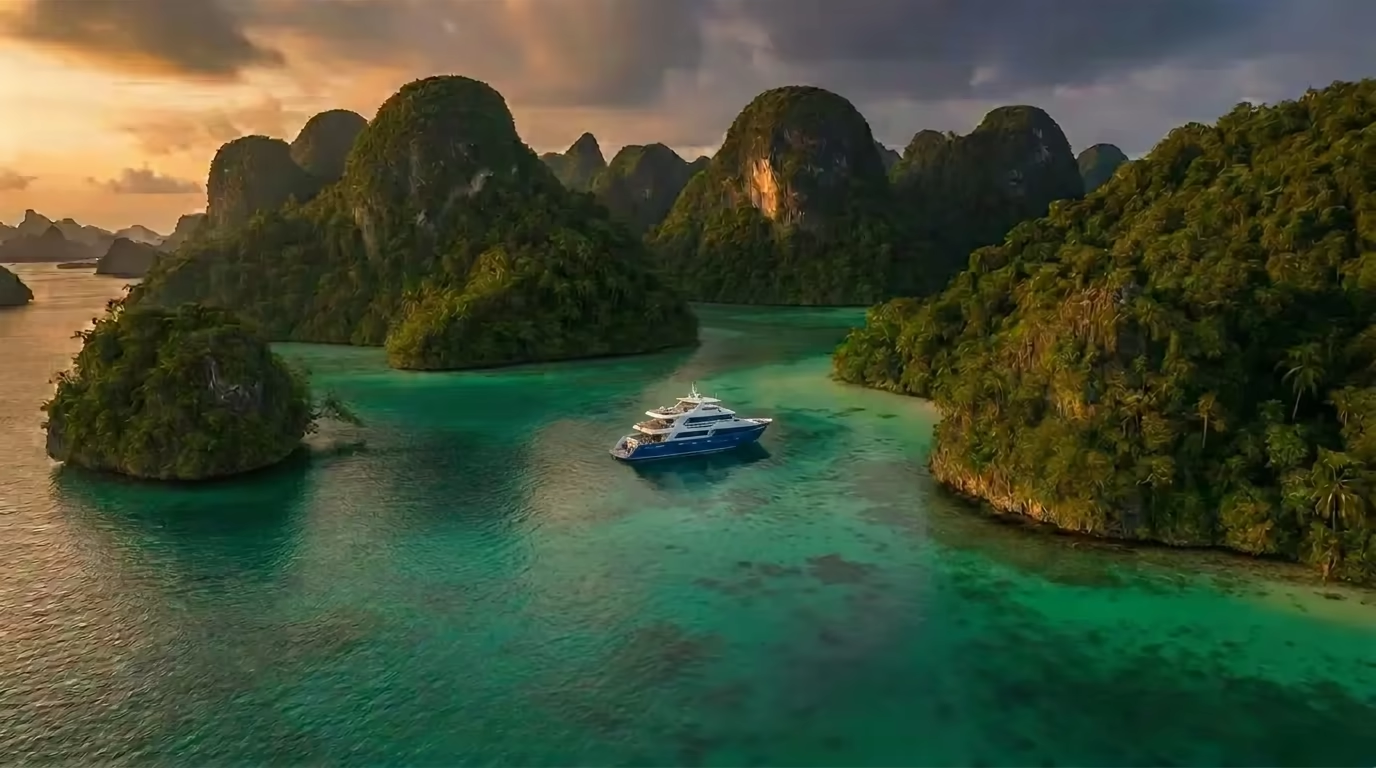
Indonesia boasts some of the world's most pristine and biodiverse marine environments, making it a dream destination for liveaboard diving. Among its crown jewels are the Banda Sea and Raja Ampat, two regions renowned for their spectacular underwater landscapes and abundant marine life. While both offer unparalleled diving experiences, they cater to slightly different preferences and skill levels.
Choosing between the Banda Sea and Raja Ampat for your next liveaboard adventure can be a delightful dilemma. Both promise breathtaking encounters, from schooling pelagics to rare macro critters, against a backdrop of vibrant coral reefs. However, understanding their distinct characteristics – from seasonal variations and typical trip durations to the specific marine life you're likely to encounter and the diving conditions – is crucial for planning your perfect trip.
This comprehensive guide will break down the key differences and similarities, helping you determine which of these Indonesian wonders best aligns with your diving aspirations and experience. Whether you're seeking adrenaline-pumping currents and pelagic action or tranquil reefs teeming with biodiversity, we'll help you navigate your decision.
| Banda Sea | Raja Ampat |
|---|---|
| Best season | |
| September - November (transition months, calmer seas) | October - April (peak season, calmer seas, less rain) |
| Top marine life | |
| Hammerhead sharks (schooling), mobula rays, whales (migratory), pelagics, diverse reef fish, macro life | Pygmy seahorses, wobbegong sharks, manta rays, walking sharks, diverse coral species (75% of world's total), schooling fish, macro life |
| Trip length & price USD | |
| 7-12 nights, $4,000 - $8,000+ | 7-12 nights, $4,500 - $9,000+ |
| Experience level | |
| Advanced (strong currents, deep dives, open ocean) | Intermediate to Advanced (moderate currents, diverse sites) |
| Access | |
| Flights to Ambon (AMQ), Saumlaki (SXK), Maumere (MOF), or Sorong (SOQ) depending on itinerary. Fewer direct flights. | Flights to Sorong (SOQ) via Jakarta (CGK) or Makassar (UPG). More established routes. |
| Visibility & water temp | |
| 20-40m+, 26-29°C (cooler in deeper areas during hammerhead season) | 15-30m+, 27-30°C |
| Currents/difficulty | |
| Often strong and unpredictable, particularly during hammerhead season. Advanced drift diving skills beneficial. | Variable, from calm to strong. Many sheltered bays, but also exposed sites with strong currents. |
| Liveaboard fleet size | |
| Smaller fleet, fewer boats operating seasonally. | Larger, more established fleet with diverse options. |
The Banda Sea, often referred to as Indonesia's 'Ring of Fire,' is a vast expanse of deep ocean surrounding a chain of volcanic islands. This remote location contributes to its pristine nature and the presence of large pelagic species. Its seasonal draw is undoubtedly the schooling hammerhead sharks, which congregate in significant numbers during the transition months of September to November.
Diving here often involves open ocean drift dives, where currents can be strong and unpredictable. While challenging, these conditions are precisely what attract the larger marine life. Beyond hammerheads, you can expect to encounter mobula rays, various species of whales during their migration, and a healthy population of reef fish and macro critters on its vibrant, untouched reefs. It's a destination for the adventurous diver seeking big animal encounters in a remote setting.
Raja Ampat, meaning 'Four Kings,' is globally recognized as the epicenter of marine biodiversity. Located in West Papua, it boasts an unparalleled concentration of coral and fish species, hosting over 75% of the world's total coral species. This region offers an incredible variety of dive sites, from vibrant coral gardens and dramatic pinnacles to mangrove forests and critter-rich muck dives.
Divers here can expect encounters with iconic species like manta rays, the endemic wobbegong shark, and the elusive walking shark. Macro enthusiasts will delight in finding pygmy seahorses, nudibranchs, and a plethora of tiny invertebrates. The diving conditions are generally more varied than the Banda Sea, with options for both sheltered, calm dives and exhilarating drift dives, making it accessible to a broader range of experienced divers.
The Banda Sea generally demands a higher level of diving experience. Strong, often unpredictable currents are common, especially on sites known for schooling pelagics. Deep dives are also frequent, requiring excellent buoyancy control and air consumption. Divers should be comfortable with open ocean conditions and drift diving techniques. An Advanced Open Water certification with experience in current is highly recommended.
Raja Ampat, while offering challenging sites, also has numerous sheltered bays and quieter reefs suitable for intermediate divers. However, many of its iconic sites, like those in Dampier Strait, are known for strong currents that bring in nutrient-rich waters and pelagic action. Therefore, an Advanced Open Water certification is generally preferred, and comfort with drift diving will significantly enhance your experience.
Accessing the Banda Sea typically involves flights to more remote airports such as Ambon (AMQ), Saumlaki (SXK), or Maumere (MOF), depending on the specific liveaboard itinerary. These routes often require multiple connections within Indonesia, making travel time longer. The liveaboard season is shorter, primarily focused on the September-November window, meaning fewer boats operate and booking well in advance is essential.
Raja Ampat is more accessible, with the primary gateway being Sorong (SOQ). Flights to Sorong usually connect through major Indonesian hubs like Jakarta (CGK) or Makassar (UPG). The liveaboard season is longer, from October to April, and a larger, more established fleet of boats operates, offering a wider range of options in terms of budget and luxury. Both destinations require domestic flights within Indonesia before boarding your liveaboard.
Your choice between the Banda Sea and Raja Ampat hinges on your diving priorities and experience. If you are an advanced diver craving the thrill of open ocean diving, strong currents, and the high probability of encountering schooling hammerhead sharks and other large pelagics in a remote, less-visited region, the Banda Sea is your ultimate destination. It offers an adventurous, big-animal focused experience.
Conversely, if you prioritize unparalleled biodiversity, a wider range of dive sites from macro to large pelagics, and a slightly more accessible (though still remote) experience, Raja Ampat is the clear winner. It caters to intermediate to advanced divers with its mix of challenging drift dives and pristine, sheltered coral gardens. For those seeking the absolute pinnacle of reef health and species diversity, Raja Ampat stands unmatched. Both offer world-class liveaboard experiences, but their distinct characteristics will guide you to your perfect Indonesian dive adventure.
The prime time for diving the Banda Sea, especially for hammerhead shark encounters, is during the transition months of September to November when seas are calmer and pelagic activity is high.
Raja Ampat is famous for its incredible biodiversity. Expect manta rays, wobbegong and walking sharks, pygmy seahorses, diverse hard and soft corals, and schooling fish in abundance.
No, the Banda Sea is generally recommended for advanced divers due to strong, unpredictable currents, open ocean diving, and deeper dive profiles. Experience with drift diving is beneficial.
A 7-12 night liveaboard trip to Raja Ampat typically ranges from $4,500 to $9,000+ USD, depending on the boat's luxury level and itinerary.
Visibility in the Banda Sea is often excellent, frequently exceeding 20-40 meters, thanks to its deep, nutrient-rich waters and remote location.
Yes, Raja Ampat has sites with strong currents, particularly in areas like Dampier Strait, which attract large pelagics. However, there are also many sheltered, calmer dive sites.
Raja Ampat is globally recognized as having the highest marine biodiversity, including an unparalleled concentration of coral species (over 75% of the world's total).
Yes, during their migratory periods, various whale species, including sperm whales and even blue whales, can be sighted in the Banda Sea, particularly during the transition months.
Browse our handpicked liveaboards and find your perfect dive adventure.