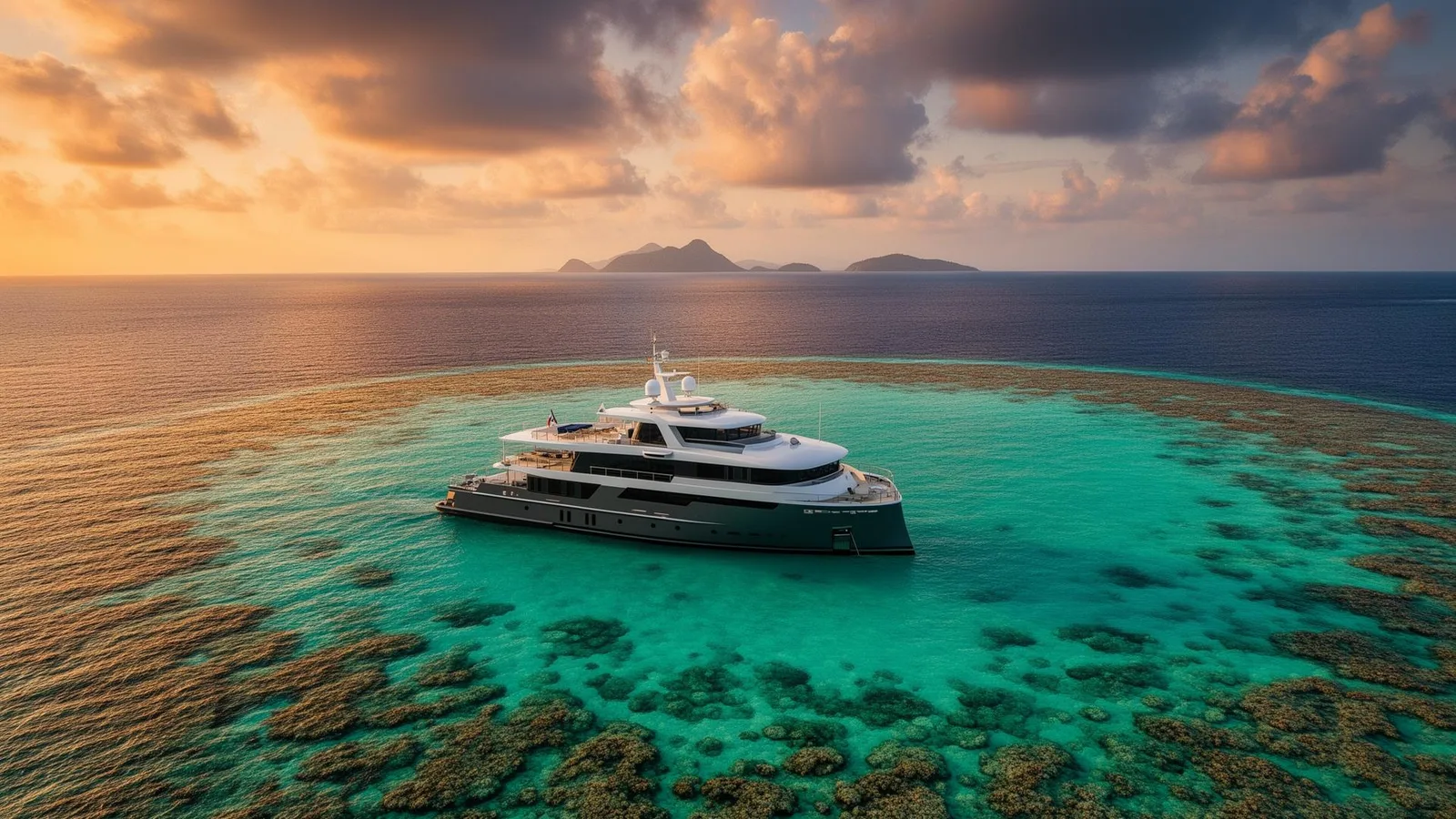
Liveaboard diving worldwide
This pillar guide covers the essentials. Browse the dedicated chapters and tools below to plan your trip with confidence.
Liveaboard Diving Worldwide — The Complete Guide
Blue Rides is a specialist booking platform for liveaboard diving holidays around the world. We compare more than 300 liveaboards across 35+ destinations — from the Maldives, Egypt and Galápagos to Indonesia, the Bahamas, Belize, Mexico, Thailand, Fiji, French Polynesia and beyond — so you can find, compare and book the perfect dive trip in one place. Every liveaboard listed on Blue Rides is hand-selected for safety, comfort and the quality of the underwater experience.
What is a liveaboard?
A liveaboard (also called a dive safari boat or dive cruise) is a vessel that doubles as your hotel and your dive base. You sleep, eat and dive from the same boat, typically for 3 to 10 nights, and travel between remote dive sites that are simply not reachable from a land-based dive centre. Most liveaboard itineraries include 3 to 4 dives per day, including night dives, all meals, drinking water, soft drinks, tea and coffee, tanks, weights and a full team of professional dive guides.
Compared with a day-boat operation from a resort, a liveaboard gives you more dives per day, more remote dive sites, no transfer time between sites, and the chance to see encounters that day boats rarely reach: hammerhead schools, whale sharks, manta cleaning stations, healthy reef systems and pristine wrecks.
Why choose a liveaboard over day diving?
Liveaboards unlock the world's best dive sites. Many of the most spectacular reefs on the planet — Tiger Beach in the Bahamas, Brothers Islands in the Egyptian Red Sea, Cocos Island, Socorro, Raja Ampat, the Komodo channels, the Maldivian central atolls, the Solomon Islands or remote Galápagos pinnacles — are too far offshore for a day-boat to reach. A liveaboard literally parks you on top of these sites overnight, which usually means you have them to yourselves at the best dive times of the day.
Liveaboards are also the most efficient way to dive intensively. Three to four dives per day for a full week means more bottom time in seven days than a typical land-based diver gets in three or four resort holidays. Add the social element — sharing meals, dive briefings and sundowners with a small group of like-minded divers — and it becomes clear why liveaboards have become the gold standard for serious recreational divers.
Top liveaboard destinations
The classic liveaboard destinations are the warm-water hotspots of the tropics. The Maldives is the most popular destination on Blue Rides, with year-round diving, gentle to challenging drift dives, and reliable encounters with manta rays, whale sharks, grey reef sharks and eagle rays. Egypt and the Red Sea offer outstanding value, easy access from Europe, and a unique mix of pristine reefs, dramatic walls and historic wrecks like the SS Thistlegorm.
Indonesia is the heart of the Coral Triangle — Komodo, Raja Ampat, the Banda Sea and Alor offer some of the highest marine biodiversity on Earth. The Galápagos and Cocos Island are bucket-list destinations for big-animal lovers, with hammerhead schools, marine iguanas and resident whale sharks. The Caribbean — Bahamas, Belize, Cayman Islands, Cuba and Mexico — is the natural starting point for divers from North America and Europe, with shark dives, blue holes, walls and wrecks all within easy reach.
For something different, consider the cold-water frontier destinations: Antarctica for crabeater seals and leopard seals, French Polynesia for tiger sharks and humpback whales, Fiji for soft coral, the Solomon Islands for WWII wrecks, and Saudi Arabia or Sudan for unspoilt Red Sea reefs.
How to choose the right liveaboard
Three factors decide whether a liveaboard is right for you: the diving, the boat, and the operator. On the diving side, match your certification level and experience to the itinerary. Easy itineraries (most Maldives Central, Hurghada, Bahamas Tiger Beach) suit Open Water divers with as few as 25 logged dives. Demanding itineraries (Galápagos, Cocos, Brothers and Daedalus, Socorro, Komodo's Manta Alley) require Advanced Open Water and 50 to 100 logged dives.
On the boat side, decide whether you prefer a small intimate vessel (8–14 guests), a mid-size yacht (16–22) or a large luxury liveaboard (24+). Bigger boats usually mean more deck space, better stabilisation, larger cabins and bigger dive decks; smaller boats give you more personalised service and a tighter group dynamic. On the operator side, look for IATA / PADI / SSI affiliations, transparent safety records, recent refits, and verified guest reviews.
Liveaboard pricing — what's included
A standard week-long liveaboard typically costs between €1,200 and €4,500 per person depending on the destination, season and boat category. Budget itineraries start around €150 per person per night (Egypt, Thailand, Philippines), mid-range trips average €250–€350 (Maldives, Indonesia), and premium destinations like Galápagos, Socorro or Antarctica run €450–€800+ per person per night.
The price almost always includes full-board accommodation, all meals and snacks, soft drinks and unlimited drinking water, all diving with tanks and weights, and a professional dive guide team. Common extras (not included) are nitrox (€80–€180 per week), full equipment rental (€150–€250), marine park or port fees (€60–€350), alcoholic beverages and tips for the crew (typically 10 % of the trip price). Flights to the embarkation port, travel insurance and dive insurance are always separate.
When is the best season for a liveaboard?
The best season depends entirely on your destination. The Maldives runs year-round but the dry season (December–April) brings the calmest weather while the southwest monsoon (May–November) brings whale sharks and mantas to Hanifaru Bay. The Egyptian Red Sea is best from March to June and September to November, when air and water temperatures are mild and visibility is at its best. Indonesia splits seasons by region — Komodo and Raja Ampat are best between October and April; the Banda Sea between September and November.
The Galápagos has two distinct seasons: the warm-and-rainy season (December–May) brings calm seas and manta rays, while the cold-and-dry season (June–November) brings nutrient-rich currents, whale sharks at Darwin Arch, and the largest hammerhead aggregations of the year. Use our destination pages to see month-by-month dive condition charts for every region we cover.
Booking a liveaboard with Blue Rides
Booking through Blue Rides is straightforward. Choose your destination, browse available departures, compare cabins and pricing, and reserve your spot online. Deposit amounts and balance due dates vary by vessel and operator — the exact terms are always shown on each vessel detail page before you book. We accept credit and debit cards via Stripe, SEPA bank transfers (with a small discount), and offer flexible payment plans on request. Every booking comes with our best-price guarantee — if you find the same trip cheaper elsewhere, we'll match the price.
We are an independent specialist booking agent, which means we represent you, the diver — not any single shipowner or operator. Our job is to find the trip that fits your level, your wishlist and your budget, then handle the paperwork, payments, and communication with the operator on your behalf, in your language. If anything changes before, during or after your trip, you have one single point of contact at Blue Rides.
Continue exploring
Dive deeper into the guide
This pillar guide covers the essentials. Browse the dedicated chapters and tools below to plan your trip with confidence.
Topic guides
What is Liveaboard Diving?
The basics — vessels, life onboard, dive operations.
How to Choose a Liveaboard
Vessel size, cabin types, dive operation, group dynamic.
Best Liveaboard Destinations
Top regions ranked by experience, biodiversity & access.
Best Time to Go
Season-by-season breakdown for every major dive region.
Liveaboard Prices Explained
What's included, hidden extras, budget vs. luxury tiers.
Liveaboard vs. Day Diving
When a liveaboard makes sense — and when it doesn't.
More Guides by Category
Equipment & Gear
Health & Safety
Skills & Technique
Trip Planning
Lifestyle & Audience
Explore the platform
Browse 300+ Liveaboards
Compare vessels by destination, price, dates and onboard amenities.
All Destinations
35+ liveaboard destinations from Maldives to Antarctica.
Top Dive Sites
60+ iconic dive sites you can only reach properly by liveaboard.
Liveaboard FAQ Hub
Quick answers to 80+ of the most common liveaboard questions.
Ready to dive your next destination?
Search every available vessel by destination, date and budget to find the liveaboard that fits your trip.