Get your weight right (you're probably over-weighted)
Most divers wear 2–4 kg too much because instructors over-weight beginners for safety. Do a proper weight check on day 1: in the water, holding a normal breath at the surface with empty BCD, you should float at eye level. Exhale fully = sink slowly. Anything more = drop weight.
Breathing IS your buoyancy control
Forget the BCD inflator for fine tuning. Inhale = rise. Exhale = sink. Slow, deep breaths give you 1–1.5m of vertical control without touching anything. Use the inflator only for major depth changes. This single shift saves 30% of your air consumption.
Get horizontal — the trim revolution
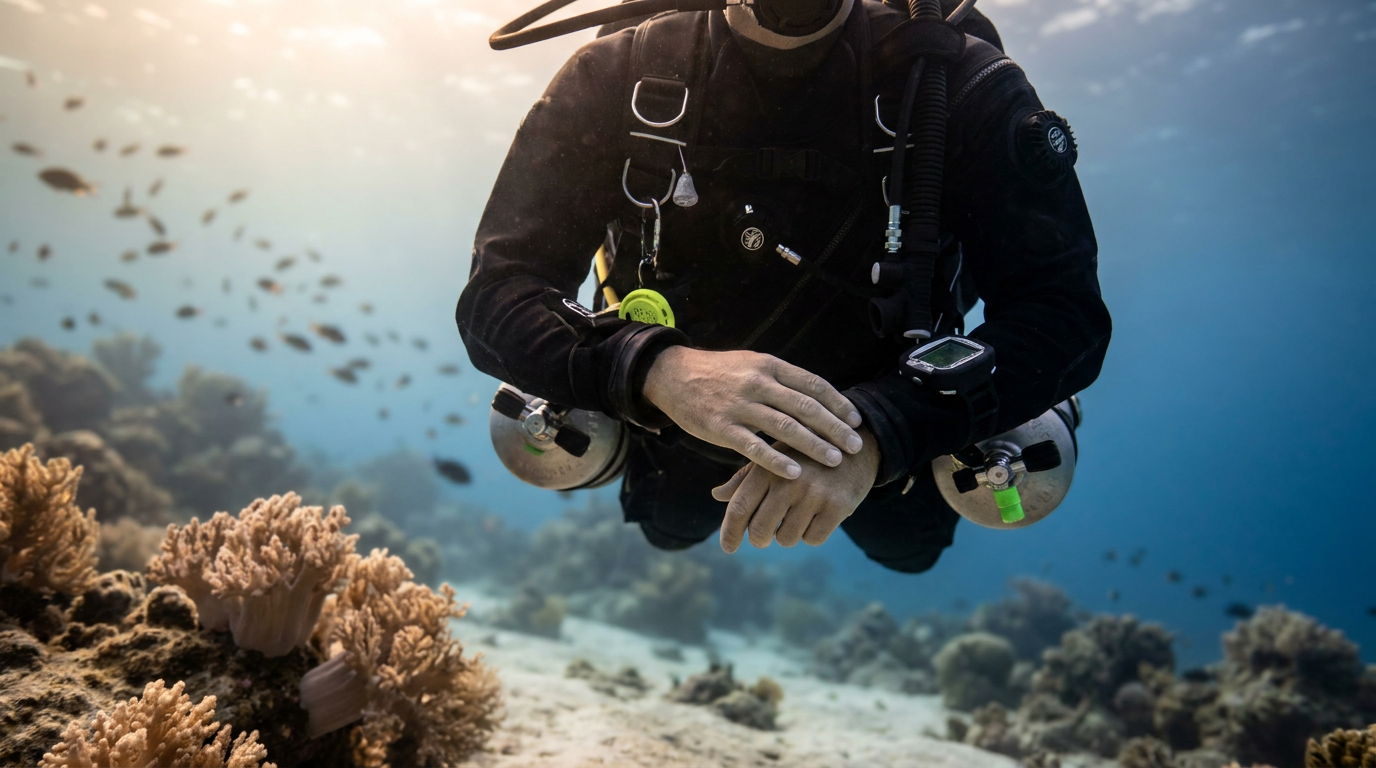
Vertical, kicking divers stir up silt and look like beginners. Aim for fully horizontal: head slightly down, fins up, frog kick. Move your weight up your body if you're bottom-heavy (trim pockets on tank strap). Most liveaboards rent BCDs with trim pockets — ask.
The hover drill — practice it daily
First 5 minutes of every dive: hover motionless at 5m, mid-water, no kick, no inflator. Within 3 days you'll cut your air consumption 20%. The dive guide will notice — and assign you the better buddies.
Common scenarios on a liveaboard
Drift dives (Maldives, Komodo): trim matters more than weighting. Wreck penetration (Truk, Egypt): perfect buoyancy required, no exceptions. Macro dives (Lembeh): sustained hover for minutes. Each scenario rewards practice — and a liveaboard gives you 25 dives in a week to practice.