About Great Blue Hole
The Great Blue Hole, a globally renowned marine sinkhole, lies approximately 70 km offshore from Ambergris Caye, situated within the Lighthouse Reef Atoll in Belize. This colossal circular formation, measuring 300 meters across and plunging to depths of 122-126 meters, is a geological wonder that originated as a limestone cave thousands of years ago. As ocean levels rose, the cave flooded and its roof collapsed, creating the iconic Blue Hole. Its significance as a dive site was cemented by Jacques Cousteau, who listed it among his favorite dive locations. Diving the Great Blue Hole typically begins on a shallow reef shelf at about 10-12 meters, where divers can observe some coral life. The descent then follows the inner wall, transitioning into a dramatic underwater landscape. At depths around 30-40 meters, divers encounter impressive stalactites and limestone formations that evidence its past as a dry cave. While the interior is less vibrant than the surrounding reef, the sheer scale of the formations and the unique environment are central to the dive's experience. An alternative dive profile allows exploration of the rim's vibrant coral, offering a different perspective on the site. While the deep interior of the Blue Hole has limited coral due to lack of sunlight, the shallow reef around its rim teems with colorful fish, shrimp, groupers, and other Caribbean marine life. Inside the hole, the primary marine encounters are with sharks, including blacktip, Caribbean reef sharks, and occasionally bull and hammerhead sharks. Midnight parrotfish are also commonly seen. Visibility can often reach up to 60 meters, enhancing the dramatic views of the geological structures and marine life. This site is considered an advanced dive due to its depth, typically reaching 40 meters. Day boat trips from Ambergris Caye or Placencia can take 3-4 hours, often leading to additional dives on the Belize Barrier Reef or at nearby cays like Half Moon Caye. Liveaboard options provide more stable platforms for access. Divers should be prepared for deep diving conditions, including cooler temperatures at depth, and are advised to carry a dive light. Two distinct dive profiles are offered: a deep exploration of the cave formations and a shallower dive along the vibrant rim.
Highlights
Colossal marine sinkholeAncient stalactites and limestone formationsCaribbean reef sharksBlacktip sharksMidnight parrotfishUNESCO World Heritage SiteVisibility often reaching 60 meters
Season calendar
Best months to dive here
Jan
Feb
Mar
Apr
May
Jun
Jul
Aug
Sep
Oct
Nov
Dec
Excellent
Good
Dive site facts: Great Blue Hole
- Depth
- 21–125 m
- Typical dive
- 40 m, 8–10 min
- Current
- Mild to moderate
- Visibility
- 20–40 m
- Water temperature
- 26–29 °C
- Entry
- Boat
- Level
- Advanced, deep specialty recommended
- Dive type
- Deep, geological, cave, pelagic
- Night dive
- Not typical
- Region / port
- Lighthouse Reef Atoll, Belize
- Coordinates
- 17.3189, -87.5339
Conditions & Currents
The Great Blue Hole typically has calm, motionless water inside, making it an excellent site for observing the deep formations without strong currents. The journey to the site can involve significant boat travel across open water, with waves growing outside the inshore reef until reaching the Lighthouse Reef Atoll. Surface conditions can be rough depending on the weather, requiring preparation for seasickness. The clear water inside the hole often allows for exceptional visibility, but divers should be aware of a noticeable thermocline as they descend to greater depths.
Marine life & sighting chances
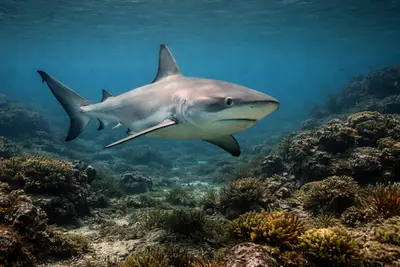
Caribbean reef shark
common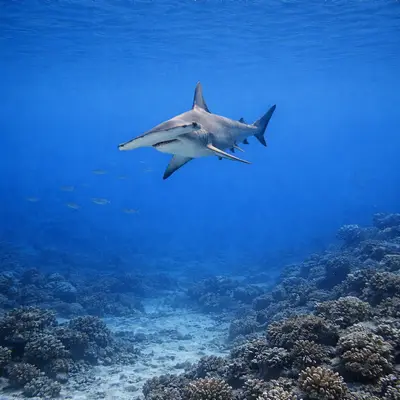
Hammerhead shark
occasional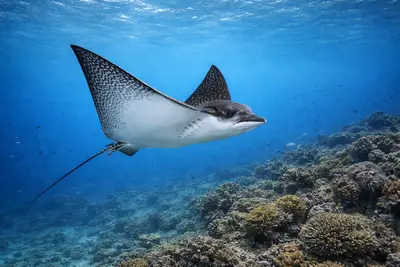
Eagle ray
occasional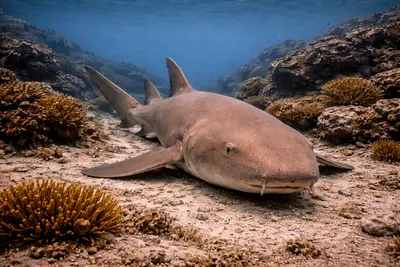
Nurse shark
occasional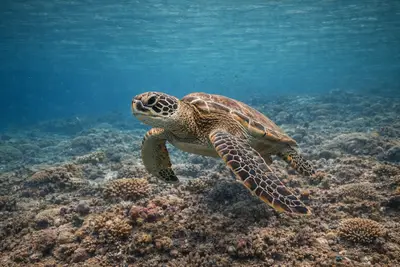
Green sea turtle
occasional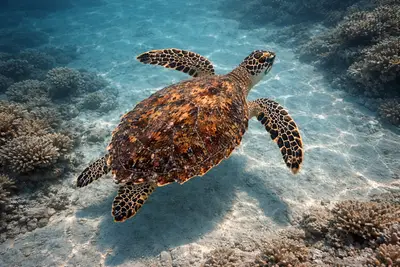
Hawksbill turtle
occasional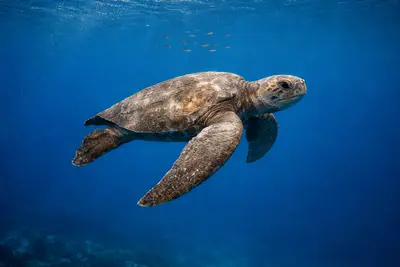
Loggerhead turtle
occasional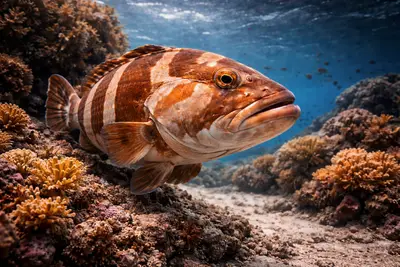
Nassau grouper
October to December · occasional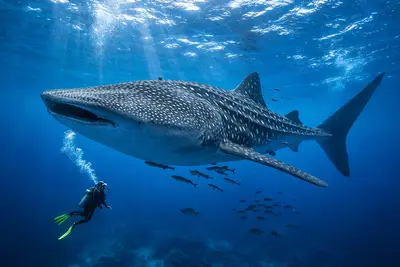
Whale shark
April to June · rareDive profile & how the dive runs
Your dive begins with a descent into the massive circular opening of the Blue Hole. The primary objective is to reach the impressive geological formations at approximately 40 meters. You will navigate around colossal stalactites and stalagmites that formed when the sinkhole was above sea level. Divers often enter a cavernous area at this depth, allowing a brief exploration of the ancient limestone structures. Maintaining excellent buoyancy control is crucial to avoid stirring up sediment and to protect the delicate formations. The dive at depth is typically short, around 8-10 minutes, due to the no-decompression limits. You will then make a slow ascent, observing the stark contrast of the deep blue walls against the lighter upper waters. A safety stop is conducted at 5 meters, often against the shallower rim of the hole, before returning to the surface.
Underwater photography
Capturing the grandeur of the Great Blue Hole demands specific photographic techniques. For the expansive underwater vistas and the dramatic stalactite formations, a wide-angle lens is essential. Consider a fisheye lens to encompass the immense scale of the sinkhole and the towering geological features. Due to the deep dive profile and reduced light penetration, external strobes are highly recommended to illuminate the formations and bring out detail and color. Position your strobes carefully to avoid backscatter from any suspended particles. Visibility is generally excellent, enhancing the striking contrast between the deep blue water and the ancient rock. Buoyancy control is paramount; avoid contact with the formations and ensure your fin kicks do not disturb the bottom sediment, which can quickly degrade photographic conditions. Aim to photograph other divers as scale references against the massive structures.
Combine with nearby dive sites
Getting there & logistics
Access to the Great Blue Hole is primarily via liveaboard vessels or long day trips from coastal towns like San Pedro on Ambergris Caye or Caye Caulker. The closest international airport is Philip S. W. Goldson International Airport (BZE) in Belize City. Day trips often involve a 2.5-hour boat ride each way and typically include two additional dives at other Lighthouse Reef Atoll sites, such as Half Moon Caye Wall. Liveaboards provide more direct access and can explore multiple sites within the atoll over several days. Marine park fees are required as the site is part of a UNESCO World Heritage area; these are usually included in dive package costs. Booking well in advance is advisable, especially during peak season from March to June, to secure spots on reputable operators' trips.
Safety & environment
Diving the Great Blue Hole is a deep dive, making advanced training and excellent buoyancy control critical. Divers must be certified Advanced Open Water and ideally have deep diving experience. The nearest recompression chamber is located in San Pedro, Ambergris Caye, which can be several hours away by boat depending on sea conditions and departure point from the Blue Hole. Emergency evacuation protocols involve transfer by boat to the mainland or San Pedro, followed by ground transport to the chamber. Due to the remote location and potential for long transfer times, comprehensive dive insurance that covers emergency medical treatment and evacuation is mandatory. Adhere strictly to your dive guide's instructions, maintain close proximity to the group, and monitor your depth and bottom time carefully. Avoid disturbing the delicate stalactite formations within the hole.
Who it suits — and who it doesn't
Suited for
- Advanced divers seeking unique geological formations
- Divers with excellent buoyancy control and deep dive experience
- Photographers interested in wide-angle and structural shots
- Those looking to tick off a world-renowned dive site from their bucket list
Less suited for
- Beginner divers or those without deep dive certification
- Divers expecting abundant marine life throughout the dive
- Individuals prone to claustrophobia in confined spaces
- Those who struggle with maintaining depth or buoyancy
FAQ
Great Blue Hole FAQ
What is the best time of year to dive the Great Blue Hole?
The optimal time to dive the Great Blue Hole is during Belize's dry season, from December to June. April to June is particularly favored for the clearest visibility and warmer waters, and it coincides with the whale shark season in other parts of Belize. While diving is possible year-round, the wet season from July to November can bring higher rainfall and choppier seas, though offshore sites like the Blue Hole are less affected by runoff.
What kind of marine life can I expect to see in the Great Blue Hole?
The Great Blue Hole is primarily known for its unique geological formations, not for abundant coral reefs or diverse fish schools within the sinkhole itself. You can expect to encounter Caribbean reef sharks and occasionally hammerhead sharks patrolling the deeper edges. Around the shallower rim and at nearby dive sites within Lighthouse Reef Atoll, you will find a richer array of marine life including various reef fish, eagle rays, and turtles.
How deep is the Great Blue Hole and what is the typical dive profile?
The Great Blue Hole is approximately 125 meters (410 feet) deep and 300 meters (1,000 feet) across. Dives typically descend to around 40 meters (130 feet) to explore the ancient stalactite and stalagmite formations. Due to the depth, bottom time is very limited, usually 8-10 minutes, followed by a slow ascent and a mandatory safety stop. This dive profile requires advanced certification and excellent buoyancy control.
Do I need a special certification to dive the Great Blue Hole?
Yes, to dive the Great Blue Hole, you must hold an Advanced Open Water Diver certification. The dive depth of 40 meters (130 feet) exceeds the limits for Open Water Divers. It is also highly recommended to have experience with deep diving and maintaining precise buoyancy control in challenging environments, as the dive involves navigating around delicate geological structures.
Can non-divers or snorkelers visit the Great Blue Hole?
While snorkeling directly in the deep section of the Great Blue Hole is not a typical activity due to its depth and lack of shallow coral reefs, some dive tours may offer snorkeling opportunities around the shallower rim of the Blue Hole or at other nearby reef sites within Lighthouse Reef Atoll. Alternatively, scenic flights over the Blue Hole are a popular way for non-divers to appreciate its immense scale and unique circular shape from above.
Why dive Great Blue Hole from a liveaboard?
Great Blue Hole is one of Belize's signature dive sites. A liveaboard sleeps you on the water and puts you in the water for three to four guided dives per day, including dawn and night dives that day-boat operators rarely offer. You skip the daily commute back to port and reach quieter, less-crowded sites in the same region on a single trip.
Below are the liveaboards that include Great Blue Hole on their Belize itineraries.
Liveaboards diving Great Blue Hole
These liveaboards may visit Great Blue Hole on selected itineraries — the exact dive sites depend on departure, weather and conditions.
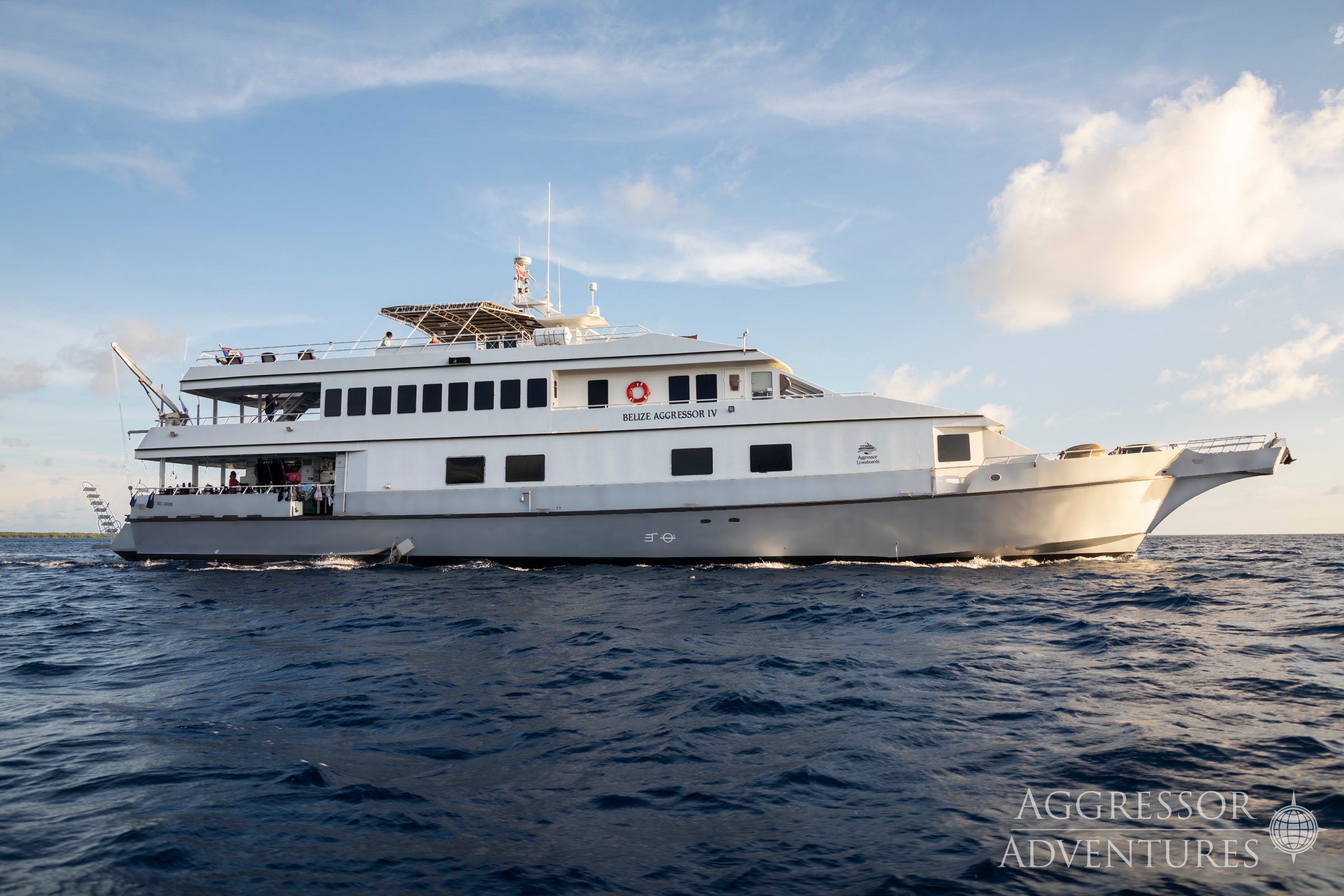
Belize Aggressor IV
Belize
20 guests42.1 m
$356/day
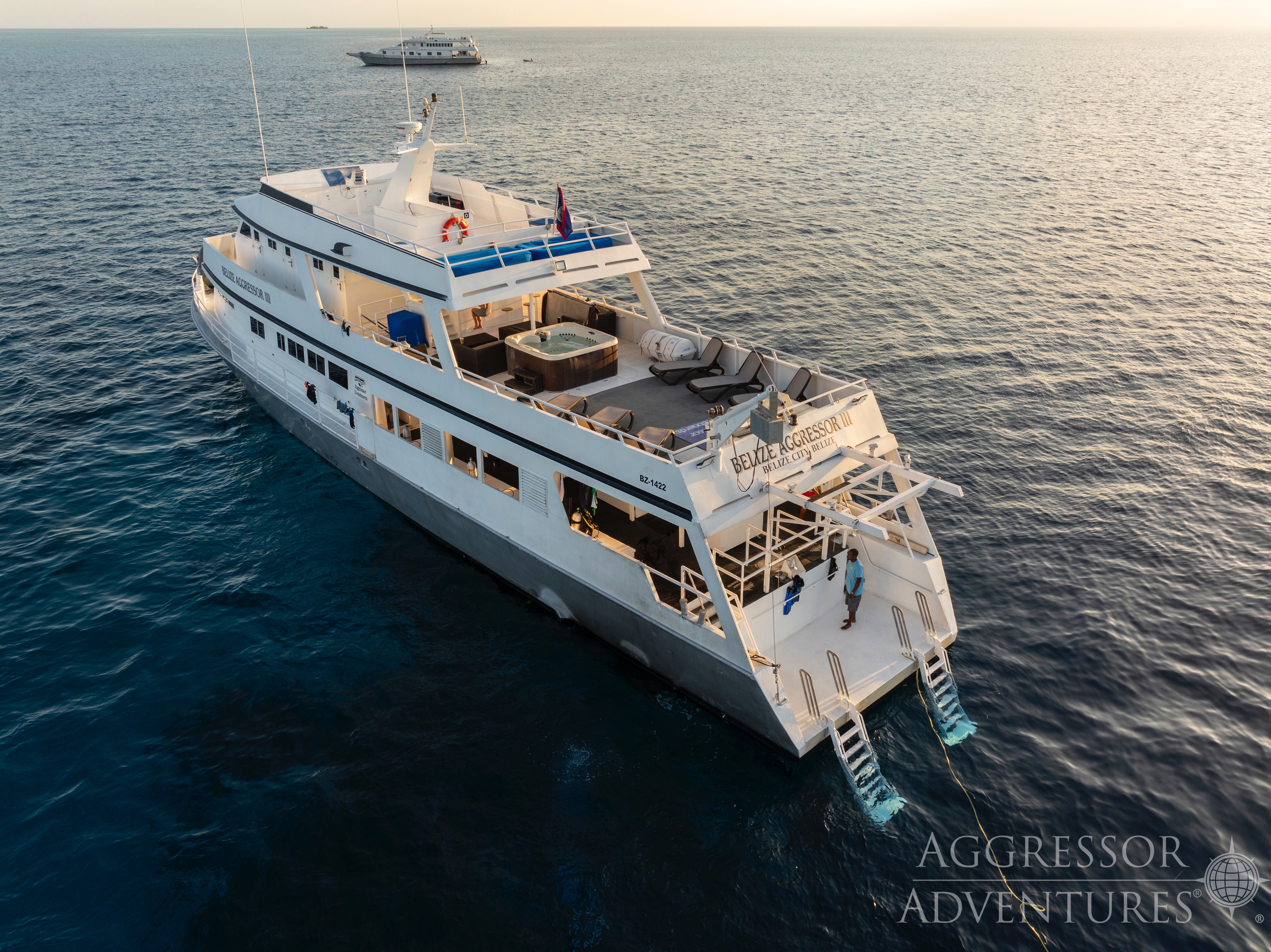
Belize Aggressor III
Belize
18 guests33.5 m
$336/day
Dive sites similar to Great Blue Hole
Same character, same waters — six more sites divers love for the exact same reasons.Compare seasons, access and liveaboard routes — then pick the site that fits your trip best.
Carrie Bow Caye Reef
Belize
Carrie Bow Caye is a small sand caye positioned directly on the Belize Barrier Reef, hosting a continuous coral reef monitoring program by the Smithsonian Institution since 1972.…
- Suitable for
- Intermediate
- Current
- Moderate
- Access
- Liveaboard or dayboat
- Depth
- 4–30 m
- Theme
- Reef / Wall
Ambergris Caye
Belize
Ambergris Caye, the largest and most popular of Belize's offshore cayes, offers unparalleled diving along 40 kilometers of the Belize Barrier Reef, situated less than a mile offshore.
- Suitable for
- Intermediate
- Current
- Mild
- Access
- Dayboat
- Depth
- 15–60 m
- Theme
- Reef / Wall
Silver Caves
Belize
Silver Caves offers a distinctive diving experience within the Lighthouse Reef Atoll, one of Belize's healthiest reef systems.
- Suitable for
- Advanced
- Current
- Mild
- Access
- Liveaboard only
- Depth
- 18–28 m
- Theme
- Reef / Cave & cavern
Que Brada
Belize
Que Brada is a prominent dive site within Belize's Lighthouse Reef Atoll, renowned for its unique topography of broken reef structures interspersed with sandy channels.
- Suitable for
- Intermediate
- Current
- Mild
- Access
- Liveaboard or dayboat
- Depth
- 10–30 m
- Theme
- Reef / Wall
South East Cut
Belize
South East Cut is a prominent dive site situated within Belize's Lighthouse Reef Atoll, a region celebrated for its spectacular underwater topography and diverse ecosystems.
- Suitable for
- —
- Current
- Mild
- Access
- Liveaboard only
- Depth
- —
- Theme
- Reef / Wall
Victoria Tunnels
Belize
Victoria Tunnels offers an engaging dive experience within the Belize Barrier Reef, distinguished by its unique canyon formations and namesake tunnels.
- Suitable for
- Advanced
- Current
- Mild
- Access
- Dayboat
- Depth
- 23–34 m
- Theme
- Reef / Wall