Loggerhead Turtle
Caretta caretta
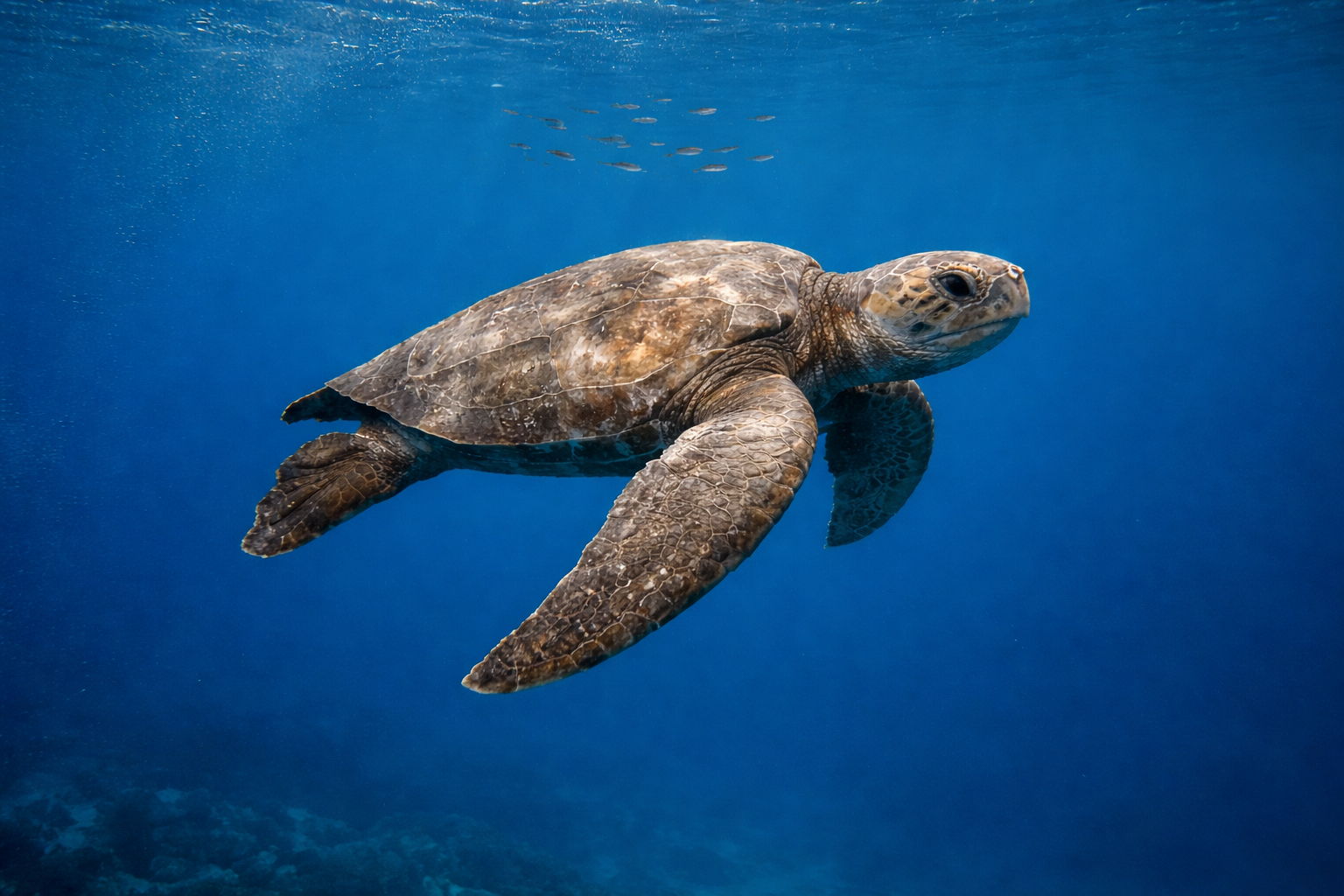
About Loggerhead Turtle
Named for its large head, which houses powerful jaws for crushing hard-shelled prey like conchs and crabs. The most common sea turtle in the Mediterranean and a frequent visitor to temperate Atlantic waters including the Azores.
Quick Facts
- Habitat: Loggerhead sea turtles, *Caretta caretta*, are a **widely distributed** marine reptile, thriving in temperate and tropical waters across the Atlantic, Pacific, and Indian Oceans. They show a strong preference for **coastal shelf habitats** but are also found in oceanic zones. Key nesting and foraging grounds include the southeastern U.S. (especially **Florida**), the Caribbean, the Mediterranean Sea (particularly **Greece** and **Turkey**), the coasts of **Oman** and **Australia**, and the southwestern Pacific. Juveniles often inhabit **pelagic environments**, drifting with currents and feeding near the surface, while adults typically forage in **benthic habitats** over continental shelves and in estuaries. They adapt to a variety of bottom types, including **rocky reefs**, **coral reefs**, and **sandy or muddy bottoms**, where their prey is abundant. Seasonal movements are common, with individuals migrating long distances between feeding and breeding grounds, often returning to **natal beaches** for nesting. This extensive range and adaptability make them a species encountered in diverse dive environments globally.
- Diet: Loggerhead turtles are primarily **carnivorous opportunists**, with a powerful jaw structure excellently adapted for crushing the shells of their prey. Their diet largely consists of **benthic invertebrates**, making them crucial components of coastal ecosystems. Key food items include **conchs**, **clams**, **crabs**, and **sea urchins**, which they skillfully extract from their shells or substrate. They also consume other hard-shelled organisms like **horse conchs**, **whelks**, and **hermit crabs**. Occasionally, they will feed on **slow-moving fish**, **jellyfish**, and **sargassum weed**, especially in pelagic juvenile stages, but their main calorie intake comes from their shelled prey. Loggerheads typically forage during the day, using their strong flippers to dig in soft sediments or to dislodge prey from rocky crevices. Their feeding behavior often leaves distinct foraging pits on the seafloor, providing indirect evidence of their presence in an area, and they are known to be **efficient and persistent hunters**.
- Best season: Encountering loggerhead turtles can vary significantly by region and their life stage. In the **southeastern United States**, especially along the coasts of **Florida** and the Carolinas, the best time for encounters is typically from **late spring through early autumn** (May to October), coinciding with their nesting season, when adults are more frequently seen nearshore. For the **Caribbean**, particularly around islands like **Barbados** or the **Bahamas**, encounters are also common during **summer months** (June to September) as breeding activity peaks. In the **Mediterranean**, particularly around **Greece** (Zakynthos) and **Turkey**, **July and August** are prime months for observing females near nesting beaches or foraging close to shore. In **Oman**, the nesting season runs from **April to September**, making these months ideal for sightings. Off the coast of **Australia**, while they are present year-round, increased activity, especially for larger adults, is noted during the **warmer months** (November to March). Generalizing across their vast range, **late spring and summer** are often the most productive seasons for diver encounters, as these periods align with increased foraging near coastal habitats and critical reproductive migrations, making them more accessible.
Fun Facts
Their powerful jaws can crush the shells of large conchs and horseshoe crabs,Loggerhead hatchlings spend 7–15 years drifting in open ocean currents,They host over 100 species on their shells,The Azores serve as a critical habitat for juvenile loggerheads
Diving Tips
When diving with loggerhead turtles, maintaining a **respectful distance** is paramount, as they are a protected species globally. Always observe from afar, giving them ample space to behave naturally; a good rule of thumb is to stay at least **15-20 feet away**. **Never chase or attempt to touch** a loggerhead, as this can cause stress, alter their natural behavior, and is illegal in many jurisdictions. Avoid blocking their path or surfacing route. Look for them in areas with **benthic invertebrates** on **sandy or rocky bottoms**, as these are their primary food sources. Spotting cues include **freshly dug depressions** in the sand from their foraging, or their distinctive, **large heads** and **reddish-brown carapaces**. Pay attention to **movement patterns**; if a turtle appears to be resting or feeding, try to position yourself down-current and remain still. If a turtle approaches you out of curiosity, remain calm and **avoid sudden movements**. Remember that all sea turtles are susceptible to disorientation and injury from human interaction. In many regions, **flash photography** is discouraged. Always adhere to **local diving regulations** and guidelines regarding marine life interaction. If you witness an injured or entangled turtle, **report it to local authorities** or marine wildlife organizations immediately, rather than attempting to intervene yourself, as this requires specialized training and permits.