About Cobia Cage
The Cobia Cage off Eleuthera in the Bahamas presents a truly unique underwater landscape. This massive, diamond-shaped, netting-based structure was originally designed as an offshore aquaculture pod for raising cobia. Although the project was eventually abandoned due to design flaws and shark damage to the netting, the structure remains largely intact and has been reclaimed by the sea, serving as a vibrant artificial reef. The cage rests in approximately 80 feet of water, anchoring just 75 yards from where a deeper wall drops off. Its netting is now completely covered in various algae, corals, and an abundance of macro life, transforming it from a functional farm into an intriguing dive site. From a distance, the growth makes the mesh appear as a solid structure, contributing to its somewhat eerie, cinematic appearance. This site is rich in both macro and larger marine species. Divers frequently observe an array of tiny creatures like shrimp, neck crabs, and lettuce sea slugs covering the netting. Larger inhabitants include Caribbean reef sharks, queen triggerfish, grey angelfish, Nassau groupers, and occasionally, a resident loggerhead turtle or even a hammerhead shark patrolling the surrounding sandy bottom. Diving the Cobia Cage often begins by descending to its base to fully appreciate its immense scale, then exploring its perimeter and the life thriving on its surfaces. The site is protected from strong easterly winds, making it a reliable destination even when other areas might be inaccessible.
Highlights
Colossal diamond-shaped structureTransformed aquaculture projectAbundant macro lifeCaribbean reef sharksLoggerhead turtle sightingsEerie, unique topographyCoral-covered netting
Season calendar
Best months to dive here
Jan
Feb
Mar
Apr
May
Jun
Jul
Aug
Sep
Oct
Nov
Dec
Excellent
Good
Off-Season
Nov – May (Peak)
Tiger sharks at Tiger Beach, hammerheads off Cat Island, best visibility up to 40m, calm seas.
Jun & Oct (Shoulder)
Reef sharks, nurse sharks, dolphins. Slightly rougher seas but still diveable.
Jul – Sep (Hurricane)
Many operators pause. If open, expect reduced visibility and unpredictable weather.
Dive site facts: Cobia Cage
- Depth
- 15–27 m
- Typical dive
- 16 m, 50–60 min
- Current
- Mild
- Visibility
- 20–40 m
- Water temperature
- 24–29°C
- Entry
- Liveaboard / guided entry
- Level
- Intermediate
- Dive type
- Artificial reef, macro, shark encounters
- Night dive
- Possible (implied, good for macro)
- Region / port
- Eleuthera, Bahamas
- Coordinates
- 25.1050° N, 76.3240° W
Conditions & Currents
Currents at the Cobia Cage are generally manageable, often described as mild, particularly given its location off Cape Eleuthera which provides some protection from prevailing winds. The site is suitable for exploring its unique structure without significant drift concerns. Visibility is typically excellent year-round, ranging from 20 to 40 meters (65-130 feet), allowing for clear views of the extensive structure and its inhabitants. Water temperatures vary by season, from 75-84°F (24-29°C), with slight cooling in the dry season attracting more pelagic species. While there's a nearby wall, the primary dive focuses on the cage itself, which does not typically experience strong surge or thermoclines directly affecting the structure.
Marine life & sighting chances

Caribbean reef shark
common
Loggerhead turtle
occasional
Hammerhead shark
occasional
Shrimp
common
Neck crab
common
Lettuce sea slug
common
Queen triggerfish
occasional
Grey angelfish
occasional
Nassau grouper
occasional
Queen angelfish
occasional
Jack
occasionalDive profile & how the dive runs
Divers typically begin by descending directly onto or alongside the massive Cobia Cage structure, which rests in about 80 feet (24 meters) of water. The initial part of the dive involves appreciating the sheer size of the diamond-shaped cage, often by swimming around its base where the sand meets the structure, reaching a maximum depth of around 87 feet (27 meters). The main exploration then focuses on ascending and navigating around the cage’s netting, which is heavily encrusted with corals, algae, and macro life. Divers can spend time examining the various cracks and hiding spots on the structure for small critters while keeping an eye out for larger pelagics in the surrounding blue. The ascent often follows the contours of the cage, treating the upper sections like a shallow reef. Safety stops are conducted in the shallower water above the cage, usually at around 15 to 20 feet (5-6 meters), offering opportunities to observe life near the surface before returning to the boat.
Underwater photography
The Cobia Cage offers exceptional opportunities for both wide-angle and macro photography due to its colossal structure and abundant small life. For wide-angle shots, a fisheye lens is ideal to capture the imposing scale of the diamond-shaped cage, especially when sharks or large turtles are present in the ambient light. Natural light photography is excellent here, particularly with the sun punching through the clear water, highlighting the structure and marine life. For macro enthusiasts, the coral and algae-covered netting is a treasure trove; a macro lens will reveal countless shrimp, crabs, and sea slugs. Due to the clarity and light, strobes are highly effective for bringing out colors and details in both wide-angle and macro compositions. Maintaining excellent buoyancy is crucial to avoid stirring up the sandy bottom beneath the cage and to protect the delicate growth on the netting.
Combine with nearby dive sites
- Crab Wall
Crab Wall is a prominent deep wall dive site in the Bahamas, specifically mentioned as part of the Exuma Cays itinerary for liveaboards.
- Lobster No Lobster
Lobster No Lobster is a renowned shallow coral head reef situated in the northern Exuma Cays of the Bahamas, often accessible via…
- Split Coral Head
Split Coral Head is a notable dive site located in Eleuthera, Bahamas, celebrated for its impressive coral formations and the distinctive…
- Premo Wall
Premo Wall is a prominent dive site situated off the island of Eleuthera in the Bahamas, recognized for its dramatic underwater topography.
- Jakes Hole
Jakes Hole is a notable dive site located in the southern end of Eleuthera, an island within the Bahamas archipelago.
- Cape Eleuthera Wall
A deeper wall dive located very close to the Cobia Cage.
Getting there & logistics
Diving the Cobia Cage is primarily done via liveaboard cruises departing from Nassau, such as the Aqua Cat, Blackbeard's, or Cat Ppalu. These liveaboards provide access to remote sites in Eleuthera and the Exuma Cays, which are typically out of reach for day boats. Divers usually fly into Lynden Pindling International Airport (NAS) in Nassau to board their liveaboard. A typical trip duration is a week, allowing for a comprehensive exploration of multiple sites in the region. There are generally no specific dive permits required for the Cobia Cage itself, as its access is included within the liveaboard itinerary. This site is frequently combined with other Eleuthera dives and sometimes with Exuma sites, depending on the week's itinerary and weather conditions.
Safety & environment
While diving the Cobia Cage is generally considered safe for intermediate divers, it's essential to maintain good buoyancy control to avoid contact with the heavily encrusted netting and to prevent stirring up the sandy bottom, which can reduce visibility. There are no significant hazards mentioned, but all divers should carry valid dive insurance covering emergency medical care and evacuation. The nearest recompression chamber is likely located in Nassau, requiring potential evacuation by boat or air from Eleuthera. Liveaboard crews are trained in emergency procedures and will manage any incidents. Divers should always follow the dive brief, stay with their buddy or group, and monitor their depth and bottom time carefully, especially when exploring the deeper sections of the cage.
Who it suits, and who it doesn't
Suited for
- Underwater photographers seeking unique subjects
- Divers interested in artificial reefs and macro life
- Experienced divers comfortable with depths to 27m
- Divers seeking shark encounters in a non-feeding environment
- Liveaboard guests exploring remote Bahamian sites
FAQ
Cobia Cage FAQ
What exactly is the Cobia Cage?
The Cobia Cage is a large, diamond-shaped underwater structure located off Eleuthera in the Bahamas. It was originally a netting-based aquaculture farm designed to raise cobia fish. Although the farming project was abandoned, the structure remains intact and has become a thriving artificial reef, covered in corals, algae, and various marine life.
What kind of marine life can I expect to see at the Cobia Cage?
Divers frequently encounter Caribbean reef sharks patrolling the area, as well as occasional loggerhead turtles and hammerhead sharks. The netting of the cage is a haven for macro life, including numerous shrimp, neck crabs, and lettuce sea slugs. You can also spot various reef fish like queen triggerfish, grey angelfish, and Nassau groupers.
Is the Cobia Cage suitable for beginner divers?
While the dive itself is not overly challenging in terms of current, the depth can reach up to 87 feet (27 meters), and the environment is quite unique. It's generally recommended for intermediate divers who are comfortable with these depths and have good buoyancy control, especially to navigate around the intricate structure without disturbing it.
How do I get to dive the Cobia Cage?
The Cobia Cage is primarily accessible via liveaboard dive boats that operate out of Nassau, Bahamas. Operators like Aqua Cat, Blackbeard's, and Cat Ppalu frequently include it in their Eleuthera itineraries. These liveaboards provide the best way to reach this somewhat remote site and combine it with other excellent dive locations in the region.
Can I enter the Cobia Cage structure?
The Cobia Cage is made of netting fastened to beams, and while there might be small openings, it is not designed for human entry. Sources indicate that any potential gaps are either too small or have sharp metal edges, making entry unsafe and ill-advised. Divers are encouraged to explore around the exterior of the structure.
Why dive Cobia Cage from a liveaboard?
Cobia Cage is one of Bahamas's signature dive sites. A liveaboard sleeps you on the water and puts you in the water for three to four guided dives per day, including dawn and night dives that day-boat operators rarely offer. You skip the daily commute back to port and reach quieter, less-crowded sites in the same region on a single trip.
Below are the liveaboards that include Cobia Cage on their Bahamas itineraries.
Liveaboards diving Cobia Cage
These liveaboards may visit Cobia Cage on selected itineraries, the exact dive sites depend on departure, weather and conditions.
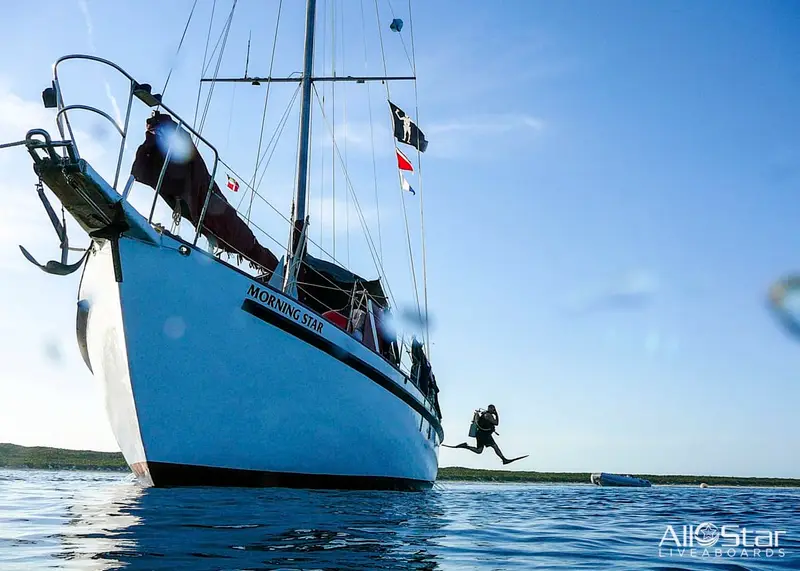
All Star Blackbeards Morning Star
Bahamas
24 guests20 m
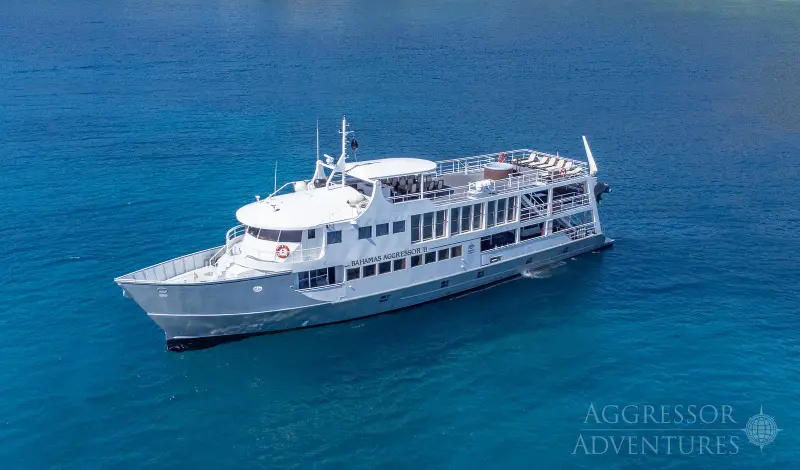
Bahamas Aggressor II
Bahamas
20 guests34 m
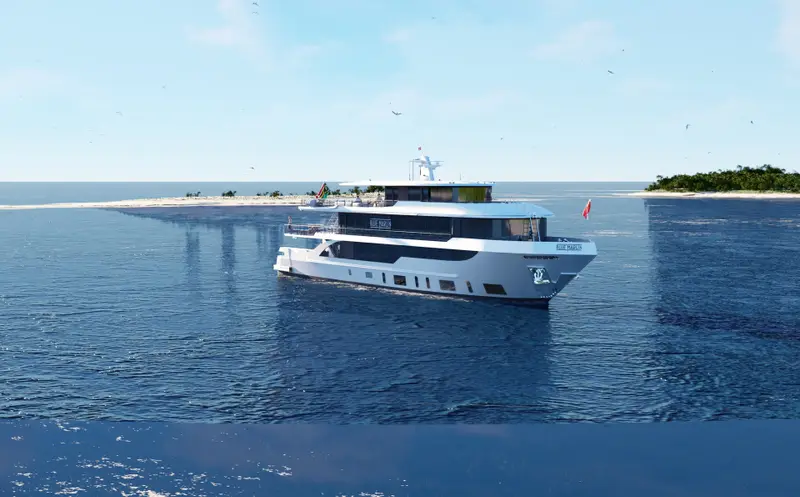
Blue Marlin
Bahamas
26 guests42 m
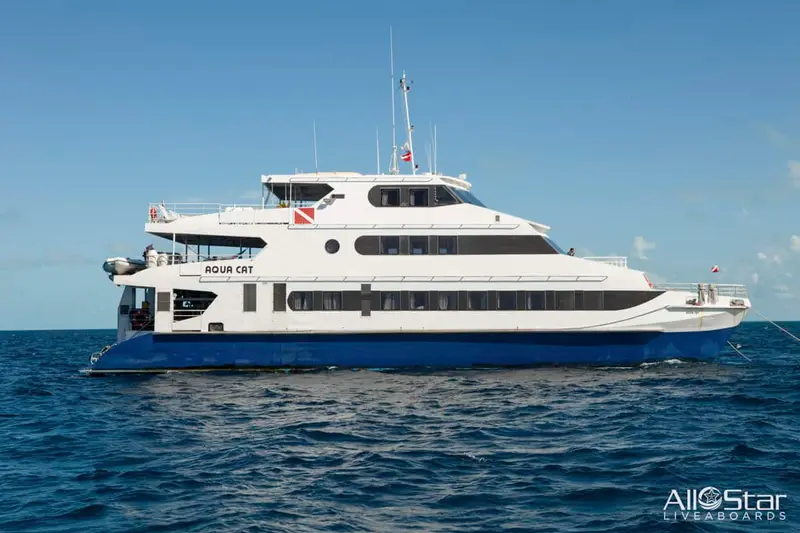
All Star Aqua Cat
Bahamas
30 guests31 m
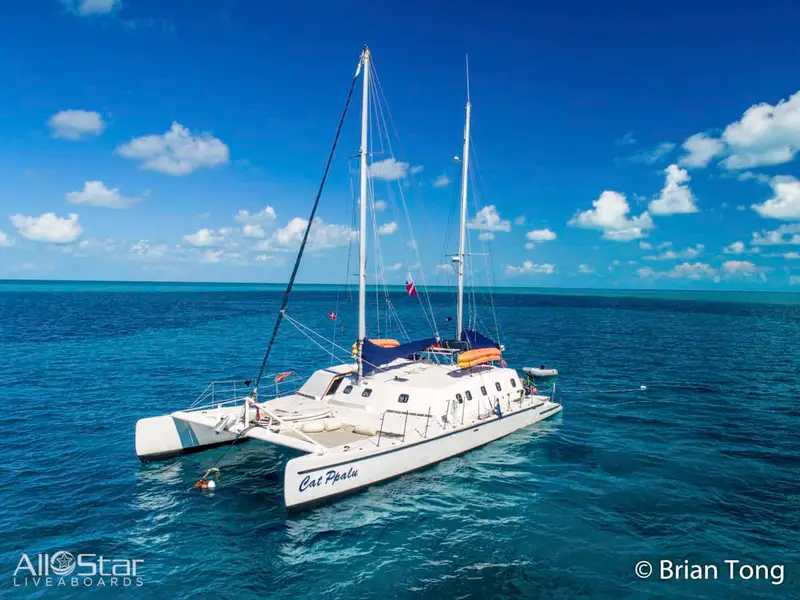
All Star Cat Ppalu
Bahamas
12 guests20 m
Dive sites similar to Cobia Cage
Same character, same waters, six more sites divers love for the exact same reasons.Compare seasons, access and liveaboard routes, then pick the site that fits your trip best.
© EsriMaxar, Earthstar, GIS
3 Fathom Wall
Cayman Islands
3 Fathom Wall is an exciting and fish-filled dive site located in the Cayman Islands, specifically at the intersection of the renowned Bloody Bay Wall.
- Suitable for
- Intermediate
- Current
- Mild
- Access
- Liveaboard only
- Depth
- ≤ 3000 m
- Theme
- Reef
While specific details for a dive site named "3 Riff" are not present in the provided sources, general diving conditions and characteristics for the Dominican Republic…
- Suitable for
- Advanced
- Current
- Mild
- Access
- Dayboat
- Depth
- 30–55 m
- Theme
- Reef
The dive site known as 3 Rocks is located off the coast of Sosúa in Puerto Plata, Dominican Republic, offering an accessible and lively underwater experience.
- Suitable for
- Beginner
- Current
- Mild
- Access
- Dayboat
- Depth
- 2–8 m
- Theme
- Reef
4 Amigos is a notable dive site located in the Bay Islands of Honduras, an area renowned for its extensive Mesoamerican Barrier Reef System, which is the world's second-longest.
- Suitable for
- Intermediate
- Current
- Moderate
- Access
- Liveaboard or dayboat
- Depth
- 9–40 m
- Theme
- Reef
© EsriMaxar, Earthstar, GIS
6 Toed Cat
Mexico
The dive site known as "6 Toed Cat" is not a recognized dive location in Mexico; rather, it refers to the polydactyl felines, many with six toes, that inhabit the Ernest Hemingway Home and Museum in Key West, Florida.
- Suitable for
- Beginner
- Current
- Mild
- Access
- Liveaboard or dayboat
- Depth
- —
- Theme
- Reef
© EsriMaxar, Earthstar, GIS
Aaron's Backyard
Honduras
Aaron's Backyard is a noted dive site within the Roatan Marine Park in Honduras, part of the extensive Mesoamerican Barrier Reef System.
- Suitable for
- Intermediate
- Current
- Moderate
- Access
- Liveaboard or dayboat
- Depth
- 9–40 m
- Theme
- Reef