What diving with a whale is actually like
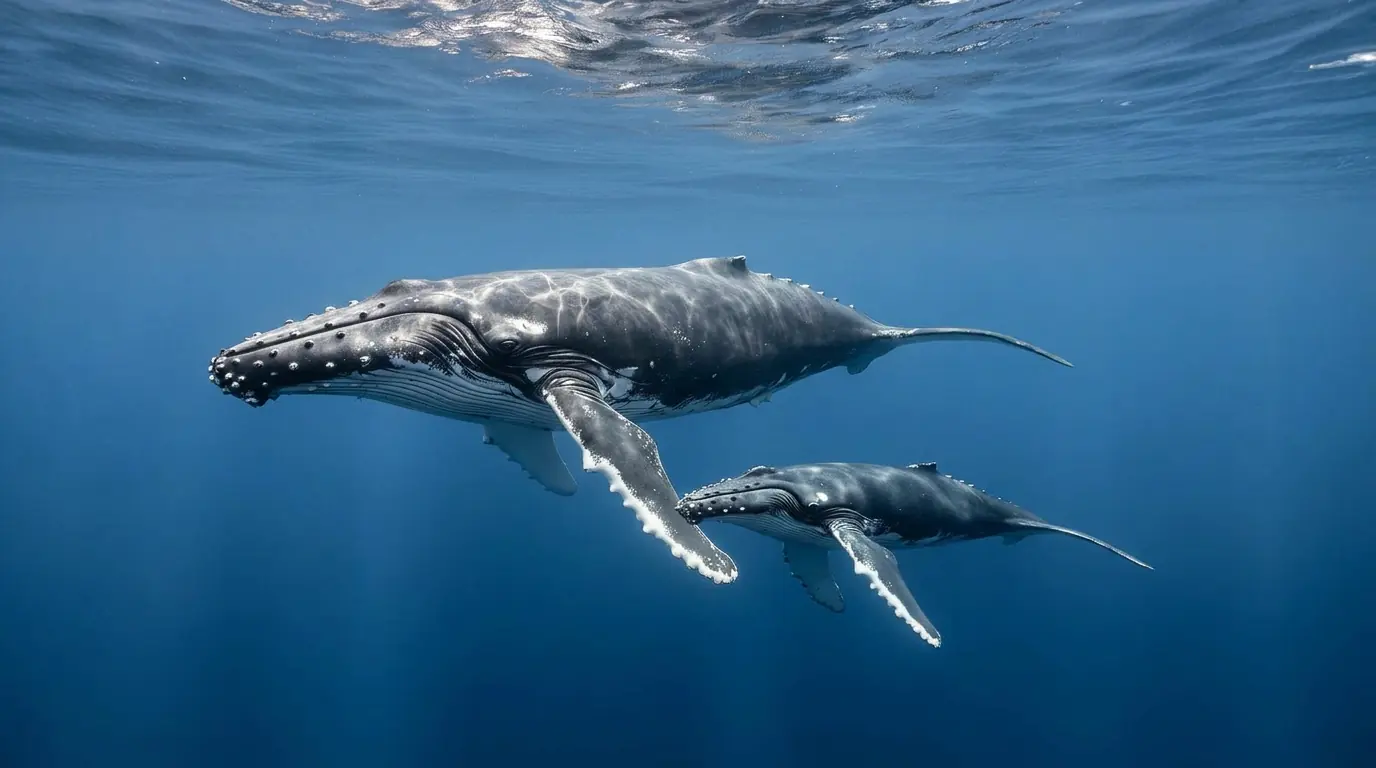
Nothing prepares you for the eye. A humpback is fifteen metres of animal, and when it rolls slightly to look at you, the eye is the size of a grapefruit and unmistakably assessing. People describe the moment identically across every destination: the scale stops registering and it becomes a conversation.
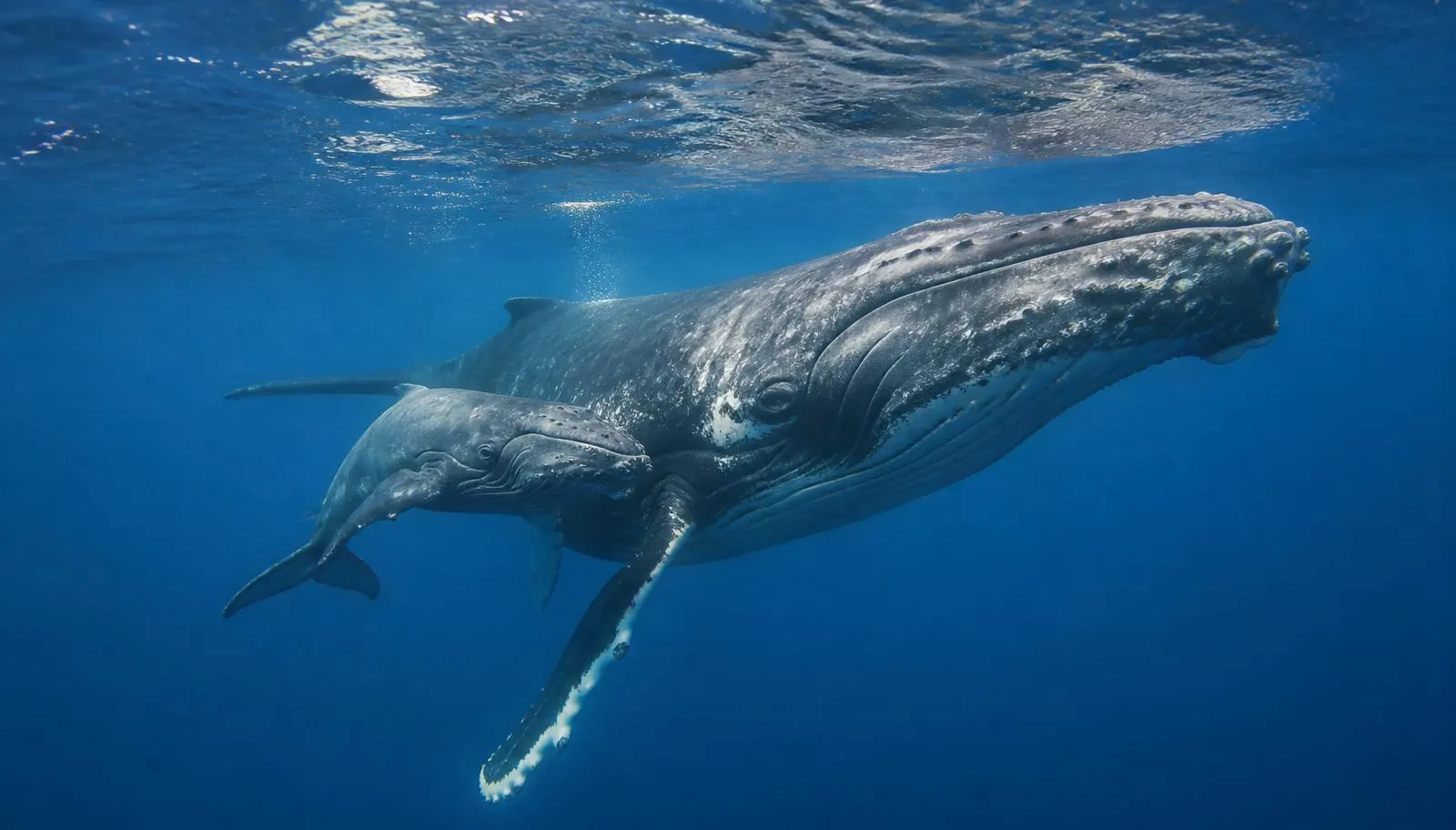
Most encounters are quiet. A mother and calf hang motionless at 8 to 15 metres, the calf surfacing every few minutes to breathe while the mother waits below. You float on the surface, do not swim towards them, and let the calf — always the curious one — decide how close it comes. Sessions can last five minutes or forty.
Then there is sound. Male humpbacks sing from around thirty metres down, and the song is not something you hear so much as feel in your sternum and sinuses. Divers who have done it once book flights to do it again.
All of this happens on a snorkel. Scuba is banned or pointless in nearly every whale-swim destination: bubbles unsettle the animals, and a diver cannot reposition fast enough to matter.
Where you can legally dive with whales
Most countries prohibit in-water contact with cetaceans entirely. The list below is where licensed, regulated whale swimming actually exists.
Tonga is the benchmark and has been running licensed swims since 1993. Dominica is the only place on Earth with permits to swim with sperm whales. Norway is the only reliable in-water orca destination.
| Destination | Species | Season | Odds | Typical cost |
|---|---|---|---|---|
| Vava'u, Tonga | Humpback (mother & calf) | Jul–Oct | Very high | $250–350 / day |
| French Polynesia (Moorea, Rurutu) | Humpback | Aug–Oct | High | $180–280 / day |
| Dominica | Sperm whale | Nov–Mar | High | $300–450 / day |
| Norway (Skjervøy) | Orca & humpback | Nov–Jan | High | $350–500 / day |
| Ningaloo, Australia | Humpback | Aug–Oct | Moderate–high | $350–450 / day |
| Baja, Mexico | Grey whale (boat contact) | Jan–Mar | Very high | $100–200 / day |
| Sri Lanka (Trincomalee) | Blue whale | Mar–Apr | Low (boat only) | $60–120 / day |
| Azores, Portugal | Sperm & baleen whales | Apr–Oct | Moderate | $150–250 / day |
| Antarctica | Humpback, minke, orca | Dec–Mar | Boat/kayak | Expedition voyage |
Vava'u, Tonga
Species: Humpback (mother & calf)
Season: Jul–Oct
Odds: Very high
Typical cost: $250–350 / day
French Polynesia (Moorea, Rurutu)
Species: Humpback
Season: Aug–Oct
Odds: High
Typical cost: $180–280 / day
Dominica
Species: Sperm whale
Season: Nov–Mar
Odds: High
Typical cost: $300–450 / day
Norway (Skjervøy)
Species: Orca & humpback
Season: Nov–Jan
Odds: High
Typical cost: $350–500 / day
Ningaloo, Australia
Species: Humpback
Season: Aug–Oct
Odds: Moderate–high
Typical cost: $350–450 / day
Baja, Mexico
Species: Grey whale (boat contact)
Season: Jan–Mar
Odds: Very high
Typical cost: $100–200 / day
Sri Lanka (Trincomalee)
Species: Blue whale
Season: Mar–Apr
Odds: Low (boat only)
Typical cost: $60–120 / day
Azores, Portugal
Species: Sperm & baleen whales
Season: Apr–Oct
Odds: Moderate
Typical cost: $150–250 / day
Antarctica
Species: Humpback, minke, orca
Season: Dec–Mar
Odds: Boat/kayak
Typical cost: Expedition voyage
Tonga — humpback mothers and calves in Vava'u
Between July and October, humpbacks that fed all summer in Antarctica arrive in the warm, sheltered water around Vava'u to calve and mate. The calm channels between the islands mean mothers can rest with newborns in flat water — and that is precisely what makes swimming possible.
Trips are licensed and tightly capped: four swimmers plus one guide in the water at a time, no swimming towards the animal, and boats must approach from the side and cut engines. Groups rotate so everyone gets in. A good day gives three or four encounters; a great day gives you a calf that circles the group for half an hour.
July and early August favour recent births and heat runs — competitive groups of males racing after a female, which is spectacular but rarely swimmable. September and early October are the classic calf-interaction weeks, when the young are strong enough to be curious. Water is 25–27 °C, and a 3 mm suit is right for repeated long swims.
Dominica — the only place you can dive with sperm whales
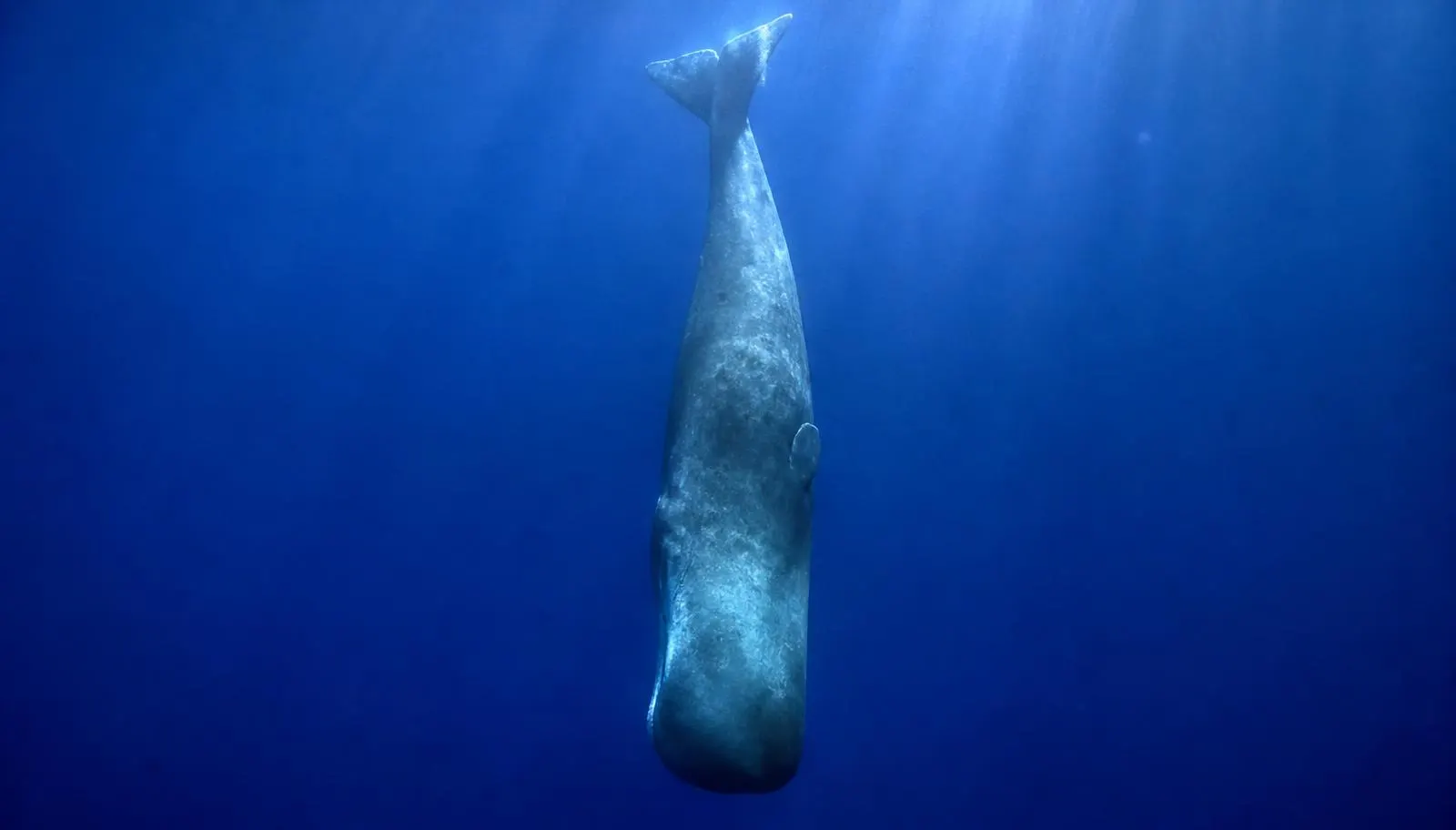
A resident family of sperm whales lives year-round in the deep water a mile off Dominica''s west coast, and the government issues a strictly limited number of in-water permits. Nowhere else on Earth allows it. Season runs November to March, when the clans are most reliably close inshore.
These are the largest toothed predators alive: 11 to 16 metres, with a head full of the densest sound-producing organ in nature. Encounters are usually with socialising groups hanging vertically in the water column, or a nursing calf left at the surface while adults dive to 1,000 metres. You will hear their clicks — sharp, mechanical, and loud enough to feel.
Permits are expensive and the boats are small, so trips book out a year ahead. Expect long searches with hydrophones between contacts, and accept that some days deliver nothing. It is the most exclusive whale encounter in the world for exactly that reason.
Norway — orcas and humpbacks under the northern lights
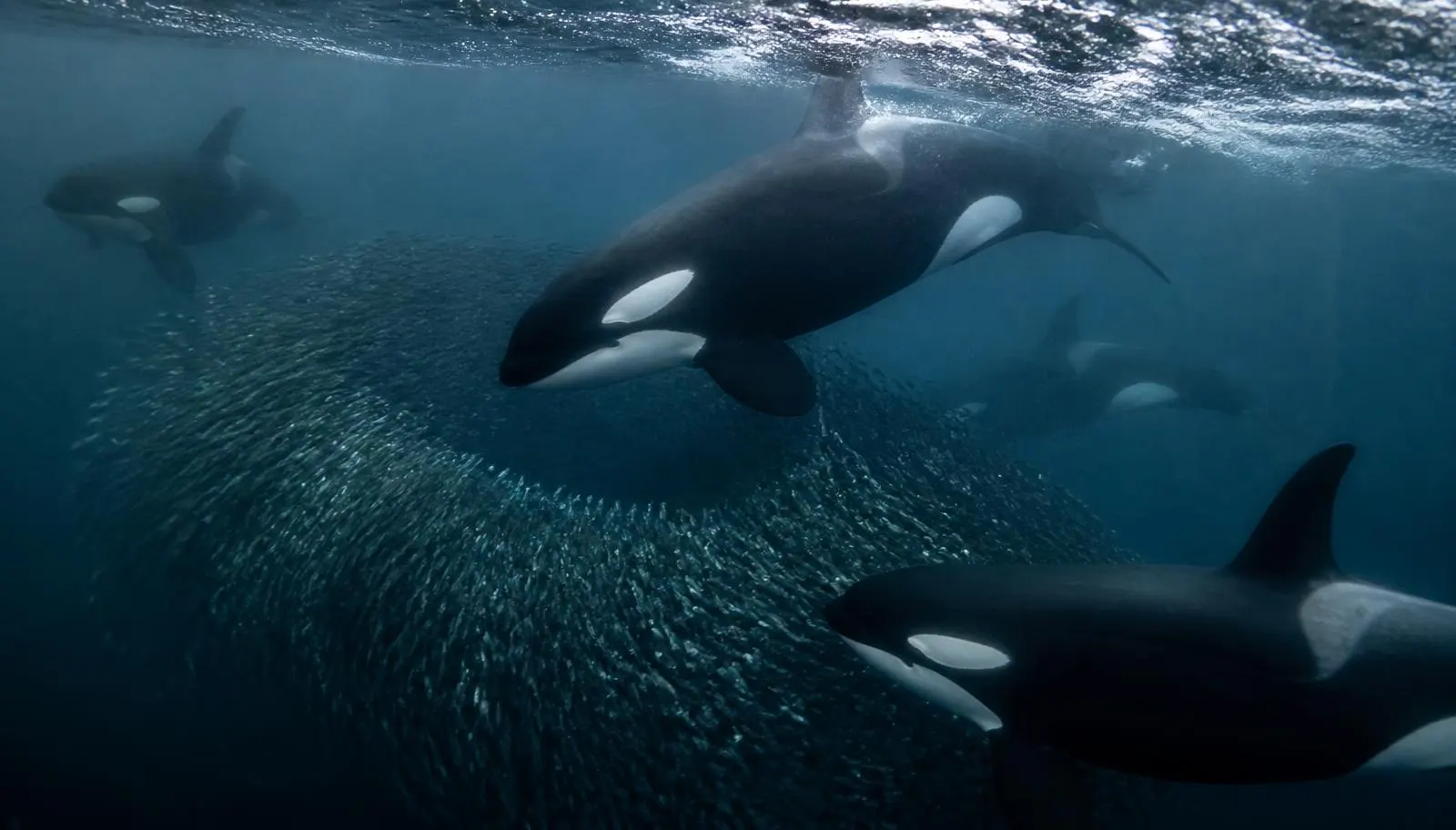
From November to January, billions of herring winter in the fjords around Skjervøy and Kvænangen, and orcas and humpbacks follow them in. Orcas herd the shoal into a tight ball and stun fish with tail slaps — carousel feeding — while humpbacks lunge through from below. Snorkellers slip in quietly at the edge of the action.
This is cold-water snorkelling in its purest form: 4 to 6 °C water, a drysuit with hood and gloves, and perhaps three or four hours of usable twilight a day. Bring the right gear and it is genuinely comfortable; borrow the wrong gear and it is miserable.
Trips run from Tromsø as day boats or small liveaboard-style vessels, and most nights deliver northern lights on top. Rules forbid swimming towards animals or getting in among the feeding ball itself.
French Polynesia, Australia and the Pacific humpback route
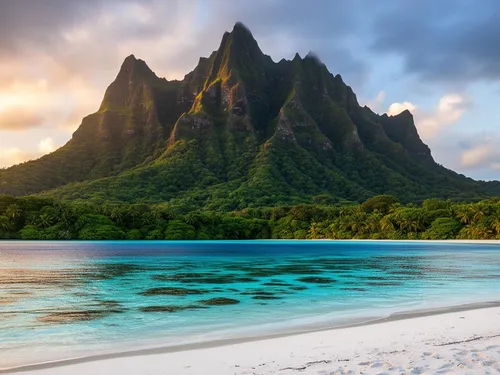
Moorea and Rurutu run licensed humpback swims from August to October, with the same Antarctic-breeding population that reaches Tonga. Polynesian law is strict: a single boat per whale, licensed guides only, no swimming in front of an animal, and a hard 30 m limit for boats. Rurutu''s dramatic drop-off means whales pass extremely close inshore.
In Australia, in-water swims are permitted at Ningaloo Reef from August to October, sold as a bolt-on to the whale shark boats. Success rates are lower than Tonga because these whales are migrating rather than resting, but the same day can produce whale sharks, humpbacks and manta rays.
Elsewhere on the Pacific route — Niue, the Cook Islands, Tahiti''s outer islands — a handful of small operators run swims under similar rules, with fewer boats and less certainty.
Mexico, Sri Lanka and the Azores: whales you watch, not dive with
Baja California''s San Ignacio and Ojo de Liebre lagoons deliver the strangest whale encounter on the planet: grey whale mothers push their calves against the boats to be scratched and patted. You do not get in the water — the whales come to you. January to March, and the reliability is close to absolute.
Sri Lanka off Trincomalee and Mirissa has the world''s most accessible blue whales, but swimming with them is not permitted and boat crowding is a genuine welfare problem. Choose a small operator that keeps 100 m distance and does not cut across the animal''s track.
The Azores are Europe''s best whale-watching, with sperm whales year-round and blue, fin and sei whales passing in April and May. In-water swims are restricted to dolphins, not whales.
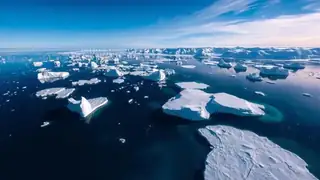
Antarctica sits in its own category: humpbacks and minkes approach zodiacs and kayaks so closely that no in-water time is needed, and swimming is prohibited.
Whale diving etiquette: the rules that keep it legal
Every one of these is a licence condition somewhere. Break them and the operator, not you, pays for it.
- Never swim towards a whale. Enter quietly, float, and let the animal close the distance. This is the rule that gets tours shut down.
- No diving down. Duck-diving onto a resting mother is read as a threat and ends the encounter.
- Stay in a tight group beside the guide — a spread-out line looks like encirclement.
- No touching, ever, even if the calf initiates it.
- No flash and no drones over animals unless the operator holds a permit.
- Keep 10 m from adults and never come between a mother and her calf.
- Be quiet on the boat. Hull noise and shouting are what typically drive whales down.
What it costs
Whale swimming is the most expensive marine wildlife encounter there is, because permits are capped and boats carry few people. Tonga runs $250 to $350 a day, usually booked as 5- to 8-day packages with accommodation. Dominica sperm whale trips cost $300 to $450 a day and often require multi-day bookings. Norway is $350 to $500 a day including drysuit hire. French Polynesia sits at $180 to $280.
Cheaper options exist where you stay in the boat: Baja grey whales at $100 to $200, Sri Lanka blue whales at $60 to $120, Azores whale watching at $150 to $250.
Budget for the season: July to October in the South Pacific and November to March in the Caribbean and Arctic are peak, and the best operators sell out 9 to 12 months ahead.
What to pack
- Long freediving fins. Whale swims are surface swims and you may need to cover 50 m quickly to reposition.
- 3 mm wetsuit for the tropics; a drysuit, hood and dry gloves for Norway (rental is standard but book early).
- Low-volume mask if you free-dive, plus a spare.
- Wide-angle camera, ideally 15 mm or wider on full frame; a whale does not fit in anything narrower.
- Sea sickness tablets — Dominica and Norway involve long open-water searches.
- Warm layers and a windproof shell for surface intervals, even in Tonga.
Month-by-month whale calendar
The southern and northern seasons are almost exactly opposite: humpbacks in the South Pacific from July to October, orcas and sperm whales in the north from November to March.

Vava'uTonga
Humpback mothers and calves resting in sheltered channels; the world's most reliable whale swim.
No liveaboards available

Moorea & RurutuFrench Polynesia
Licensed humpback swims with strict one-boat-per-whale rules.

DominicaCaribbean
The only permitted sperm whale swims on Earth, with a resident family group.

SkjervøyNorway
Orcas and humpbacks carousel-feeding on herring in 4 °C fjords, under the northern lights.
No liveaboards available

NingalooAustralia
In-water humpback swims sold alongside whale sharks and manta rays.

Baja CaliforniaMexico
Grey whale mothers push calves against the boats to be touched; no swimming needed.

TrincomaleeSri Lanka
The most accessible blue whales in the world — boat-based watching only.
No liveaboards available

AzoresPortugal
Sperm whales year-round plus blue and fin whales passing in spring.

Antarctic PeninsulaAntarctica
Humpbacks and minkes approach zodiacs and kayaks; February and March are peak.
Is diving with whales dangerous?
Handled properly, no. Humpbacks and sperm whales are enormously aware of where their bodies are, and there is no record of a licensed whale swim ending in a deliberate attack. Orcas have never killed a human in the wild.
The risks are physical and situational: a pectoral fin or fluke moved without warning at close range, being caught between a mother and calf, cold-water shock in Norway, and exhaustion or separation from the boat in swell. Every one of them is managed by staying beside the guide and never approaching the animal.
Sperm whales deserve one extra note: their echolocation clicks are among the loudest sounds any animal makes. At very close range they are physically uncomfortable, which is one of several reasons Dominica caps distance and group size so tightly.
Choosing an ethical whale operator
Ask whether the operator holds a government permit — in Tonga, Dominica, French Polynesia and Australia, whale swimming without one is illegal, and unlicensed boats do exist. Ask how many swimmers go in per rotation: four plus a guide is the legal maximum in Tonga and a reasonable benchmark anywhere. Ask what happens when a whale shows avoidance behaviour; the right answer is that the boat leaves and finds another animal.
Good signs: a briefing before departure, guides who abort encounters early, hydrophones and spotters rather than chasing, no guarantees, and contributions to photo-ID research. Bad signs: multiple boats converging on one whale, swimmers dropped in front of a moving animal, drones without permits, and marketing images of people touching whales.
If you want the encounter built into a full diving trip, Antarctica, the Azores and Ningaloo all combine whale season with serious diving — tell us your dates and we will line up the itinerary.