Australia Liveaboard Diving

Liveaboards in Australia

from $356 / day

2 of 2 · Australia liveaboard routes, seasons & prices

Odyssey Liveaboard

Discover Australia's remote Rowley Shoals aboard a stable and spacious liveaboard.

  • Aircon Cabins
  • Warm Water Showers
  • Air Conditioned saloon

4.8(273 reviews)

20 guestsfrom $356/day
Spoilsport

Australia's award-winning liveaboard for unparalleled Great Barrier Reef and Coral Sea diving.

  • En-Suite bathrooms
  • Aircon Cabins
  • Warm Water Showers

4.6(89 reviews)

28 guestsfrom $408/day

Diving in the Coral Sea: wrecks, walls and whale sharks

Beyond the continental shelf lies the true frontier of diving in Australia. While the Great Barrier Reef is its most famous jewel, the ultimate liveaboard experience in Australia reaches further out into the deep, clear water of the remote Coral Sea. These expeditions reach untouched outer reefs and steeply dropping oceanic walls, far from any day boat, and deliver a genuine sense of discovery on a colossal scale.

Most liveaboards depart from Cairns or Port Douglas in Queensland. Shorter itineraries work the Ribbon Reefs, a chain of ten reefs running north along the outer edge of the Great Barrier Reef, home to Cod Hole, where enormous and famously curious potato cod meet divers on the sand, and Steve's Bommie, a single pinnacle so densely packed with life that most divers do it twice. Longer trips push east to the Coral Sea, where sites such as Osprey Reef, Bougainville Reef and Holmes Reef rise from more than 1,000 metres of open ocean. Visibility at Osprey Reef regularly exceeds 40 metres, and North Horn is one of the most reliable shark dives in the Pacific, with grey reef and whitetip sharks, silvertips and occasional hammerheads patrolling the amphitheatre.

Further south and west, Australia offers dives found nowhere else: the Yongala wreck off Townsville, widely rated among the best wrecks in the world for sheer fish density; Ningaloo Reef in Western Australia for whale sharks between March and July and humpbacks from August to October; and the temperate reefs of South Australia for sea lions, leafy sea dragons and cage diving with great whites at the Neptune Islands.

Water on the tropical east coast runs between 23 and 29 degrees Celsius, warmest from December to March and coolest in July and August, when a 5 mm suit is welcome. Visibility ranges from 12 to 30 metres inshore and far more offshore. The Coral Sea season peaks from August to January, with the dwarf minke whale aggregation on the Ribbon Reefs from June to July offering one of the few in-water encounters with baleen whales permitted anywhere in the world. Coral spawning, usually in November, is another calendar highlight.

Marine life is vast: more than 1,500 fish species, six of the world's seven sea turtle species, manta rays, giant clams, nudibranchs in extraordinary variety and reef systems visible from orbit. Australian operators run to strict safety and environmental standards, and most vessels are large, stable and well-equipped for multi-day offshore crossings, with nitrox, camera stations and four to five dives a day including night dives.

Australia suits divers who want scale, structure and big animals in one trip. Reef dives are accessible to Open Water divers, while Coral Sea walls and shark dives are best enjoyed with an Advanced certification and comfort in blue water.

Why dive a liveaboard in Australia

From legendary wrecks and thriving reefs to close-up encounters with iconic marine life, this destination offers the experiences divers dream about. Warm, clear waters and well-organized liveaboard routes make it easy to explore the best sites. These are the highlights that keep divers coming back year after year.

Great Barrier Reef

The world's largest coral reef system stretching over 2,300km

Minke whale encounters

Swim with dwarf minke whales during their annual migration

Ningaloo Reef

Whale shark snorkelling on Australia's western reef

SS Yongala wreck

One of the world's best wreck dives, teeming with life

Who a liveaboard in the Coral Sea suits — and who it doesn't

Australia spans a tropical barrier reef, remote Coral Sea walls, cool-water sea lions and a legendary shipwreck — the coast you pick defines the trip.

Beginners

Open Water, from about 20 dives

Inner Great Barrier Reef sites out of Cairns and Port Douglas are shallow, sheltered and heavily used for training.

Matching areas:Great Barrier ReefCairnsPort Douglas

Advanced divers

Advanced, blue-water and current experience

Coral Sea walls at Osprey Reef drop into open ocean with shark action; Ningaloo whale-shark snorkelling runs roughly March to July.

Matching areas:Osprey ReefRibbon ReefsNingaloo

Deep and technical

Deep, Nitrox, wreck penetration

The SS Yongala off Townsville lies at roughly 16 to 30 metres in current and is protected — no penetration allowed; the HMAS Brisbane and other scuttled wrecks host technical training.

Matching areas:SS YongalaHMAS BrisbaneOsprey Reef

Photo and video

Wide-angle and macro, strong operator base

Dwarf minke whale encounters on the Ribbon Reefs in June and July, sea lions in South Australia, and the Yongala’s dense fish life.

Matching areas:Ribbon ReefsSS YongalaPort Lincoln

Best time to dive in Australia

Diving on the Great Barrier Reef is possible year-round, but conditions and marine life encounters shift with the seasons. Water temperatures range from a cool 23°C in winter (June-August) to a warm 29°C in summer (December-March). The peak Coral Sea season runs from August to January, while special events like the dwarf minke whale aggregation in June and July and coral spawning in November define the calendar for many divers.

👆 Click any month for detailed conditions
Excellent
Good
Off-Season

June–October

Dry season with best visibility on the Great Barrier Reef. Minke whale season June–July. Ningaloo whale sharks March–July.

April–May, November

Comfortable temperatures, good visibility, fewer crowds. Giant cuttlefish aggregation in South Australia May–August.

December–March

Wet season in the tropics. Reduced visibility, jellyfish season. Warmer water attracts coral spawning.

Underwater visibility

32m
(105ft)
21m
(69ft)
10m
(33ft)
Jan
Feb
Mar
Apr
May
Jun
Jul
Aug
Sep
Oct
Nov
Dec

Air & water temperature

33°C 27°C 21°C
29°
31°
29°
31°
28°
30°
27°
28°
25°
26°
24°
24°
23°
24°
23°
25°
24°
27°
26°
29°
27°
30°
28°
31°
Jan
Feb
Mar
Apr
May
Jun
Jul
Aug
Sep
Oct
Nov
Dec
Water
Air (Day)

Recommended wetsuit

3mm
3mm
3mm
3mm
5mm
5mm
5mm
5mm
5mm
5mm
3mm
3mm
Jan
Feb
Mar
Apr
May
Jun
Jul
Aug
Sep
Oct
Nov
Dec
3mm (warm)
5mm (moderate)
Wetsuit Guide

What you'll see diving in the Coral Sea

Australia's marine life is vast, from the 1,500 fish species of the Great Barrier Reef to unique temperate water creatures. Divers can expect encounters with giant potato cod at Cod Hole, reef sharks at Osprey Reef, and six species of sea turtles across the region. Seasonally, the coast hosts major migrations, including dwarf minke whales on the Ribbon Reefs in June and July, and whale sharks at Ningaloo Reef from March to July.

When to See What

Use this calendar as a guide: the highlighted months show when your chances are usually best. Wildlife follows its own rhythm, so sightings are never guaranteed — but we hope this makes planning a little easier. The rhythm of Australian diving is defined by spectacular seasonal migrations. From June to July, dwarf minke whales visit the Ribbon Reefs, while whale sharks congregate at Ningaloo Reef from March to July, followed by humpback whales between August and October.

Species
Jan
Feb
Mar
Apr
May
Jun
Jul
Aug
Sep
Oct
Nov
Dec
Whale Shark
Whale Shark
Reef Manta Ray
Reef Manta Ray
Green Turtle
Green Turtle
Humpback Whale
Humpback Whale
Giant Cuttlefish
Giant Cuttlefish
Coris
Coris
Porcelain Crab
Porcelain Crab
Sea Hare
Sea Hare
Sea Slug
Sea Slug
Shovelnose Ray
Shovelnose Ray
Silver Drummer
Silver Drummer
Stripey
Stripey
Tambja morosa
Tambja morosa
Triplefin
Triplefin
Velvet Surgeonfish
Velvet Surgeonfish
Peak Season
Present
Rare/Absent

Cod Hole and Osprey Reef: the best dive sites in Australia

Australia's most iconic dive sites lie far offshore, accessible only by liveaboard. Expeditions reach the outer Ribbon Reefs to visit Cod Hole, famous for its giant, curious potato cod, and Steve's Bommie, a pinnacle bursting with life. Longer trips push out to the Coral Sea to dive the sheer oceanic walls of Osprey Reef, where North Horn offers one of the Pacific's most reliable shark encounters in visibility that often exceeds 40 metres.

1

Boat Rock

Advanced
030m / 098ftBest: April–September-34.0700°, 151.1700°

Boat Rock is a prominent, exposed pinnacle situated off the northern end of North Stradbroke Island, also known as Minjerribah, in southeast Queensland. This site is a small rocky outcrop that barely breaks the surface, characterized by steep sides descending directly to 25 meters onto a sandy bottom. Surrounding the main pinnacle is a complex network of rocky gutters, ledges, and smaller bommies that extend out to depths of around 30 meters. The topography creates a magnet for pelagic species and large schooling fish, making it one of the most action-packed dive sites in the Point Lookout area. While coral growth on the pinnacle itself is sparse, the abundant fish life includes dense schools of bigeye and giant trevally, kingfish, fusiliers, snapper, and mackerel. Queensland groupers reside in the gutters, and rays such as spotted eagle rays, bull rays, and stingrays frequent the sandy areas. Diving here is considered advanced due to the almost constant strong currents, which demand experienced divers comfortable with depth and drift conditions. Visibility typically ranges from 10 to 20 meters on good days, but can drop significantly after heavy rainfall or southerly weather. The site is circumnavigable on a single dive if divers maintain a steady pace, with surrounding ledges and gutters inviting further exploration. Boat Rock is less frequently dived compared to other North Stradbroke sites because of these challenging conditions and the difficulty in anchoring. However, when conditions align, it consistently delivers spectacular big fish encounters, making it a highly rewarding destination for those with the requisite skills.

Exposed pinnacle dive siteStrong currents, pelagic actionGiant trevally schoolsQueensland groupersSpotted eagle raysBronze whaler sharksWobbegongs and moray eelsCooler month shark sightings
2
812m / 2639ftBest: Diving at Cocos Keeling - Canons is ex…-12.1150°, 96.8850°

Cocos Keeling - Canons offers a distinctive dive experience within the Cocos (Keeling) Islands lagoon, making it Australia's most remote dive destination. This site, officially known as the Gerhard Cannon Site, is notable for its six iron cannons, dating from the early to mid-19th century, which lie rusted in two clusters on the seabed. These cannons, likely salvaged from historic shipwrecks, are surrounded by a debris field that includes metallic wreckage, old telegraph cables, and even what local rumor suggests is a forgotten safe. The dive site runs shallow, typically between 8 to 12 meters, allowing for relaxed multi-level profiles suitable for various certification levels, often as a post-lunch dive. Beyond its historical artifacts, Canons is a vibrant natural reef, home to a diverse array of marine life. It is particularly known for frequent sightings of 'Kat', the resident dugong, as well as dolphins and manta rays that are often seen entering or leaving the lagoon. During summer months, giant triggerfish nest here, and fine sand under ledges can reveal white cap partner gobies. The Cocos (Keeling) Islands generally boast an average visibility of 25 meters, clear turquoise waters, and consistently warm temperatures ranging from 26°C to 29°C. The islands are surrounded by a protected marine park, home to over 600 species of fish and nearly 100 species of coral, contributing to the rich biodiversity observed at sites like Canons. This combination of unique historical elements and thriving reef ecosystems provides an engaging and memorable dive for visitors.

Historic iron cannonsResident dugong 'Kat'Dolphin and manta ray sightingsHealthy reef lifeShallow, multi-level profileEarly to mid-19th century artifactsClear, warm Indian Ocean waters
3

Raine Island

Advanced
540m / 16131ftBest: October–December-11.5900°, 144.0300°

Raine Island is a pivotal dive site located in the Far Northern Great Barrier Reef, approximately 85 kilometers east-north-east of Cape Grenville and just over 4 nautical miles south of the island itself. It stands as an important, remote, and largely unexplored part of the reef, offering an expedition-style diving experience. The underwater topography features steep oceanic walls, flourishing coral gardens, and a reef top sloping gradually from about one meter down to five meters before a sharp drop to depths exceeding 30 meters. This location is globally recognized as the largest and most critical nesting area for green sea turtles, drawing thousands of females to its shores annually, especially between October and March. Divers here frequently encounter large numbers of green sea turtles, along with grey and whitetip reef sharks, barracuda schools, and manta rays during specific conditions. The site also boasts diverse macro marine life, including nudibranchs, shrimps, and pipefish. The strong oceanic currents contribute to exceptional water clarity and resilient coral systems, which maintain high coral cover. Due to its remote location and exposure to oceanic conditions, Raine Island is exclusively accessible via liveaboard, requiring a liveaboard journey from Cairns or Horn Island. Diving here is suited for experienced divers comfortable with potential strong currents and deep wall dives, promising a wild and unfiltered underwater adventure away from crowded tourist routes.

World's largest green sea turtle nurserySpectacular coral wall divesTiger shark encountersRemote, pristine Great Barrier ReefExceptional pelagic marine lifeUnexplored, dynamic ecosystemHigh coral cover and vibrancy
4

Manta Bommie

Intermediate
1420m / 4666ftBest: October–April-27.4340°, 153.5563°

Manta Bommie is consistently ranked among Australia's top dive sites, located a short boat ride from Point Lookout on North Stradbroke Island. This popular outer-reef cleaning station is famed for its consistent presence of reef manta rays, making it a significant draw for divers and snorkelers. The topography consists of large rock and reef formations rising from the sandy seafloor, forming a 'bommie' that serves as a vital cleaning station for mantas and other pelagic species. Depths at the bommie range from 14 to 20 meters, with the pinnacle reaching 14 to 16 meters and its base extending to 18 to 20 meters, making it accessible for various diver levels. While manta rays are frequently spotted from October to April, the site also hosts a rich variety of marine life year-round. Divers can expect to encounter green and loggerhead turtles, eagle rays, leopard sharks, guitarfish, and diverse reef fish. Seasonal highlights include schooling eagle rays and cownose rays, alongside numerous macro subjects like nudibranchs and flatworms. Diving Manta Bommie typically involves a guided boat operation, approaching the site as a patient mid-depth dive where divers maintain position around the bommie. The experience centers on observing mantas and other large animals as they interact with the cleaning station, providing exceptional wide-angle photography opportunities.

Consistent manta ray sightingsOuter-reef cleaning stationDiverse shark speciesVibrant reef formationsRich pelagic encountersGreen and loggerhead turtles

Bucket-list dives worth booking early

A liveaboard trip in Australia delivers several bucket-list experiences found nowhere else on the planet. Snorkeling with inquisitive dwarf minke whales on the Ribbon Reefs in June and July is a unique and permitted in-water encounter. Other trip-defining moments include coming face-to-face with the giant potato cod at the legendary Cod Hole and exploring the remote, shark-patrolled oceanic walls of the Coral Sea.

Underwater view of the dive site Great Barrier Reef Exploration in Australia
1
June – October

Queensland Coast

Dive the world's largest coral reef system, spanning over 2,300 kilometers with 1,500 species of fish and 400 types of coral – a UNESCO World Heritage wonder.

Read more
Underwater view of the dive site Minke Whale Season in Australia
2
June – July

Ribbon Reefs

Snorkel with curious dwarf minke whales during their annual migration through the Ribbon Reefs – one of the world's few places where these gentle giants approach humans.

Read more
Underwater view of the dive site Cod Hole Encounters in Australia
3
Year-round

Ribbon Reef No. 10

Dive the legendary Cod Hole and interact with giant potato cod weighing over 100kg that approach divers for close encounters – an iconic Australian dive experience.

Read more

Above water: climate, shore trips and extra costs

While the diving is the main event, Australia offers incredible topside adventures to extend your trip. Before or after a Great Barrier Reef liveaboard, you can explore the Whitsunday Islands by sailboat. For those venturing to other coasts, consider a swim with whale sharks at Ningaloo Reef in Western Australia or a journey through the vineyards of the Barossa Valley in South Australia.

Great Barrier Reef Scenic Flight

Great Barrier Reef Scenic Flight

See the iconic Heart Reef and the stunning scale of the Great Barrier Reef from a helicopter or seaplane. The aerial perspective reveals the intricate coral formations and turquoise waters in breathtaking detail.

Daintree Rainforest Walk

Daintree Rainforest Walk

Explore the world's oldest tropical rainforest, a UNESCO World Heritage site where the jungle meets the reef. Spot cassowaries, tree kangaroos, and ancient ferns on guided boardwalk trails.

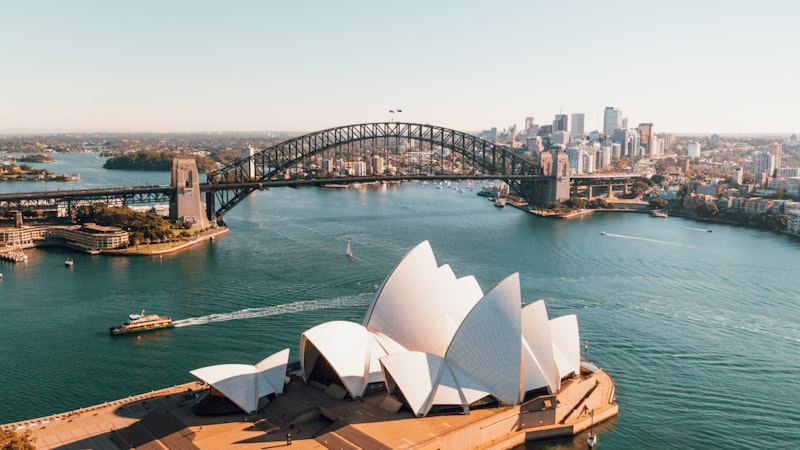
Sydney Harbour & Opera House

Sydney Harbour & Opera House

Cruise past the iconic Sydney Opera House and Harbour Bridge on a harbour cruise. The dazzling waterfront cityscape is one of the world's most recognisable and photogenic urban landscapes.

Whitsunday Islands Sailing

Whitsunday Islands Sailing

Sail through 74 tropical islands with pristine Whitehaven Beach, ranked among the world's best. The pure silica sand and swirling turquoise waters of Hill Inlet are utterly mesmerising.

What a liveaboard in Australia costs

The calendar below shows how liveaboard prices shift month by month, so you can see exactly when your money goes furthest. We want every diver to get the best possible value, which is why we highlight the seasons that balance great conditions with the fairest rates.

Australia is a premium liveaboard destination, with daily rates reflecting the high operational standards and remote nature of the itineraries. Prices vary based on the vessel's comfort level, with options ranging from budget-friendly catamarans to luxurious, purpose-built dive ships. The season also influences cost, with peak demand and higher prices during the unique dwarf minke whale season in June and July.

$356–$408

per day liveaboard

$150–$300

per 2-tank dive trip

$80–$250

hotel per night

Prices reflect typical costs for mid-range to premium options. Budget alternatives may be available.

Getting to Cairns and Hamilton Island: flights and transfers

Getting to your Australian liveaboard is straightforward, with Cairns Airport (CNS) serving as the main gateway for Great Barrier Reef and Coral Sea trips. Major Australian cities like Sydney and Brisbane offer direct domestic flights to Cairns, from where most boats depart. Transfers to the marinas in Cairns or Port Douglas are typically short, and most nationalities can easily obtain an Electronic Travel Authority (ETA) or eVisitor visa online before traveling.

Insider tips

🍽️

Dive during shoulder season (Mar-Apr, Oct-Nov) – Great conditions with lower prices and fewer tourists

🍽️

Book liveaboard trips to the outer Great Barrier Reef – All-inclusive packages offer better value than day trips

✈️

Use budget airlines for domestic flights – Jetstar and Bonza connect dive hubs at lower fares

🏨

Stay in hostels or Airbnbs in Cairns – Save significantly compared to resort accommodation

🚢

Bring your own dive gear – Rental fees on liveaboards and day boats add up quickly

🚢

Look for multi-day liveaboard deals – 3-4 night trips offer more dives per dollar than single day excursions

Getting there

Cairns Airport

CairnsCNS

Main gateway for Great Barrier Reef diving with domestic flights from Sydney, Melbourne, Brisbane

Hamilton Island Airport

Hamilton IslandHTI

Gateway for Whitsundays diving, direct flights from Sydney, Melbourne, Brisbane

Entry requirements

Most nationalities require an ETA (Electronic Travel Authority) or eVisitor visa. Apply online before travel. Valid passport required.

This information is provided without guarantee. Please visit the official website for the latest entry requirements.

Official Immigration Information →

Frequently asked questions about Australia liveaboards

When is the best time to dive in Australia?
Diving conditions in Australia change throughout the year. Check our month-by-month best-time-to-dive guides to plan around peak visibility, weather and marine life encounters.
Do I need a liveaboard to dive in Australia?
A liveaboard gives you access to remote dive sites in Australia that day boats cannot reach, plus 3–5 dives per day in maximum comfort. For the best dives in Australia, a liveaboard is the recommended choice.
What certification do I need to dive in Australia?
Most Australia liveaboards require Open Water as a minimum, with Advanced Open Water and 30+ logged dives recommended for currents and deeper sites. Some expert routes require Tech or 100+ dives.
How much does a Australia liveaboard cost?
Liveaboard prices in Australia typically range from €1,500 to €6,000+ per week depending on vessel category, route length and season. Browse the boats below for live pricing.
Do I need a visa for Australia?
Visa requirements vary by your nationality. Always check the latest entry rules with the destination's official government source before booking flights.
Is diving in Australia safe for beginners?
Many Australia sites are beginner-friendly, but some routes feature strong currents or deep walls suited only to experienced divers. Check each vessel's recommended experience level.

Australia compared with other liveaboard destinations

Honest, in-depth comparisons to help you decide between destinations, certifications, equipment and dive styles.

Liveaboard vs Land-Based Diving: Which Trip Is Right for You?

Choosing between a liveaboard and a land-based dive trip is the most fundamental decision divers face when planning a serious diving holiday. The right answer depends on your priorities: maximum dive count and access to remote sites favor liveaboards; beach time, family flexibility and lower cost favor land-based resorts. Both formats have evolved significantly in the last decade, and the line between them has blurred — luxury dive resorts now offer multi-day expedition trips, while many liveaboards include topside excursions and even spa days. This guide compares the two formats across every meaningful dimension: cost per day, dives per day, marine life access, comfort, social dynamics, family-friendliness, and travel logistics. We'll also cover the hybrid models (resort + day-charter, or 'safari boat' itineraries) that try to capture the best of both worlds. If you're certified, in love with diving and want to maximize bottom time, a liveaboard is almost always the better choice — you can clock 25+ dives in a week and reach sites no day boat can. If you're traveling with non-divers, prefer land-based comfort, or want flexibility to take days off, a resort wins. We'll get into all the nuances below.

Read comparison

Great Barrier Reef vs. Coral Sea: Your Liveaboard Dive Showdown

Australia's Queensland coast is a diver's paradise, boasting two of the world's most iconic underwater realms: the Great Barrier Reef (GBR) and the Coral Sea. While often mentioned in the same breath, these distinct destinations offer vastly different liveaboard experiences, catering to a spectrum of divers from beginners to seasoned pros. The Great Barrier Reef, a UNESCO World Heritage site, is a sprawling, accessible wonderland of vibrant shallow reefs, diverse marine life, and sheltered conditions. It's the quintessential Australian dive, perfect for those seeking colorful coral gardens and abundant fish in a generally calm environment. Liveaboards here typically explore the outer reef sections, offering multi-day adventures to sites inaccessible from day boats. Conversely, the Coral Sea lies further offshore, beyond the continental shelf. It's renowned for its dramatic drop-offs, pristine visibility, pelagic encounters, and deeper, more challenging diving. This remote frontier appeals to experienced divers seeking adrenaline-pumping drifts, shark action, and the thrill of exploring truly untouched underwater landscapes. Understanding these fundamental differences is key to choosing the liveaboard adventure that best suits your diving aspirations.

Read comparison

Australia vs Fiji Liveaboard: Your Ultimate Dive Destination Showdown

Choosing your next liveaboard destination can be a thrilling yet challenging decision, especially when comparing two world-renowned dive powerhouses like Australia and Fiji. Both offer unparalleled underwater experiences, from vibrant coral reefs to encounters with iconic megafauna, but they cater to slightly different preferences and budgets. Australia, home to the immense Great Barrier Reef and the remote Coral Sea, promises grand-scale biodiversity, dramatic drop-offs, and encounters with large pelagics. Its liveaboard offerings often focus on extended expeditions to pristine, offshore sites, appealing to divers seeking adventure and vast, untouched ecosystems. Fiji, the 'Soft Coral Capital of the World,' presents a different kind of allure with its kaleidoscopic reefs, abundant reef sharks, and warm, inviting waters. Its liveaboards often navigate through archipelagos, offering a blend of exhilarating drift dives and serene reef exploration, perfect for those who appreciate vibrant colors and a more intimate island-hopping experience.

Read comparison
Plan your trip

Ready to dive?

Explore our expedition vessels and find your perfect trip to Australia