Giant Cuttlefish
Sepia apama
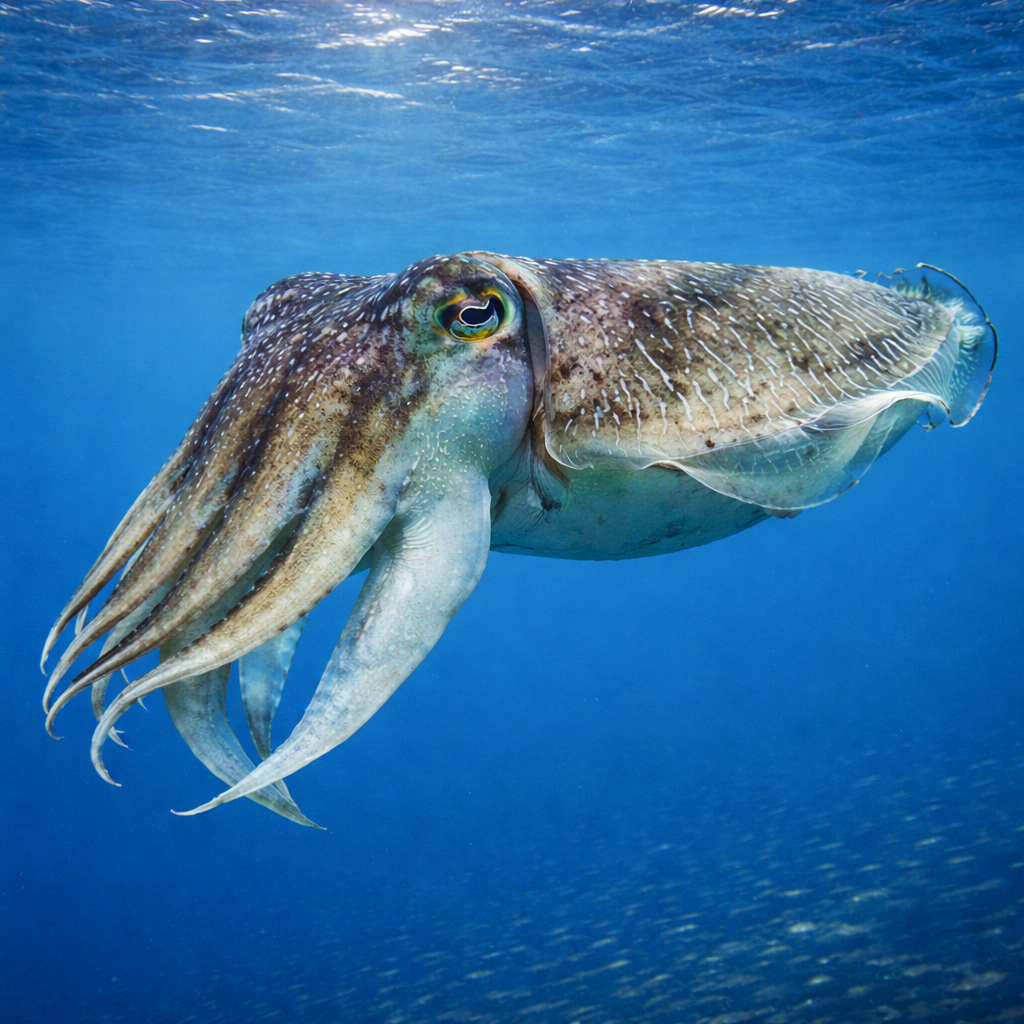
About Giant Cuttlefish
The world's largest cuttlefish species, famous for spectacular colour-changing displays during breeding aggregations in South Australia.
Quick Facts
- Habitat: The Giant Cuttlefish (Sepia apama) primarily inhabits the **temperate waters of southern Australia**, extending from Ningaloo Reef in Western Australia around the southern coastline to southern Queensland in the east. These remarkable cephalopods are typically found in **shallow, coastal waters**, often associated with rocky reefs, seagrass beds, and sandy substrates from the intertidal zone down to depths of about 100 meters, though they are most commonly encountered in less than 30 meters. Their preferred habitats offer ample opportunities for camouflage, hunting, and protection from predators. During their spectacular breeding aggregations, such as the famous gathering in **Spencer Gulf**, South Australia, they congregate in **sheltered rocky areas** with abundant crevices and rocky overhangs that provide ideal sites for egg-laying and protection for the young. While generally more dispersed throughout their range outside the breeding season, they still favor areas offering a mix of **hard and soft bottom features** for their diverse behavioral repertoire.
- Diet: Giant Cuttlefish are **apex predators** in their localized ecosystems, employing a sophisticated array of hunting techniques to capture their prey. Their diet primarily consists of **small fish, crabs, and prawns**, but they are also opportunistic and will consume other crustaceans and even smaller cephalopods. They use their highly developed eyesight to spot prey, often employing **rapid color changes and mesmerizing patterns** to hypnotize or distract their targets before striking. Their two long, retractable feeding tentacles, tipped with suckers, are explosively extended from within their eight arms to **snag and pull prey into their beak-like mouth**. Once captured, the prey is usually held firmly while the cuttlefish uses its powerful beak to crush shells or tear flesh. Their **ambush predation** strategy often involves camouflaging themselves perfectly against the seabed, waiting for an unsuspecting meal to pass within striking distance, making them incredibly effective hunters.
- Best season: The **absolute best season** to witness the Giant Cuttlefish, particularly their **incredible breeding aggregation**, is during the **Southern Hemisphere winter** months, specifically from **May to August**. This is when tens of thousands of individuals converge in the **shallow waters of Spencer Gulf**, near Whyalla, South Australia, creating one of the marine world's most spectacular natural events. This period offers unparalleled opportunities for divers to observe their elaborate courtship rituals, intricate color displays, and mass egg-laying. Outside of this specific aggregation, Giant Cuttlefish can be encountered year-round throughout their distribution in southern Australian waters, though sightings are less frequent and dispersed. For general diving encounters in other parts of their range, such as along the coasts of Victoria or Tasmania, the **warmer late spring and summer months (November to March)** might offer slightly better visibility and more comfortable diving conditions, though encounters are not guaranteed and will be more solitary. However, for the **true giant cuttlefish spectacle**, focusing on **Whyalla during winter** is paramount.
Fun Facts
They can change colour, pattern, and skin texture in less than a second,Males use a split-screen display—showing male colours to rivals on one side and female colours to mates on the other,The Whyalla aggregation can involve over 100,000 individuals in a single season,They have the largest brain-to-body ratio of any invertebrate,After breeding, both males and females die—their entire adult life lasts only one season
Diving Tips
When diving with Giant Cuttlefish, **slow, deliberate movements** and **excellent buoyancy control** are paramount to avoid startling these intelligent creatures. They are generally unbothered by divers, especially during the breeding season when they are highly focused on mating, but sudden movements can cause them to jet away. Look for them in areas with **rocky outcrops and crevices**, or camouflaged against **sandy or rubble bottoms**. During the **Whyalla aggregation**, they are often in very shallow water, sometimes less than 5 meters, so be mindful of your depth and surroundings. Observe their **mesmerizing color changes**; these are not only for camouflage but also for communication, displaying courtship, aggression, or alarm. Maintain a respectful distance, roughly **1.5 to 2 meters**, allowing them space to behave naturally; avoid touching them or interfering with their activities. Night dives can also be particularly rewarding, as cuttlefish are often more active feeders after dark. Legally and ethically, it's crucial to **never harass or collect** cuttlefish or their eggs. In the Spencer Gulf special management zone, specific rules apply during the breeding season. Always check local regulations. For photography, use **gentle, diffused lighting** and avoid repetitive, intense flashes that could disturb them. Focusing on their intricate eye movements and the rhythmic pulsation of their fins can reveal much about their behavior. Remember, patience is key to witnessing their full range of remarkable behaviors.