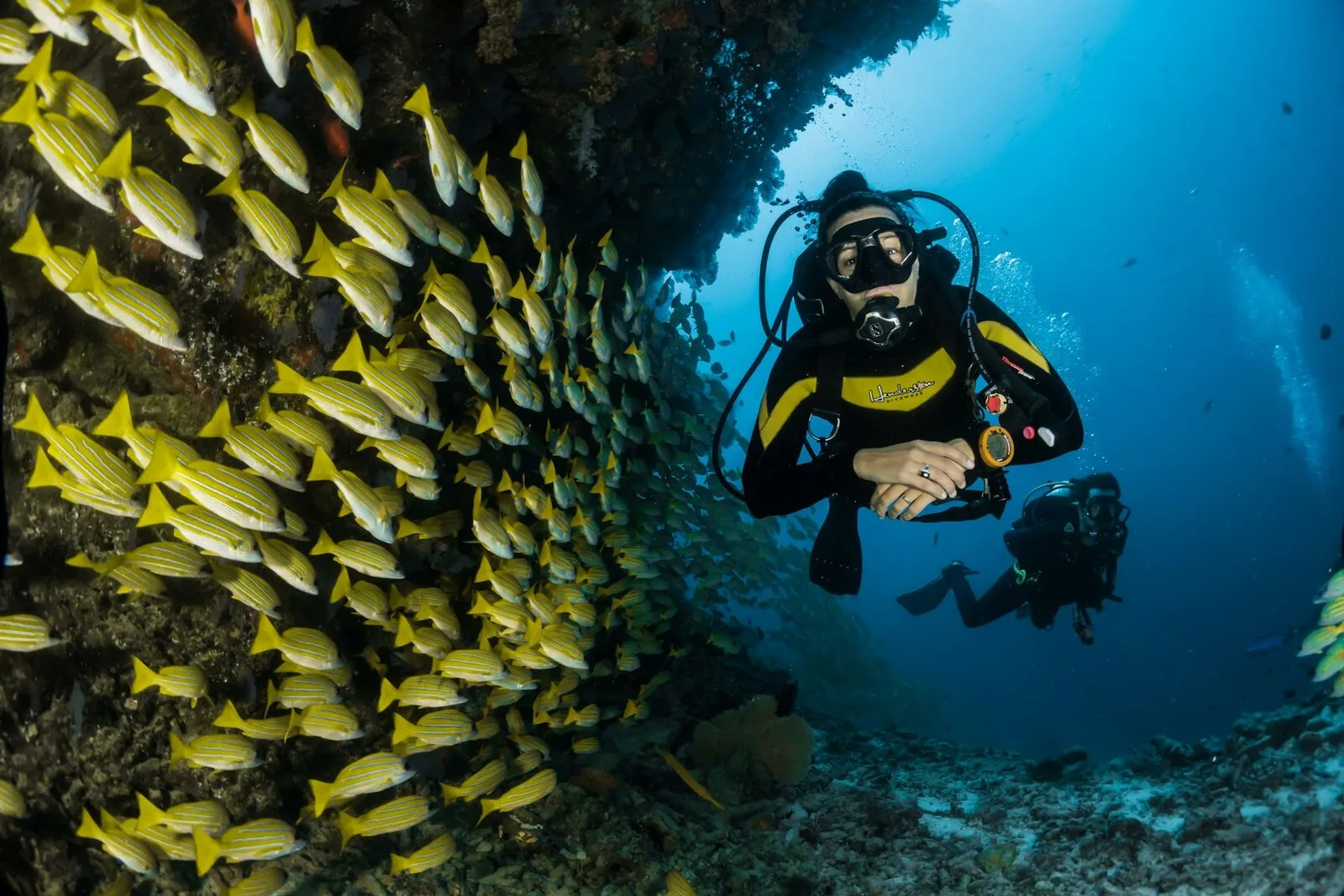
The right wetsuit for every water temperature and body type — so every dive stays comfortable.
A properly fitting wetsuit is crucial for comfort and safety underwater. If it is too thin, you will freeze and the dive becomes miserable. If it is too thick, you will overheat on the surface and the extra buoyancy makes descending more difficult.
Choosing the right thickness depends not only on water temperature but also on individual factors such as body type, personal cold sensitivity, and planned dive duration.
24°C+ (75°F+)
Ideal for warm dive destinations like the Caribbean, Maldives, or Red Sea in summer. Provides minimal thermal protection but shields against sunburn and minor abrasions.
20–24°C (68–75°F)
The most versatile choice for most dive destinations worldwide. Suitable for the Mediterranean, subtropical regions, and warmer seasons in temperate zones.
10–20°C (50–68°F)
For colder waters like Northern Europe, Canada, or deeper dives. Often combined with a hood, gloves, and booties for complete thermal protection.
< 10°C (50°F)
For extreme cold like ice diving, Scandinavia, or Antarctica. Keeps the body completely dry and allows for variable insulation layers underneath.
Slender individuals with less body fat lose heat faster and should choose a thicker suit. People with more body mass have natural insulation and can often dive comfortably in thinner suits.
Some people naturally feel cold more easily than others. If you tend to get cold on land, you should always opt for the next thickness level when diving.
The deeper you dive, the colder the water becomes. During longer dives, your body cools down more significantly. Plan for extra insulation on deep or extended dives.
Active diving with lots of movement generates more body heat. Photographers or observers who move less should choose thicker suits to compensate.
Generally choose one thickness level higher
More natural insulation
For borderline temperatures, wear a thin vest under your suit. A 5mm suit with a 2mm vest provides similar insulation to a 7mm suit but offers more versatility.
A well-fitting 5mm suit insulates better than a poorly fitting 7mm suit. The suit should fit snugly without restricting movement or creating folds where water can flush through.
In water temperatures below 20°C, you lose significant heat through your head. A neoprene hood, gloves, and booties can make the difference between a comfortable dive and shivering.
If you are unsure, choose the thicker suit. You can always let some water in to cool down, but you cannot make a too-thin suit warmer underwater.
24°C+
→ 2–3mm
20–24°C
→ 5mm
10–20°C
→ 7mm
<10°C
→ Drysuit
These recommendations are for average divers. Adjust the thickness based on your personal cold sensitivity.