What diving with sharks is actually like
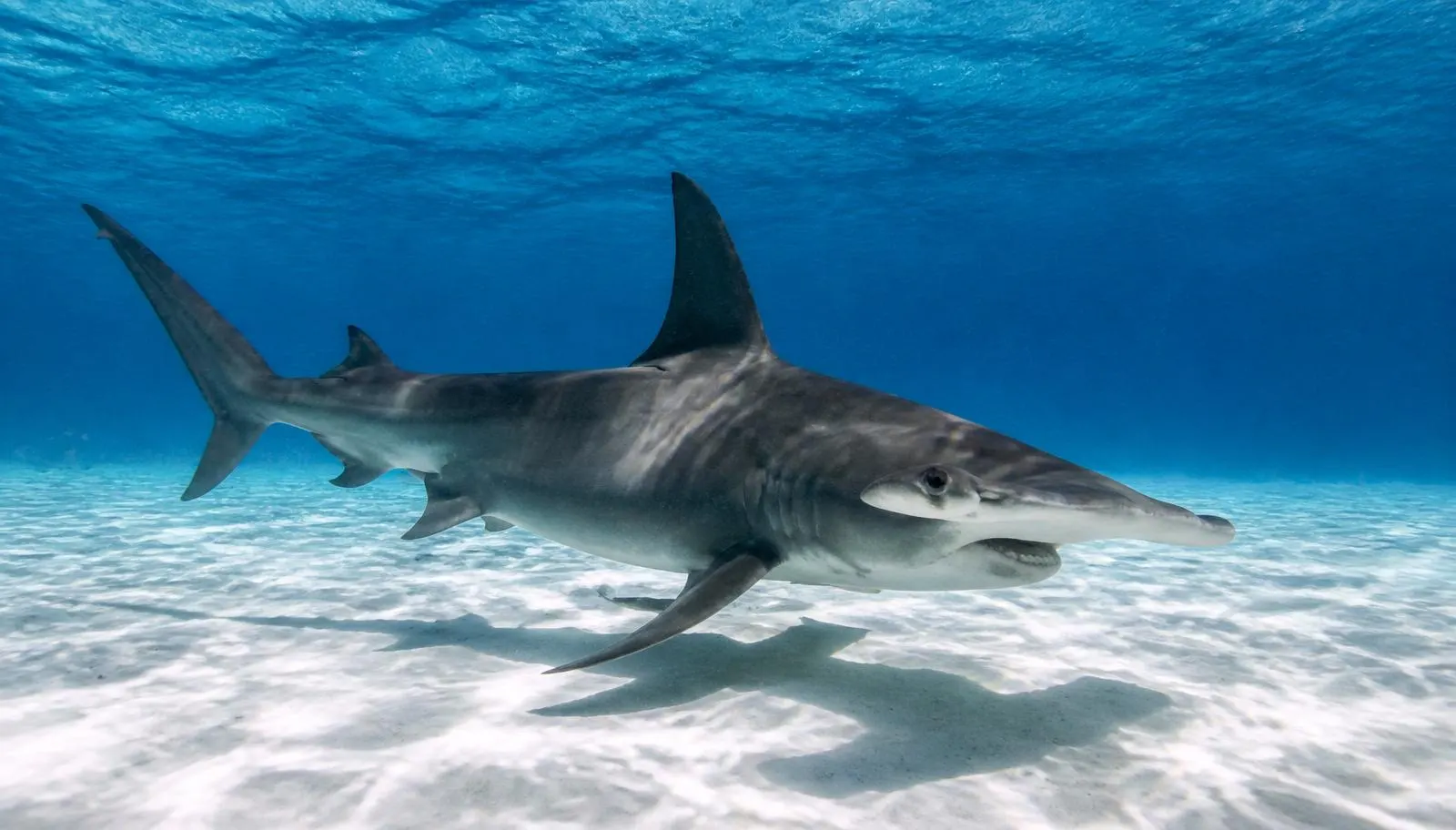
The universal reaction, from people who arrive terrified, is anticlimax followed by obsession. Sharks are cautious. A great hammerhead approaching over white sand does so slowly, circling wide, breaking off, coming back a little closer each time. It is behaving like a large wild animal deciding whether you matter — which is to say, not like anything in a film.
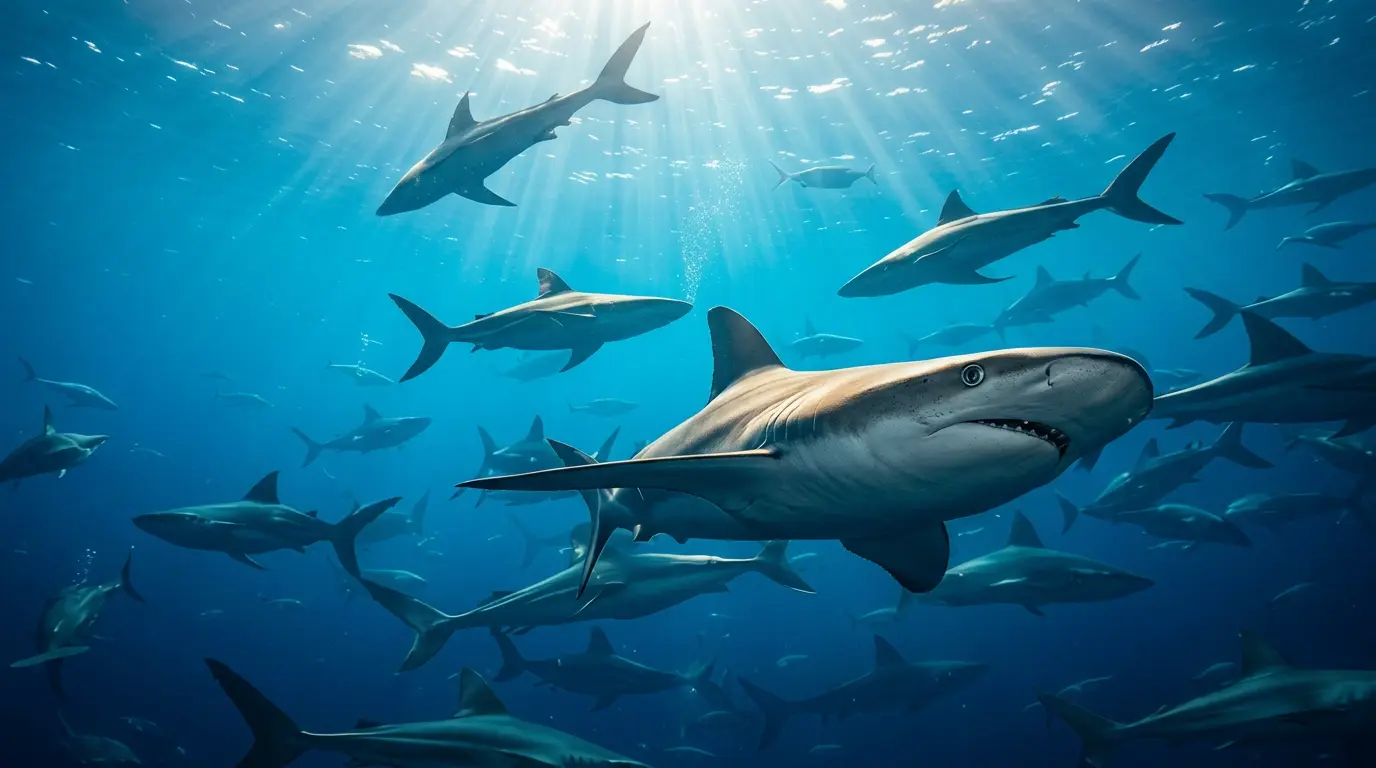
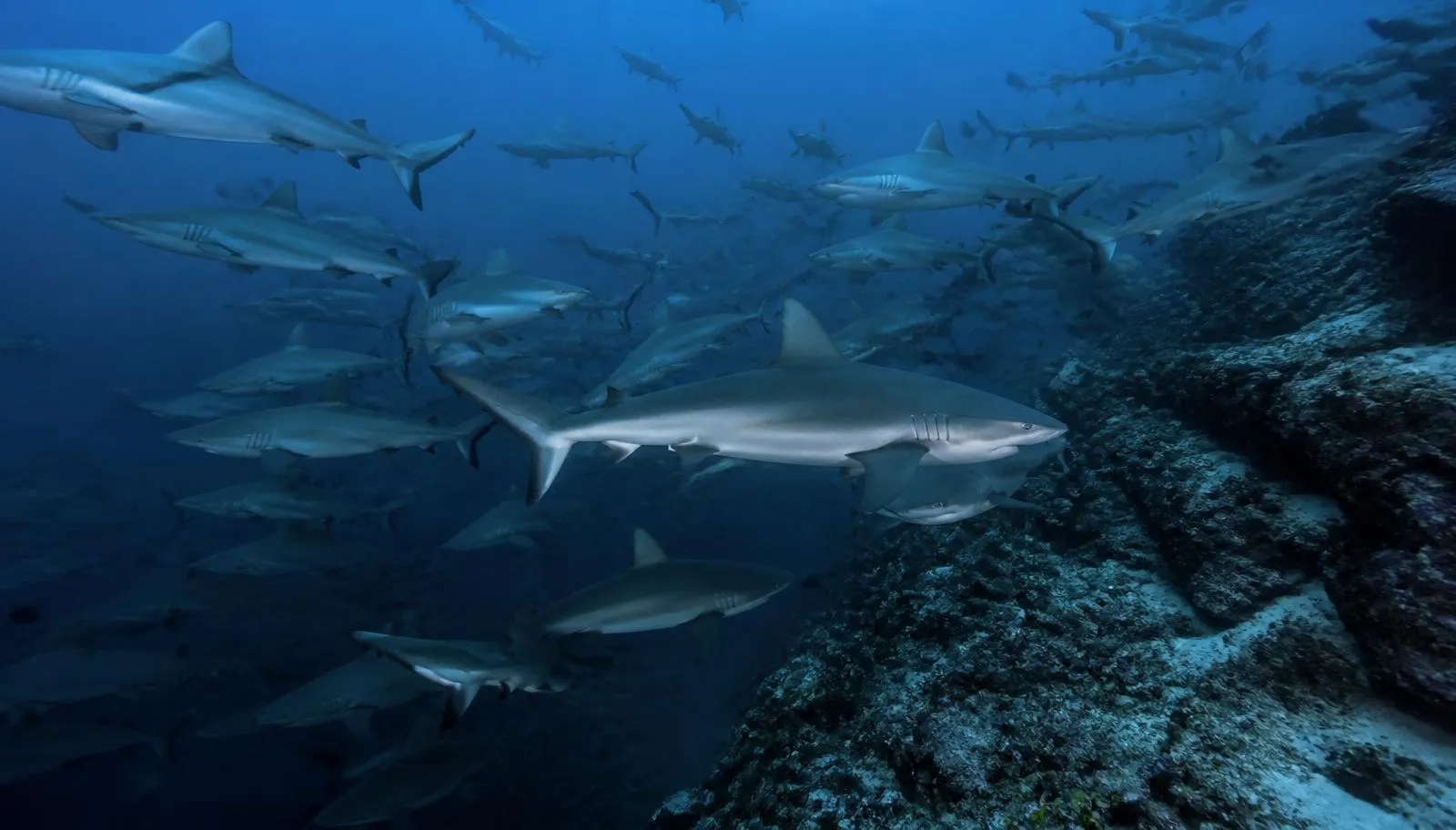
Most shark dives are calm, seated affairs. You kneel on sand or hook into a reef, keep your hands in, stay in a line or a circle, and watch. The animals do the moving. Reef shark dives in Fakarava or the Maldives are the opposite: you drift in current while hundreds of grey reefs hold station in the channel like fish in a river.
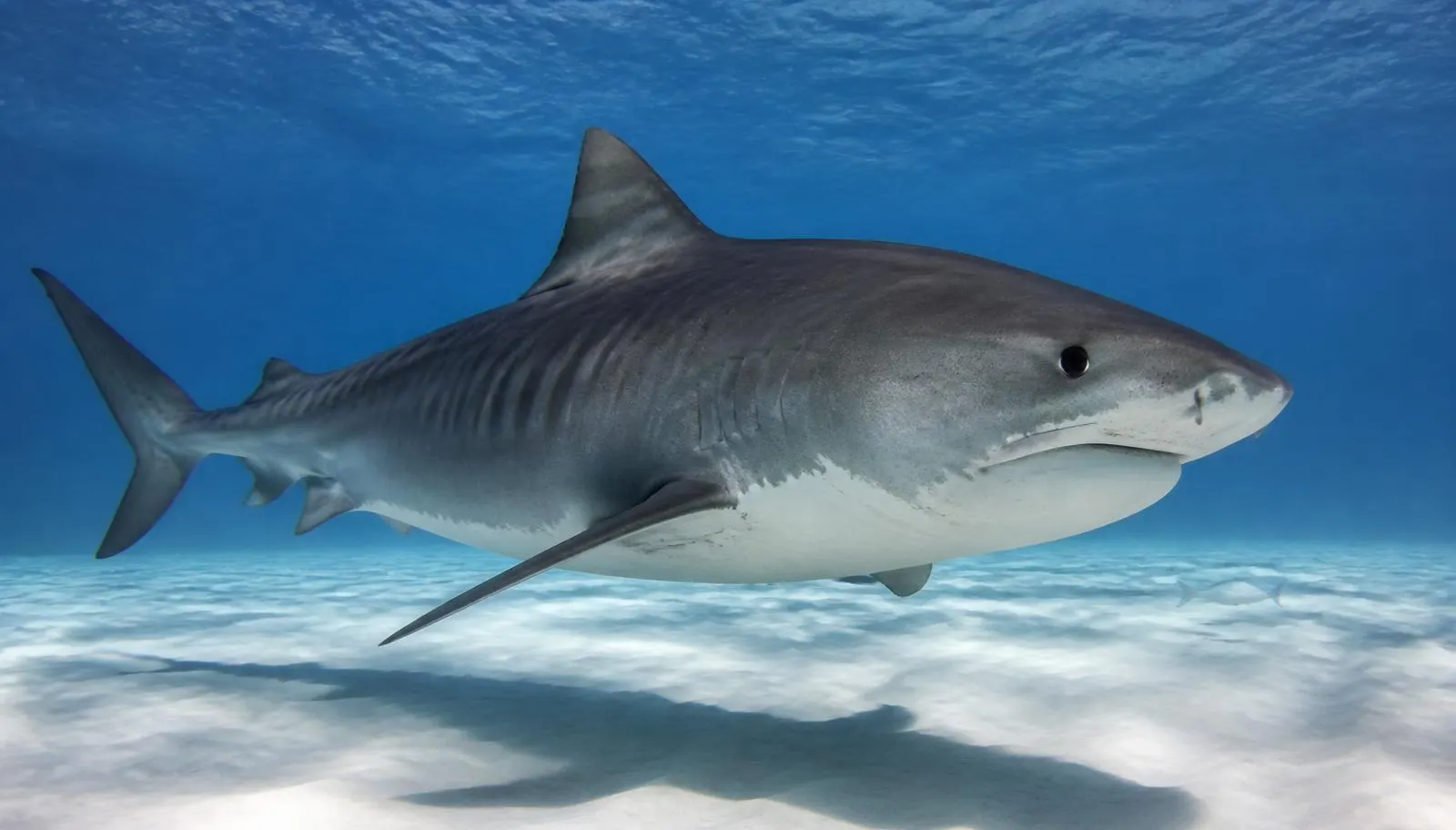
The heart-rate spike, when it comes, is almost always about proximity rather than threat — a tiger shark passing close enough that you feel the pressure wave, or a bull shark that decides to inspect your dome port. Divers describe the same thing afterwards: they went to see sharks and left angry about finning.
Where to dive with sharks: the best places compared
Every entry below is a genuine, repeatable encounter rather than a lucky sighting.
Short version: Bahamas for big individual sharks at close range, Galapagos and Cocos for enormous schools, Polynesia and the Maldives for reef shark density, and the Red Sea for oceanic whitetips in blue water.
| Destination | Species | Season | Type | Typical cost |
|---|---|---|---|---|
| Bimini, Bahamas | Great hammerhead | Dec–Mar | Baited, no cage | $250–400 / day |
| Tiger Beach, Bahamas | Tiger, lemon, reef | Oct–Jan | Baited, no cage | Liveaboard week |
| Darwin & Wolf, Galapagos | Scalloped hammerhead schools | Jun–Nov | Wild, current | Liveaboard week |
| Cocos Island, Costa Rica | Hammerhead, whitetip | Jun–Nov | Wild, current | Liveaboard 10 nights |
| Fakarava South, Polynesia | Grey reef (hundreds) | All year, Jun–Jul peak | Wild drift | Liveaboard week |
| Guadalupe / Neptune Is. | Great white | Aug–Oct / all year | Cage | $3,000+ trip |
| Beqa Lagoon, Fiji | Bull shark | All year, Apr–Oct best | Baited, no cage | $200–300 / day |
| Protea Banks, South Africa | Bull, tiger, hammerhead | Apr–Nov | Wild, advanced | $120–200 / day |
| Malpelo, Colombia | Hammerhead, silky | Feb–Jun | Wild, advanced | Liveaboard week |
| Red Sea (Brothers, Elphinstone) | Oceanic whitetip, thresher | Oct–Dec | Wild, blue water | Liveaboard week |
| Malapascua, Philippines | Thresher shark | All year | Wild, dawn dive | $90–140 / day |
| Jardines de la Reina, Cuba | Silky, Caribbean reef | Nov–Apr | Wild + baited | Liveaboard week |
Bimini, Bahamas
Species: Great hammerhead
Season: Dec–Mar
Type: Baited, no cage
Typical cost: $250–400 / day
Tiger Beach, Bahamas
Species: Tiger, lemon, reef
Season: Oct–Jan
Type: Baited, no cage
Typical cost: Liveaboard week
Darwin & Wolf, Galapagos
Species: Scalloped hammerhead schools
Season: Jun–Nov
Type: Wild, current
Typical cost: Liveaboard week
Cocos Island, Costa Rica
Species: Hammerhead, whitetip
Season: Jun–Nov
Type: Wild, current
Typical cost: Liveaboard 10 nights
Fakarava South, Polynesia
Species: Grey reef (hundreds)
Season: All year, Jun–Jul peak
Type: Wild drift
Typical cost: Liveaboard week
Guadalupe / Neptune Is.
Species: Great white
Season: Aug–Oct / all year
Type: Cage
Typical cost: $3,000+ trip
Beqa Lagoon, Fiji
Species: Bull shark
Season: All year, Apr–Oct best
Type: Baited, no cage
Typical cost: $200–300 / day
Protea Banks, South Africa
Species: Bull, tiger, hammerhead
Season: Apr–Nov
Type: Wild, advanced
Typical cost: $120–200 / day
Malpelo, Colombia
Species: Hammerhead, silky
Season: Feb–Jun
Type: Wild, advanced
Typical cost: Liveaboard week
Red Sea (Brothers, Elphinstone)
Species: Oceanic whitetip, thresher
Season: Oct–Dec
Type: Wild, blue water
Typical cost: Liveaboard week
Malapascua, Philippines
Species: Thresher shark
Season: All year
Type: Wild, dawn dive
Typical cost: $90–140 / day
Jardines de la Reina, Cuba
Species: Silky, Caribbean reef
Season: Nov–Apr
Type: Wild + baited
Typical cost: Liveaboard week
Bahamas — the best big-shark diving in the world
The Bahamas banned commercial shark fishing in 2011 and protected 640,000 square kilometres of water. The result is the densest, most approachable big-shark population anywhere, and shark diving now generates more for the economy each year than fishing ever did.
Bimini, December to March, is the great hammerhead capital. Dives are 8 to 12 metres on white sand, with unlimited bottom time and animals up to four metres passing within arm''s reach. Visibility is exceptional and the light is perfect for photography.
Tiger Beach, October to January, is shallower still — often 6 metres — with tiger sharks, lemon sharks and Caribbean reef sharks all on the same dive. It is reached by liveaboard from West End or Freeport.
Both are baited dives with no cage. That works because the operators are experienced, the briefings are strict, and everybody kneels in a defined line with a safety diver watching the perimeter. Follow the brief and there is no drama.
Galapagos, Cocos and Malpelo — hammerhead schools in current
These three seamount destinations deliver the sight that defines big-animal diving: hundreds of scalloped hammerheads stacked above a cleaning station, silhouetted against the surface. It happens where cold nutrient-rich upwellings meet oceanic islands, and it demands current skills.
Galapagos (Darwin and Wolf, June to November) is the largest aggregation and adds whale sharks in the same season. Cocos Island (June to November) has the same schools plus hunting whitetips at night. Malpelo (February to June) is the least visited of the three and adds silky shark shoals and, occasionally, smalltooth sand tiger sharks from the deep.
All three are liveaboard-only, all require 50 to 100 logged dives and Nitrox, and all involve reef hooks, negative entries and surge. Water is 18 to 26 °C with sharp thermoclines — a 5 mm suit with a hooded vest is the minimum.
Reef sharks: Fakarava, the Maldives and Palau
The Tumakohua pass at Fakarava South in French Polynesia holds several hundred grey reef sharks permanently. You drift in on the incoming tide and the animals simply hang there in ranks, facing the current. In June and July the annual grouper spawning turns it into a night-time feeding frenzy that has been filmed by every major documentary crew.
The Maldives delivers grey reefs and whitetips on almost every channel dive, plus nurse shark aggregations at Alimatha and tigers at Fuvahmulah in the far south — the latter now one of the most reliable tiger shark dives on Earth.
Palau''s Blue Corner and Fiji''s Beqa Lagoon complete the set: Blue Corner for reef sharks in ripping current with a hook, Beqa for eight species on a single baited dive, bull sharks included.
None of these require baiting. Reef shark diving is the easiest and cheapest way into shark diving and the best place to learn how the animals actually behave.
Great whites: cage diving explained
Great whites are the one species where a cage is standard. Guadalupe Island in Mexico was the gold standard for visibility until Mexican authorities suspended tourism there in 2023; today the reliable options are the Neptune Islands in South Australia (year-round, best May to October for large females) and Gansbaai in South Africa, where numbers have collapsed since orcas began preying on white sharks in 2017.
Cage diving is done on surface hookah air, no certification required, in cold green water. It is a spectacle rather than a dive. Cage-free white shark diving exists for experienced professionals but is not something we would book a recreational diver onto.
Be sceptical of operators who use heavy chumming and towed decoys close to shore. The better ones keep bait control tight and never let a shark take the bait, which keeps the animals from associating boats with food.
Baited vs wild shark dives: what is the difference?
A wild dive puts you where sharks naturally are — a channel, a seamount, a cleaning station. Nothing is added to the water. Galapagos, Fakarava, Malapascua and the Red Sea all work this way. Encounters are less predictable and more distant, and the behaviour you see is completely natural.
A baited dive uses a sealed bait box or crate to hold sharks in a defined area, with divers arranged in a line and a safety diver controlling the perimeter. Bimini, Tiger Beach, Beqa and Jardines de la Reina all use it. Encounters are close, long and photographically superb.
Baiting is not feeding. The good operators never allow sharks to take food from a diver''s hand, use bait in fixed quantities, and dive the same sites on a schedule so animals do not become dependent. Hand-feeding for show, chumming into open water and any operation where sharks mob divers are the practices to avoid.
The research consensus is that well-run baited dives do not measurably increase risk to swimmers elsewhere, and that the tourism revenue is one of the few forces slowing shark population decline.
What it costs
Reef shark diving costs nothing extra — it is simply included on Maldives, Polynesia, Palau and Red Sea itineraries. Dedicated baited day trips run $200 to $400: Bimini hammerheads at the top of that range, Beqa bull sharks in the middle, Malapascua threshers at $90 to $140.
Liveaboards are where the serious shark diving lives. Expect roughly $2,000 to $3,000 for a Bahamas or Red Sea week, $4,000 to $6,500 for Galapagos, $5,500 to $7,500 for Cocos or Malpelo including the longer crossings, and $4,000 plus for Jardines de la Reina.
Add marine park fees ($100 to $500 for Galapagos and Cocos), Nitrox, and gear rental for cold-water destinations. Great white cage trips in Australia and South Africa run $3,000 and up including liveaboard nights.
What to pack
- Dark gloves and dark fins. Contrast attracts investigation; matte black does not.
- 5 mm suit plus hooded vest for Galapagos, Cocos and Malpelo; 3 mm is enough for the Bahamas and Fiji.
- Reef hook and heavy-duty SMB for current destinations — mandatory on most Pacific seamount boats.
- Nitrox certification. Effectively required on Galapagos and Cocos liveaboards.
- Wide-angle lens or dome port. Sharks come closer than you expect and a 24 mm is already too tight.
- No shiny watch or jewellery.
Month-by-month shark calendar
Reef shark destinations work all year; the big-animal aggregations are strictly seasonal and rarely overlap, which makes planning straightforward.

BiminiBahamas — great hammerhead
Great hammerheads over white sand at 10 m, with unlimited bottom time and superb light.
Tiger BeachBahamas — tiger shark
Tigers, lemons and reef sharks on the same shallow dive, reached by liveaboard.

Darwin & Wolf IslandsGalapagos
Hundreds of scalloped hammerheads plus whale sharks in the cold upwelling season.

Cocos IslandCosta Rica
Hammerhead schools by day and hunting whitetips by night; 10-night trips only.

Fakarava SouthFrench Polynesia
Several hundred resident grey reef sharks; the June–July grouper spawning is the peak.

Beqa LagoonFiji
Up to eight shark species on one baited dive, bull sharks included.

Brothers & ElphinstoneEgypt, Red Sea
Oceanic whitetips in blue water plus thresher and hammerhead on the offshore reefs.

Fuvahmulah & AtollsMaldives
Grey reefs and whitetips on every channel dive, with reliable tiger sharks in the far south.

MalapascuaPhilippines
The world's only daily thresher shark dive, on a dawn descent to Monad Shoal.

Jardines de la ReinaCuba
Silky and Caribbean reef sharks in a fully protected marine park with no other divers.
Are sharks dangerous to divers?
Statistically, almost not at all. There are roughly 60 to 70 unprovoked shark bites worldwide each year and a handful of fatalities, overwhelmingly involving surfers and swimmers at the surface in murky water — the two conditions that make a human resemble prey. Scuba divers make up a tiny fraction of incidents despite millions of dives a year with sharks present.
The reasons are simple: divers are below the surface, they exhale bubbles, they are large and noisy, and they usually face the animal. None of that fits a shark''s search image for food.
Which species deserve genuine respect? Oceanic whitetips, tiger sharks and bull sharks are bold, persistent and worth diving with an experienced guide. Great hammerheads, greys, whitetips, nurses and threshers are shy to the point of being hard to photograph. The perspective that matters: humans kill an estimated 80 to 100 million sharks a year, and a third of all shark and ray species are now threatened with extinction.
Choosing an ethical shark operator
Ask whether the sharks are ever fed by hand. The right answer is no: bait stays in a sealed crate, controlled by a designated feeder, and animals are never rewarded for approaching divers. Ask how many divers go down at once and whether there is a dedicated safety diver watching the perimeter — on a good baited dive there always is.
Ask what the operator contributes. The best shark operations fund tagging programmes, submit photo-ID data, and campaign for protected areas; several Bahamian and Fijian operators were directly responsible for their countries'' shark sanctuary legislation.
Avoid anyone advertising guaranteed sightings, hand-feeding footage, riding or touching, or dives where sharks visibly mob the group. And skip Oslob-style operations in any species — habituating wild animals to handouts is the one practice with clear documented harm.
Nearly every liveaboard we sell in the Bahamas, Red Sea, Galapagos, Cocos and Polynesia runs shark diving on those terms. Tell us which species you want and we will point you at the right week.