Costa Rica Liveaboard Diving

Liveaboards in Costa Rica

from $477 / day

3 of 3 · Costa Rica liveaboard routes, seasons & prices

Cocos Aggressor

Premier Diving Expeditions to Cocos Island, Costa Rica — Home of Hammerhead Sharks

  • Large interior lounge
  • Outdoor barbecue deck
  • Private bathrooms in every cabin

4.8(27 reviews)

22 guestsfrom $477/day
Sea Hunter

A premier 115-foot vessel for Cocos Island expeditions, featuring a pro-grade diving platform with integrated equipment hire and technical support.

  • Complimentary Clothes Washing
  • Indoor Communal Salon
  • Silent Research Room

4.9(88 reviews)

20 guestsfrom $690/day
Okeanos Aggressor II

Discover the aquatic marvels of Cocos Island while enjoying all-inclusive luxury.

  • Open-Air Barbecue Area
  • Air-Conditioned Dining Saloon
  • Internal Social Room

4.3(89 reviews)

24 guestsfrom $582/day

Diving in the Pacific: wrecks, walls and great hammerheads

Costa Rica's Pacific coast is famous, but it is the isolated Cocos Island — 550 kilometers offshore — that has earned the country its place among the world's elite dive destinations. Designated a UNESCO World Heritage Site and protected as a national park since 1978, Cocos is reachable only by liveaboard after a 32–36 hour crossing, and what awaits beneath the surface justifies every nautical mile.

Bajo Alcyone, the most famous seamount in the eastern Pacific, rises from 300 meters of open ocean to a plateau at 25 meters. Schooling scalloped hammerhead sharks form silver walls of hundreds — sometimes thousands — of individuals, particularly between June and November when warm and cold currents collide. Galapagos sharks, silky sharks, and the occasional whale shark complete the pelagic theatre.

Manuelita Island, just minutes from the anchorage at Chatham Bay, offers night dives that are legendary among shark divers. Whitetip reef sharks abandon their usual passive behavior and hunt in coordinated packs across the reef, swarming over coral heads in pursuit of sleeping fish. Few dives in the world deliver such raw predator action.

Dirty Rock and Big Dos Amigos are the other signature sites — pinnacles and arches that channel current and concentrate marbled rays, eagle rays, tiger sharks, and the elusive smalltooth sand tiger shark, a rare species whose recent identification at Cocos was a milestone for shark research. Bottlenose dolphins frequently join divers, and silky sharks circle the boat between dives.

On the mainland, the Bat Islands (Islas Murciélago) off Guanacaste are accessible from coastal resorts and famous for reliable encounters with adult bull sharks between May and November. The Catalina Islands offer manta rays and seasonal whale shark sightings, while the Caño Island Biological Reserve in the south provides easier diving with white-tip sharks, turtles, and large schools of snappers.

Costa Rica also offers some of the most diverse topside experiences in the Americas — cloud forests, active volcanoes, and rainforests teeming with monkeys, toucans, and sloths. Combined with year-round water temperatures of 24–28°C and strong marine protection laws, Costa Rica is a destination for advanced divers chasing big animals in big blue water.

Why dive a liveaboard in Costa Rica

From legendary wrecks and thriving reefs to close-up encounters with iconic marine life, this destination offers the experiences divers dream about. Warm, clear waters and well-organized liveaboard routes make it easy to explore the best sites. These are the highlights that keep divers coming back year after year.

Hammerhead schools

Massive schools of scalloped hammerheads at Cocos Island—arguably the world's best

Remote expedition

36 hours offshore to a UNESCO World Heritage Site—true expedition diving

Year-round pelagics

Big animals every month: whale sharks, tiger sharks, mantas, and dolphins

Biodiversity hotspot

Above and below water, Costa Rica holds 5% of the world's biodiversity

Who a liveaboard in the Pacific suits — and who it doesn't

Two very different Pacific worlds: easy Guanacaste day diving, and Cocos Island — a 36-hour crossing to one of the great shark destinations.

Beginners

Open Water, from about 20 dives, mainland only

Guanacaste sites such as the Catalinas and Bat Islands fringes have moderate conditions, though visibility is variable and water can be cool with upwelling.

Matching areas:Catalina IslandsGuanacastePlayas del Coco

Advanced divers

Advanced, 50+ dives for Cocos liveaboards

Cocos Island operators require Advanced level and current experience: strong surge, blue-water entries and hammerhead cleaning stations at 20 to 30 metres.

Matching areas:Cocos IslandBajo AlcyoneDirty Rock

Deep and technical

Deep, Nitrox strongly recommended

Bajo Alcyone is a deep seamount with hard current, and Cocos sits 550 kilometres offshore — evacuation takes days, so Nitrox and conservative profiles are the standard rather than technical depth.

Matching areas:Bajo AlcyoneCocos IslandManuelita

Photo and video

Wide-angle, low light, big animals

Scalloped hammerhead schools, whitetip night hunts at Manuelita and mobula rays; green water and current make strobe work demanding.

Matching areas:ManuelitaDirty RockCatalina Islands

Best time to dive in Costa Rica

Diving at Cocos Island is excellent year-round, but the experience changes with the seasons. The rainy season from June to November offers peak pelagic activity, with massive schools of hammerheads, but also brings stronger currents and lower visibility. Conversely, the dry season from January to May provides calmer seas for the crossing and clearer water, with more manta rays sighted.

👆 Click any month for detailed conditions
Excellent
Good
Off-Season

Jun – Dec (Wet Season)

Paradoxically the best diving! Peak hammerhead season with schools of hundreds. Whale sharks Jun–Aug. Strongest currents attract massive pelagic action.

Jan – May (Dry Season)

Calmer seas, warmer water, good visibility. Fewer hammerheads but still excellent manta and shark encounters. May is transition month.

Underwater visibility

32m
(105ft)
23m
(74ft)
13m
(43ft)
Jan
Feb
Mar
Apr
May
Jun
Jul
Aug
Sep
Oct
Nov
Dec

Air & water temperature

32°C 27°C 22°C
26°
28°
27°
29°
27°
30°
28°
30°
27°
29°
26°
28°
25°
28°
24°
28°
24°
28°
25°
28°
26°
28°
26°
28°
Jan
Feb
Mar
Apr
May
Jun
Jul
Aug
Sep
Oct
Nov
Dec
Water
Air (Day)

Recommended wetsuit

5mm
3mm
3mm
3mm
3mm
5mm
5mm
5mm
5mm
5mm
5mm
5mm
Jan
Feb
Mar
Apr
May
Jun
Jul
Aug
Sep
Oct
Nov
Dec
3mm (warm)
5mm (moderate)
Wetsuit Guide

What you'll see diving in the Pacific

The waters of Cocos Island are a theater for apex predators, headlined by enormous schools of scalloped hammerhead sharks. Divers regularly encounter Galapagos, silky, and tiger sharks, while night dives at Manuelita Island reveal whitetip reef sharks hunting in packs. Marbled and eagle rays are common, and the mainland's Bat Islands are famous for reliable encounters with adult bull sharks.

When to See What

Use this calendar as a guide: the highlighted months show when your chances are usually best. Wildlife follows its own rhythm, so sightings are never guaranteed — but we hope this makes planning a little easier. The rhythm of big animal encounters at Cocos Island peaks between June and November, when nutrient-rich currents attract the largest schools of hammerhead sharks and increase the chances of a whale shark sighting. The dry season from January to May, by contrast, is known for calmer conditions and more frequent manta ray sightings.

Species
Jan
Feb
Mar
Apr
May
Jun
Jul
Aug
Sep
Oct
Nov
Dec
Great Hammerhead
Great Hammerhead
Whale Shark
Whale Shark
Tiger Shark
Tiger Shark
Whitetip Reef Shark
Whitetip Reef Shark
Oceanic Manta Ray
Oceanic Manta Ray
Bottlenose Dolphin
Bottlenose Dolphin
Galapagos Shark
Galapagos Shark
Bull Shark
Bull Shark
Velvet Surgeonfish
Velvet Surgeonfish
Lizardfish
Lizardfish
Longnose Hawkfish
Longnose Hawkfish
Needlefish
Needlefish
Numbfish
Numbfish
Pacific Creolefish
Pacific Creolefish
Pilotfish
Pilotfish
Peak Season
Present
Rare/Absent

Bucket-list dives worth booking early

The ultimate Costa Rican diving experience is witnessing the wall of scalloped hammerheads at Cocos Island's Bajo Alcyone, an iconic eastern Pacific spectacle. Another trip-defining moment is the legendary night dive at Manuelita, where divers watch packs of whitetip reef sharks actively hunt across the reef. For those on the mainland, coming face-to-face with large bull sharks at the Bat Islands is an unforgettable thrill.

Underwater view of the dive site Humpback Whale Migration in Costa Rica
1
Jul – Nov (Southern Herd) & Dec – Mar (Northern Herd)

Marino Ballena National Park, Uvita

Every year, humpback whales travel thousands of miles from both hemispheres to the warm waters off Costa Rica's Pacific coast. Marino Ballena National Park — named after the whale-tail-shaped sandbar — is the prime spot to witness mothers nursing their calves, spectacular breaches and haunting songs echoing through the deep.

Read more
Underwater view of the dive site Bull Shark Encounters at Bat Islands in Costa Rica
2
May – November

Islas Murciélago, Guanacaste

The Bat Islands (Islas Murciélago) off the northern Guanacaste coast are one of the few places on Earth where divers can reliably encounter bull sharks in crystal-clear water. Between May and November, large females patrol the rocky pinnacles at depths of 20–30 meters, often accompanied by whitetip reef sharks and giant moray eels.

Read more
Underwater view of the dive site Mobula Ray Aggregations in Costa Rica
3
May – October

Catalina Islands & Gulf of Papagayo

During the rainy season, massive schools of mobula rays — sometimes numbering in the hundreds — gather in the nutrient-rich waters of the Gulf of Papagayo and around the Catalina Islands. These graceful rays form mesmerizing formations, spiraling upward through the water column in one of Costa Rica's most unforgettable underwater spectacles.

Read more
Underwater view of the dive site Hammerhead Shark Schools at Cocos Island in Costa Rica
4
June – December (Best Visibility)

Cocos Island (Isla del Coco)

Cocos Island, a UNESCO World Heritage Site 550 km off the Pacific coast, is widely considered one of the top ten dive sites on the planet. Massive schools of scalloped hammerhead sharks circle the volcanic seamounts daily, joined by silky sharks, Galápagos sharks, giant mantas and occasionally whale sharks. The 36-hour liveaboard crossing is rewarded with some of the most electrifying big-animal diving anywhere.

Read more

Above water: climate, shore trips and extra costs

Beyond the world-class diving, Costa Rica offers some of the most diverse topside adventures in the Americas. Before or after your liveaboard, you can explore the country's famous cloud forests in Monteverde or hike near the active Arenal Volcano. The rainforests are teeming with iconic wildlife like monkeys, toucans, and sloths, and a tour of a Central Valley coffee plantation is a cultural highlight.

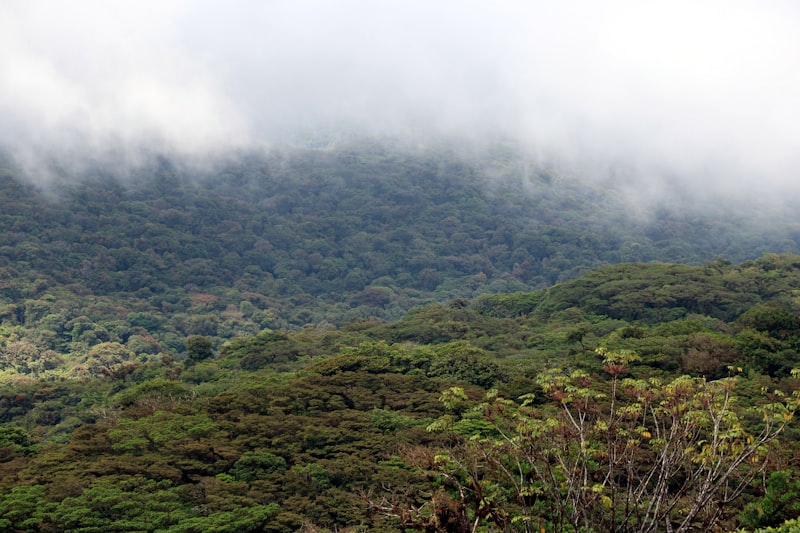
Monteverde Cloud Forest

Monteverde Cloud Forest

Walk among the clouds on hanging bridges through one of the world's most biodiverse cloud forests. Spot resplendent quetzals, howler monkeys, and countless hummingbirds in this mystical ecosystem.

Arenal Volcano & Hot Springs

Arenal Volcano & Hot Springs

Soak in natural hot springs heated by this iconic volcano, hike through lava fields, and zip-line through the rainforest canopy with volcanic views. A perfect pre or post-dive adventure.

Manuel Antonio National Park

Manuel Antonio National Park

White sand beaches meet tropical forest in this stunning park. Spot three-toed sloths, white-faced monkeys, and iguanas while hiking to pristine beaches.

Tortuguero National Park

Tortuguero National Park

Accessible only by boat or plane, this "Amazon of Costa Rica" is a critical nesting site for sea turtles. Explore jungle canals teeming with wildlife including caimans and river otters.

What a liveaboard in Costa Rica costs

The calendar below shows how liveaboard prices shift month by month, so you can see exactly when your money goes furthest. We want every diver to get the best possible value, which is why we highlight the seasons that balance great conditions with the fairest rates.

Cocos Island is a premium, high-cost liveaboard destination, reflecting its extreme remoteness and the complex logistics of the 36-hour journey. Prices are highest during the peak hammerhead season from June to November, when demand is strong and trips sell out months in advance. This remains one of diving's ultimate bucket-list expeditions with a price tag to match.

$477–$690

per day liveaboard

$50–$70

per 2-tank dive trip

$150–$400

hotel per night

Prices reflect typical costs for mid-range to premium options. Budget alternatives may be available.

Getting to San José and Puntarenas: flights and transfers

To reach your Cocos Island liveaboard, you will fly into Juan Santamaría International Airport (SJO) in San José. From the capital, it is a road transfer of a few hours to the Pacific port of Puntarenas, where all expeditions depart for the 36-hour crossing. Most visitors from the US, UK, and EU do not require a visa for stays up to 90 days.

Insider tips

🎯

Book early — limited boats and permits mean no last-minute discounts.

💰

Combine with mainland adventures — use pre/post trip days for affordable rainforest tours.

💰

Consider shared cabins — lower per-person costs on most vessels.

📅

Mar–May offers 10-15% savings with warmer water and more mantas.

Getting there

Juan Santamaría International Airport

San JoséSJO

Main gateway, 3hr drive to Puntarenas where liveaboards depart

Daniel Oduber Quirós International

LiberiaLIR

Alternative for Guanacaste region

Entry requirements

No visa required for US, Canada, UK, EU, and most Western countries for stays up to 90 days. Valid passport with 6 months validity required.

This information is provided without guarantee. Please visit the official website for the latest entry requirements.

Official Immigration Information →

Frequently asked questions about Costa Rica liveaboards

How much does a Cocos Island liveaboard cost in 2026?
Prices for a Cocos Island trip in 2026 vary by vessel and season, but it's a premium experience due to the island's remote nature. These 8 to 10-day journeys are an investment in a bucket-list adventure, covering the long crossing, accommodation, meals, and world-class diving.
When is the best time to dive Cocos Island, Costa Rica?
The best time for your Cocos Island liveaboard depends on what you want to see! For the largest schools of scalloped hammerheads, plan your trip between June and November. If you prefer calmer seas and better visibility, consider December to May, and for whale sharks, aim for August through October.
Do I need advanced certification for a Costa Rica liveaboard?
Yes, you will need an Advanced Open Water certification with at least 50 logged dives for a Cocos Island trip due to the deep, current-heavy conditions. Some operators may even require 100 dives, so it's always best to confirm the specific prerequisites for your chosen vessel.
Which port do Costa Rica liveaboards depart from?
All liveaboards bound for the remote Cocos Island depart from ports on Costa Rica's Pacific coast. The journey itself is a significant part of the adventure, as the open-ocean crossing to the island typically takes between 32 and 36 hours.
What marine life can I see on a Cocos Island liveaboard?
Cocos Island is a world-famous destination for big animal encounters, so expect to see incredible pelagic life. You'll dive with massive schools of scalloped hammerheads, plus silky sharks, Galápagos sharks, and huge mobula rays. Marlin and seasonal whale sharks also make frequent appearances in this UNESCO World Heritage Site.
Is the crossing to Cocos Island rough and should I take precautions?
Yes, the 32 to 36-hour open-ocean crossing to Cocos Island can be rough, so it's wise to be prepared. We highly recommend packing motion-sickness medication, even if you don't normally get seasick, to ensure you arrive comfortable and ready to dive.
What should I pack for a Cocos Island liveaboard trip?
For a Cocos Island liveaboard, you should pack a 5mm wetsuit, gloves, and a hood, as water temperatures can be cooler (24–26°C). A dive torch is great for exploring, and you must bring your own surface marker buoy (SMB) with a reel for safety in the currents.

Costa Rica compared with other liveaboard destinations

Honest, in-depth comparisons to help you decide between destinations, certifications, equipment and dive styles.

Liveaboard vs Land-Based Diving: Which Trip Is Right for You?

Choosing between a liveaboard and a land-based dive trip is the most fundamental decision divers face when planning a serious diving holiday. The right answer depends on your priorities: maximum dive count and access to remote sites favor liveaboards; beach time, family flexibility and lower cost favor land-based resorts. Both formats have evolved significantly in the last decade, and the line between them has blurred — luxury dive resorts now offer multi-day expedition trips, while many liveaboards include topside excursions and even spa days. This guide compares the two formats across every meaningful dimension: cost per day, dives per day, marine life access, comfort, social dynamics, family-friendliness, and travel logistics. We'll also cover the hybrid models (resort + day-charter, or 'safari boat' itineraries) that try to capture the best of both worlds. If you're certified, in love with diving and want to maximize bottom time, a liveaboard is almost always the better choice — you can clock 25+ dives in a week and reach sites no day boat can. If you're traveling with non-divers, prefer land-based comfort, or want flexibility to take days off, a resort wins. We'll get into all the nuances below.

Read comparison

Costa Rica vs. Panama: Liveaboard Diving Showdown

Choosing your next liveaboard adventure between Costa Rica and Panama can be a delightful dilemma for even the most seasoned diver. Both Central American nations boast exceptional marine biodiversity and offer unparalleled opportunities to encounter large pelagics, but their unique characteristics cater to different preferences and experience levels. Costa Rica, often hailed as a pioneer in ecotourism, draws divers to its remote Cocos Island, a UNESCO World Heritage site renowned for its prolific shark populations and dramatic underwater topography. Panama, on the other hand, presents a dual-coast advantage with the Caribbean and Pacific, though liveaboard operations primarily focus on its Pacific gems like Coiba National Park and the remote Hannibal Bank. This comprehensive comparison will delve into the specifics of each destination, helping you discern which liveaboard experience aligns best with your diving aspirations. We'll examine everything from marine life encounters and optimal diving seasons to trip costs and accessibility, providing you with the factual insights needed to make an informed decision for your next Blue Rides booking.

Read comparison

Beyond the Limits: Recreational vs. Technical Diving Explained

Scuba diving opens up a breathtaking world hidden just beneath the surface, an activity enjoyed by millions globally. For the vast majority, this means recreational diving. Governed by agencies like PADI and SSI, recreational diving is defined by its limits: no deeper than 40 meters (130 feet), always having a direct path to the surface, and staying within no-decompression limits. This framework allows divers to explore vibrant coral reefs, shipwrecks, and kelp forests with relatively simple equipment and training, focusing on enjoyment and safety within a well-established comfort zone. On the other end of the spectrum lies technical (or tec) diving. Often seen as the 'extreme sport' of the scuba world, tec diving is explicitly about going beyond recreational limits. This means diving deeper than 40 meters, planning for mandatory decompression stops on ascent, or penetrating far into overhead environments like caves or complex wrecks. Agencies such as Technical Diving International (TDI), Global Underwater Explorers (GUE), and PADI's TecRec arm provide the highly specialized training required for these demanding dives. The fundamental difference is one of philosophy. Recreational diving prioritizes risk avoidance by staying within strict, pre-defined boundaries. Technical diving, in contrast, is about risk mitigation. Tec divers intentionally plan to enter situations that would be emergencies for recreational divers, but they do so with extensive training, meticulous planning, redundant equipment systems, and specialized breathing gases. It's a calculated approach to exploring environments that are otherwise inaccessible. This distinction isn't just about numbers and gear; it’s about mindset and motivation. While a recreational diver might be thrilled by the colorful reefs of the Red Sea, a technical diver might be drawn to the challenge of exploring a deep, historic wreck like the Britannic off the coast of Greece. Understanding the differences in limits, equipment, training, and risk is crucial for any diver considering where their underwater journey might lead next.

Read comparison
Plan your trip

Ready to dive?

Explore our expedition vessels and find your perfect trip to Costa Rica