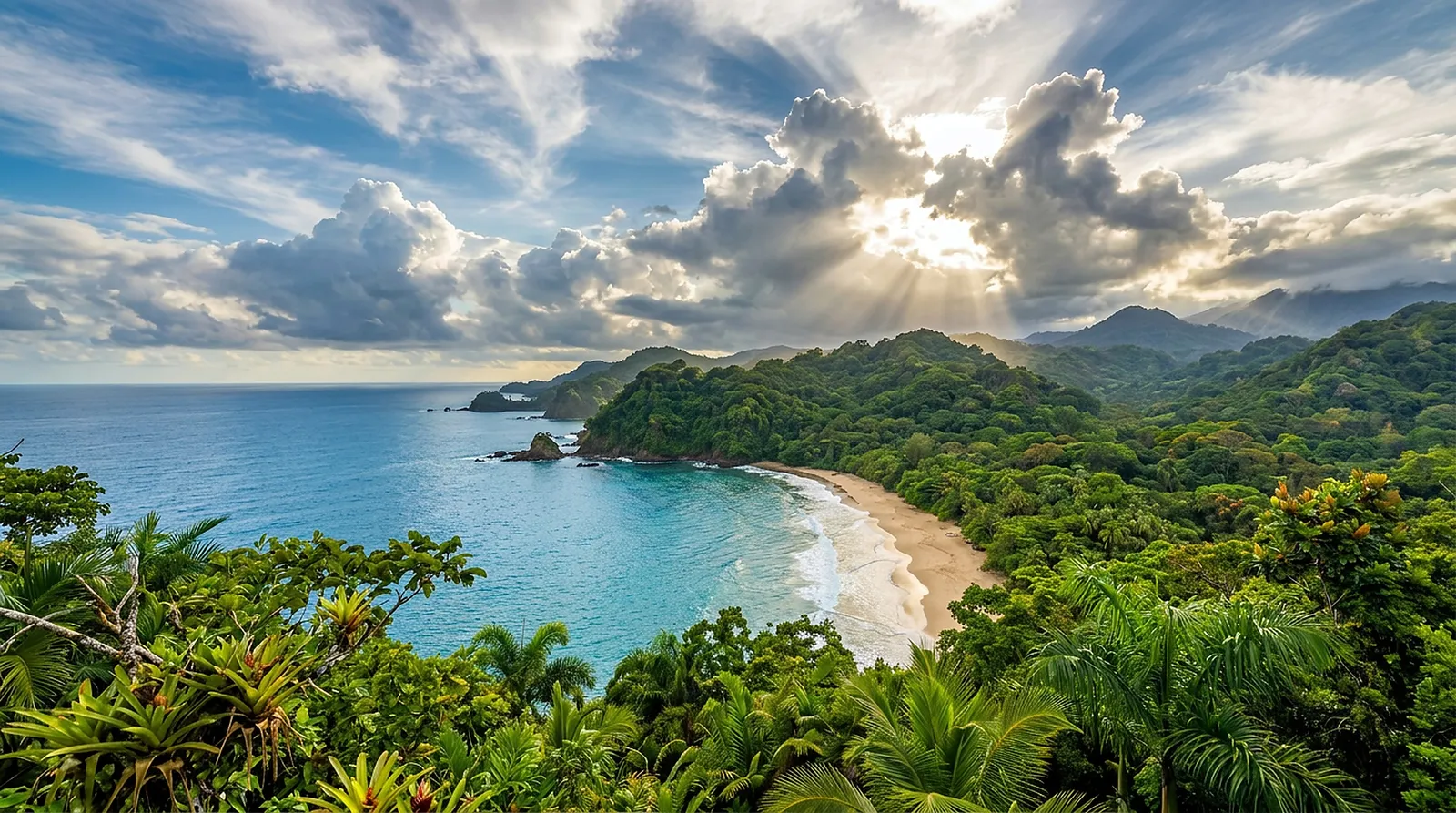
Conditions in September
So, you’re thinking about diving Cocos Island in September? Excellent choice, but let’s talk about what you can expect. September falls right in the middle of Costa Rica’s rainy season. Don’t let that scare you off – for Cocos Island, this often translates to some of the most exhilarating diving conditions. While the mainland will be experiencing quite a bit of rain, Cocos, being so far offshore, operates on its own oceanic weather patterns. You’ll likely encounter overcast skies, and yes, there will be rain. Sometimes it’s a gentle drizzle, other times it’s a proper tropical downpour. This weather, however, is often what kicks the pelagic action into high gear.
Sea conditions around the island can be quite varied. Expect a bit more chop on the surface during travel days to and from the island, and potentially some surge at the dive sites themselves. This is all part of the wild, untamed beauty of Cocos. Water temperatures are comfortably warm, typically ranging from 26°C to 29°C (79°F to 84°F). However, thermoclines are a common feature here, and during upwellings, pockets of colder water can temporarily drop to 22°C (72°F) or even lower. Visibility, while generally excellent, can be a bit more unpredictable in September. It usually hovers in the 20-30 meter range, but post-rain runoff or increased plankton blooms (which attract the big stuff!) might reduce it slightly in certain areas. Currents are almost always present and can range from mild to strong, making drift diving a common practice.
What you will see
September is prime time for big animal encounters at Cocos Island, and if pelagics are your passion, you're in for a treat. The increased plankton in the water, often associated with the rainy season, acts as a magnet for the ocean's giants. You can expect to see truly massive schools of scalloped hammerhead sharks – sometimes hundreds strong – circling cleaning stations. White-tip reef sharks are ubiquitous, often snoozing in sandy patches or hunting after sunset. Silky sharks are frequent visitors in the blue, and Galapagos sharks make regular appearances, especially around the deeper pinnacles. Tiger sharks are also more commonly sighted during these months, though they’re always a special encounter.
Beyond the sharks, you’ll encounter incredible numbers of other large marine life. Giant manta rays, often in groups, gracefully glide overhead, offering breathtaking close-up encounters. Mobula rays, eagle rays, and marble rays are also common. You’ll frequently spot marlins and sailfish patrolling the blue, along with large schools of jacks, tuna, and snappers. For the macro enthusiasts, while Cocos is renowned for its big stuff, don’t forget to keep an eye out for interesting nudibranchs, smaller reef fish, and endemic species in the cracks and crevices. The sheer biodiversity and abundance of marine life during September really make it a standout month for unforgettable underwater experiences.
Top dive sites this month
While every dive site around Cocos Island holds its own magic, a few really shine in September’s conditions. Manuelita Deep is a perennial favorite, and in September, the hammerhead schools here can be truly mind-boggling. You'll descend onto the ridge and wait in anticipation as hundreds of hammerheads cruise by, sometimes unbelievably close. The shallower part of Manuelita is also fantastic for white-tip reef sharks and colorful reef fish.
Another must-visit in September is Dirty Rock. This iconic site is essentially a massive pinnacle rising from the depths, and its exposed nature makes it a magnet for schooling pelagics and large ocean predators. Hammerheads are a staple here, but you’re also very likely to encounter large groups of Galapagos sharks and even tiger sharks. The currents can be formidable, but they bring the nutrients that attract all the action. Finally, Bajo Alcyone is another world-class hammerhead site that simply doesn't disappoint in September. It's a deep pinnacle where descending into the blue and silently observing the passing schools of hammerheads is a quintessential Cocos experience. Remember, the exact dive sites depend on currents and conditions, but your liveaboard crew will always take you to where the action is best.
Practical tips for your trip
Given the comfortable water temperatures but potential for cooler thermoclines, a 3mm full wetsuit is usually sufficient for most divers in September. However, if you tend to get cold easily or plan on doing multiple dives a day (which you will!), a 5mm suit or even a 5mm with a hood vest wouldn't be overkill, especially for those longer deco stops or deeper dives. September suits intermediate to advanced divers best due to the potential for strong currents, surge, and deeper dive profiles. While beginners with solid buoyancy control and an adventurous spirit are welcome, those susceptible to motion sickness or uncomfortable in challenging conditions might find it more demanding.
Liveaboard availability for Cocos Island, especially during peak pelagic season like September, can be tight. It’s always best to book well in advance – often 12-18 months out – to secure your spot on your preferred vessel. What to pack? Beyond your standard dive gear, definitely bring a good rain jacket and waterproof bags for protecting your electronics. A wide-brimmed hat and reef-safe sunscreen are essential for surface intervals, as the equatorial sun can be intense even on cloudy days. Don’t forget motion sickness medication if you’re prone to it, as the crossing to Cocos can be bumpy. Be aware that the internet is typically satellite-based and very slow or non-existent, so embrace the digital detox! Cocos Island will truly immerse you in the wild side of the ocean.
Year-round overview for Costa Rica (Cocos)
Frequently asked questions
Is September a good month to dive in Costa Rica (Cocos)?
What can you see diving in Costa Rica (Cocos) in September?
Should I book a Costa Rica (Cocos) liveaboard for September or wait?
Find a liveaboard for September
Compare available Costa Rica (Cocos) liveaboards departing in September.
Search and Book