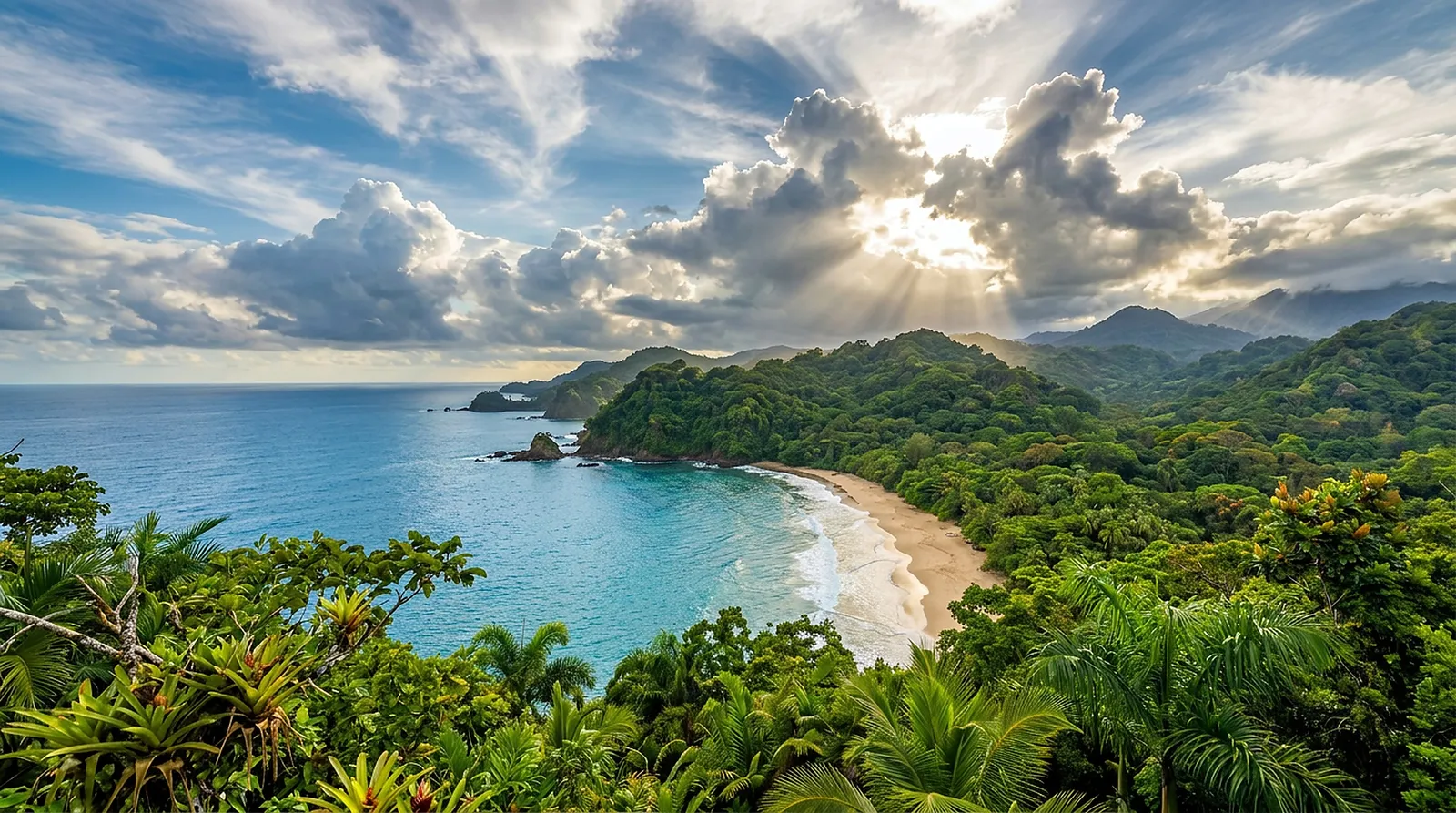
Conditions in March
Diving Cocos Island in March offers a prime opportunity to experience its legendary marine biodiversity. As it falls within the dry season (December to May), you can generally expect favorable surface conditions. While the Pacific can always be a bit unpredictable, March typically brings calmer seas compared to the wet season, making the journey to Cocos more comfortable. Air temperatures hover around a pleasant 28-32°C (82-90°F), and while you're primarily there for what's beneath the waves, sunny days are the norm, perfect for enjoying time on deck between dives.
Beneath the surface, the water temperature in March is reliably warm, ranging from 27-29°C (81-84°F). This comfortable temperature allows for longer dive times with less thermal stress, though you'll still appreciate a wetsuit to fend off any minor chills and for protection against the occasional brush with coral or marine life. Visibility during this month is excellent, often exceeding 20-30 meters (65-100 feet). While thermoclines are a constant feature of Cocos Island, leading to occasional drops in temperature and clarity, they are generally less pronounced and frequent in March, allowing for consistently clear views of the abundant pelagic life.
Currents are a defining feature of Cocos Island diving, and March is no exception. You should anticipate moderate to strong currents at many dive sites. These currents are precisely what attract the massive aggregations of pelagic species that Cocos is famous for. While these conditions can be challenging for novice divers, experienced divers will find them exhilarating. Most dives are drift dives, requiring good buoyancy control and comfort with moving water. Your dive guides are experts at positioning the liveaboard to maximize your experience while ensuring safety within these dynamic currents.
What you will see
March is an exceptional time to witness the oceanic spectacle of Cocos Island, particularly for its famous shark populations. You'll be immersed in the world of schooling hammerhead sharks, with massive aggregations of scalloped hammerheads being the undisputed highlight. Dive after dive, you'll encounter these majestic creatures in vast numbers at cleaning stations. White-tip reef sharks are also ubiquitous, often seen resting in crevices or patrolling the reefs. Beyond the hammerheads, you can expect frequent sightings of Galapagos sharks gracefully navigating the blue, and tiger sharks are also a real possibility during this time, attracted by the healthy ecosystem.
It's not just about sharks, however. March also offers excellent opportunities for encounters with other charismatic megafauna. Manta rays, often giant oceanic mantas, glide effortlessly through the currents, sometimes circling divers. Mobula rays are a common sight, schooling in impressive numbers. Eagle rays are also frequently observed, their distinctive patterns making for beautiful underwater photographs. The nutrient-rich waters fueled by the currents attract an incredible diversity of fish life, including large schools of jacks, tuna, and snappers, creating vibrant and bustling reef scenes.
While Cocos is renowned for its pelagics, keep an eye out for green and hawksbill turtles, which are frequently spotted on nearly every dive. Even dolphins and whales, though less predictable, can make an appearance near the liveaboard or during safety stops. Keep your camera ready, as the sheer volume and diversity of large marine life in March is truly astounding. The healthy coral reefs also contribute to the vibrant ecosystem, providing shelter and food for countless smaller reef fish, though the true stars of Cocos are undeniably its large, pelagic residents.
Top dive sites this month
In March, nearly all the iconic dive sites of Cocos Island are firing on all cylinders, offering optimal conditions for pelagic encounters. Bajo Alcyone is consistently a top performer for schooling hammerheads. This submerged seamount is a natural cleaning station, and in March, you'll find hundreds of hammerheads circling, providing an unforgettable spectacle. The strong currents here mean you'll often hook in to observe the action, a thrilling experience as the sharks glide just meters away. It's a must-do for any diver seeking close encounters with these incredible animals.
Another essential site is Manuelita Coral Garden & Deep. While the coral garden itself is beautiful and home to white-tip reef sharks and diverse reef fish, the "deep" section is where the magic happens for schooling hammerheads and other large pelagics. In March, the visibility is usually excellent, allowing you to witness the vast scale of these schools as they emerge from the blue. Similarly, Dirty Rock lives up to its legendary status, especially in March. This site is a magnet for hammerheads, Galapagos sharks, and often boasts impressive schools of jacks and tuna. The topography of the rock formations provides excellent opportunities for divers to position themselves and observe the passing parade of marine life.
Don’t miss Chatham Bay, particularly if you’re hoping for tiger shark sightings, which are more prevalent around this area. While not a guaranteed sighting, March offers a good chance. This bay also provides a calmer environment for night dives, where you might see hunting white-tip reef sharks. Finally, Dos Amigos Grande is another premier site where you can expect to see large schools of hammerheads and often mantas feeding in the healthy currents. The archway feature adds an exciting element to this already dynamic dive, creating stunning photographic opportunities as sharks and rays navigate the dramatic underwater landscape.
Practical tips for your trip
Given the comfortable water temperatures of 27-29°C (81-84°F) in March, a 3mm full wetsuit is typically sufficient. However, due to the prevalence of thermoclines and the multiple dives per day, some divers may prefer a 5mm suit for extra warmth, especially if you tend to get cold easily. Wearing a shorty over a 3mm or bringing a hooded vest can also be a good strategy. This month is best suited for experienced open water divers comfortable with strong currents, deep dives, and drift diving. While not exclusively for advanced divers, those with limited experience in challenging conditions may find the rapid currents and long depths more demanding than expected. Ensure you have adequate dive insurance that covers remote locations and potential medical evacuations.
Liveaboard availability for Cocos Island, especially during the desirable dry season month of March, can be limited. It's highly recommended to book your trip well in advance, often 12-18 months out, to secure your preferred liveaboard and cabin. Options range from luxurious vessels to more functional but equally capable boats, all offering multi-day expeditions to this remote UNESCO World Heritage site. Be prepared for a long journey, involving international flights to Costa Rica's Juan Santamaría International Airport (SJO), usually an overnight stay in San José or Puntarenas, followed by a 36-hour boat transfer to Cocos Island. This journey in itself is part of the adventure!
Beyond your standard dive gear, consider packing a surface marker buoy (SMB) and a dive computer (ideally with nitrox capabilities, as many liveaboards offer it to extend bottom time). A reef hook can be invaluable for observing pelagics in strong currents without exerting yourself. On the surface, bring plenty of sun protection – high SPF sunscreen, a wide-brimmed hat, and sunglasses are essential. Insect repellent is also a good idea for any time spent on land or near the coast during transfers. Connectivity is limited to non-existent on Cocos Island, so be prepared for a digital detox and enjoy the unparalleled natural beauty surrounding you.
Year-round overview for Costa Rica (Cocos)
Frequently asked questions
Is March a good month to dive in Costa Rica (Cocos)?
What can you see diving in Costa Rica (Cocos) in March?
Should I book a Costa Rica (Cocos) liveaboard for March or wait?
Find a liveaboard for March
Compare available Costa Rica (Cocos) liveaboards departing in March.
Search and Book