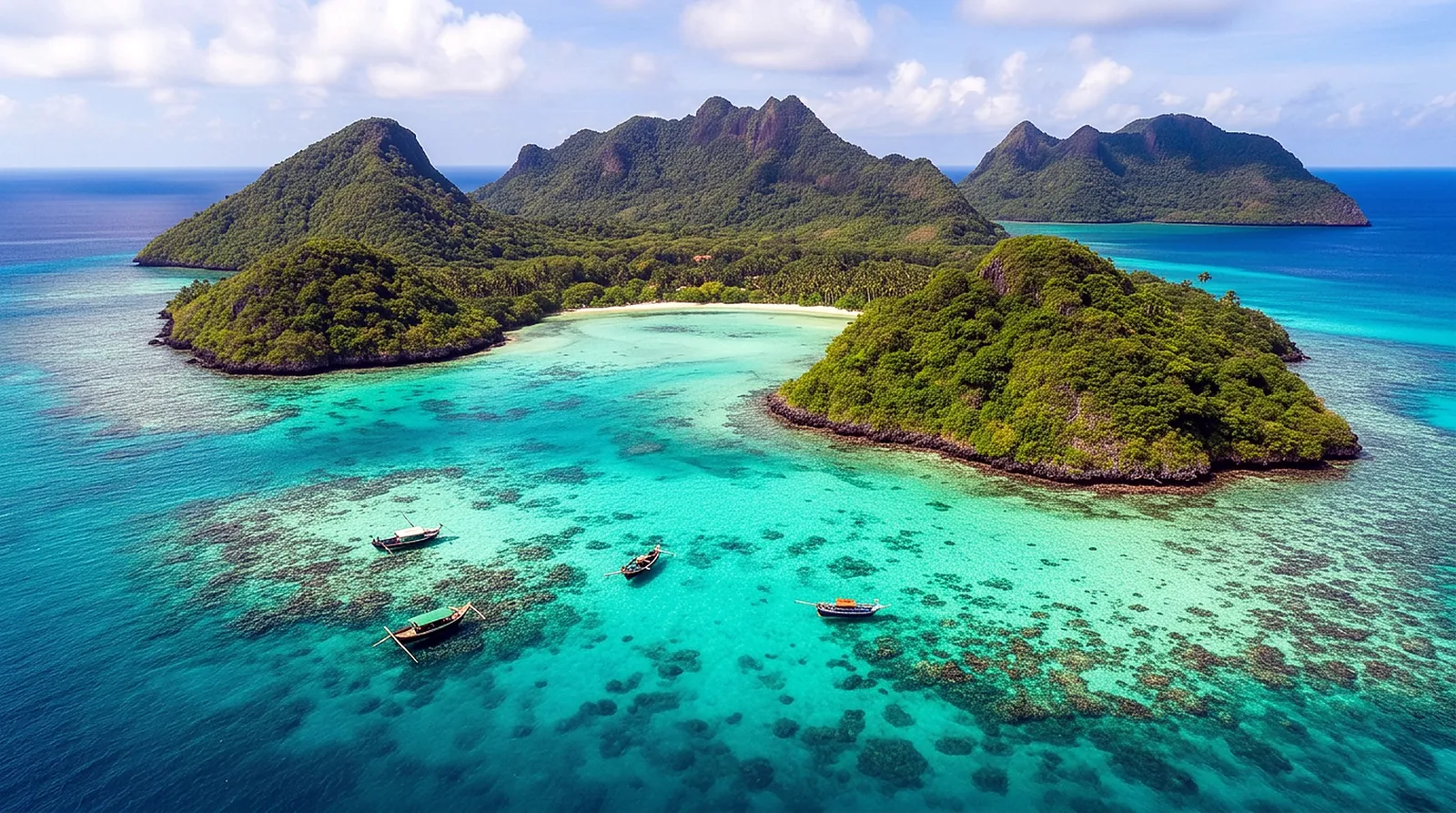
Conditions in March
You're considering Alor in March? Excellent choice, though it’s essential to set your expectations right for this shoulder season. March in Alor sees the transition from the wet season into the drier months, offering a unique blend of conditions. Expect some rain, but not typically the sustained downpours you might experience in deeper wet season. These rain showers tend to be intermittent and often pass quickly, leaving brilliant sunshine in their wake. Sea states are generally calm to moderate. While glass-like conditions aren't guaranteed every day, you won’t usually be battling big swells, making transfers between dive sites comfortable on a liveaboard.
Water temperatures in March are inviting, typically hovering around 28-29°C (82-84°F). This means you can often get away with a 3mm shorty or even just a rash guard for protection, though a 3mm full suit is always a good idea if you do multiple dives a day or are prone to getting cold. Visibility is where March can be a bit more variable compared to the peak dry season. You can expect good to very good visibility, generally in the 15-25 meter range. While not the crystal-clear 30+ meter visibility you might find in September, it’s certainly more than adequate for enjoying Alor’s vibrant reefscapes and spotting larger marine life.
Currents in March are a hallmark of Alor’s diving experience, and they remain present and often strong. This is part of what makes Alor so nutrient-rich and supports its incredible biodiversity. Drift dives are common, and you’ll need to be proficient in current management. Your dive guides will be experts at reading these currents, but be prepared for exhilarating rides, especially around the straits and passages. These currents are also what bring in the pelagics, so embrace them!
What you will see
March in Alor is fantastic for a diverse range of marine encounters. While Alor is always renowned for its incredible biodiversity, the transitional weather can sometimes stir up plankton blooms, which, while occasionally reducing visibility slightly, are also a magnet for certain pelagic species. You can often spot schooling barracuda and trevally on the deeper reefs, and the strong currents around sites like Clown Valley or Half Moon Bay are perfect for exhilarating drifts past various reef sharks, including grey reef sharks and whitetip reef sharks. Keep an eye out into the blue for oceanic sunfish (Mola Mola), which are an exciting, albeit less common, possibility during this time, often found in cooler upwellings.
Macro life is another huge draw for Alor, and March is no exception. The reefs teem with critters. Expect to find an incredible array of nudibranchs of all shapes and sizes, pygmy seahorses meticulously camouflaged in gorgonian fans, and various species of frogfish waiting patiently for their next meal. Scorpionfish, stonefish, and vibrant pipefish are also abundant. The volcanic sand slopes around Kalabahi Bay offer some of the best muck diving opportunities, where you can spot mimic octopuses, flamboyant cuttlefish, and various rare gobies.
While humpback whale sightings are more common later in the year during their migration, March can still offer surprises. Pilot whales and various dolphin species are frequently seen from liveaboards transiting between dive sites. The nutrient-rich waters consistently support healthy populations of reef fish, from colourful anthias and damselfish to parrotfish and angelfish. The reefs themselves are in phenomenal condition, offering vibrant soft and hard coral gardens that are a joy to explore.
Top dive sites this month
For diving in March, your liveaboard itinerary will likely focus on the diverse range of sites around Alor and Pantar islands, making the most of the prevailing conditions. Pantar Strait is a must-visit, offering a series of high-energy drift dives along its steep walls. Sites like Clown Valley and Half Moon Bay within this strait are fantastic for pelagic action, with regular sightings of reef sharks and large schools of fish powering through the currents. The healthy coral growth here is spectacular, and you'll find plenty of smaller critters tucked into crevices as you whizz by.
Another prime area is the region just off the coast of Alor Besar. Dive sites such as The Arch and School's Out are consistently good, offering varied topography including swim-throughs and vibrant reef flats. These sites are rich in both macro life and schooling fish. For dedicated muck divers, the black sand slopes of Kalabahi Bay, particularly spots like the "Black Forest" or "Muck City," are phenomenal in March for finding rare critters like wonderpus, flamboyant cuttlefish, and various frogfish species. These sheltered bays often offer calmer conditions and excellent visibility for macro photography, making them a perfect complement to the exhilarating drift dives.
Practical tips for your trip
Given the water temperatures of 28-29°C (82-84°F), you'll be comfortable in a 3mm wetsuit. If you tend to get cold or plan on doing many dives over several days, a full-length 3mm suit is advisable. Some divers might even be fine with just a rash guard and board shorts, but remember that a wetsuit also offers protection against sun and accidental contact with corals.
March in Alor is best suited for intermediate to advanced divers. The presence of strong currents means that good buoyancy control and comfort in varied conditions are essential. While some sheltered bays offer easier dives, many of Alor's signature sites are drift dives that require experience. Beginners might find aspects challenging, though highly experienced guides are excellent at managing dive groups. Liveaboard availability in March is generally good as it's not yet peak season, offering you a slightly less crowded experience. However, booking in advance is always recommended to secure your preferred boat and cabin.
What to pack? Beyond your standard dive gear, consider bringing a reef hook – invaluable for safely observing action in strong currents without damaging the reef. A good dive computer is a must, and a signaling device like a SMB (Surface Marker Buoy) for open water ascents is crucial. Don't forget reef-safe sunscreen, a wide-brimmed hat, and insect repellent. Be aware that Alor is relatively remote, and while liveaboards are well-equipped, there’s limited infrastructure outside of the main town for forgotten items. Cellular signal can be patchy, so embrace the digital detox! Also, be respectful of local customs and communities if you get a chance to visit onshore. This trip will be an incredible adventure, so embrace Alor’s wild beauty and prepare for some truly epic diving.