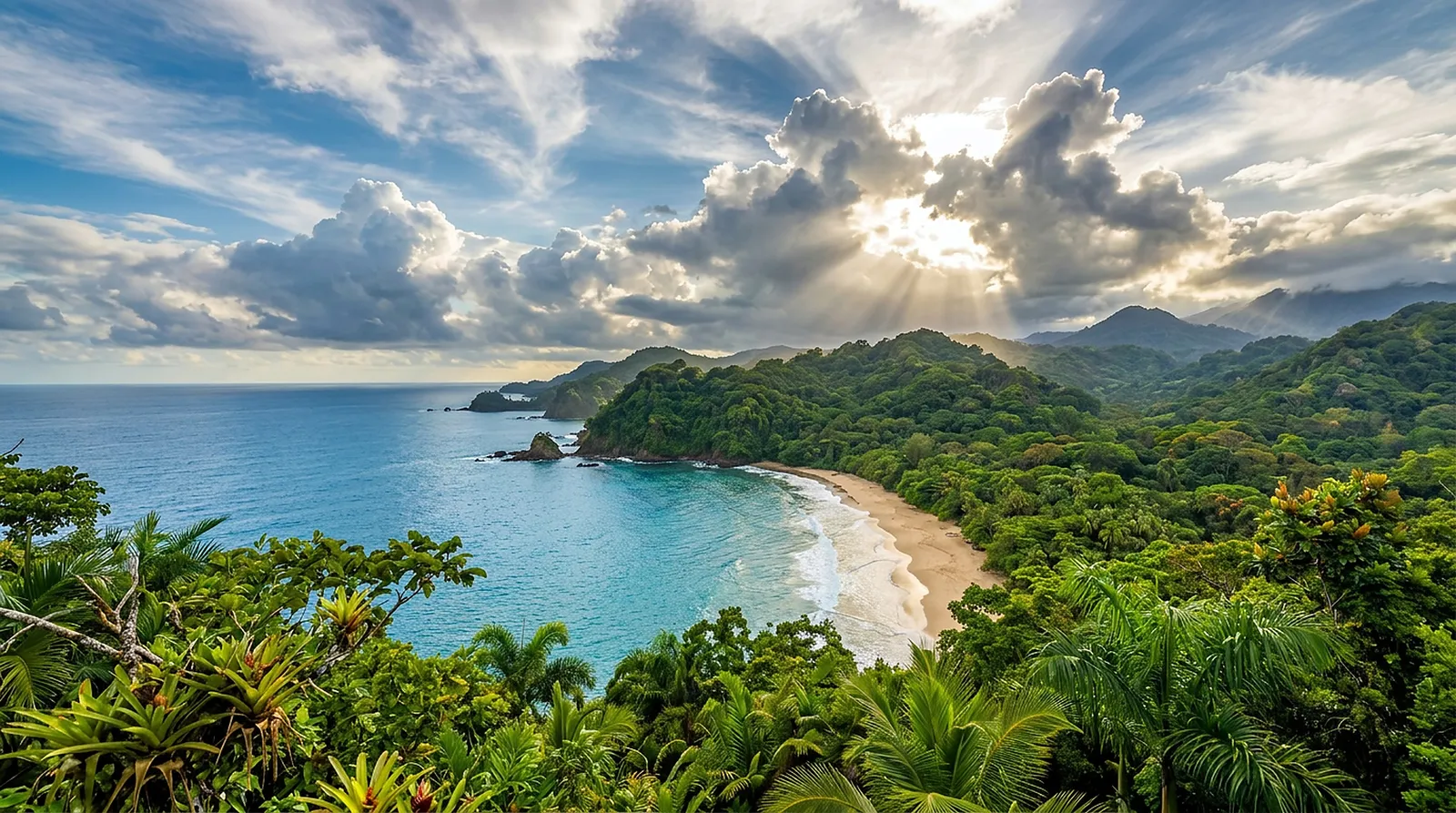
Conditions in October
So, you're eyeing Cocos Island for an October dive trip? Good choice. While it falls within the wet season, don't let that deter you – it actually has some significant advantages for divers. Surface conditions can be a bit more dynamic, with choppier seas and occasional rain showers, especially in the afternoons. But hey, you're not going to Cocos for sunbathing on the deck, right? The air temperature hovers consistently around 26-29°C (79-84°F), providing a warm embrace between dives.
Underwater, things are typically superb. Water temperatures at depth consistently range from 24-27°C (75-81°F), though thermoclines can drop it a few degrees in certain spots, usually around deeper pinnacles. Visibility can vary quite a bit, but often hits an impressive 15-25 meters, even up to 30 meters on a good day. The increased plankton in the water during this time, encouraged by the rain and currents, is precisely what attracts the big stuff you're coming to see.
Currents are a defining feature of Cocos, and October is no exception. You'll encounter moderate to strong currents at many sites, which means drift diving is common. This isn't a bad thing; strong currents are often indicators of nutrient-rich waters, drawing in the pelagics. Your dive guides will be experts at reading these movements, ensuring you're in the right place at the right time to witness the oceanic spectacle.
What you will see
October in Cocos Island is prime time for hammerhead sharks – and I mean, seriously prime! The increased plankton blooms during the wet season are like an open invitation for these magnificent creatures. You’ll regularly witness immense schools of scalloped hammerheads, often in the hundreds, circling cleaning stations or cruising in the blue. It’s an absolutely mind-blowing experience. Beyond the hammerheads, you’re also in for a treat with other shark species. Silky sharks are frequently seen, especially around the deeper areas and open ocean, often accompanied by their smaller brethren, the whitetip reef sharks, which can be found resting in caves or hunting on the reefs.
But it’s not just about the sharks. Mantas, both oceanic and mobula rays, are frequent visitors in October, gracefully gliding through the currents, often in impressive numbers. You might also encounter large schools of eagle rays, their distinctive patterns a beautiful sight against the blue. During safety stops, or just cruising along, keep an eye out for tuna, jacks, and barracuda in massive schools, forming shimmering walls of life that can dwarf a diver. These pelagic fish are a constant reminder of the sheer productivity of Cocos' waters.
While Cocos is renowned for its big animal encounters, don't forget to appreciate the smaller stuff during your safety stops or while exploring shallower reef structures. Though not a macro destination in the traditional sense, you’ll find vibrant reef fish, moray eels, and various invertebrates adding splashes of color to the rocky formations. However, the real stars of the show in October are undeniably the massive aggregations of pelagic sharks and rays – it’s a big animal paradise, plain and simple.
Top dive sites this month
For October, several sites around Cocos Island truly shine, offering unparalleled opportunities for pelagic encounters. Manuelita Outside is a must-dive. This site is practically synonymous with large schools of scalloped hammerheads. You’ll often drop in on cleaning stations where hundreds of these sharks gather, creating an unforgettable spectacle. The outside wall here is also excellent for silvertip and silky sharks.
Another absolute gem for this time of year is Bajo Alcyone. This seamount is a beacon for large marine life, and in October, the hammerhead schools here are regularly immense. You'll often descend onto the top of the seamount and then let the current carry you along, watching the drama unfold below. And don't forget Dirty Rock. This iconic pinnacle provides multiple facets for exploration, with strong currents often bringing in hammerheads, silky sharks, and even whale sharks if you're lucky. Given the currents, these sites are best suited for experienced divers comfortable with varying conditions.
Practical tips for your trip
A 3mm full wetsuit is generally sufficient for most divers, especially if you're doing multiple dives a day. If you tend to get cold or plan on longer dives, a 5mm might offer a bit more comfort, particularly if you encounter some of those deeper thermoclines. Cocos Island diving is definitely best suited for experienced divers. The currents can be strong, and often dives involve negative entries and drift diving in open water. This isn't really a place for beginners, but if you're an advanced diver with good buoyancy control and a comfort level with currents, you'll be absolutely thrilled.
Liveaboard availability for Cocos in October can vary, but generally, it’s a popular time for those in the know, so booking well in advance is highly recommended. Given you're on a liveaboard, packing essentials include reef-safe sunscreen, a hat, sunglasses, and lightweight clothing. Don't forget any personal medications and seasickness remedies, just in case, as the ride out can be choppy. Crucially, pack your certifications, logbook, and all necessary dive gear. A good reef hook can be useful for holding your position in strong currents without damaging the reef. Prepare for variable surface weather, but expect truly epic underwater encounters!
Regional notes
Each note applies only to the named region, not to the whole country.
- Puntarenas (Gulf of Nicoya, Pacific coast): Average sea temperature 28.2 °C (83 °F)