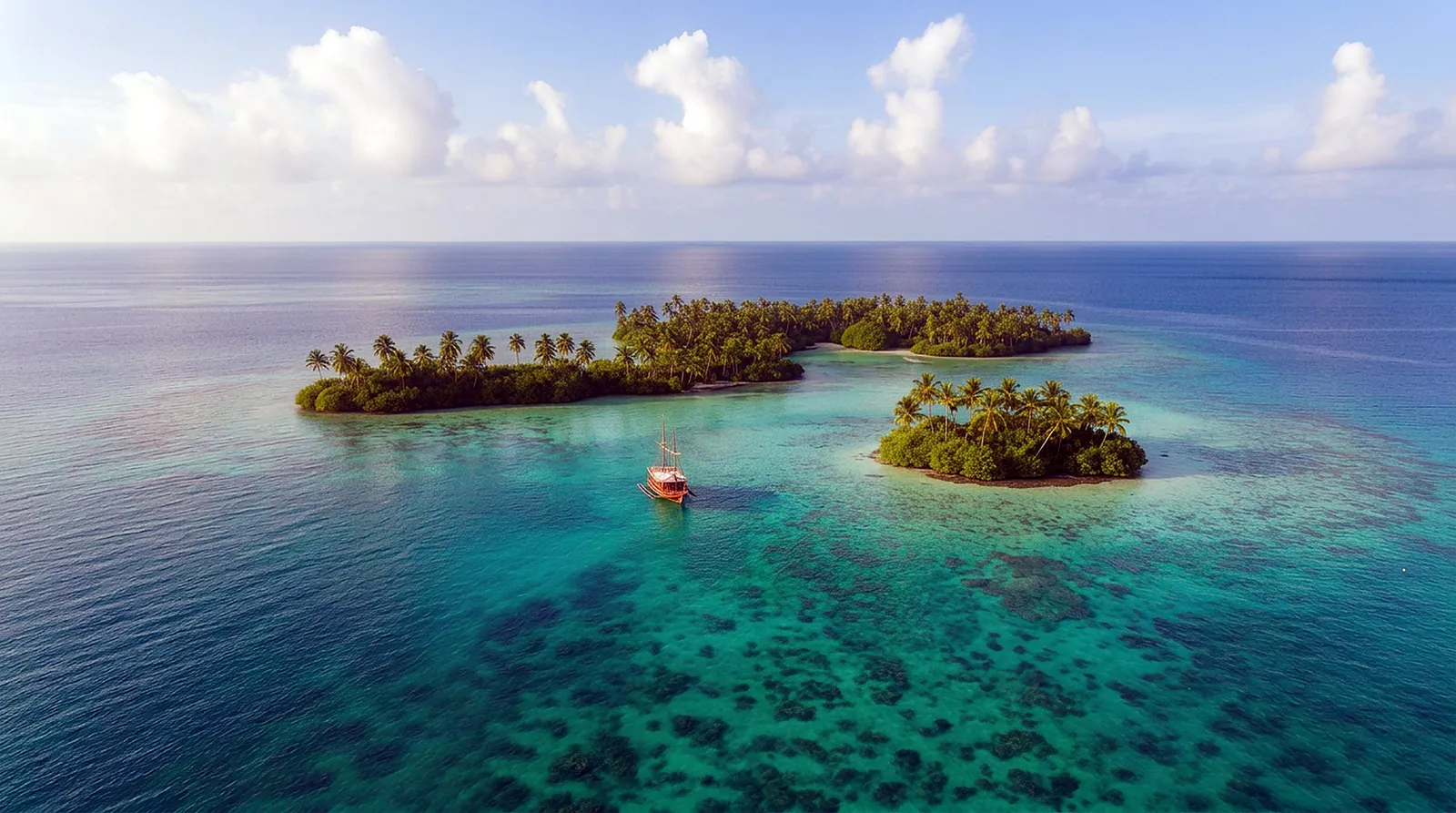
Conditions in October
So, you're dreaming of diving the legendary Banda Sea, often called the "Ring of Fire," and October is your magic month? Excellent choice! October falls squarely within the sweet spot for diving in this extraordinary region. You can expect truly idyllic conditions that make for comfortable and thrilling underwater adventures. The weather above the surface is typically calm and sunny, a perfect complement to the stunning vistas you’ll encounter offshore.
Below the waves, the Banda Sea in October truly shines. The water temperature is consistently warm, averaging around 29°C (84°F) around Ambon (northern Banda Sea gateway). This means you’ll be super comfortable during your dives, even on multiple dives a day. Visibility is usually outstanding, often offering impressive clarity. Imagine floating in gin-clear waters, able to see the distant outlines of hammerhead schools or the intricate details of a vibrant reef from afar. Currents can be present and vary from mild to moderate, especially around more exposed seamounts and pinnacles. These currents are often what bring in the nutrient-rich waters that attract the big pelagics, so while they require a bit more awareness, they are definitely your friends!
Crucially, October sits firmly in the dry season after the trade winds have subsided, meaning calmer seas and less chance of rain. This makes for smooth sailing on your liveaboard and optimal conditions for accessing even the most remote dive sites. It's truly one of the best times to experience the full grandeur of the Banda Sea with minimal disruptions.
What you will see
October in the Banda Sea is synonymous with one thing for many divers: pelagic action! This is prime time for encountering large schooling fish and impressive predators. The highlight for many is the incredible opportunity to witness schooling hammerhead sharks. These magnificent creatures are often found in significant numbers around the seamounts and offshore pinnacles during this period, drawn in by the rich currents. Seeing schools of hammerheads cruise by in formation is a truly unforgettable experience that makes the journey to the Banda Sea utterly worthwhile.
But it’s not just hammerheads stealing the show. Keep your eyes peeled for other impressive pelagics such as large dogtooth tuna, barracuda schools, trevally, and various species of reef sharks. Manta rays can also be sighted, often gliding gracefully over cleaning stations, and you might even be lucky enough to spot whale sharks, though their appearances are less predictable. Beyond the big stuff, the Banda Sea boasts incredibly healthy and vibrant coral reefs, teeming with smaller reef fish. You'll encounter a kaleidoscope of colours on every dive, from parrotfish and angelfish to triggerfish and sweetlips.
And for those who appreciate the smaller wonders, don't despair! While renowned for its pelagics, the Banda Sea's reefs also harbour a fascinating array of macro life. Look closely among the corals and sponges, and you can discover pygmy seahorses, various nudibranchs, colorful flatworms, and a multitude of crustaceans. The sheer biodiversity here is astounding; it’s a place where you can switch from observing massive schools of sharks to admiring a tiny jewel-like creature all on the same dive trip. Seasonal aggregations of particular species, driven by spawning or feeding cycles, are often at their peak in October, contributing to the incredible density of marine life you'll experience.
Top dive sites this month
If you're targeting those spectacular pelagic encounters, especially hammerheads, then a few particular areas in the Banda Sea really shine in October. The Manuk and Api Islands, often referred to as the "Snake Islands," are must-visits. These volcanic islands are known for their strong currents and vast aggregations of sea snakes, but more importantly, the nutrient-rich waters around them act as magnets for large pelagics, including incredible schools of hammerheads. The excitement of diving these remote, exposed sites is unparalleled.
Another top contender is the "Lucipara Atoll" or Lucipara group of islands. This remote atoll, deep in the Banda Sea, features a series of submerged seamounts and pinnacles that are absolute hotspots for schooling hammerheads during October. The sheer oceanic nature of these sites contributes to the high likelihood of encountering large open-ocean creatures. Additionally, the reefs around the Banda Neira and Hatta Islands, while offering fantastic healthy corals and diverse reef life, can also produce unexpected pelagic surprises as they lie on the hammerhead highway. These sites offer a perfect blend of pelagic action and vibrant reef ecosystems, ensuring a diverse and thrilling dive itinerary.
Practical tips for your trip
For diving in the Banda Sea in October, given the comfortable water temperatures averaging around 29°C (84°F) around Ambon (northern Banda Sea gateway), most divers will be perfectly fine with a 3mm shorty or a full 3mm wetsuit. If you tend to get cold easily, or plan on doing multiple dives a day over several days, a 5mm suit might be more comfortable, particularly for longer dives in areas with cooler upwellings. Remember, a full suit also offers protection from potential stinging hydroids or pesky jellyfish.
This expedition is generally best suited for advanced divers. While some dives might be calm, many of the prime pelagic sites involve stronger currents and exposed conditions, requiring good buoyancy control and experience in drift diving. Beginners might find the conditions challenging, and liveaboard operators often specify an advanced certification and a minimum number of logged dives for Banda Sea trips. Liveaboard availability, especially for October, tends to fill up quickly due to the peak season demand. It’s highly recommended to book your trip months, if not a year, in advance to secure your spot on one of the premium vessels.
Beyond your standard dive gear, consider packing a surface marker buoy (SMB) and a dive computer, as these are essential safety items, particularly in current-prone areas. A reef hook can be useful for observing pelagics in currents without expending too much energy. Don't forget reef-safe sunscreen, a wide-brimmed hat, and insect repellent for evenings on deck or island excursions. Given the remoteness of the Banda Sea, connectivity can be limited, so embrace the digital detox and focus on the incredible underwater world! Also, always carry adequate dive insurance – better to be safe than sorry when exploring these pristine, distant waters. Enjoy the adventure!
Regional notes
Each note applies only to the named region, not to the whole country.
- Ambon (northern Banda Sea gateway): Average sea temperature 28.6 °C (83 °F)