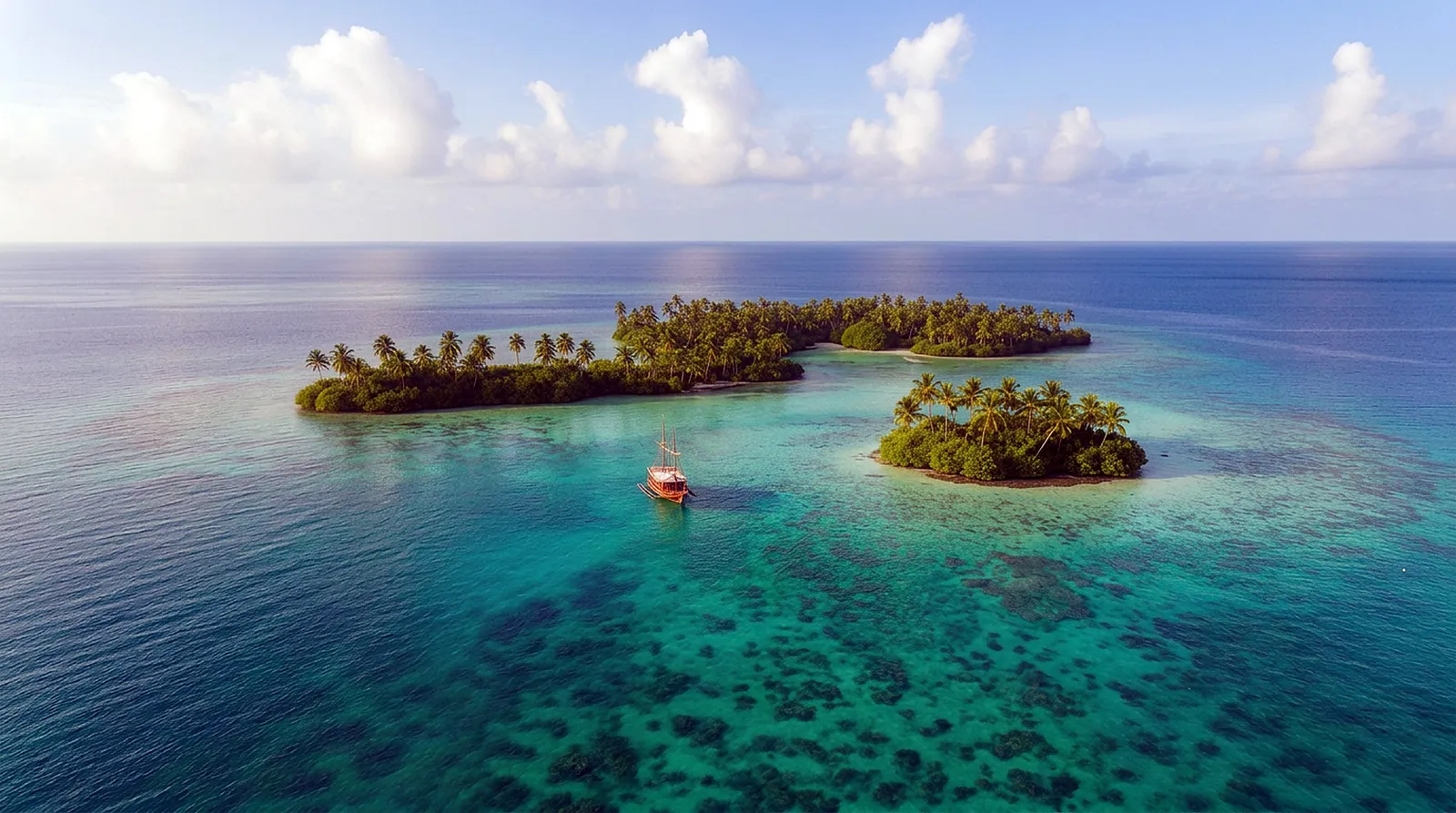
Conditions in September
September in the Banda Sea is nothing short of spectacular, marking the sweet spot as the southeast monsoon transitions. This means you’re looking at some of the calmest seas of the year, perfect for smooth sailing on your liveaboard and even smoother dives. You can expect mostly sunny skies, light breezes, and flat, inviting waters. The air temperature hovers comfortably around 28-32°C (82-90°F), making surface intervals a joy. Below the surface, the water temperature is consistently warm, typically ranging from 27-29°C (81-84°F). This allows for comfortable diving even on longer bottom times, though a 3mm wetsuit is still advisable for thermal protection and preventing nicks and scrapes.
Visibility during September is generally excellent throughout the Banda Sea. You're often treated to crystal-clear waters, frequently exceeding 25-30 meters (80-100 feet), sometimes even more in prime locations. This incredible clarity is a major draw, allowing you to appreciate the vastness of the reefs and the distant pelagic action. While currents can always be present in a dynamic region like the Banda Sea, especially around seamounts and passes, September typically sees them at a more predictable and manageable level compared to other times of the year. Your dive guides will, of course, brief you thoroughly on the expected conditions for each dive site, ensuring you have the best and safest experience possible.
What you will see
September is prime time for the Banda Sea's famous 'Ring of Fire' and its incredible pelagic encounters. This month often coincides with the tail end of the whale migration season, meaning you have a decent chance of spotting various whale species, including spinner dolphins and even pilot whales passing through. The clear waters and nutrient-rich upwellings create a buffet for larger marine life. You’ll frequently encounter schooling barracuda, trevally, and fusiliers in vast numbers, often spiraling into mesmerizing silver tornadoes. Keep your eyes peeled for dogtooth tuna, sharks – including grey reef sharks, hammerheads (especially around deeper seamounts like the Lucipara Ridge), and even thresher sharks if you’re particularly lucky on dawn dives.
Beyond the big stuff, the Banda Sea is rich in biodiversity. Healthy coral reefs teeming with colorful reef fish are the norm. You'll find vibrant soft corals, massive hard coral formations, and an abundance of macro life if you take the time to look closely. Expect to see pygmy seahorses, various nudibranchs, gobies, and commensal shrimp and crabs hiding amongst the corals. The sheer density of marine life is astonishing, with pristine reefs showing minimal signs of human impact. This combination of healthy corals and abundant pelagics makes September an exceptional time to experience the Banda Sea's unique ecosystem.
Top dive sites this month
For an unforgettable September experience in the Banda Sea, several dive sites stand out. The Lucipara Ridge is absolutely phenomenal this time of year. This remote seamount chain acts as a beacon for pelagic action, with regular sightings of schooling hammerheads, tuna, and large reef sharks gliding through its clear, current-swept waters. It's a true blue-water diving paradise. Then there's Manuk Island, known as the "Snake Island." Here, the volcanic activity warms the water, attracting countless sea snakes that gracefully weave through the reef. It's a unique and thrilling experience that's particularly comfortable in the calm September conditions.
Further east, Nusantara, near the Ceram Sea, offers incredible walls and healthy reefs, often with strong currents that bring in larger schooling fish. And, of course, the historical and stunning dives around the Banda Islands themselves are a must. Sites like Hatta Island and Batu Kapal reveal spectacular coral gardens, healthy fish populations, and occasional reef sharks. The visibility around the Banda Islands in September is usually superb, enhancing the already dramatic underwater topography. These locations provide a perfect blend of pelagic encounters, vibrant reef diving, and unique marine phenomena that are best experienced during this idyllic month.
Practical tips for your trip
Given the pleasant water temperatures of 27-29°C (81-84°F), a 3mm full wetsuit or even a shorty combined with a rash guard is usually sufficient for most divers. However, if you tend to get cold easily or plan on doing multiple dives a day, a 3mm full suit will provide good thermal comfort and protection against coral grazes. September is ideal for experienced divers who can handle potential currents, especially around the exposed seamounts, but the generally calm conditions also make it accessible for intermediate divers looking to enhance their skills. Beginners might find some of the sites a bit challenging, but there are plenty of sheltered, gentler dives around the main islands.
Liveaboard availability can be tight for September as it's a peak season for reasons mentioned above. We strongly recommend booking your trip well in advance, usually 6-12 months out, to secure your preferred vessel and itinerary. What to pack? Apart from your diving gear, light, quick-drying clothing is essential. Don't forget reef-safe sunscreen, a wide-brimmed hat, insect repellent for evenings on deck, and plenty of swimwear. A good quality camera (with appropriate underwater housing) is a must to capture the breathtaking beauty. Be aware that the Banda Sea is remote, so internet and phone signal can be intermittent or nonexistent for extended periods. Embrace the digital detox and immerse yourself fully in the magic of this extraordinary destination.
Year-round overview for the Banda Sea
Frequently asked questions
Is September a good month to dive in the Banda Sea?
What can you see diving in the Banda Sea in September?
Should I book a the Banda Sea liveaboard for September or wait?
Find a liveaboard for September
Compare available the Banda Sea liveaboards departing in September.
Search and Book