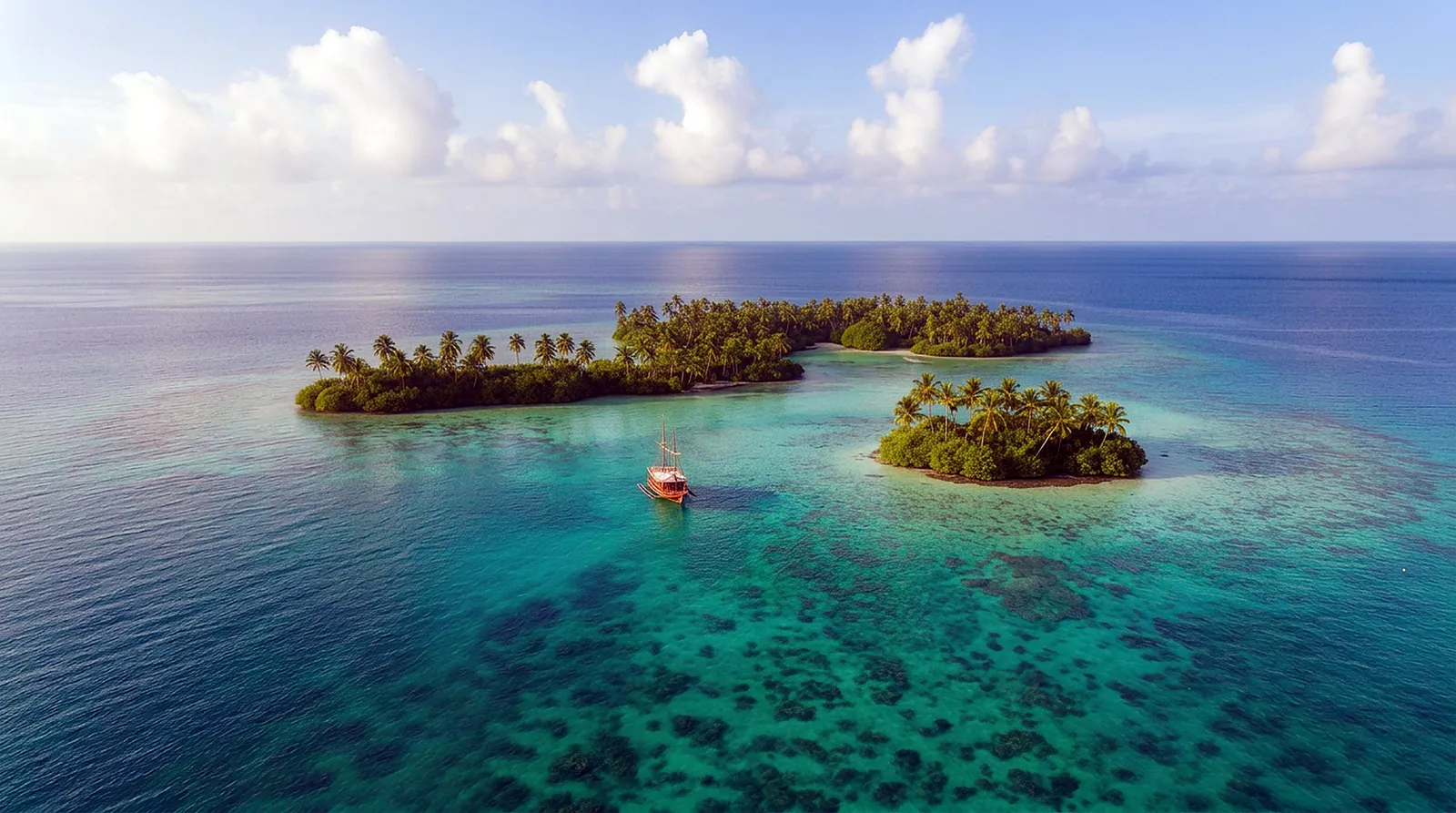
Conditions in December
So, you’re thinking about diving the Banda Sea in December? Let’s talk brass tacks. December in the Banda Sea marks the transition season, moving from the drier months into the wetter northwest monsoon. This doesn’t mean diving stops, but it does mean a shift in conditions you should be aware of. Around Ambon (the northern Banda Sea gateway), daily air temperatures typically range from 24.2°C (76°F) to 31.5°C (89°F), accompanied by increased humidity and a higher chance of rainfall, sometimes in short, sharp bursts. Don’t let that deter you; while surface conditions can be choppier than in the September-October peak season, many days still offer enjoyable sailing.
Underwater, things remain pretty fantastic. Water temperatures are consistently warm, averaging around 30°C (85°F) around Ambon (the northern Banda Sea gateway). This means you can often get away with a 3mm wetsuit, or even a rash guard if you're particularly warm-blooded. Visibility remains excellent, often outstanding, allowing divers to fully appreciate the vastness of the reefs and the abundant marine life. This is still more than enough to fully appreciate the vastness of the reefs and the abundant marine life.
Currents are a constant companion in the Banda Sea, regardless of the month, due to its deep oceanic nature and the Indonesian Throughflow. In December, these currents can be moderate to strong, which is precisely why the Banda Sea is so renowned for its pelagic encounters. They bring in nutrient-rich water, attracting the big stuff. You’ll need to be comfortable with drift diving, and your guide will be crucial in navigating these dynamic underwater highways safely and effectively, ensuring you’re positioned for the best sightings.
What you will see
If you're heading to the Banda Sea in December, prepare to be amazed by the sheer scale of marine life. This is the fabled "Ring of Fire" for a reason, boasting healthy, vibrant coral reefs teeming with biodiversity. While the main whale and hammerhead aggregation season peaks slightly earlier, December still offers incredible opportunities for pelagic encounters. You’ll frequently spot various shark species, including grey reefs, whitetips, and blacktips patrolling the reef edges. Keep an eye on the blue for larger pelagics like dogtooth tuna, barracuda, and jacks schooling in impressive numbers.
The coral gardens themselves are a spectacle. You'll glide over vast, untouched fields of hard and soft corals, home to an incredible array of reef fish. Expect to see colourful parrotfish, angelfish, butterflyfish, and clownfish making their homes amongst the anemones. Macro enthusiasts won't be disappointed either. While the Banda Sea isn't solely a macro destination, its pristine reefs hide a multitude of smaller critters. Look closely for pygmy seahorses, flamboyant cuttlefish, various nudibranchs, and colourful pipefish in the cracks and crevices.
What makes December special, even outside the peak "hammerhead" season (which generally peaks in September and October), is that the Banda Sea is always full of surprises. While massive schools of hammerheads are less guaranteed than in early fall, you still stand a good chance of encountering them, often in smaller, curious groups. Oceanic mantas, mobula rays, and even seasonal migrations of whale sharks have been known to pass through, adding an extra layer of excitement to each dive. Every dive here is an exploration into a truly wild and dynamic ecosystem.
Top dive sites this month
In December, some of the absolute best diving in the Banda Sea can be found around the remote islands and seamounts. The Banda Islands themselves offer exceptional diving, with sites like Lava Flow standing out. This site, created by a volcanic eruption, boasts incredibly fast-growing hard corals and a spectacular density of reef fish. It's an explosion of life, and the currents here can bring in schools of fusiliers and pelagics looking for a feed.
Further east, the remote islands of the Forgotten Islands chain, such as those around Nil Desperandum, truly shine. These seamounts and atolls are magnets for pelagic action. While the name might suggest otherwise, "Nil Desperandum" itself is a known hotspot for sharks, including the possibility of hammerheads, and large schools of trevally and barracuda. Another excellent region to focus on is Manuk Island, known as the "Snake Island," for its healthy population of Olive sea snakes. Beyond the unique snake encounters, the reef is pristine and attracts a range of reef fish and often sharks. The sheer isolation of these sites ensures untouched ecosystems and incredible, diverse diving experiences.
Practical tips for your trip
Considering the warm water temperatures around 30°C (85°F) near Ambon, a 3mm wetsuit or thin suit is generally ideal for most divers. If you tend to get cold easily after multiple dives, a 5mm might offer a bit more comfort, but it’s rarely a necessity. This trip is best suited for experienced divers. The Banda Sea is not usually recommended for beginners due to the often strong and unpredictable currents. You should be comfortable with drift diving, navigating stronger currents, and performing negative entries. A decent level of fitness is also beneficial for handling the conditions and maximizing your dive time.
Liveaboard availability in December can be a mixed bag. While it's not peak season, it’s also not completely off-season, so booking well in advance is still highly advisable, especially if you have specific dates or boats in mind. Blue Rides often has excellent options, so reach out to secure your spot. What to pack? Beyond your standard dive gear, consider bringing a light rain jacket for surface intervals, reef-safe sunscreen, a good quality wide-brimmed hat, and insect repellent. Also, remember that many of the Banda Sea's dives are in very remote locations, so having a spare mask strap, fin strap, and any essential personal items (medications, etc.) is a very smart move. Be prepared for a truly wild adventure; sometimes the biggest luxury is the pristine, untouched nature of your surroundings.
Regional notes
Each note applies only to the named region, not to the whole country.
- Ambon (northern Banda Sea gateway): Average sea temperature 29.7 °C (85 °F)