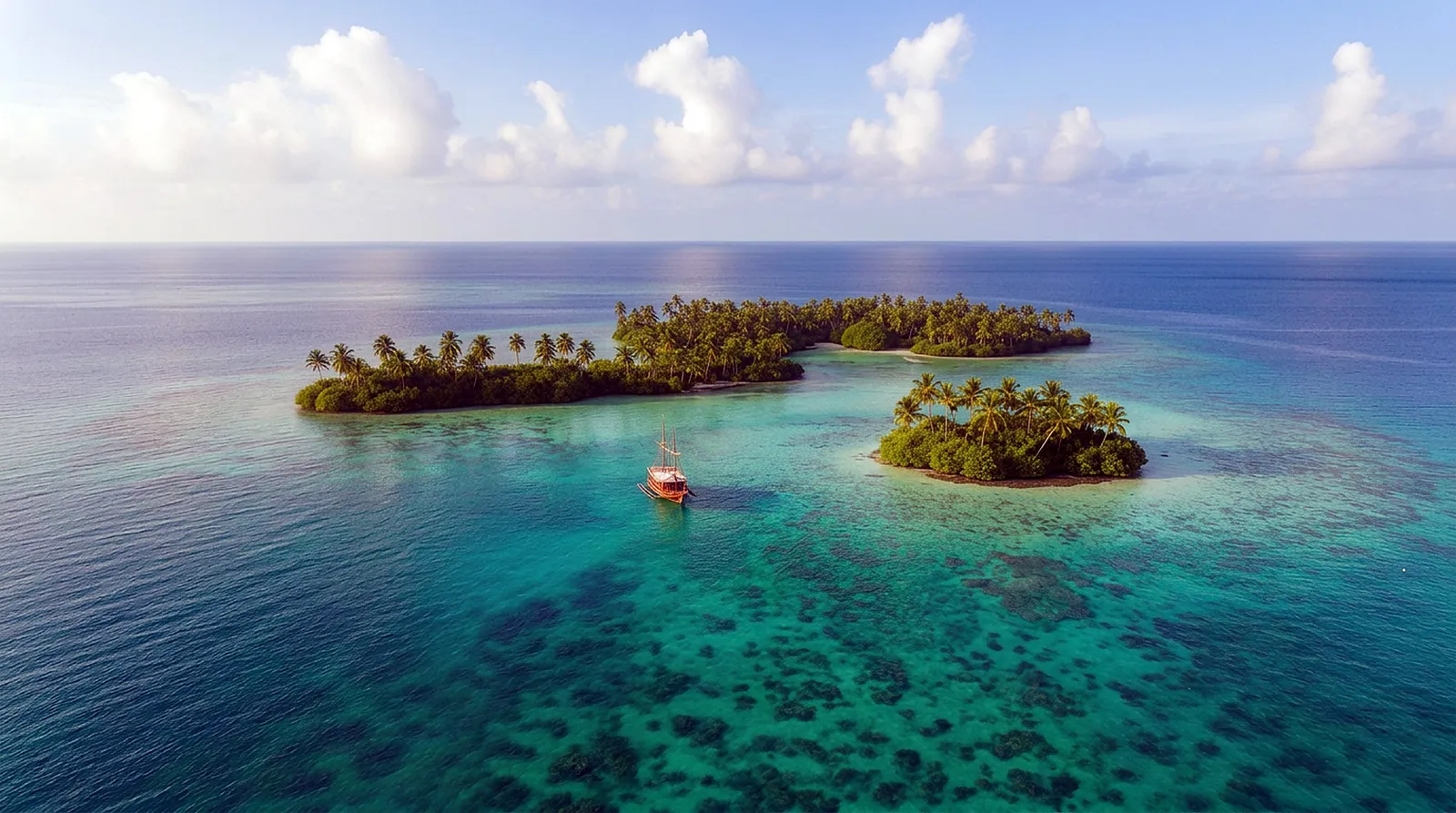
Conditions in February
So, you’re thinking about diving the Banda Sea in February? Excellent choice, my friend, though it’s important to set your expectations. February in the Banda Sea falls squarely within the monsoon season, specifically the west monsoon. What does this mean for your dive trip? Well, prepare for a bit more dynamic weather than the postcard-perfect crystal clear days you might imagine from other Indonesian dive destinations. You can expect more frequent rainfall, and the sea can be a bit choppier, especially during crossings between islands. While not consistently rough, there's a higher chance of encountering swells, so if you're prone to seasickness, definitely pack your remedies!
Despite the monsoon, diving is indeed possible, and many liveaboards still operate, though their itineraries might be adjusted to find more sheltered bays and islands. Water temperatures are generally very pleasant, hovering around 27-29°C (81-84°F), so you won’t be shivering underwater. Visibility, however, can be a mixed bag. While the Banda Sea is renowned for its gin-clear waters in the peak season, February's increased rainfall and runoff can reduce it in some areas. You might experience visibility ranging from a decent 15 meters to a glorious 30+ meters on good days, often depending on the specific site and recent weather. Currents are always a factor in the Banda Sea, and February is no exception. They can range from mild to strong, offering exhilarating drift dives and bringing in the nutrients that fuel the incredible marine life.
What you will see
Even with the monsoon conditions, the Banda Sea in February is far from barren – quite the opposite, in fact. This region is a true hotspot for pelagic action, and while not peak hammerhead season, you still stand a good chance of encountering these magnificent creatures, especially around deeper seamounts and pinnacles. Look out for schooling hammerheads, though their numbers might not be as high as in October/November. Other sharks like whitetip and grey reef sharks are common residents throughout the year and will definitely make an appearance. Manta rays, though less predictable than in certain dedicated cleaning stations, can also be spotted, often feeding near nutrient-rich upwellings. Keep your eyes peeled in the blue!
Beyond the big stuff, the Banda Sea boasts an astonishing diversity of reef life. Expect vibrant coral gardens that are incredibly healthy, teeming with colourful reef fish such as fusiliers, snappers, and surgeonfish. Macro lovers, don't despair! While the Banda Sea is famous for its pelagics, its reefs and muck sites hold a treasure trove of smaller critters. Nudibranchs, pygmy seahorses, frogfish, and various crustaceans are usually present, though you might need to work a little harder to find them than in dedicated macro destinations. Special aggregations are less pronounced in February compared to the dry season, but the sheer biodiversity of this region means there’s always something incredible to see. You might even spot a passing whale or dolphin pod on your surface intervals – it’s a wild ocean out here!
Top dive sites this month
Given the February conditions, liveaboard itineraries will often prioritize more sheltered dive sites and island groups within the Banda Arc. Expect to visit spectacular areas like the volcanic islands of the Banda Islands group themselves. Sites like Lava Flow in Banda Neira, where hard corals grow at an astonishing rate due to the geothermal activity, are a fantastic experience regardless of the season. The sheltered bays around these islands can offer excellent visibility even when the open sea is a bit lumpy. You'll also likely explore sites around Pulau Run and Ai, known for their stunning walls and healthy reef ecosystems.
Another excellent option for February in the Banda Sea is the cluster of islands around South Ambon, particularly towards the Lease Islands. While Ambon Bay is known for its muck diving, the surrounding islands offer fantastic reef dives. You might also find liveaboards venturing towards the Serua and Manuk islands when conditions allow, though these more exposed volcanic islands can be trickier to access if the weather is particularly rough. These are still prime real estate for pelagic encounters when reachable, with steep drop-offs and nutrient-rich waters attracting larger marine life.
Practical tips for your trip
Alright, let’s get down to the nitty-gritty for your February Banda Sea adventure. Given the comfortable water temperatures (27-29°C / 81-84°F), a 3mm shorty or full suit will be perfectly adequate for most divers. If you’re someone who gets cold easily, or if you plan on doing multiple dives a day, a 5mm suit might offer a bit more comfort and protection. This month is generally suitable for intermediate to advanced divers due to the potential for choppier seas and stronger currents. While beginners can certainly join, a few dives under your belt will make the experience far more enjoyable, especially if you encounter challenging conditions.
Liveaboard availability in February can be a bit more limited compared to the peak season (September-November), as some operators choose to move to different regions or undergo maintenance. However, you can definitely find options, often at better rates, making it an attractive time for the savvy traveler. Book in advance, as berths still fill up. What to pack? Standard dive gear, obviously, but also consider a rain jacket for surface intervals and stronger anti-seasickness medication if you’re prone to it. A good reef-safe sunscreen and a wider-brimmed hat are always a good idea. Be aware that itineraries might be flexible due to weather, so go with an open mind and embrace the adventure. The Banda Sea is an incredible destination, and even in February, it promises encounters you won't soon forget!
Year-round overview for the Banda Sea
Frequently asked questions
Is February a good month to dive in the Banda Sea?
What can you see diving in the Banda Sea in February?
Should I book a the Banda Sea liveaboard for February or wait?
Find a liveaboard for February
Compare available the Banda Sea liveaboards departing in February.
Search and Book