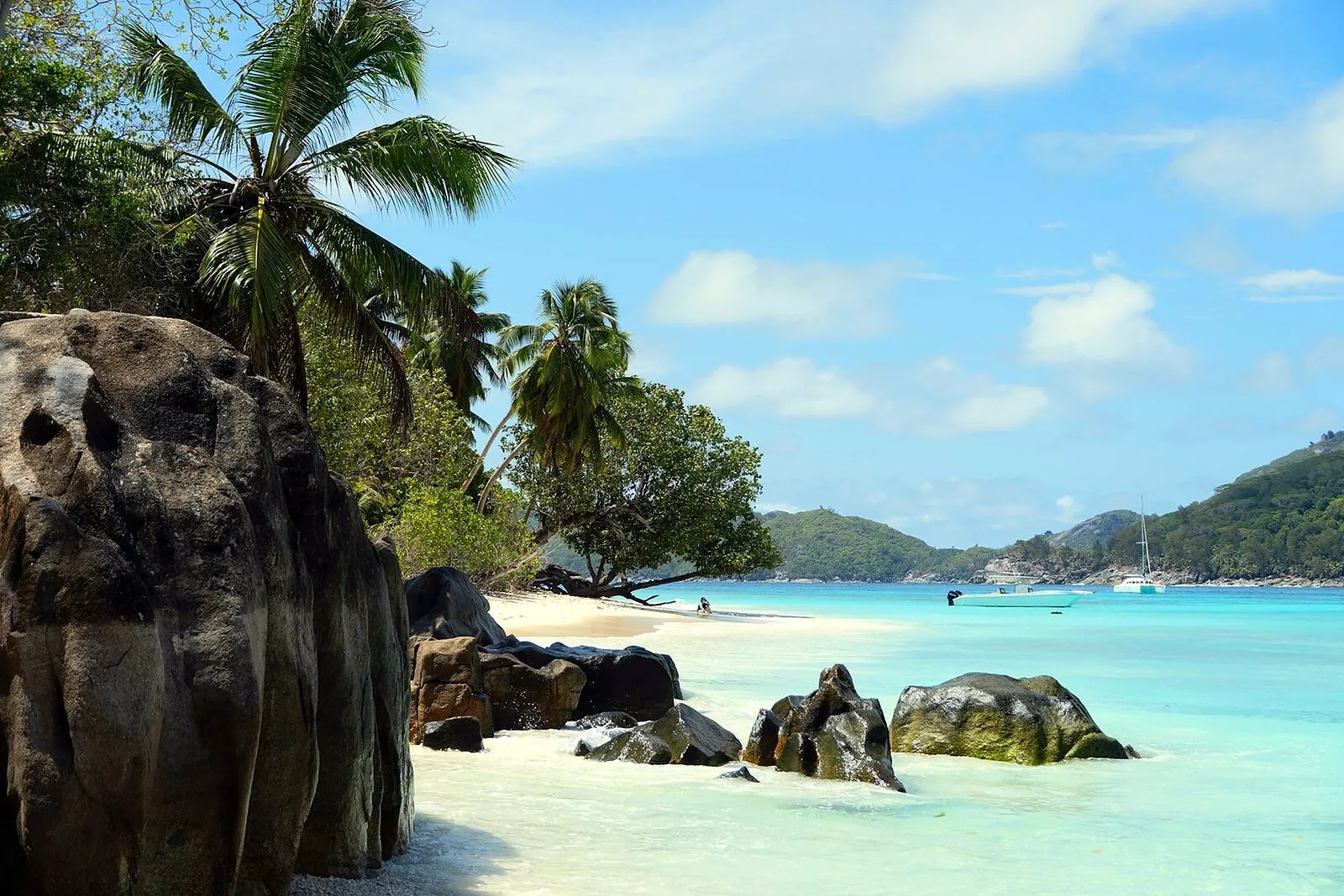
Conditions in February
February in Seychelles offers a unique and generally pleasant diving experience, though it sits within the inter-monsoon period as the islands transition from the northwest monsoon to the southeast trade winds. This shift often means calmer seas compared to the peak of either monsoon, providing a comfortable ride for liveaboards and easier access to a wider array of dive sites. You can typically expect a gentle swell, making for smooth sailing and easy entries and exits from the water.
Water temperatures during February are wonderfully warm, hovering consistently between 28-30°C (82-86°F). This balmy warmth means you'll likely be comfortable in a 3mm shorty or even just your swimsuit if you're prone to overheating. Visibility, while not always at its absolute peak compared to the October/November window, is still very good, generally ranging from 15-25 meters. On exceptional days, you might even encounter 30 meters or more, especially on deeper sites away from the main islands.
Currents can be a mixed bag during this transitional month. While generally moderate, you might encounter stronger, more unpredictable currents on some outer sites or channels as the monsoons shift. This variability can be a blessing, as it often brings in nutrient-rich water and with it, larger pelagic species. However, it also means some dives might be more suited to experienced divers comfortable with drift diving. Your liveaboard dive guides will always assess conditions meticulously to ensure your safety and enjoyment.
What you will see
February in Seychelles is a fantastic time for marine life encounters, straddling the tail end of the plankton blooms that attract large filter feeders and the onset of clearer waters. While whale shark season generally peaks from October to January, you still have a decent chance of encountering these gentle giants in February, particularly around the outer islands or aggregation points such as the area south of Mahé. Keep your eyes peeled and listen to your dive guides; they know the local movements.
Beyond whale sharks, you're almost guaranteed to see a rich tapestry of reef fish. Expect to be surrounded by schools of snappers, fusiliers, bannerfish, and butterflyfish. Look out for Napoleon wrasse, often seen patrolling the reef, and the endearing Hawksbill and Green sea turtles, which are plentiful across the archipelago. The granite sites are adorned with colourful hard and soft corals, providing shelter for a myriad of smaller creatures. Moray eels, often in vibrant colours, peek out from crevices, and octopus are frequently spotted camouflaged on the reef.
For those who love pelagics, February can deliver. Reef sharks, including Grey Reef Sharks and Whitetip Reef Sharks, are common residents on many dive sites. If you are lucky, barracuda schools can form impressive swirling tornadoes, and eagle rays elegantly glide by. While manta rays are more consistently sighted during specific seasons in other parts of the world, opportunistic encounters in Seychelles are always a possibility, especially around cleaning stations or nutrient-rich areas. Don't forget to keep an eye on the smaller scale too; the macro life here, including nudibranchs, crabs, and shrimp, is diverse and rewarding for keen-eyed divers.
Top dive sites this month
Given the generally calmer conditions and good visibility, February is a great time to explore a wide range of sites, from the inner granite islands to some of the outer atolls. One unmissable site is Ennerdale Wreck, located off Mahé. This British oil tanker, sunk in 1970, lies at around 30 meters and is now an artificial reef teeming with marine life, including large groupers, barracudas, and schools of snappers. Its depth and structure make it a thrilling dive, often with good currents bringing in big fish.
Another must-visit is Shark Bank, also near Mahé. As its name suggests, this offshore granite pinnacle is renowned for shark sightings – primarily Grey Reef and Whitetip Reef sharks – but also attracts schooling pelagics like tuna and trevally. The topography is stunning, with huge granite boulders forming dramatic swim-throughs and canyons. Finally, for a vibrant coral garden experience, head to Brissare Rocks. These rocky islets near Praslin offer shallower, colourful dives perfect for exploring healthy coral formations and encountering a plethora of reef fish, turtles, and often eagle rays. The visibility here can be superb, making it ideal for photographers.
Practical tips for your trip
As mentioned, water temperatures are delightfully warm, so a 3mm shorty or even just a rashguard for sun protection will suffice for most divers. If you tend to get cold easily or plan on multiple dives a day, a full 3mm wetsuit would be ideal. This month really suits divers of all experience levels. Beginners will appreciate the generally calmer seas and warm waters around the inner islands, while more advanced divers can seek out the thrilling currents and pelagic action of the deeper, offshore sites.
Liveaboard availability in February is generally good, as it's not considered peak season in the same way as October/November. However, it's still advisable to book well in advance, especially if you have specific dates or a particular liveaboard in mind, as the Seychelles remain a popular destination year-round. Remember to pack light, breathable clothing for surface intervals, strong reef-safe sunscreen, a wide-brimmed hat, and insect repellent. While the weather is generally pleasant, remember to bring a light rain jacket, as short, tropical downpours can occur during this transitional period. Always ensure your dive insurance is up-to-date and covers all diving activities you plan to undertake.
Year-round overview for the Seychelles
Frequently asked questions
Is February a good month to dive in the Seychelles?
What can you see diving in the Seychelles in February?
Should I book a the Seychelles liveaboard for February or wait?
Find a liveaboard for February
Compare available the Seychelles liveaboards departing in February.
Search and Book