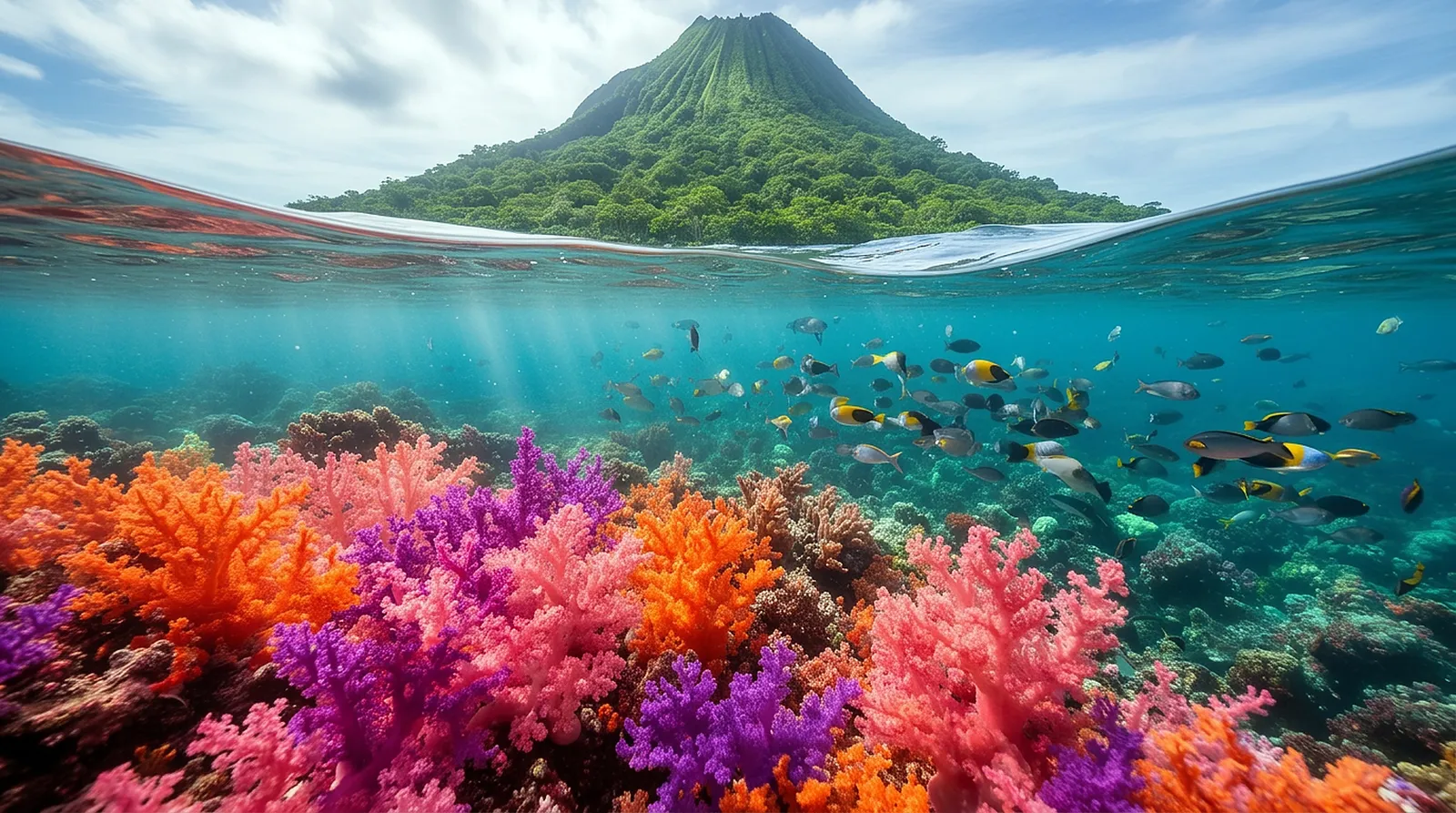
Conditions in February
Diving Papua New Guinea in February, you're embracing the challenge and rewards of the wet season. Don't let the "wet" part scare you off; it's not a complete washout, but it does mean you’ll encounter more rain, particularly in the afternoons. Think lush, green landscapes above water and nutrient-rich waters below. While the trade winds are generally calmer during this period, you can still expect some variability in sea state. Choppier conditions might be present on offshore sites or during squalls, but many of the more protected bays and fringing reefs will offer smoother rides. Water temperatures are wonderfully warm, typically hovering between 28-30°C (82-86°F), so you'll be comfortable in minimal exposure protection.
Visibility, while still good, might not reach the crystal-clear, 40-meter (130-foot) averages of the dry season. You can generally expect visibility in the 15-25 meter (50-80 foot) range, which is still fantastic for soaking in the vibrant reef ecosystems. The increased rainfall during the wet season contributes to slightly lower visibility in some areas due to runoff, especially closer to the coast or river mouths. Currents can be a mixed bag; some sites will experience mild to moderate currents, offering exciting drift dives, while others remain relatively calm. Your liveaboard crew, intimately familiar with local conditions, will always choose the best and safest sites based on the day’s weather and current patterns.
What you will see
February in Papua New Guinea is a truly exciting time for marine life encounters, especially if you're keen on the macro and mesopelagic. The increased nutrients in the water during the wet season, spurred by the rainfall, create a thriving ecosystem. This means you’re likely to see an abundance of smaller critters. Think rare nudibranchs in a dazzling array of colors and shapes, pygmy seahorses camouflaged perfectly on their gorgonian hosts, and various species of frogfish waiting patiently for their next meal. Keep your eyes peeled for ornate ghost pipefish flickering among crinoids and an incredible variety of shrimp and crab species hiding in every crevice.
While February isn't peak season for massive pelagic aggregations like whale sharks, you'll still have excellent chances to encounter a diverse range of larger marine life. Reef sharks, including grey reef sharks and whitetips, are common residents on many dive sites. You might also spot schooling barracuda, trevally, and fusiliers creating shimmering walls of silver. Mantas and other rays are present year-round, and while not in vast numbers like seasonal aggregations, individual sightings are always a thrilling possibility, especially on cleaning stations. It's a great month for observing the intricate food web in action, from tiny crustaceans to medium-sized predators.
Top dive sites this month
When diving Papua New Guinea in February, some areas truly shine despite the wet season. In Kimbe Bay, you'll find incredible protection from the elements, offering consistently good diving. Sites like Susan's Reef and Inglis Shoal are phenomenal for both macro critters and schooling fish, with vibrant coral gardens that are breathtaking. The nutrient-rich water here often brings out some exciting, unexpected encounters.
Moving further east, the waters around Milne Bay are also particularly rewarding during this time. The bay’s sheltered nature often provides clearer conditions even during the wet season. Dive sites such as Vanessa's Reef and the famous Lauadi muck diving area offer an unparalleled experience for macro photography enthusiasts. Here, you'll discover a treasure trove of unique and rare species, from flamboyant cuttlefish to various pipefish and ornate ghost pipefish, making it an absolute paradise for those who love to examine the minute wonders of the reef.
Practical tips for your trip
Given the warm water temperatures of 28-30°C (82-86°F), a 3mm shorty or even just a dive skin will be perfectly adequate for thermal protection. Some divers might opt for a full 3mm suit for added protection against minor stings or scrapes, but anything thicker would likely be too warm. This month generally suits divers of all experience levels, though advanced divers who appreciate diverse marine life and are comfortable with varying visibility will especially love it. If you're a keen underwater photographer, particularly of macro subjects, February is an outstanding time to visit.
Liveaboard availability tends to be better in February compared to the peak dry season, which means you might find more options and potentially better deals. However, it's still Papua New Guinea, so booking well in advance is always recommended, especially for popular itineraries. What to pack? Besides your standard dive gear, definitely bring a good rain jacket for topside excursions, plenty of insect repellent (the wet season means more mosquitoes), and a reliable dry bag for your electronics. Be aware that while liveaboards provide a high level of comfort and safety, shore excursions might sometimes be affected by rain, and internet connectivity can be limited. Embrace the adventurous spirit; PNG in February offers a unique and incredibly rewarding dive experience.
Year-round overview for Papua New Guinea
Frequently asked questions
Is February a good month to dive in Papua New Guinea?
What can you see diving in Papua New Guinea in February?
Should I book a Papua New Guinea liveaboard for February or wait?
Find a liveaboard for February
Compare available Papua New Guinea liveaboards departing in February.
Search and Book