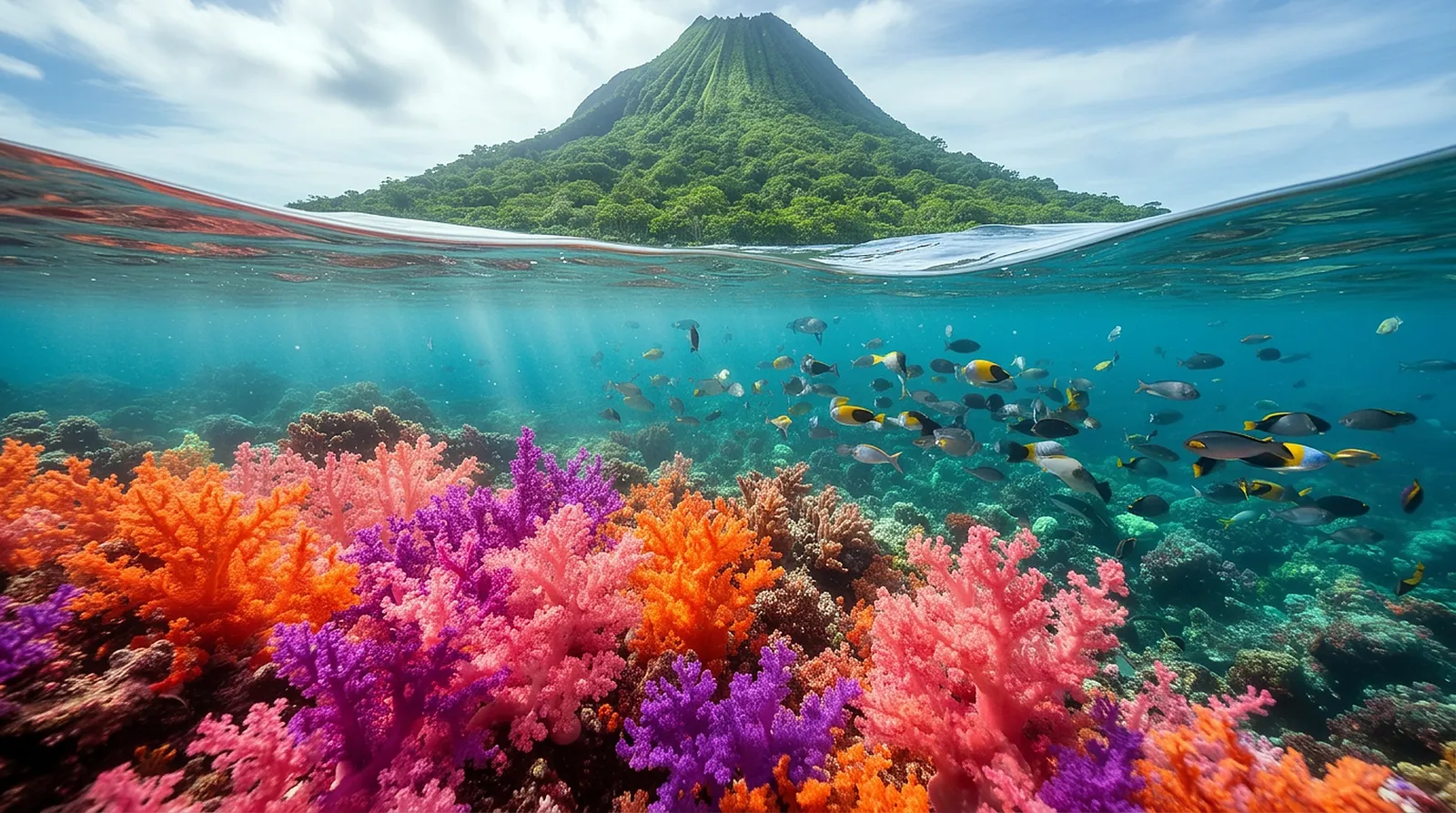
Conditions in April
So, you’re thinking about diving Papua New Guinea in April, huh? That’s a fantastic choice, and let me tell you why it’s a sweet spot for an unforgettable liveaboard adventure. April sits right at the tail end of the wet season and the very beginning of the dry season, which means you get to enjoy the best of both worlds. The monsoon rains, while still possible, are generally tapering off, leaving behind a lush, vibrant landscape above water and surprisingly clear conditions below. You’ll find the sea state to be generally calm, especially as the month progresses, making for comfortable cruising and easy entries and exits from your liveaboard.
Long-term average sea temperatures in April: about 30 °C (86 °F) around Kimbe (West New Britain). This means you’re looking at comfortable long dives without feeling the chill, even on repetitive dives. Visibility is often excellent this time of year, ranging from good to truly exceptional. While you might encounter some localized lower visibility closer to river mouths after heavier rains, generally, the water is crystal clear, offering sensational views of the vibrant reefs.
Currents in PNG are notoriously diverse and can vary significantly from one dive site to another, and even within the same site at different times of the day. In April, you can expect anything from gentle drifts to exhilarating currents, especially around channels and passages. This is exactly what brings in the big pelagic action, so don't be afraid of a bit of a push now and then – it's all part of the excitement! Your dive guides will be experts at reading the conditions, ensuring you get to experience the best of these dynamic underwater environments safely.
What you will see
April in Papua New Guinea is a truly magical time for marine life encounters. The slightly cooler water temperatures (compared to the very peak of the wet season) combined with the prevailing currents often bring in a dazzling array of pelagic species. You’re in a prime window for encountering various shark species, including grey reef sharks, whitetip reef sharks, and even silvertips, especially around the outer reefs and pinnacles. Large schools of barracuda, trevally, and tuna are common sights, creating a spectacular display of underwater hunting and schooling behaviour. It’s not uncommon to spot different species of manta rays gliding gracefully over cleaning stations, and eagle rays are often seen cruising by in the blue.
But it's not all about the big stuff! Papua New Guinea is a macro paradise, and April doesn't disappoint for those who love to go small. The reefs explode with vibrant nudibranchs, colourful flatworms, and an incredible diversity of shrimp and crab species tucked away in every crevice. Look closely, and you’ll find pygmy seahorses clinging to gorgonian fans, as well as various pipefish and ornate ghost pipefish camouflaged amongst the corals. The healthy, unspoiled reefs are teeming with life, from intricate anemone fish darting amongst their host anemones to vibrant parrotfish and angelfish schooling over the coral gardens.
This transitional month can also be a fantastic time to witness some unique aggregations. Keep your eyes peeled for spawning events or juvenile fish hiding amongst the dense coral, which are often more prevalent as the weather stabilizes. The sheer biodiversity of PNG means that every dive is an opportunity for a new and unexpected sighting, whether it’s a curious cuttlefish, an octopus on the hunt, or an elusive mandarin fish making an appearance at dusk.
Top dive sites this month
For an April dive adventure in Papua New Guinea, you absolutely have to consider the Bismarck Sea regions. The area around Kimbe Bay in West New Britain is phenomenal this time of year. The numerous pinnacles like Bradford Shoal and Susan's Reef are incredibly vibrant, with fantastic coral health and an abundance of schooling fish. You'll likely encounter pelagics cruising the blue and a dazzling array of macro life on the reef walls. The conditions around Kimbe Bay are typically excellent in April, offering clear water and a good mix of drift and calmer dives.
Further east, the waters around New Ireland, particularly the Kavieng region, are also prime for April diving. Dive sites like Albatross Passage and Bargibant's Reef will deliver exhilarating drift dives with strong currents bringing in sharks and large pelagics, alongside stunning coral formations. The visibility here is often superb, making for incredible wide-angle photography opportunities. Additionally, exploring the wrecks around Rabaul, like the Japanese Zero Plane, provides a fascinating historical dimension to your diving, often benefiting from the stable weather conditions April offers.
Practical tips for your trip
Given the balmy water temperatures, a 3mm shorty or even just a rash guard will be perfectly adequate for most divers. If you tend to get cold easily or are planning multiple long dives each day, a 3mm full wetsuit would provide that extra bit of warmth and protection. April is a fantastic month for almost all levels of divers. While some sites, especially those with stronger currents, might be more challenging and better suited for experienced divers, there are plenty of sheltered reefs and easier dives that beginners can thoroughly enjoy. Your liveaboard crew will always ensure dives are tailored to the group's experience and comfort levels.
Liveaboard availability in April tends to be quite good, as it's just before the peak season really kicks in, but it's still wise to book well in advance to secure your preferred boat and itinerary, especially if you have specific dates in mind. What to pack? Light, breathable clothing is essential given the tropical climate. Sun protection (hat, sunglasses, reef-safe sunscreen) is a must. Don't forget your camera gear – Papua New Guinea offers incredible opportunities for both macro and wide-angle photography. As for things to be aware of, motion sickness medication is always a good idea for liveaboard trips, just in case. Also, bring a good insect repellent for evenings topside, although mosquitoes are generally minimal on liveaboards. Make sure your dive insurance is up to date, and be prepared for an adventure that will truly redefine your diving experiences – PNG in April is simply unforgettable!
Regional notes
Each note applies only to the named region, not to the whole country.
- Kimbe (West New Britain): Average sea temperature 29.9 °C (86 °F)