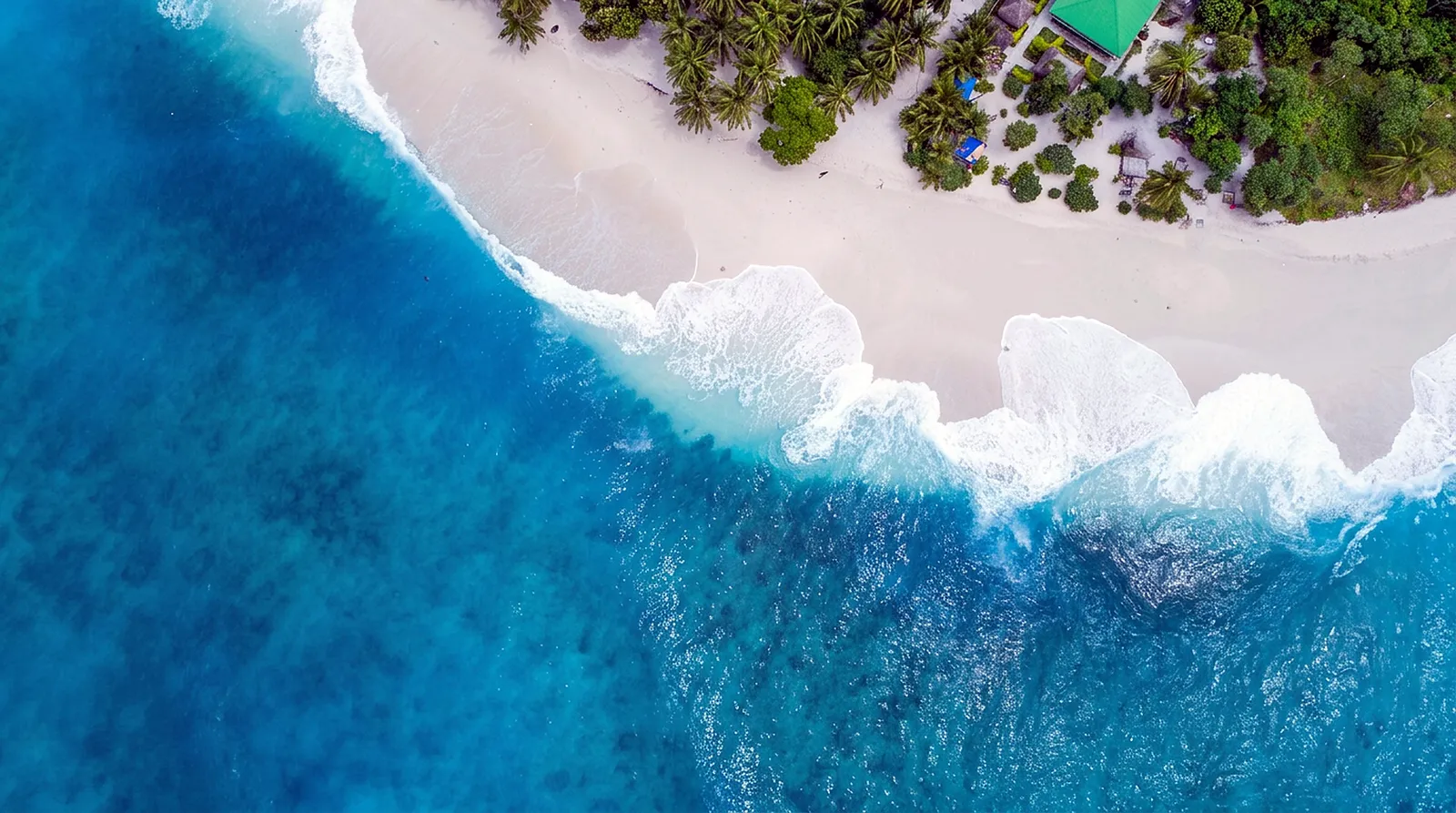
Conditions in December
December in Belize marks a wonderful transition. You're catching the very beginning of the official dry season, which means the rain that characterises the autumn months begins to subside, especially as you move towards the end of the month. While you can still expect the odd tropical shower, they are typically brief and refreshing, rarely disrupting a full day of diving. The real weather feature to know about in December is the arrival of the "Nortes" or "Northers." These are cool fronts that push down from the north, bringing breezier conditions and choppier seas for a day or two. While this can make for a rockier boat ride, our liveaboard captains are experts at navigating these conditions, often seeking shelter on the leeward sides of the atolls to ensure your dives are safe and comfortable.
The water is still wonderfully warm, hovering at a very pleasant 26-28°C (79-82°F). You'll be perfectly comfortable for multiple dives a day. Visibility during this period is generally very good to excellent, often ranging from 20 to 30 meters (65-100 feet) and sometimes even more on calm days at the outer atolls. After a Norther passes through, visibility might temporarily dip, but it clears up remarkably fast. Currents can be a feature of Belizean diving, particularly in the channels and cuts of the atolls like Turneffe and Lighthouse Reef. This is not a bad thing; in fact, it's what sweeps in the nutrients that attract the big schools of fish and pelagic life you've come all this way to see. Think of it as the ocean's lifeblood, making every dive dynamic and exciting.
What you will see
While Belize's famous whale shark aggregations happen later in the spring, December offers its own spectacular cast of marine characters. The steep walls of the outer atolls are highways for Caribbean reef sharks, and you will have countless encounters with these powerful, elegant predators as they patrol the reef edges. Keep your eyes peeled in the blue for squadrons of eagle rays gliding effortlessly in formation, a truly breathtaking sight. Nurse sharks are a common sight, often found resting under ledges or in sandy patches, while lucky divers might catch a glimpse of a solitary hammerhead shark investigating the deep waters off the walls.
The real secret weapon of a late-December trip to Belize is the chance to witness the beginning of one of the Caribbean's most incredible natural events: the Nassau grouper spawning aggregation. For a few days around the full moon, thousands of these large fish travel to specific sites, like those around Glover's Reef, to reproduce. Seeing the sheer number of groupers, their colourations changing as they engage in their spawning rituals, is a humbling and unforgettable experience that few divers ever get to see. It’s a powerful reminder of the vibrant, wild heart of the ocean, and being there as it begins is a true privilege.
Beyond the big stuff, the reefs themselves are a kaleidoscope of life. Belize’s barrier reef system is incredibly healthy, with huge stands of pillar coral, massive barrel sponges, and intricate fields of purple sea fans. In amongst this incredible architecture, you will find a treasure trove of macro life. Look closely for the decorator crabs, Pederson's cleaner shrimp, and the elusive reef squid. The reefs are also home to a fantastic reef fish population, from the large, psychedelic-patterned stoplight parrotfish to elegant queen angelfish and curious barracuda that hang motionless in the mid-water. Every safety stop becomes a new opportunity for discovery.
Top dive sites this month
A liveaboard itinerary in December focuses on the three legendary offshore atolls. The headline act, of course, is the **Great Blue Hole** at Lighthouse Reef Atoll. Descending into this colossal marine sinkhole is a bucket-list dive you’ll never forget. As you drop into the deep blue, the walls give way to colossal, ancient stalactites hanging from ledges at around 40 meters (130 feet). But the adventure at Lighthouse Reef doesn't end there. **Half Moon Caye Wall** is arguably one of the best wall dives in the world. It’s a sheer, vertical drop-off teeming with life, where you’ll drift alongside reef sharks, turtles, and huge schools of crevalle jacks. Another standout here is **Long Caye Aquarium**, a site that perfectly lives up to its name with staggering fish density and vibrant coral gardens.
Your journey will also take you to **Turneffe Atoll**, the largest and most biologically diverse of the atolls. The undisputed star here is **The Elbow**, a point at the southern tip where currents converge, creating a pelagic playground. Here, you can expect to see massive schools of horse-eye jacks forming swirling vortexes, dog snappers, and a near-constant procession of eagle rays. Finally, there's **Glover's Reef Atoll**, a UNESCO World Heritage Site. Its more remote location means it sees fewer divers and boasts some of the most pristine reefs in the Caribbean. A dive at **Long Caye Wall** here offers stunning reefscapes, and if you are visiting in late December, it is within this atoll that you have the best chance of witnessing the awe-inspiring Nassau grouper spawning aggregation.
Practical tips for your trip
For the water temperatures in December, a 3mm full wetsuit is the perfect choice for most divers. If you tend to get cold easily after several days of multiple dives, you might consider adding a hooded vest or even opting for a 5mm, but for the vast majority, 3mm is the sweet spot. A liveaboard trip to Belize's outer atolls is best suited for divers with an intermediate to advanced skill level. You should be comfortable with deep dives (the Blue Hole profile is to 40m/130ft), wall diving, and potential currents. While the diving isn't overly technical, the nature of the sites and the offshore environment means it’s not the ideal place for a brand-new, freshly certified diver.
Be aware that December, especially around the Christmas and New Year holidays, is absolute peak season. Liveaboards are often fully booked more than a year in advance, so planning ahead is absolutely essential. When packing, in addition to your standard dive equipment, make sure to bring a light rain jacket for brief squalls and a windbreaker or fleece. When a "Norther" wind blows through, evenings on the top deck can get surprisingly cool. As always in the tropics, reef-safe sunscreen and a hat are non-negotiable. Finally, maintain a flexible attitude. The weather is the one thing no one can control, and the captain will always prioritise safety, which may mean adjusting the itinerary to provide the best and safest possible diving experience based on the sea conditions.
Year-round overview for Belize
Frequently asked questions
Is December a good month to dive in Belize?
What can you see diving in Belize in December?
Should I book a Belize liveaboard for December or wait?
Find a liveaboard for December
Compare available Belize liveaboards departing in December.
Search and Book