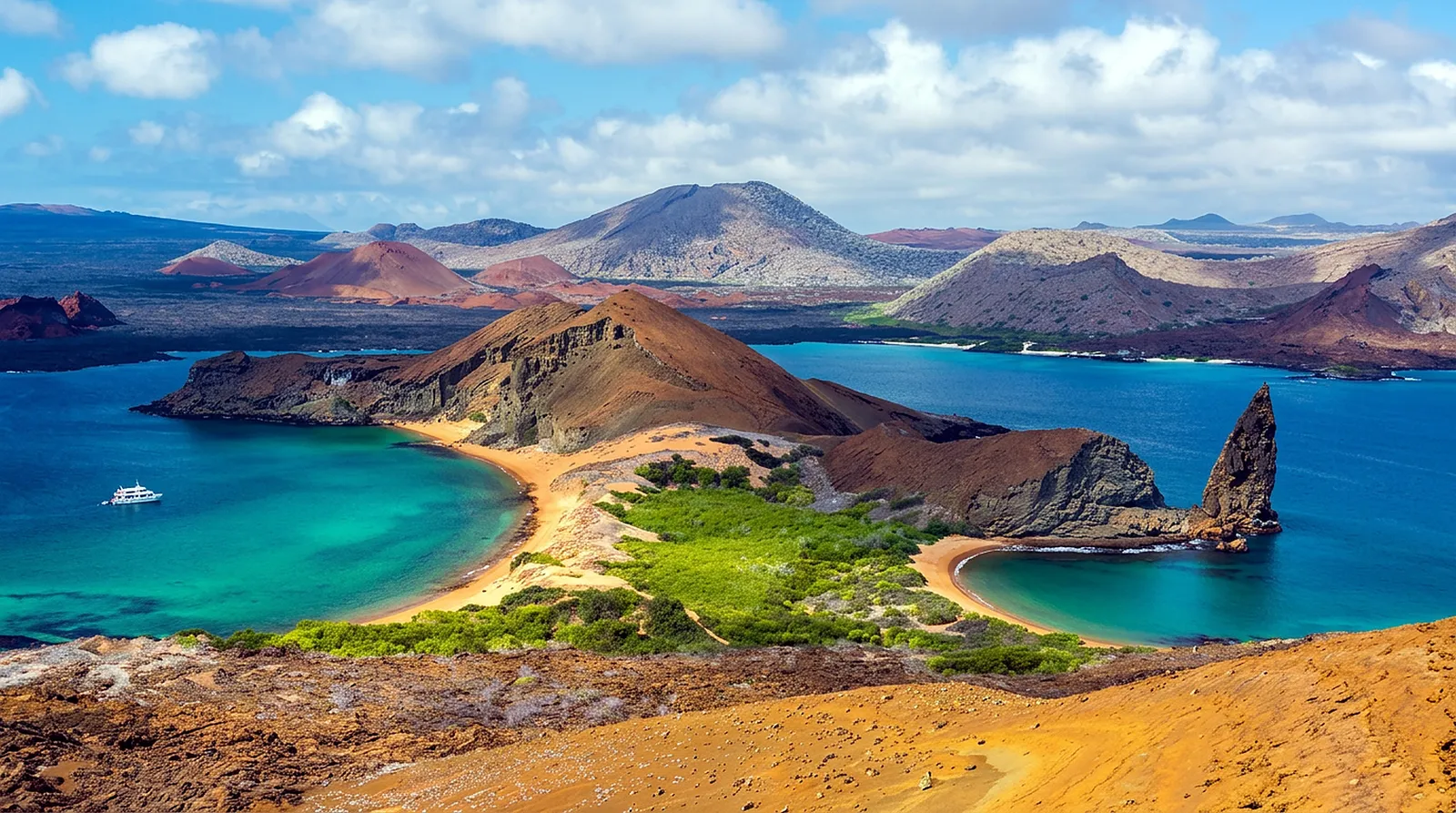
Conditions in September
So, you're eyeing a September dive trip to the legendary Galápagos, huh? Excellent choice, but let’s get real about what you're signing up for. September falls firmly within the "Garua" or cool season in Galápagos. This means cooler air temperatures, often hovering around 20-25°C (68-77°F) tops, and a greater chance of overcast skies and light, misty rain – the "garua" itself. Don't expect blazing sunshine every day; it's more of a moody, atmospheric vibe. But hey, the cooler surface temperatures are often a beacon for pelagic action below! The sea can be a bit livelier this time of year, with swells more common, especially as you head towards the exposed northern islands like Darwin and Wolf. If you're prone to motion sickness, be sure to pack your preferred remedy.
Now for the water. This is the cool season, so water temperatures are notably lower than in the warm season, typically ranging from 18-24°C (64-75°F). You'll find it colder as you go deeper and in areas influenced by the Humboldt Current. Visibility can be a mixed bag; while it can still hit 15-25 meters on a good day, the cooler, nutrient-rich waters often mean a higher concentration of suspended particles, which can reduce visibility somewhat. However, this plankton bloom is precisely what draws in the big stuff! Currents are almost always a factor in Galápagos, and September is no exception. Expect strong to very strong currents, especially at Darwin and Wolf. This is drift diving at its finest, so be prepared for exhilarating rides and a good workout. Your dive guide will be an expert at positioning you to make the most of these currents for optimal wildlife viewing.
What you will see
September in Galápagos is prime time for the big boys, making it an absolute hotspot for pelagic encounters. The cooler, nutrient-rich waters of the Garua season act like a giant cafeteria for marine life, drawing in an incredible array of megafauna. You can almost guarantee sightings of Galápagos sharks, silky sharks, and white-tip reef sharks. But the true star of the show during this period has to be the scalloped hammerhead sharks. Enormous schools of them congregate around the northern islands, and September is generally considered one of the best months for experiencing these majestic creatures in their natural aggregations. You’ll be treated to breathtaking displays as hundreds, sometimes even thousands, glide past.
Beyond the sharks, keep your eyes peeled for massive schools of jacks, barracuda, and snappers. This is also a fantastic time for marine mammals. Fur seals and playful sea lions will undoubtedly be your constant companions, eager to interact and chase their reflections. You might also spot Bottlenose dolphins gracefully swimming by. Mola Mola (oceanic sunfish) sightings increase during the cooler months, often found in deeper, cooler waters, slowly moving along. While mantas are present year-round, the cooler season often provides good opportunities to see them feeding. Don’t forget to occasionally look away from the blue and closer to the reefs for unique endemic species like the Galápagos marine iguana, often seen feeding underwater on algae.
Top dive sites this month
Hands down, the undisputed champions for September diving in Galápagos are Darwin's Arch (or what remains of it, following its collapse in 2021) and Wolf Island. These two northernmost islands are where the magic truly happens, particularly during the Garua season when the largest aggregations of hammerhead sharks are observed. You'll spend multiple dives here, experiencing the renowned "El Arco" and "El Derrumbe" (the site of the collapsed arch) at Darwin, and the various dive sites around Wolf like "La Ventana del Diablo" (Devil's Window). The sheer volume of pelagic life, from hammerheads to Galápagos sharks, silky sharks, and enormous schools of fish, makes these locations a must-visit.
While Darwin and Wolf are the main drawcards, other sites in the central and western islands still offer unique experiences. Keep an eye out for sites like Cape Douglas off Fernandina Island, where you have the best chance of encountering marine iguanas feeding underwater. Punta Vicente Roca off Isabela Island is known for its colder, nutrient-rich upwellings, attracting mola mola, penguins, and a diverse range of unusual macro life you won't find anywhere else. These sites offer a welcome contrast to the heart-pounding action of Darwin and Wolf, showcasing the Galápagos' incredibly varied biodiversity.
Practical tips for your trip
Given the water temperatures of 18-24°C (64-75°F), a 7mm wetsuit is an absolute must for September, and many divers even opt for a hood or a hooded vest for additional warmth, especially during multiple dives a day. Think about layers if you tend to get cold easily. This isn't a month for beginners; the strong currents and challenging conditions, particularly at Darwin and Wolf, demand experienced divers comfortable with drift diving, negative entries, and handling themselves in strong surge. You’ll want to have a good number of logged dives under your belt before tackling Galápagos in September.
Liveaboard availability in September can be tight, as this is a popular time for pelagic encounters, so planning and booking well in advance (6-12 months out) is highly recommended. Besides your dive gear, pack warm layers for the evenings and topside, as the air can be cool and damp. A good quality reef hook (used responsibly and only on dead rock) can be invaluable for holding position in strong currents. Remember your motion sickness medication, a rechargeable light for night dives or peering into crevices, and a dry bag for keeping essentials safe on deck. Be aware that surface conditions can be choppy, so if you're prone to seasickness, come prepared. Embrace the chillier, more rugged side of Galápagos diving – it's what draws in the incredible marine life you're coming to see!
Year-round overview for the Galápagos
Frequently asked questions
Is September a good month to dive in the Galápagos?
What can you see diving in the Galápagos in September?
Should I book a the Galápagos liveaboard for September or wait?
Find a liveaboard for September
Compare available the Galápagos liveaboards departing in September.
Search and Book