What diving with wild dolphins is actually like
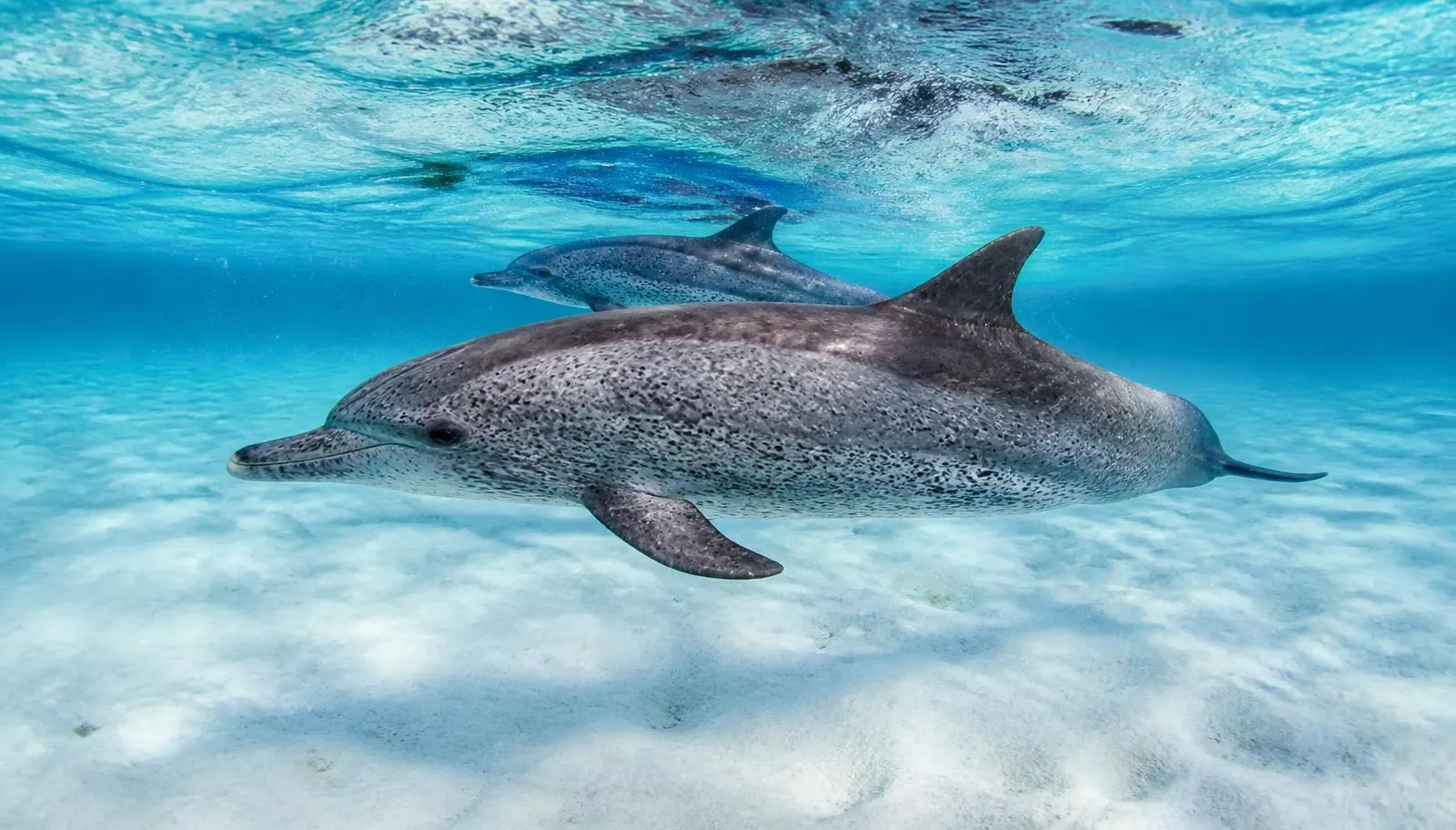
The difference between a wild dolphin encounter and every other marine wildlife experience is that the animal is running the interaction. A pod of Atlantic spotted dolphins on the Bahama Banks will spot the boat from a kilometre away, come to the bow on their own, and then stay in the water with snorkellers for twenty minutes because they find it interesting. When they lose interest, they leave, instantly and completely.
That is why the good operators tell you to do the opposite of what instinct suggests. Do not swim at them. Do not reach. Spin, dive, make eye contact, mirror what they do — behave like something worth investigating and juveniles in particular will come back again and again, upside down, watching you watch them.
You will also hear them. Whistles and click trains carry through water beautifully, and a big pod sounds like a busy room. Photographers quickly learn that dolphins move too fast for anything but wide angle and ambient light.
Some days nothing happens. The pod passes and does not engage. That is the honest cost of a genuine wild encounter, and it is exactly what a captive facility sells you out of.
Wild vs captive: why we only recommend wild encounters
Captive dolphin swims — resort lagoons, sea pens, swim-with-dolphin parks — are marketed as a bucket-list experience and they are the one marine encounter we will not book. Bottlenose dolphins in captivity have ranges reduced from hundreds of square kilometres to a pool, are frequently trained through food restriction, and show stress behaviours, stereotypy and shortened lifespans. Many facilities in the Caribbean and Asia still stock animals from drive hunts.
The tell is simple: if the dolphin has to perform, be fed, or be present because it cannot leave, that is not an encounter. If the animal can swim away at any second and chooses not to, it is.
Wild swims are also better. Interactions are longer, the behaviour is real, and pods are large — 20 to 60 animals in the Bahamas or the Red Sea, versus two in a pen. A growing number of countries, including Canada and India, have banned cetacean captivity outright.
Where to dive with wild dolphins: the best places compared
These are the destinations with resident, habituated-but-wild pods and licensed in-water operators.
The two standouts are the Bahamas for genuine two-way interaction in gin-clear shallow water, and Egypt''s Sataya reef for the largest reliably swimmable spinner pods in the world.
| Destination | Species | Season | Odds | Typical cost |
|---|---|---|---|---|
| Bimini & White Sand Ridge, Bahamas | Atlantic spotted, bottlenose | May–Sep | Very high | Liveaboard week |
| Sataya & Samadai, Egypt | Spinner dolphin | All year | Very high | Liveaboard week |
| Azores, Portugal | Bottlenose, common, spotted | Apr–Oct | High | $120–200 / day |
| Moorea & Rangiroa, Polynesia | Spinner, rough-toothed | All year | High | $100–180 / day |
| Big Island, Hawaii | Spinner dolphin | All year | Restricted by law | $100–150 / day |
| Ponta do Ouro, Mozambique | Bottlenose, humpback dolphin | Oct–Apr | Moderate–high | $70–120 / day |
| Maldives | Spinner, bottlenose | All year | High (boat), rare in water | Liveaboard week |
| Baja & Sea of Cortez, Mexico | Common, bottlenose | Nov–Apr | High (boat) | $90–150 / day |
Bimini & White Sand Ridge, Bahamas
Species: Atlantic spotted, bottlenose
Season: May–Sep
Odds: Very high
Typical cost: Liveaboard week
Sataya & Samadai, Egypt
Species: Spinner dolphin
Season: All year
Odds: Very high
Typical cost: Liveaboard week
Azores, Portugal
Species: Bottlenose, common, spotted
Season: Apr–Oct
Odds: High
Typical cost: $120–200 / day
Moorea & Rangiroa, Polynesia
Species: Spinner, rough-toothed
Season: All year
Odds: High
Typical cost: $100–180 / day
Big Island, Hawaii
Species: Spinner dolphin
Season: All year
Odds: Restricted by law
Typical cost: $100–150 / day
Ponta do Ouro, Mozambique
Species: Bottlenose, humpback dolphin
Season: Oct–Apr
Odds: Moderate–high
Typical cost: $70–120 / day
Maldives
Species: Spinner, bottlenose
Season: All year
Odds: High (boat), rare in water
Typical cost: Liveaboard week
Baja & Sea of Cortez, Mexico
Species: Common, bottlenose
Season: Nov–Apr
Odds: High (boat)
Typical cost: $90–150 / day
Bahamas — the most interactive wild dolphins on Earth
North of Bimini and along White Sand Ridge, a resident population of Atlantic spotted dolphins lives over white sand flats in 6 to 12 metres of water with 30-metre visibility. Generations of these animals have grown up around a small number of liveaboards, and the result is a pod that actively seeks out swimmers — spy-hopping at the boat, riding the bow, and inviting play.
Trips are liveaboard-based from Florida or Bimini, typically 6 to 7 nights between May and September when the water is flat and warm (27–29 °C). Days are spent searching, and encounters run from ten minutes to over an hour. Bottlenose dolphins share the same grounds and are larger, bolder and rougher in their play.
The rules that make it sustainable: snorkel only, no touching, no feeding, no chasing, and the boat never drops swimmers in front of moving animals. Free-diving skills help enormously — spotted dolphins respond to a diver who can spiral down five metres and come back up with them.
Egypt — spinner dolphins at Sataya and Samadai
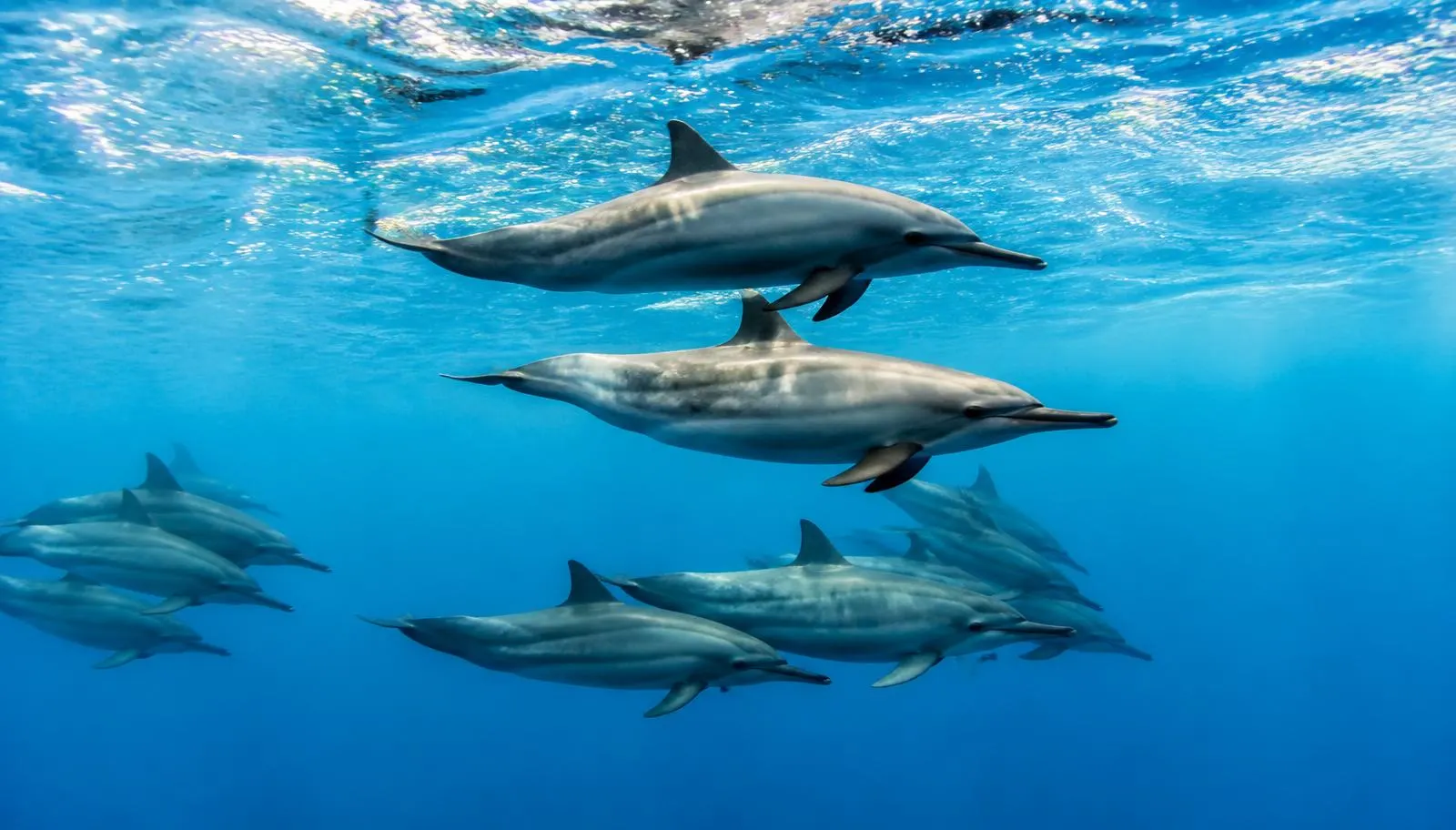
Sataya Reef (Dolphin Reef) in the southern Red Sea holds a resident pod of spinner dolphins that often numbers well over a hundred animals. They hunt offshore at night and spend the day resting inside the sheltered lagoon, which is precisely why the encounter is regulated: dolphins that are disturbed while resting lose sleep they cannot recover.
Access is by liveaboard, and the protocol matters. Boats anchor outside the resting zone, swimmers enter quietly at the edge, and nobody swims into the middle of the pod. Done properly, animals peel off in small groups and pass close by out of curiosity. Done badly — motorised approaches, dozens of snorkellers charging in — the pod abandons the lagoon.
Samadai (Dolphin House) near Marsa Alam works on the same principle with a formal zoning system: a core protected zone the dolphins have to themselves, a snorkelling zone, and a diving zone. It is one of the better-managed cetacean sites anywhere and can be reached as a day trip.
Both work year-round; March to November has the best conditions, and southern liveaboard itineraries combining Sataya with oceanic whitetips at the Brothers are the strongest weeks of the year.
Azores, Polynesia and Hawaii
The Azores are Europe''s best cetacean destination: 24 species pass through, and licensed in-water swims run with bottlenose, common, spotted and striped dolphins from April to October. Boats are small, guides are biologists, and the same trip can produce sperm whales and blue whales in spring.
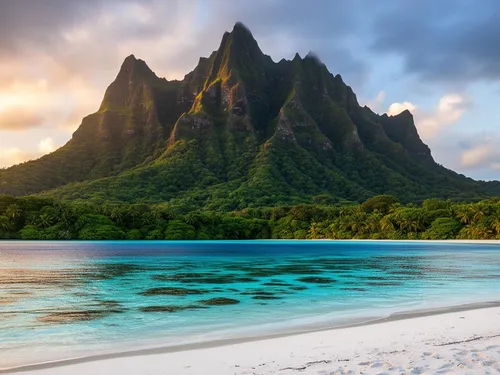
French Polynesia has spinner dolphins inside the lagoons at Moorea and Rangiroa, plus rough-toothed dolphins — an unusually curious open-ocean species — off Rurutu and Tikehau. Rangiroa''s Tiputa Pass is famous for bottlenose dolphins that surf the incoming tide alongside divers, one of the few genuine dolphin-on-scuba encounters in the world.
Hawaii changed the rules in 2021: it is now illegal to approach within 45 metres of a spinner dolphin in Hawaiian waters, because the bays where they rest were being overwhelmed. Legitimate operators now run boat-based watching and open-ocean encounters outside the restricted zone. Any Hawaiian tour promising a guaranteed swim with spinners in a bay is breaking federal law.
Dolphin species you will actually meet
Practical note: spinners are the species most often sold as swim encounters and the one most damaged by them, because daytime is when they sleep. Always pick an operator that works the edge of a resting pod, never the middle.
| Species | Look for | Behaviour in water | Where |
|---|---|---|---|
| Atlantic spotted | Spots increase with age; 2–2.3 m | Extremely interactive, playful | Bahamas, Azores |
| Spinner | Slim, long beak, spinning leaps; 1.8 m | Curious but resting by day — keep distance | Red Sea, Hawaii, Maldives, Polynesia |
| Bottlenose | Robust, short beak, grey; 2.5–3.8 m | Bold, sometimes rough, highly intelligent | Worldwide |
| Common dolphin | Yellow hourglass flank pattern | Fast, big pods, bow-rides | Azores, Mexico, Med |
| Rough-toothed | Cone-shaped head, no crease | Unusually curious, slow approaches | French Polynesia |
| Indo-Pacific humpback | Dorsal hump, pinkish adults | Shy, coastal | Mozambique, Oman |
| Risso's dolphin | Heavily scarred pale body, blunt head | Deep divers, rarely approach | Azores, Med |
Atlantic spotted
Look for: Spots increase with age; 2–2.3 m
Behaviour in water: Extremely interactive, playful
Where: Bahamas, Azores
Spinner
Look for: Slim, long beak, spinning leaps; 1.8 m
Behaviour in water: Curious but resting by day — keep distance
Where: Red Sea, Hawaii, Maldives, Polynesia
Bottlenose
Look for: Robust, short beak, grey; 2.5–3.8 m
Behaviour in water: Bold, sometimes rough, highly intelligent
Where: Worldwide
Common dolphin
Look for: Yellow hourglass flank pattern
Behaviour in water: Fast, big pods, bow-rides
Where: Azores, Mexico, Med
Rough-toothed
Look for: Cone-shaped head, no crease
Behaviour in water: Unusually curious, slow approaches
Where: French Polynesia
Indo-Pacific humpback
Look for: Dorsal hump, pinkish adults
Behaviour in water: Shy, coastal
Where: Mozambique, Oman
Risso's dolphin
Look for: Heavily scarred pale body, blunt head
Behaviour in water: Deep divers, rarely approach
Where: Azores, Med
How to behave in the water so dolphins stay
One more: leave the pod before it leaves you if the animals show avoidance — tail slaps, tight formation, repeated diving away.
- Never swim towards a dolphin. Enter quietly, stay still, and let them approach. Chasing ends every encounter.
- Be interesting. Spin, spiral, dive and turn — dolphins respond to mirrored play, not to people paddling in a line.
- Never touch or attempt to hold a fin. It is illegal in most jurisdictions and can provoke a defensive strike.
- No feeding, ever. Fed dolphins lose foraging behaviour and get killed by boats.
- Stay out of the middle of a resting pod, and never separate mothers from calves.
- Keep the group tight so the animals have open water on all sides.
- Snorkel, not scuba. Bubbles and slow movement make you dull; a free-diver is far more engaging to a dolphin.
What it costs
Day trips are cheap: $70 to $200 in the Azores, Polynesia, Hawaii, Mozambique and Mexico, usually 3 to 6 hours with several in-water attempts.
The two premium destinations are liveaboard-based. Bahamas dolphin trips run roughly $2,800 to $4,000 for 6 to 7 nights, built entirely around finding and swimming with the spotted dolphin pods. Red Sea southern itineraries including Sataya cost about $1,300 to $2,200 a week and combine dolphins with sharks, wrecks and reef diving — by far the better value if you want a full diving holiday.
Extras: marine park fees at Samadai and in the Azores, Nitrox on Red Sea boats, and a wetsuit you can spend six hours a day in.
What to pack
- Long freediving fins. The single biggest factor in how long dolphins stay with you.
- Low-volume mask for easy equalising on repeated duck-dives.
- 3 mm suit or shorty — you will be in and out of the water all day and get cold faster than you expect.
- Wide-angle camera, ambient light only. No strobes: flash into a dolphin''s face ends the encounter.
- Basic free-diving practice before the trip. Even five metres of comfortable descent transforms the interaction.
- Sea sickness tablets for the Bahamas crossings and Azores offshore runs.
Month-by-month dolphin calendar
Resident pods in the Red Sea, Polynesia and Hawaii work all year; the Bahamas and Azores are strictly summer destinations.

Bimini & White Sand RidgeBahamas
Atlantic spotted dolphins that seek out swimmers over white sand with 30 m visibility.

Sataya ReefEgypt, Red Sea
A resident spinner pod of 100+ animals resting in a sheltered lagoon; liveaboard access.
Samadai (Dolphin House)Egypt, Red Sea
A formally zoned spinner dolphin sanctuary reachable as a day trip from Marsa Alam.

AzoresPortugal
Licensed swims with bottlenose, common and spotted dolphins, plus sperm whales.

Moorea & RangiroaFrench Polynesia
Spinners in the lagoons and bottlenose surfing Tiputa Pass alongside divers.
Maldives
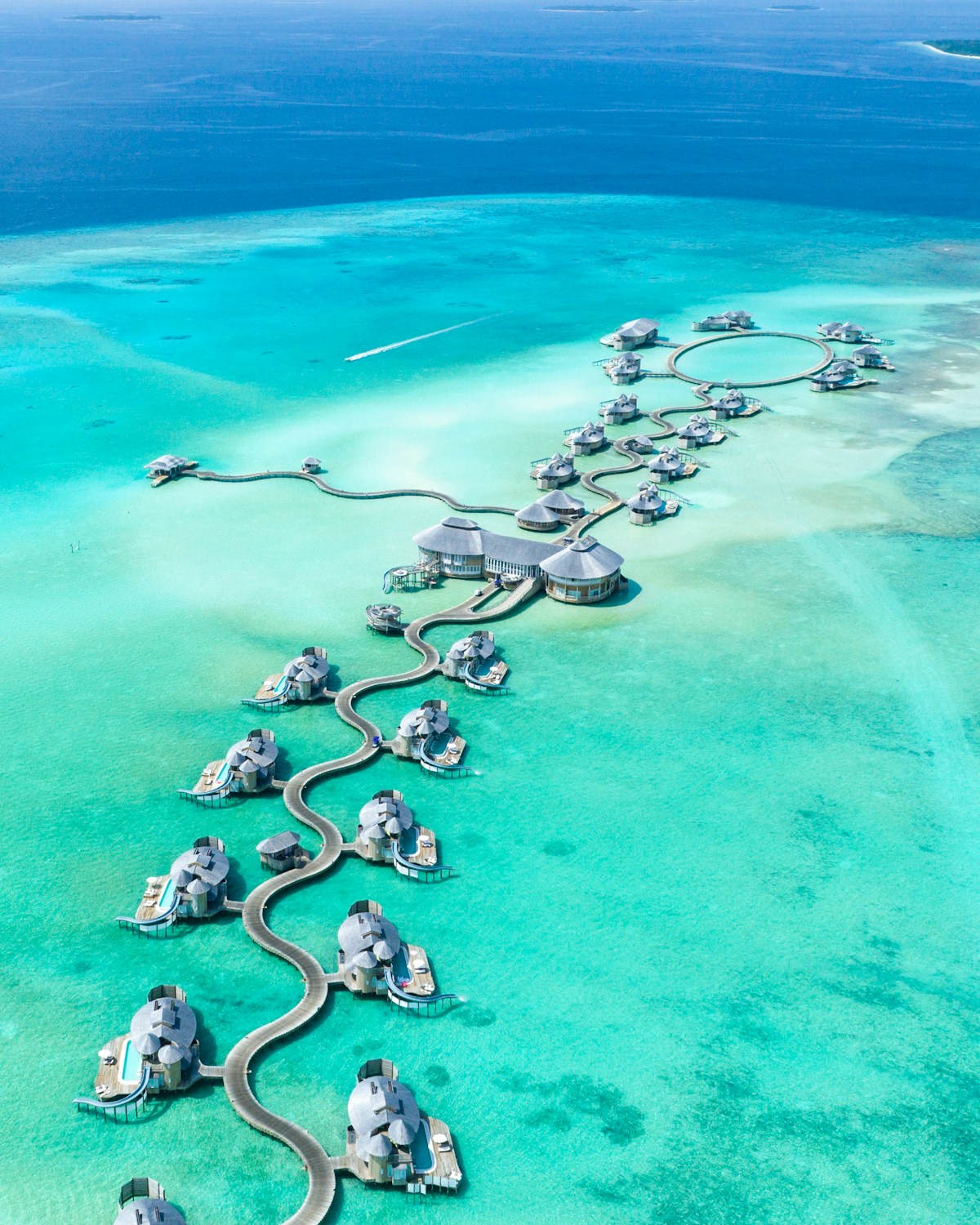
Huge spinner pods bow-riding liveaboards at dusk; in-water encounters are opportunistic.
No liveaboards available

Ponta do OuroMozambique
Long-running wild bottlenose swim programme with strict no-touch protocols.
No liveaboards available

Sea of CortezMexico
Enormous common dolphin superpods hunting sardine bait balls; mostly boat-based.
Are wild dolphins dangerous?
Almost never, but they are not the cartoon either. Bottlenose dolphins are large, powerful predators with complex social lives, and lone habituated males — the ones that hang around harbours and become local celebrities — have injured swimmers who tried to grab or ride them. Wild pods in open water simply leave if they do not want company.
The rules that keep it safe are the same ones that keep the encounter good: no touching, no grabbing, no swimming into the middle of a pod, no getting between mother and calf. Give an animal an exit and it will never need to defend itself.
Human impact runs the other way. Dolphins are killed by gillnet bycatch, boat strikes, chemical pollution and drive hunts, and disturbance of resting pods has measurably displaced spinner dolphins from bays in Hawaii and Egypt. Every distance rule in this guide exists because the animals were losing sleep, literally.
Choosing an ethical dolphin operator
Three questions. Are the animals wild and free to leave? If it is a lagoon, pen, or anything with a gate, book something else. Do you ever feed them? No is the only acceptable answer. What do you do if the pod is resting? The right answer is to keep distance or leave.
Good signs: no guarantees, small groups, in-water briefings before departure, guides who call people out of the water when animals show avoidance, engine-off approaches, and participation in dorsal-fin photo-ID research. Bad signs: dolphins that appear on cue, boats surrounding a pod, swimmers dropped ahead of moving animals, and any marketing image of a person holding a fin.
Our Red Sea, Bahamas, Azores and Polynesia partners all run wild-only encounters. Tell us which pod you want to meet and we will find the boat and the week.