About Cueva de los Peces
Cueva de los Peces, or the "Cave of Fish," is a renowned dive site nestled on the Bay of Pigs coast in Cuba, situated conveniently between Playa Larga and Playa Girón. This unique location features Cuba's deepest cenote, a natural sinkhole plunging to 70 meters, offering both crystal-clear fresh and saltwater environments. The topography within the cenote is truly remarkable, characterized by stunning underwater stalagmites and intricate geological formations that create an unparalleled cave diving experience. The cenote is a haven for diverse marine life, including barracuda, lobsters, and eels, all thriving amidst vibrant coral and other marine organisms. While the cenote is renowned, the area also features shore-side diving with jagged rock formations easing entry into the water, and further opportunities for snorkeling in the Caribbean Sea where colorful fish are abundant. The surrounding Bay of Pigs is famous for its clear, warm turquoise waters and extensive coral reefs. Conditions within the cenote are generally calm with no significant currents, making it an accessible dive for various skill levels. The best time to experience Cueva de los Peces is during the day, when sunlight filters through the cave entrance, illuminating its breathtaking interior. The inland cenote water can be quite cold compared to the nearby sea, so appropriate thermal protection is advisable.
Highlights
Cuba's deepest cenoteUnique underwater stalagmitesIntricate geological formationsAbundant fish lifeBarracuda, lobster, eelsCalm, current-free environmentCrystal-clear fresh and saltwater
Season calendar
Best months to dive here
Jan
Feb
Mar
Apr
May
Jun
Jul
Aug
Sep
Oct
Nov
Dec
Excellent
Good
Off-Season
Nov – May (Dry Season)
Best visibility 30–40m, calm seas. Peak season for Jardines de la Reina. Whale sharks, silky sharks, crocodiles.
Jun – Jul & Oct (Shoulder)
Warm water, occasional rain. Good shark diving continues. Fewer tourists.
Aug – Sep (Hurricane Season)
Peak hurricane risk. Some operators pause. Rough seas and reduced visibility when storms pass.
Dive site facts: Cueva de los Peces
- Depth
- 70 m
- Current
- None
- Visibility
- Good, depends on diver buoyancy
- Water temperature
- Cooler than ocean
- Entry
- Shore / platform
- Level
- Experienced divers (for depth)
- Dive type
- Cave, freshwater, marine life
- Region / port
- Bay of Pigs, Matanzas Province
- Coordinates
- 22.115, -81.1
Conditions & Currents
Cueva de los Peces is an inland cenote, and as such, experiences no typical ocean currents. Divers will find extremely calm water conditions within the cave, making it suitable for focused exploration without concerns about drift. However, visibility inside the cave can be affected by stirred-up sediment if buoyancy control is not maintained. The water temperature within the cenote is notably cooler than the adjacent ocean, which divers should account for in their thermal protection. Entry and exit are typically straightforward from designated platforms or shore access points, with the primary challenge being managing a potentially crowded environment, especially during peak tourist times.
Marine life & sighting chances


Dive profile & how the dive runs
Diving at Cueva de los Peces typically begins with an easy entry into the cenote. You gradually descend into the cavern, where the sun's rays often penetrate, creating stunning light effects. The route usually involves exploring the main chamber, observing the rock formations and the life supported within this unique freshwater environment. As you progress, you can reach depths of up to 70 meters, making it a site for experienced divers to explore further. Turn points are determined by gas consumption and depth limits, with the ascent following the same entry path. Safety stops are conducted in the shallower sections of the cenote before exiting.
Underwater photography
Capturing the beauty of Cueva de los Peces requires specific considerations for its unique lighting and freshwater environment. Wide-angle lenses are ideal to encompass the vastness of the cave and the stunning light shafts that penetrate the entrance, especially around midday. External strobes are crucial for illuminating the darker areas and bringing out the colors of the resident fish, corals, and rock formations. Given the cenote's depth, a powerful focus light will also assist with both focusing and exploring. Buoyancy control is paramount to avoid stirring up sediment, which can quickly reduce visibility and ruin photographic opportunities. Ethical photography practices are essential, ensuring no disturbance to the delicate cave environment or its inhabitants.
Combine with nearby dive sites
Getting there & logistics
Access to Cueva de los Peces is straightforward, as it's located directly off Highway 11/122 between Playa Larga and Playa Girón in Matanzas Province. Most international travelers will fly into Havana (HAV) or Varadero (VRA) airports, then arrange ground transport to the Bay of Pigs area, which can take several hours. Day trips from local accommodations are common, with dive shops on-site offering equipment rentals and guided dives. There might be a small fee for swimming or diving in the cenote. This site is often combined with shore dives at nearby ocean sites like Punta Perdiz, offering a varied diving itinerary within the same region.
Safety & environment
Diving in Cueva de los Peces, especially to its full depth, requires good buoyancy control and proper cave diving protocols, even though it is a cenote. Divers must be mindful of the cooler water temperatures compared to the ocean and plan thermal protection accordingly. The nearest recompression chamber is likely in Havana, necessitating robust evacuation plans and comprehensive dive insurance that covers medical emergencies and air ambulance services. Always dive with certified guides from reputable local operators and adhere strictly to their instructions to ensure a safe experience. Be aware that the area can get crowded, so maintaining situational awareness is important.
Who it suits — and who it doesn't
Suited for
- Experienced divers interested in cenote/cave environments
- Underwater photographers seeking unique light effects
- Divers looking for freshwater diving experiences
- Travelers combining ocean and cenote dives
- Those seeking a relaxed, shore-accessible dive
Less suited for
- Divers without good buoyancy control
- Those who prefer strong currents and pelagic action
- Divers uncomfortable with cooler water temperatures
- Individuals sensitive to potentially crowded dive sites
- Those expecting vibrant coral reefs typical of ocean dives
FAQ
Cueva de los Peces FAQ
What is the maximum depth of Cueva de los Peces?
Cueva de los Peces reaches a depth of approximately 70 meters (230 feet). This makes it an attractive site for experienced divers looking to explore deeper cavern environments, but it also necessitates proper training and equipment for such depths.
Is Cueva de los Peces a freshwater or saltwater dive site?
Cueva de los Peces is primarily a freshwater cenote, fed by underground systems. While it is close to the ocean, the water inside the cave is distinctly cooler than the Caribbean Sea and offers a different kind of marine environment.
What kind of marine life can be seen in Cueva de los Peces?
Despite being a freshwater cave, Cueva de los Peces is home to various aquatic creatures. Divers can expect to see barracuda, lobsters, and eels, along with other fish species adapted to this unique ecosystem, as well as some coral formations.
Are there specific times of day that are best for diving here?
Diving during the day, especially when the sun is high, is recommended at Cueva de los Peces. The sunlight penetrates the cave entrance, creating impressive light shafts and enhancing visibility and photographic opportunities within the cavern.
What is the water temperature like in Cueva de los Peces?
The water temperature in Cueva de los Peces is notably cooler than the nearby ocean water. Divers should plan to wear appropriate thermal protection, such as a thicker wetsuit, to ensure comfort during their dive in this freshwater cenote.
Is Cueva de los Peces suitable for beginner divers?
While the shallow areas near the entrance can be accessible for snorkeling and introductory dives, exploring the full depth of 70 meters is reserved for experienced divers. Good buoyancy control is essential to avoid disturbing the cave's delicate environment.
Why dive Cueva de los Peces from a liveaboard?
Cueva de los Peces is one of Cuba's signature dive sites. A liveaboard sleeps you on the water and puts you in the water for three to four guided dives per day, including dawn and night dives that day-boat operators rarely offer. You skip the daily commute back to port and reach quieter, less-crowded sites in the same region on a single trip.
Below are the liveaboards that include Cueva de los Peces on their Cuba itineraries.
Liveaboards diving Cueva de los Peces
These liveaboards may visit Cueva de los Peces on selected itineraries — the exact dive sites depend on departure, weather and conditions.
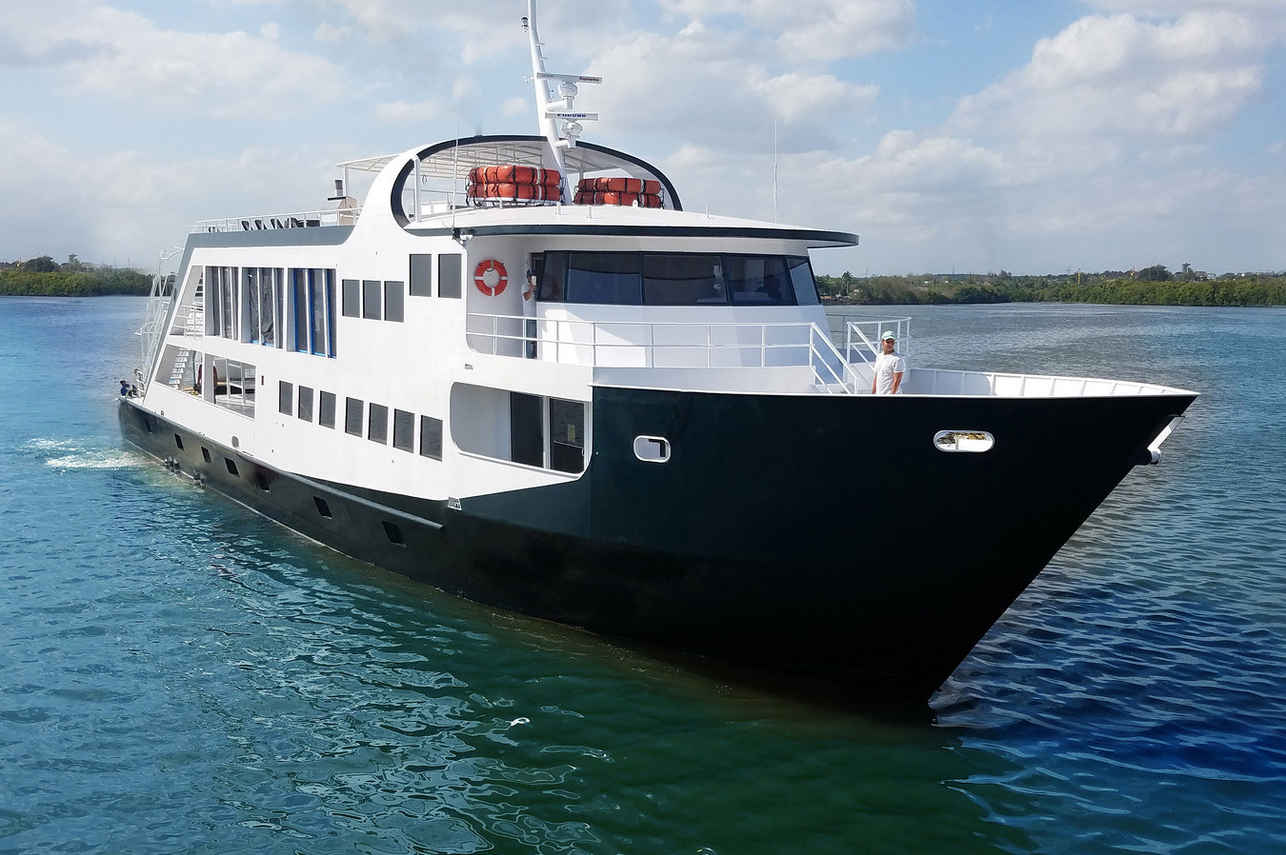
Jardines Avalon Fleet
Cuba
20 guests35 m
Dive sites similar to Cueva de los Peces
Same character, same waters — six more sites divers love for the exact same reasons.Compare seasons, access and liveaboard routes — then pick the site that fits your trip best.
© Esri — Maxar, Earthstar, GIS
3 Fathom Wall
Cayman Islands
3 Fathom Wall is an exciting and fish-filled dive site located in the Cayman Islands, specifically at the intersection of the renowned Bloody Bay Wall.
- Suitable for
- Intermediate
- Current
- Mild
- Access
- Liveaboard only
- Depth
- ≤ 3000 m
- Theme
- Reef
While specific details for a dive site named "3 Riff" are not present in the provided sources, general diving conditions and characteristics for the Dominican Republic…
- Suitable for
- Advanced
- Current
- Mild
- Access
- Dayboat
- Depth
- 30–55 m
- Theme
- Reef
The dive site known as 3 Rocks is located off the coast of Sosúa in Puerto Plata, Dominican Republic, offering an accessible and lively underwater experience.
- Suitable for
- Beginner
- Current
- Mild
- Access
- Dayboat
- Depth
- 2–8 m
- Theme
- Reef
4 Amigos is a notable dive site located in the Bay Islands of Honduras, an area renowned for its extensive Mesoamerican Barrier Reef System, which is the world's second-longest.
- Suitable for
- Intermediate
- Current
- Moderate
- Access
- Liveaboard or dayboat
- Depth
- 9–40 m
- Theme
- Reef
© Esri — Maxar, Earthstar, GIS
6 Toed Cat
Mexico
The dive site known as "6 Toed Cat" is not a recognized dive location in Mexico; rather, it refers to the polydactyl felines, many with six toes, that inhabit the Ernest Hemingway Home and Museum in Key West, Florida.
- Suitable for
- Beginner
- Current
- Mild
- Access
- Liveaboard or dayboat
- Depth
- —
- Theme
- Reef
© Esri — Maxar, Earthstar, GIS
Aaron's Backyard
Honduras
Aaron's Backyard is a noted dive site within the Roatan Marine Park in Honduras, part of the extensive Mesoamerican Barrier Reef System.
- Suitable for
- Intermediate
- Current
- Moderate
- Access
- Liveaboard or dayboat
- Depth
- 9–40 m
- Theme
- Reef