About Long Caye Wall
Long Caye Wall is a spectacular dive site located within Belize's Lighthouse Reef Atoll, often considered one of the country's premier wall dives. As part of the Mesoamerican Barrier Reef system, a UNESCO World Heritage site, it is renowned for its dramatic topography where the reef crest begins shallow before plunging into immense depths. This remote location, farthest offshore among Belize's atolls, ensures a thriving ecosystem relatively untouched by coastal runoff. The dive profile typically starts with a vibrant shallow reef before transitioning into an impressive vertical wall, adorned with healthy hard and soft corals, giant sponges, and intricate tube formations. Depths extend significantly, offering diverse exploration opportunities along the face of the wall. The prevailing currents push nutrients westward, contributing to the rich biodiversity observed here. Marine life at Long Caye Wall is diverse and prolific, characterized by frequent sightings of Caribbean reef sharks, nurse sharks, various rays including spotted eagle rays, and sea turtles. The healthy coral structures also support a dense population of colorful reef fish such as snappers, angelfish, grunts, and parrotfish. Conditions here are often clear and warm, making it an excellent location for both observation and underwater photography. Accessibility to Long Caye Wall is primarily via liveaboard vessels or specialized dive charters operating from mainland Belize or popular cayes like San Pedro and Caye Caulker. The site is a staple in itineraries that visit the Lighthouse Reef Atoll, often combined with dives at the Great Blue Hole and Half Moon Caye Wall, providing a comprehensive experience of Belize's outer reef environment.
Highlights
Dramatic vertical wall diveHealthy coral ecosystemsAbundant reef fishFrequent shark and ray sightingsPart of Lighthouse Reef AtollExcellent visibility
Season calendar
Best months to dive here
Jan
Feb
Mar
Apr
May
Jun
Jul
Aug
Sep
Oct
Nov
Dec
Excellent
Good
Dive site facts: Long Caye Wall
- Depth
- 6–30 m (wall drops deeper)
- Typical dive
- 12–19 m, 50 min
- Current
- Mild to moderate drift
- Visibility
- 20–40 m
- Water temperature
- 26–29°C
- Entry
- Liveaboard / tender boat
- Level
- Open Water Diver, Advanced recommended for deeper sections
- Dive type
- Wall, drift, coral reef
- Night dive
- Possible
- Region / port
- Lighthouse Reef Atoll, Belize
- Coordinates
- 17.3333, -87.55
Conditions & Currents
Currents at Long Caye Wall are generally mild but can be noticeable, especially along the deeper sections of the wall, influencing drift dive conditions. The prevailing winds push nutrients westward, which contributes to the site's rich marine life. Divers typically perform a tender entry, with boats dropping divers at one point and picking them up down-current to facilitate a relaxed drift. Visibility here is consistently excellent, often exceeding 30 meters, due to the site's offshore location and minimal coastal runoff. Water temperatures remain warm throughout the year, usually between 26–29°C, eliminating the need for thick wetsuits. Surge is minimal due to the deep-water access, but divers should always be aware of potential changes in current strength and plan their gas accordingly, especially on deeper wall sections.
Marine life & sighting chances

Caribbean reef shark
common
Nurse shark
common
Spotted eagle ray
occasional
Hawksbill sea turtle
common
Green sea turtle
occasional
Snapper
common
Angelfish
common
Parrotfish
common
Grouper
common
Moray eel
common
Barracuda
occasional
Garden eel
occasional
Yellowhead jawfish
occasionalDive profile & how the dive runs
Diving Long Caye Wall typically begins with a descent to the top of the reef, which often starts around 6 meters. From this shallow shelf, the wall drops vertically into much greater depths, often hundreds of feet. Divers will explore along the face of this vibrant wall, observing numerous corals, sponges, and marine life in the clear waters. Due to potential currents, it's often a drift dive where the boat drops divers at one end and picks them up further along the wall, maximizing the distance covered. Turnaround points are determined by air consumption and depth limits, with a common maximum depth around 19-30 meters for recreational divers to enjoy the most diverse section of the wall. The safety stop is usually performed in the shallower sections of the reef crest, where schools of fish are abundant.
Underwater photography
Long Caye Wall offers exceptional opportunities for both wide-angle and macro photography. For wide-angle shots, utilize the excellent visibility to capture the dramatic drop-off and the extensive coral formations, especially when the sun is higher in the sky for optimal light penetration. A fisheye or wide-angle rectilinear lens is ideal for showcasing the sheer scale of the wall and large schools of fish. For macro subjects, explore the crevices and coral heads for smaller reef creatures like blennies, nudibranchs, and various juvenile fish. Due to the clarity of the water, external strobes are highly recommended to bring out the true colors of the corals and marine life, especially at deeper sections. Be mindful of your buoyancy to avoid damaging delicate coral structures on the wall.
Combine with nearby dive sites
- Great Blue Hole
A renowned sinkhole dive, often combined with Long Caye Wall in Lighthouse Reef Atoll itineraries.
- Half Moon Caye Wall
Another vertical wall dive known for its diverse marine life and healthy corals, located within Lighthouse Reef Atoll.
- Aquarium
A nearby site at Lighthouse Reef, sometimes referred to as Long Caye Aquarium, known for abundant fish life.
- The Elbow at Turneffe
Located in the larger Turneffe Atoll, famous for pelagic encounters.
Getting there & logistics
Access to Long Caye Wall is primarily through liveaboard trips, which typically run for a week, departing from Belize City or various cayes such as San Pedro or Caye Caulker. The nearest international airport is Philip S. W. Goldson International Airport (BZE) in Belize City. From there, transfers to departure ports are usually arranged by the liveaboard operator or resort. Due to its location within the Lighthouse Reef Atoll, marine park fees are generally required, which are often included in liveaboard or tour packages. These trips typically combine Long Caye Wall with other premier sites like the Great Blue Hole and Half Moon Caye Wall, offering a comprehensive tour of Belize's most remote and biodiverse dive locations.
Safety & environment
While diving at Long Caye Wall is generally considered safe for appropriately certified divers, certain precautions are important. The nearest recompression chamber is located in San Pedro, Ambergris Caye, making emergency evacuation a significant consideration, usually by boat and then potentially by air. Dive insurance with comprehensive evacuation and recompression coverage is therefore essential. Divers should maintain good buoyancy control to avoid contact with the wall's fragile coral ecosystem and be aware of their depth and bottom time, especially on deep wall dives. Always dive with a reputable operator, follow your dive guide's instructions, and carry an audible and visual signaling device.
Who it suits — and who it doesn't
Suited for
- Advanced Open Water Divers seeking wall dives
- Divers interested in diverse coral ecosystems
- Photographers (wide-angle and macro)
- Liveaboard enthusiasts
- Divers seeking remote and pristine sites
Less suited for
- Beginner Open Water Divers without current experience
- Divers uncomfortable with potential drift
- Snorkelers (due to depth and currents)
- Those prone to seasickness on longer boat transits
FAQ
Long Caye Wall FAQ
What kind of marine life can I expect at Long Caye Wall?
Long Caye Wall is teeming with diverse marine life. You can frequently spot Caribbean reef sharks, nurse sharks, and various sea turtles. The vibrant coral reef also hosts numerous reef fish like snappers, angelfish, parrotfish, and groupers. Occasionally, divers might encounter spotted eagle rays cruising past the wall.
Is Long Caye Wall suitable for beginner divers?
While the top of the reef at Long Caye Wall is shallow enough for Open Water divers, the main attraction is the deep wall dive. Advanced Open Water certification is recommended to fully explore the vibrant sections and manage potential currents. Beginners without prior drift diving experience might find the conditions challenging.
How do I get to Long Caye Wall?
Long Caye Wall is located in the remote Lighthouse Reef Atoll. The most common way to access it is via liveaboard dive boats, which typically offer week-long itineraries departing from Belize City or major cayes like San Pedro. Some day trips may be available from more distant locations, but liveaboards provide the most convenient access.
What are the typical dive conditions at Long Caye Wall?
Dive conditions are generally excellent, with warm water temperatures ranging from 26–29°C and exceptional visibility often between 20 to 40 meters. Currents are usually mild, allowing for comfortable drift dives along the wall, but can sometimes be moderate. The site's offshore location minimizes coastal runoff, contributing to its clarity.
What makes Long Caye Wall a unique dive site?
Long Caye Wall stands out due to its dramatic vertical drop-off and exceptionally healthy coral ecosystems. As part of the Lighthouse Reef Atoll, it offers pristine conditions away from mainland influences. Its topography provides a unique habitat for a wide array of marine life, making every dive a vibrant exploration.
Why dive Long Caye Wall from a liveaboard?
Long Caye Wall is one of Belize's signature dive sites. A liveaboard sleeps you on the water and puts you in the water for three to four guided dives per day, including dawn and night dives that day-boat operators rarely offer. You skip the daily commute back to port and reach quieter, less-crowded sites in the same region on a single trip.
Below are the liveaboards that include Long Caye Wall on their Belize itineraries.
Liveaboards diving Long Caye Wall
These liveaboards may visit Long Caye Wall on selected itineraries — the exact dive sites depend on departure, weather and conditions.
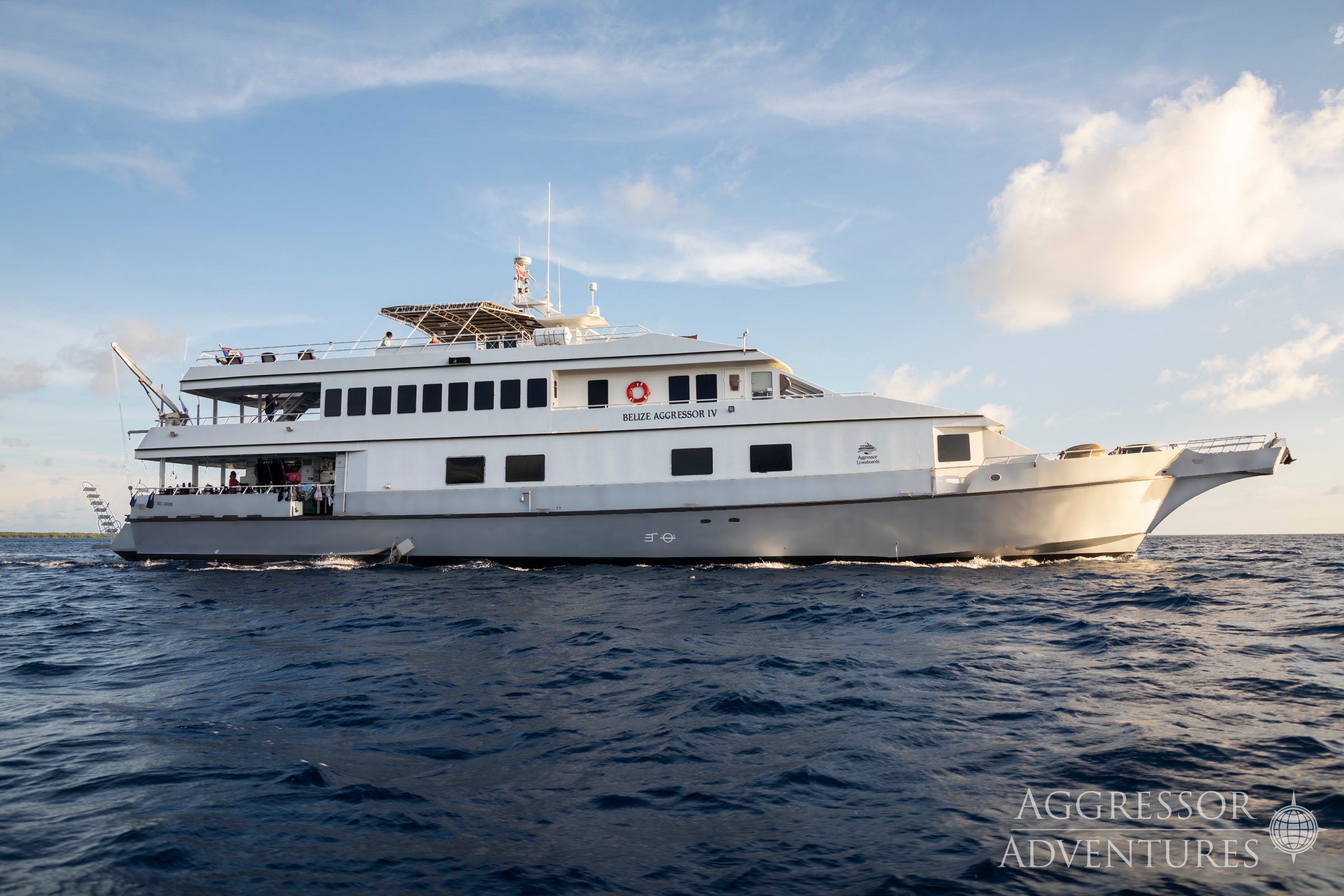
Belize Aggressor IV
Belize
20 guests42.1 m
$356/day
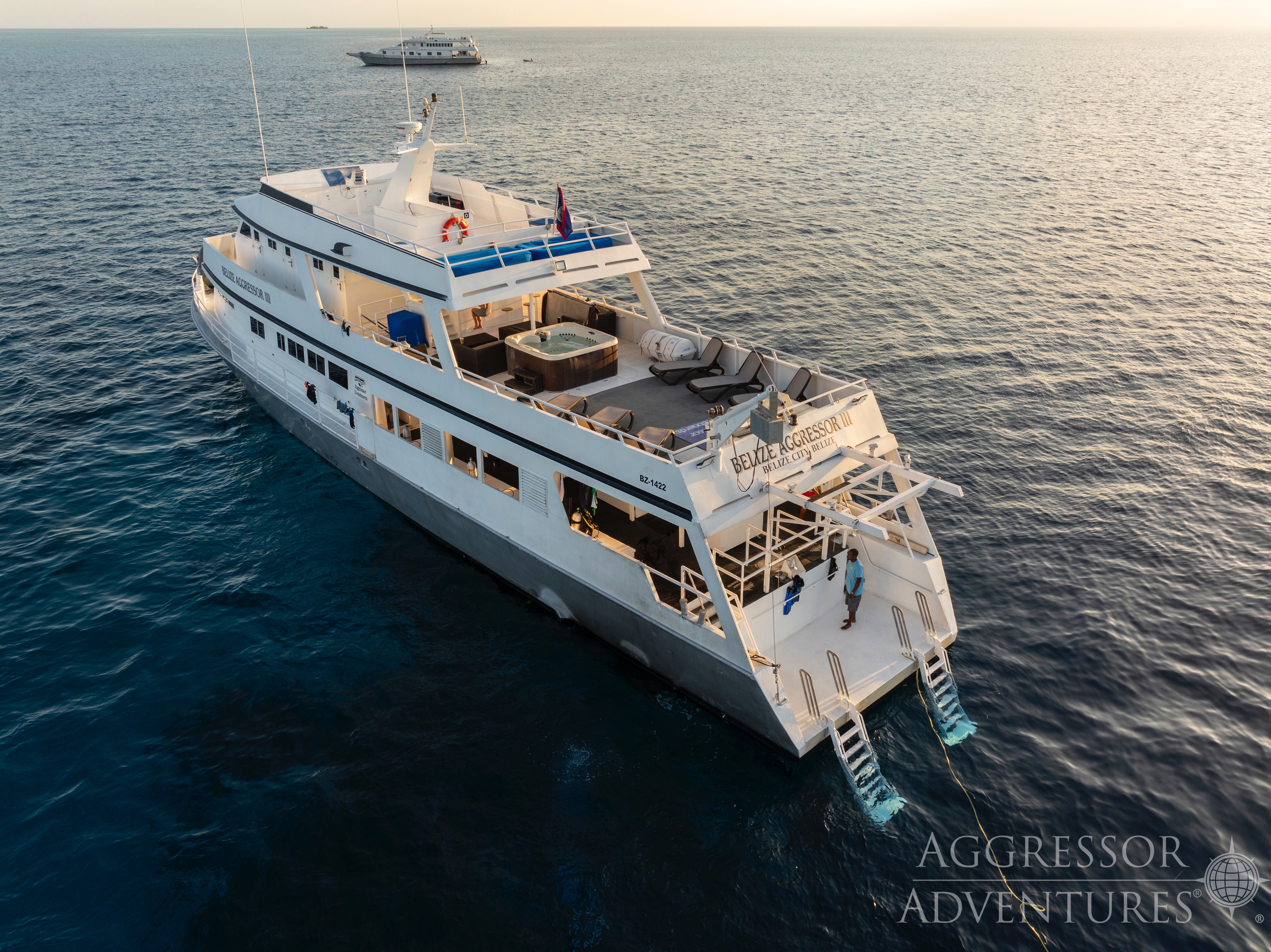
Belize Aggressor III
Belize
18 guests33.5 m
$336/day
Dive sites similar to Long Caye Wall
Same character, same waters — six more sites divers love for the exact same reasons.Compare seasons, access and liveaboard routes — then pick the site that fits your trip best.
© Esri — Maxar, Earthstar, GIS
Ambergris Caye
Belize
Ambergris Caye, the largest and most popular of Belize's offshore cayes, offers unparalleled diving along 40 kilometers of the Belize Barrier Reef, situated less than a mile offshore.
- Suitable for
- Intermediate
- Current
- Mild
- Access
- Dayboat
- Depth
- 15–60 m
- Theme
- Reef / Wall
Aquarium is a renowned dive site located within the pristine waters of Lighthouse Reef, a remote atoll approximately 50 miles offshore from mainland Belize.
- Suitable for
- Beginner
- Current
- Strong
- Access
- Liveaboard or dayboat
- Depth
- 6–15 m
- Theme
- Drift / Reef
© Esri — Maxar, Earthstar, GIS
Carrie Bow Caye Reef
Belize
Carrie Bow Caye is a small sand caye positioned directly on the Belize Barrier Reef, hosting a continuous coral reef monitoring program by the Smithsonian Institution since 1972.…
- Suitable for
- Intermediate
- Current
- Moderate
- Access
- Liveaboard or dayboat
- Depth
- 4–30 m
- Theme
- Reef / Wall
© Esri — Maxar, Earthstar, GIS
Glovers Reef Atoll
Belize
Glover's Reef Atoll, situated approximately 45 miles offshore from mainland Belize, is a pristine marine environment renowned for its exceptional biodiversity and healthy coral ecosystems.
- Suitable for
- Intermediate
- Current
- Moderate
- Access
- Liveaboard or dayboat
- Depth
- 8–30 m
- Theme
- Reef / Wall
© Esri — Maxar, Earthstar, GIS
Great Blue Hole
Belize
The Great Blue Hole, a globally renowned marine sinkhole, lies approximately 70 km offshore from Ambergris Caye, situated within the Lighthouse Reef Atoll in Belize.
- Suitable for
- Advanced
- Current
- Strong
- Access
- Liveaboard or dayboat
- Depth
- 10–40 m
- Theme
- Cave & cavern / Wall
© Esri — Maxar, Earthstar, GIS
Half Moon Caye Wall
Belize
Half Moon Caye Wall, located within Belize's Lighthouse Reef Atoll, is celebrated as one of the Caribbean's premier dive sites and part of Central America’s first marine protected area.
- Suitable for
- Intermediate
- Current
- Mild
- Access
- Liveaboard or dayboat
- Depth
- 9–40 m
- Theme
- Wall