Parrotfish
Scaridae
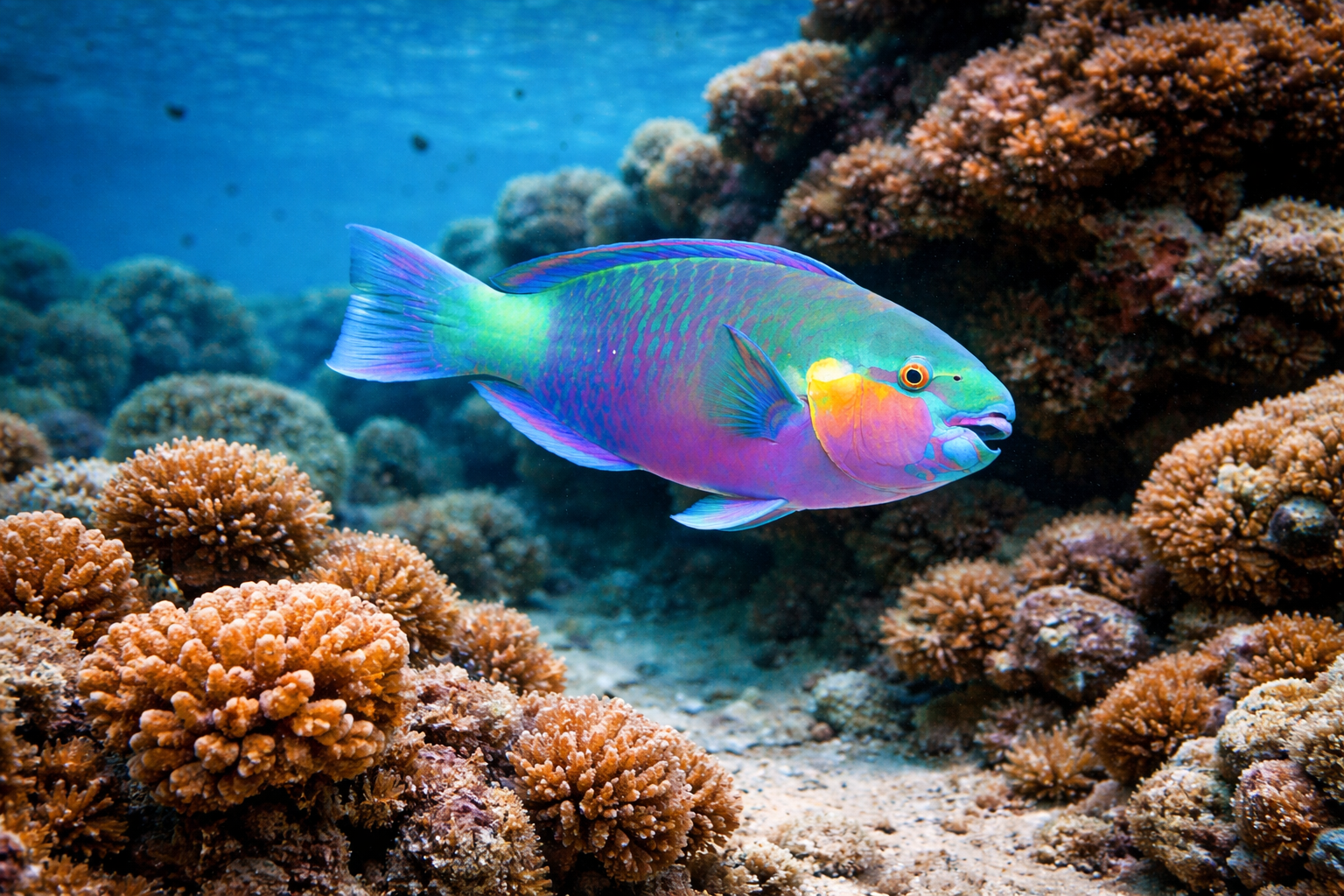
About Parrotfish
Parrotfish are colorful reef fish named for their beak-like fused teeth, which they use to scrape algae and coral. They play a vital role in reef health by controlling algae growth and producing white sand through their digestion of coral. Found throughout Caribbean reefs, they display stunning colors ranging from blue-green to pink and purple.
Quick Facts
- Habitat: Parrotfish are ubiquitous inhabitants of **tropical and subtropical coral reefs** worldwide, playing a crucial role in maintaining healthy reef ecosystems. They are found across the Indo-Pacific, Atlantic, and Caribbean regions. In the Indo-Pacific, divers can easily spot them in the clear waters of the **Great Barrier Reef** in Australia, throughout **Indonesia's Raja Ampat** and Komodo National Park, and in the vibrant reefs of the **Philippines** such as Apo Reef. In the Caribbean, they are prevalent in locations like the **Florida Keys**, Bonaire, and throughout the **Bahamas**. These fish prefer shallow, sunlit reef crests and lagoons where coral growth is abundant, though some larger species may venture into deeper reef slopes up to 30 meters. Juveniles often seek refuge in areas with dense seagrass beds or branching corals to avoid predators. Their presence is a strong indicator of a **thriving reef environment**, as they are instrumental in bioerosion and sediment production. While they do not exhibit significant seasonal migration patterns, their activity may be slightly reduced during periods of extreme weather, such as tropical storms, when they seek shelter within the reef structure.
- Diet: Parrotfish are essential **herbivores** on coral reefs, primarily feeding on **algae** that grows on hard substrates. They employ a unique feeding strategy, using their **fused, beak-like teeth** to scrape algae directly off rocks, dead coral, and living coral surfaces. This scraping action is so efficient that it often leaves behind distinctive **grazing marks** on the substrate, a tell-tale sign of their activity. While algae constitutes the bulk of their diet, some species also consume **small invertebrates** inadvertently ingested during their grazing. A significant byproduct of their digestion is **fine, white sand**, which is expelled as fecal matter. A single large parrotfish can produce hundreds of pounds of sand annually, making them crucial contributors to the creation and maintenance of **sandy beaches and reef flats**. This constant grazing prevents fast-growing algae from overgrowing and smothering corals, thereby facilitating coral recruitment and growth. Their feeding habits are fundamental to the ecological balance of coral reefs.
- Best season: Parrotfish are present year-round in most tropical and subtropical reef systems, but divers may find certain seasons more favorable for encounters due to **optimal water conditions** and activity levels. In the **Caribbean**, the best time to see them is generally during the **dry season from December to May**, when water visibility is at its peak and the weather is consistently calm. For example, in **Bonaire**, calm seas during these months make for excellent diving conditions. Similarly, in the **Indo-Pacific**, the **dry season** often provides the best diving. For the **Great Barrier Reef**, this typically runs from **June to October**, offering spectacular visibility and comfortable temperatures. In destinations like **Raja Ampat**, the diving is excellent year-round, but the **October to April** period often provides the calmest seas and clearest waters, making it ideal for observing these fish without strong currents. While parrotfish are always there, these periods offer the **most comfortable and rewarding** diving experiences for observing their natural behaviors.
Fun Facts
A single parrotfish can produce up to 300 kg of sand per year,Many species change sex during their lifetime, from female to male,They create a mucus sleeping bag at night to mask their scent from predators,Their 'beak' is actually made of fused teeth that continuously grow
Diving Tips
When observing parrotfish, divers should always maintain a **respectful distance** to avoid disturbing their natural behavior. Approaching them slowly and calmly will often allow for **extended viewing opportunities**. Look for them in shallow, sunlit reef areas, particularly where there are abundant algal growths or large coral colonies, as these are their primary food sources. Their distinctive **"beak" mouth** is an immediate identifier, along with their often **bright and varied coloration**, which can change dramatically between juvenile, initial (female/immature male), and terminal (dominant male) phases. Divers should listen for a **distinctive scraping sound** while close to the reef, which is the audible cue of parrotfish actively feeding on algae; this is a clear sign of a healthy reef. Remember that **feeding parrotfish** are vital to reef health, so never interfere with their foraging. **Do not touch or harass** these fish, as this can stress them and alter their behavior, potentially leading to injuries to both the fish and the diver. Always adhere to **local regulations** regarding marine life interaction, which universally prohibit handling or disturbing marine animals. Consider participating in **reef-friendly diving practices** to minimize your impact, such as careful buoyancy control to avoid contact with the reef structure where parrotfish graze. Observing their diverse behaviors, from solitary grazing to schooling patterns, provides a deeper appreciation for their ecological importance.