About Angulas Paradise
Angulas Paradise is a renowned shallow reef dive site located in front of the Parque Nacional del Este in the Dominican Republic, near Bayahibe. This site, along with Casa Estrella and Acuario, is celebrated for its accessible depths and abundant marine ecosystem, making it suitable for divers of all experience levels. The topography features a clear sandy bottom interspersed with magnificent coral formations and marine sponges. The maximum depth reached is typically between 12 and 14 meters, providing ample bottom time to explore the vibrant reef. Divers can expect to encounter typical Caribbean marine life year-round, including various reef fish species and diverse corals. While specific seasonal highlights for Angulas Paradise are not detailed, the region generally offers consistent warm water temperatures and good visibility throughout the year. This site provides a relaxed and rewarding dive experience, perfect for those seeking to explore healthy, colorful reefs without deep dives or strong currents. Its calm conditions and shallow profile contribute to its popularity among beginners and experienced divers alike looking for a beautiful, tranquil underwater exploration.
Highlights
Shallow Caribbean reefParque Nacional del Este frontageMagnificent coral formationsDiverse marine spongesTypical Caribbean marine lifeSuitable for all dive levels
Season calendar
Best months to dive here
Jan
Feb
Mar
Apr
May
Jun
Jul
Aug
Sep
Oct
Nov
Dec
Excellent
Good
Dec – Apr (Dry Season)
Best visibility 25–40m, calm seas. Humpback whale season Jan–Mar in Silver Bank. Ideal water temperatures 25–27°C.
May – Nov (Wet/Hurricane Season)
Warmer water, occasional rain reduces visibility. Hurricane risk Aug–Oct but diving continues. Fewer crowds, better prices.
Dive site facts: Angulas Paradise
- Depth
- 12-14 m
- Current
- Mild
- Visibility
- 18-27 m, peaking at 30 m
- Water temperature
- 24-29°C
- Entry
- Boat
- Level
- All levels
- Dive type
- Reef, shallow
- Region / port
- Bayahibe, Dominican Republic
- Coordinates
- 18.3438° N, 68.8542° W
Conditions & Currents
Dive sites in the Bayahibe area, where Angulas Paradise is located, generally experience mild currents, especially on the south coast. The calm Caribbean seas contribute to a relaxing dive experience, which makes conditions predictable and manageable for divers of all levels. Entry and exit are typically straightforward boat procedures, likely via tender, due to the tranquil water. Visibility remains consistently good throughout the year, usually ranging from 18 to 27 meters, although it can extend up to 30 meters in peak season. Water temperatures are warm year-round, averaging between 24-29°C, reducing the concern for thermoclines. These generally calm conditions mean divers can enjoy extended bottom times without significant current-related gas planning challenges, allowing focus on marine observation.
Marine life & sighting chances

Coral
common
Marine sponges
common
Reef fish
common
Dolphin
occasional
Sting-ray
occasional
Manatee
occasional
Eagle ray
occasional
Barracuda
occasional
Nurse shark
occasional
Jack
occasional
Turtle
occasional
Trumpetfish
common
Butterflyfish
common
Parrotfish
commonDive profile & how the dive runs
Dives at Angulas Paradise typically begin with a boat entry to the shallow reef, which lies between 12 and 14 meters deep. Divers can expect to explore the extensive coral formations and marine sponges that characterize this site. The dive profile generally involves a leisurely tour over the reef, allowing ample time to observe the abundant Caribbean marine life. There are no specific routes or turn points mentioned, suggesting a free-form exploration of the accessible reef area. Given the shallow depth, bottom times are generous, and safety stops can be performed comfortably over the reef itself, or free-floating at 5 meters as part of the ascent, before returning to the boat.
Underwater photography
Angulas Paradise, with its shallow depths and excellent visibility, is ideal for wide-angle photography, capturing the expansive coral formations and the overall reef landscape. A wide-angle lens would be suitable for showcasing the healthy coral gardens and marine sponges. For capturing individual reef fish or smaller creatures, a macro lens could also be beneficial, especially if focusing on specific details within the coral. Ambient light is usually sufficient due to the shallow profile, but strobes can enhance colors and reduce backscatter. Practicing excellent buoyancy control is crucial to avoid contact with the delicate coral structures while positioning for shots. Given the site's calm nature, photographers can take their time to compose shots and observe marine behavior without the challenges of strong currents.
Combine with nearby dive sites
- Casa Estrella
Another shallow Caribbean reef with coral and marine sponges.
- Acuario
A shallow Caribbean reef suitable for all levels.
- Coral Garden
An artificial reef site with natural reef and structures.
- Catalina Garden
A shallow Caribbean reef known for good visibility and a small drop-off.
- Atlantic Princess Wreck
A shallow wreck dive at 12m, intentionally sunk as an artificial reef.
Getting there & logistics
Diving in the Bayahibe area, including Angulas Paradise, is primarily accessed via local dive centers operating from resorts. Divers usually fly into the Dominican Republic's international airports, such as Punta Cana International Airport (PUJ) or Santo Domingo's Las Américas International Airport (SDQ). From these airports, transfers to Bayahibe are arranged, typically taking an hour or two. Dive trips to Angulas Paradise are often part of daily boat excursions, frequently combined with other nearby shallow reefs. No specific permits or fees beyond standard dive trip costs are mentioned for this site. Trips often range from single-day excursions to multi-day resort-based packages, allowing divers to explore multiple sites in the Bayahibe region, which offers a variety of reefs and wrecks suitable for all levels.
Safety & environment
For Angulas Paradise, emergency services and recompression chambers would typically be located in larger cities or resort areas, with the nearest likely in La Romana or Santo Domingo. Divers are strongly advised to have comprehensive dive insurance covering medical emergencies and evacuation, as access to advanced medical care may require transport. Site-specific hazards are minimal due to the shallow depths and mild currents, making it a safe choice for all skill levels. However, standard safe diving practices, including careful buoyancy control to protect the delicate coral, buddy checks, and monitoring air supply, are always essential. Given its location within the Parque Nacional del Este, respecting marine life and adhering to environmental guidelines, such as not touching or removing anything, is paramount.
Who it suits, and who it doesn't
Suited for
- Beginner divers seeking easy conditions
- Photographers focusing on reef life and wide-angle shots
- Divers interested in healthy coral ecosystems
- Families with varying dive experience levels
- Relaxed, unchallenging dives
Less suited for
- Technical divers looking for deep or complex profiles
- Divers seeking strong currents and drift dives
- Those primarily interested in large pelagic encounters
- Divers focused solely on wreck penetration
FAQ
Angulas Paradise FAQ
What marine life can I expect to see at Angulas Paradise?
Angulas Paradise is home to a variety of typical Caribbean marine life. You can anticipate encountering numerous colorful reef fish, vibrant coral formations, and diverse marine sponges. Occasional sightings of dolphins, sting-rays, and even manatees are also possible, enhancing the natural beauty of the site.
What are the typical diving conditions at Angulas Paradise?
Conditions at Angulas Paradise are generally calm and clear. The water temperature consistently ranges from 24-29°C year-round, and visibility is excellent, typically between 18-27 meters, often peaking at 30 meters. Currents are usually mild, making for a relaxed and enjoyable dive experience suitable for all skill levels.
Is Angulas Paradise suitable for beginner divers?
Yes, Angulas Paradise is highly suitable for beginner divers. With depths ranging from 12-14 meters, mild currents, and good visibility, it offers a safe and accessible environment for new divers to gain experience and explore a beautiful coral reef without significant challenges. It is often recommended for all certification levels.
What is the best time of year to dive Angulas Paradise?
The best time to dive Angulas Paradise, and the Dominican Republic in general, is from June to September for peak visibility, though this is also hurricane season. Shoulder months like May and November offer fewer crowds. The warm water temperatures and generally good conditions make it a viable dive destination year-round.
Are there other dive sites near Angulas Paradise that can be combined into a trip?
Yes, Angulas Paradise is located in an area with several other accessible dive sites. Nearby options include Casa Estrella and Acuario, which are also shallow reefs. The Atlantic Princess Wreck, a shallow artificial reef, and Catalina Garden, another vibrant shallow reef, are also popular choices often combined with dives at Angulas Paradise.
Why dive Angulas Paradise from a liveaboard?
Angulas Paradise is one of Dominican Republic's signature dive sites. A liveaboard sleeps you on the water and puts you in the water for three to four guided dives per day, including dawn and night dives that day-boat operators rarely offer. You skip the daily commute back to port and reach quieter, less-crowded sites in the same region on a single trip.
Below are the liveaboards that include Angulas Paradise on their Dominican Republic itineraries.
Liveaboards diving Angulas Paradise
These liveaboards may visit Angulas Paradise on selected itineraries, the exact dive sites depend on departure, weather and conditions.
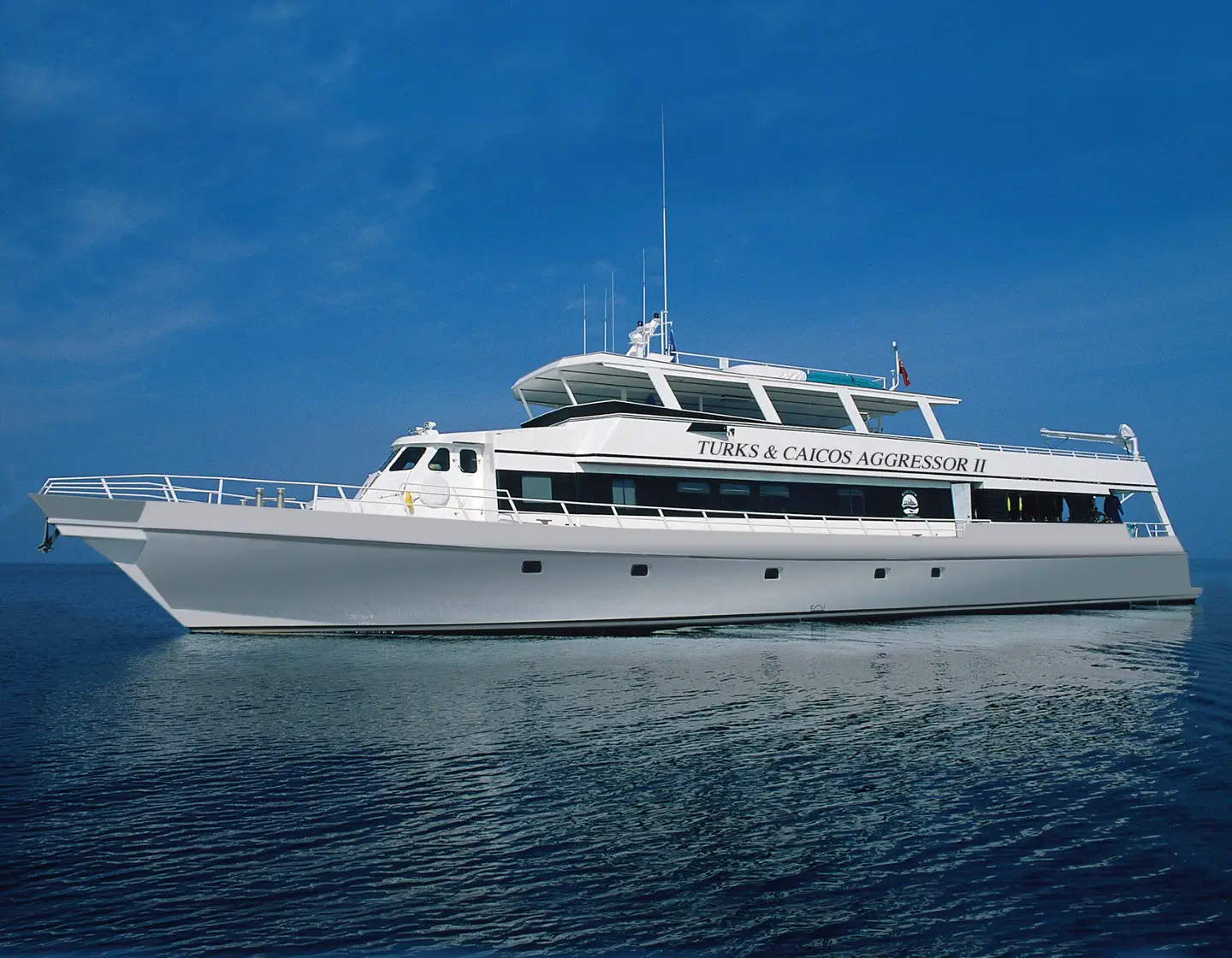
Turks & Caicos Aggressor II
Turks & Caicos
18 guests37 m
Dive sites similar to Angulas Paradise
Same character, same waters, six more sites divers love for the exact same reasons.Compare seasons, access and liveaboard routes, then pick the site that fits your trip best.
© EsriMaxar, Earthstar, GIS
3 Fathom Wall
Cayman Islands
3 Fathom Wall is an exciting and fish-filled dive site located in the Cayman Islands, specifically at the intersection of the renowned Bloody Bay Wall.
- Suitable for
- Intermediate
- Current
- Mild
- Access
- Liveaboard only
- Depth
- ≤ 3000 m
- Theme
- Reef
While specific details for a dive site named "3 Riff" are not present in the provided sources, general diving conditions and characteristics for the Dominican Republic…
- Suitable for
- Advanced
- Current
- Mild
- Access
- Dayboat
- Depth
- 30–55 m
- Theme
- Reef
The dive site known as 3 Rocks is located off the coast of Sosúa in Puerto Plata, Dominican Republic, offering an accessible and lively underwater experience.
- Suitable for
- Beginner
- Current
- Mild
- Access
- Dayboat
- Depth
- 2–8 m
- Theme
- Reef
4 Amigos is a notable dive site located in the Bay Islands of Honduras, an area renowned for its extensive Mesoamerican Barrier Reef System, which is the world's second-longest.
- Suitable for
- Intermediate
- Current
- Moderate
- Access
- Liveaboard or dayboat
- Depth
- 9–40 m
- Theme
- Reef
© EsriMaxar, Earthstar, GIS
6 Toed Cat
Mexico
The dive site known as "6 Toed Cat" is not a recognized dive location in Mexico; rather, it refers to the polydactyl felines, many with six toes, that inhabit the Ernest Hemingway Home and Museum in Key West, Florida.
- Suitable for
- Beginner
- Current
- Mild
- Access
- Liveaboard or dayboat
- Depth
- —
- Theme
- Reef
© EsriMaxar, Earthstar, GIS
Aaron's Backyard
Honduras
Aaron's Backyard is a noted dive site within the Roatan Marine Park in Honduras, part of the extensive Mesoamerican Barrier Reef System.
- Suitable for
- Intermediate
- Current
- Moderate
- Access
- Liveaboard or dayboat
- Depth
- 9–40 m
- Theme
- Reef