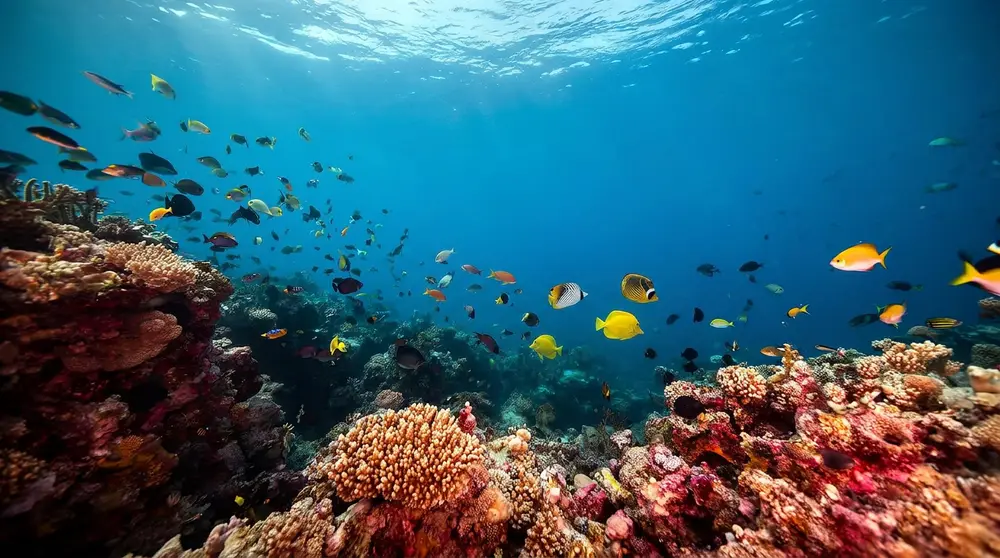
Graceful and vibrant, butterflyfishes (Chaetodontidae) are an iconic emblem of healthy coral reefs, their dazzling colours and intricate patterns instantly captivating any diver who encounters them. These relatively small, flattened, disk-shaped fishes are perfectly adapted for navigating the complex topography of reef environments, easily slipping through narrow crevices and over coral formations. While their maximum size rarely exceeds 22 centimetres, their presence is profoundly impactful, painting the underwater world with an artist's palette of yellows, oranges, blacks, whites, and blues. Identification often relies on these distinctive markings; many species exhibit a "false eye spot" near the tail, believed to confuse predators, and an eye bar that runs vertically through the actual eye, helping to camouflage it. Their small, often brush-like mouths, which can be protrusible in some species, are another key identification feature, hinting at their specialised feeding habits.
Behaviour & reproduction
- Size
- Unknown
- Weight
- 0.2 kg
- Lifespan
- 5–10 years
- Status
- Not Evaluated
Reproduction in most species involves pelagic spawning, where males and females release their eggs and sperm into the water column. The fertilised eggs then drift with the currents as plankton before hatching into larvae. These larvae spend a period in the open ocean, developing and growing, until they are ready to settle onto a suitable reef habitat. This dispersal mechanism allows for the colonisation of new areas and the maintenance of genetic diversity across wider geographical ranges. Once settled, the juveniles seek refuge amongst the corals, growing rapidly into the recognisable forms that divers adore.
Ecologically, butterflyfishes play a critical role in the health and balance of coral reefs, though their impact can be complex. Many species are obligate corallivores, meaning they feed exclusively on live coral polyps. While this might sound detrimental, their selective grazing can influence coral growth patterns and prevent single coral species from dominating an area, thereby promoting biodiversity. These species, with their specialised mouths, meticulously nip at individual polyps, leaving tell-tale feeding scars on the coral. Other butterflyfish species are more generalist feeders, consuming a diverse array of small invertebrates such as worms, crustaceans, and other benthic organisms found on or within the reef structure. Some even supplement their diet with algae or zooplankton. The presence of a variety of butterflyfish species often signals a robust and thriving reef ecosystem, as their dietary needs often reflect the overall health and diversity of the coral and invertebrate communities.