Giant Grouper in its natural habitat — diving encounters and best destinations

Giant Grouper

Unknown
Over 50 years
Not Evaluated

Want to dive with this animal?

The Giant Grouper at a glance

The giant grouper (Epinephelus lanceolatus), also known as the Queensland groper, brindle grouper, or mottled-brown sea bass, holds the title of the largest bony fish found on coral reefs. Capable of reaching lengths up to 3 metres and weights of 400 kilograms, this massive marine ray-finned fish belongs to the family Serranidae. It possesses the most widespread distribution of any grouper species, spanning across the tropical Indo-Pacific ocean.

Behaviour & reproduction

Size
Unknown
Weight
Up to 400 kg
Lifespan
Over 50 years
Status
Not Evaluated

Despite their intimidating size, giant groupers are calm and famously curious, often approaching scuba divers closely to inspect them. However, because they grow slowly and take approximately 20 years to reach sexual maturity, populations are highly sensitive to overfishing. Encounters with these long-lived reef giants remain a prized highlight for divers across the Indo-Pacific.
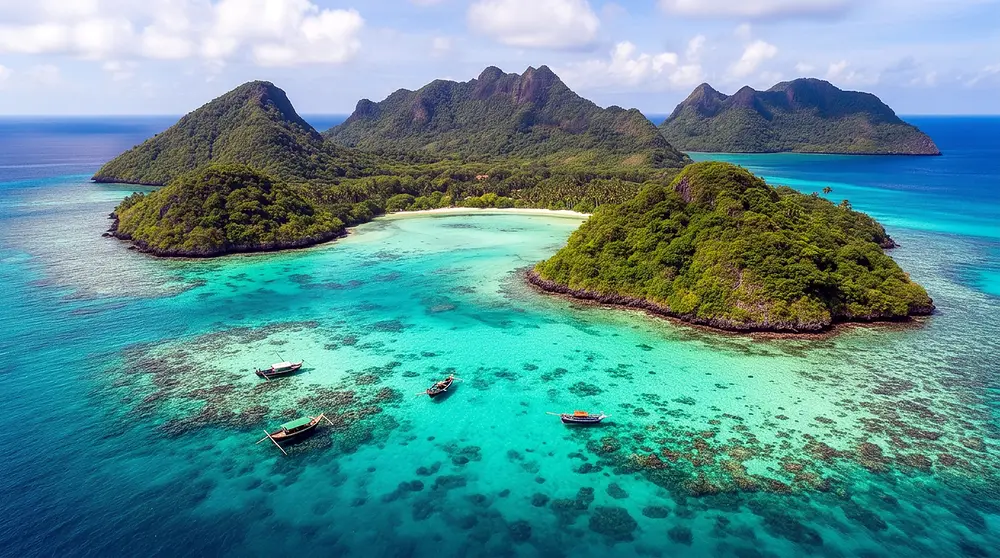
Where to dive with the Giant Grouper: 18 top spots

Diving Tips

Encountering a giant grouper in the wild is an unforgettable experience due to the animal's massive scale and inquisitive nature. When diving around deep wrecks, expansive caves, or prominent reef ledges where groupers reside, maintain slow and calm movements. Giant groupers are often curious and may swim directly toward divers to investigate. Always give the fish ample space and avoid cornering it or blocking its exit from a cavern or ledge; a startled grouper can flex its gill covers to produce a startlingly loud acoustic boom.

Never attempt to hand-feed a giant grouper. Their feeding mechanism creates a violent suction vacuum capable of drawing in massive prey, and incidents of large specimens biting or attacking humans have been reported. Maintain neutral buoyancy at all times so you do not damage delicate coral structures while watching these slow-moving giants near swim-throughs or structural overhangs.

Fun facts about the Giant Grouper

  • The giant grouper is the largest bony fish found on coral reefs, reaching lengths up to 3 metres and weights of 400 kg.
  • To capture prey, the giant grouper rapidly flares its gill covers and opens its mouth, creating a suction pump that swallows animals whole.
  • As protogynous hermaphrodites, giant groupers begin life as females and can later transition into males, taking roughly 20 years to mature.
  • Juvenile giant groupers look dramatically different from adults, featuring a bright yellow body marked with bold, dark irregular bars.

Best time to see the Giant Grouper

Giant groupers are non-migratory reef residents, meaning divers can encounter them year-round throughout their Indo-Pacific range. Because adults typically hold territories around a specific cave, overhang, or shipwreck for many years, local sightings remain consistent regardless of the calendar month.

Spawning activity in giant groupers is tied directly to lunar cycles rather than specific seasonal months. During these lunar spawning events, which last about seven days, groupers gather in aggregations where broadcast spawning takes place. While precise month-by-month timing varies across regional populations—ranging from the Red Sea and East Africa to Australia and Hawaii—diving conditions are generally best during calm weather seasons that allow easy access to offshore reefs, outer reef walls, and deep wrecks.

Where the Giant Grouper lives

The giant grouper inhabits shallow tropical marine and estuarine environments across a depth range of 1 to 100 metres, though it is most commonly encountered between 1 and 50 metres depth. It is the largest reef-associated bony fish in the world, occupying coral reefs, rocky reefs, outer reef slopes, and sheltered lagoons.

Large adult giant groupers prefer high-relief structures, frequently taking up residence inside deep underwater caves, beneath expansive coral ledges, or around artificial structures such as shipwrecks, bridges, and harbour piers. Subadults and secretively behaved juveniles stay closer to shallow sheltered reefs, rubble fields, or estuarine environments such as mud flats.

Geographically, its distribution spans from the Red Sea and Algoa Bay in South Africa eastward across the Indian Ocean to the Pitcairn Islands and Hawaii, extending north to southern Japan and south to Australia. It is notably absent from the Persian Gulf.

What the Giant Grouper eats

The giant grouper is an opportunistic ambush predator occupying the top tier of the reef food web. Its diet includes a wide variety of marine life, such as reef fishes, small sharks, batoids (rays), juvenile sea turtles, crustaceans, and molluscs. Reef-dwelling specimens favor spiny lobsters and crabs, whereas individuals living in estuarine environments feed heavily on mud crabs (*Scylla serrata*).

Rather than chasing prey down, the giant grouper lies in wait inside crevices or under reef ledges. When prey comes within range, the grouper drops its lower jaw and flares its gill covers in a fraction of a second. This rapid expansion creates a powerful vacuum that draws water and prey into its mouth whole, requiring no chewing.

Equipped with specialized eyes that function effectively in low light, the giant grouper is cathemeral, actively hunting during dawn and dusk as well as throughout the day.

Giant Grouper: frequently asked questions

When is the best time to see Giant Grouper?
Giant groupers are non-migratory reef residents, meaning divers can encounter them year-round throughout their Indo-Pacific range. Because adults typically hold territories around a specific cave, overhang, or shipwreck for many years, local sightings remain consistent regardless of the calendar month. Spawning activit
How big does Giant Grouper get?
Giant Grouper: Unknown
Is Giant Grouper dangerous for divers?
Encountering a giant grouper in the wild is an unforgettable experience due to the animal's massive scale and inquisitive nature. When diving around deep wrecks, expansive caves, or prominent reef ledges where groupers reside, maintain slow and calm movements. Giant groupers are often curious and may swim directly towa
What is the conservation status of Giant Grouper?
Giant Grouper: Not Evaluated
Plan your trip

Ready to dive with these animals?

Choose a destination or search every available vessel to find the liveaboard that matches the marine life you want to see.