About Koh Tao — Green Rock
Green Rock, situated off the west coast of Koh Tao near Koh Nang Yuan, is a unique dive site characterized by a striking cluster of granite boulders. This site offers an adventure-filled experience with its natural network of swim-throughs, caverns, and narrow passages, making it a highly interactive underwater landscape. Depths vary from 4 meters down to approximately 30 meters, accommodating both newer and experienced divers. The topography is its defining feature: a chaotic pile of granite formations that create a maze-like environment. Divers can explore numerous tunnels and hidden chambers, revealing different aspects of the reef community with each visit. The site is known for its resident triggerfish, especially titan and yellow margin triggerfish, which are more territorial during nesting season. Beyond these, you can find blue-spotted stingrays, moray eels, groupers, and schools of barracuda and fusiliers. Conditions are generally calm and the site is diveable in various weather, though strong winds from June to August, and mid-November to early January can make it inaccessible. Visibility typically ranges from 10 to 25 meters, and water temperatures are a comfortable 27–30°C year-round. While Open Water divers can enjoy the shallower parts, an Advanced Open Water certification is recommended for deeper explorations and more complex swim-throughs. Green Rock is an ideal spot for those seeking discovery and interaction with the underwater environment. Its intricate structure rewards careful navigation and offers a dynamic dive where no two trips are ever quite the same. It's often combined with a dive to Chumphon Pinnacle for a full morning trip.
Highlights
Labyrinthine granite swim-throughsTrigger Pit nesting zoneFrequent turtle sightingsBlacktip reef sharksAbundant reef fish schoolsDiverse macro life in crevicesUnique underwater topography
Season calendar
Best months to dive here
Jan
Feb
Mar
Apr
May
Jun
Jul
Aug
Sep
Oct
Nov
Dec
Excellent
Good
Dive site facts: Koh Tao — Green Rock
- Depth
- 4–30 m
- Typical dive
- 12–25 m, 50–60 min
- Current
- Mild to variable
- Visibility
- 10–25 m
- Water temperature
- 27–30°C
- Entry
- Boat
- Level
- Open Water with experience / AOWD recommended
- Dive type
- Boulder formations, swim-throughs, reef
- Region / port
- Koh Tao, Thailand
- Coordinates
- 10.1256, 99.8156
Conditions & Currents
Currents at Green Rock are typically mild but can vary, occasionally sweeping through the channels and bringing increased fish activity. The site is generally sheltered, offering good visibility between 10–25 meters, although strong winds and waves, especially between June to August and mid-November to early January, can make the site inaccessible. Water temperatures remain consistently warm, ranging from 27–30°C throughout the year. Divers should be aware of triggerfish nesting areas, particularly between 16 and 25 meters, where these fish can be territorial. Good buoyancy control is essential for navigating the numerous swim-throughs and managing encounters with potentially defensive marine life.
Marine life & sighting chances

Titan triggerfish
Nesting season (June-September) · commonYellow margin triggerfish
Nesting season · common
Blue-spotted stingray
occasional
Moray eel
common
Giant grouper
occasional
Yellowtail barracuda
common
Fusilier
common
Trevally
common
Nudibranch
occasional
Shrimp
occasional
Scorpionfish
occasional
Pipefish
occasional
Hawksbill turtle
common
Green turtle
commonDive profile & how the dive runs
Dives at Green Rock typically begin on the north side, descending through a canyon formed by massive granite boulders. From there, divers navigate through an intricate network of swim-throughs, tunnels, and caverns that define the site. The route progresses through various gaps, some wide and others requiring careful fin control, eventually reaching deeper sections down to 25-30 meters. The deeper areas feature the 'Trigger Pit,' a sandy expanse with triggerfish nests between 16-25 meters. Divers explore the rock formations, observing marine life tucked into crevices and hidden chambers. The turn point often depends on air consumption and the group's comfort with deeper exploration. Ascent usually involves making your way back towards shallower parts of the rock, allowing for an extended safety stop in the 5-meter zone where the rock tops offer additional marine life viewing before surfacing.
Underwater photography
Green Rock offers exceptional opportunities for both wide-angle and macro photography due to its diverse topography and marine life. For wide-angle shots, a fisheye lens is ideal to capture the grandeur of the granite swim-throughs and the dramatic interplay of light and shadow within the caverns. You'll want to ensure good buoyancy to navigate these tight spaces without disturbing the environment. For macro subjects, such as nudibranchs, shrimp, and pipefish hidden in crevices, a dedicated macro lens will be essential. Bringing a powerful torch is highly recommended to illuminate darker areas within the swim-throughs and bring out the true colors of resident marine life. Patience is key when photographing triggerfish, especially during nesting season; maintain a respectful distance to avoid aggressive encounters. Pay attention to schools of barracuda and fusiliers in the open water for dynamic compositions.
Combine with nearby dive sites
- Chumphon Pinnacle
Often combined with Green Rock as a two-dive trip
- Koh Tao — Japanese Garden
Ideal for beginners, known for coral formations
- Koh Tao — Twins
Versatile site near Koh Nang Yuan, suitable for all levels
- Sail Rock
Further afield, known for schools of fish and a chimney swim-through
- Elephant Head Rock
Another Koh Tao site with rock formations
Getting there & logistics
Green Rock is located just a short 15–30 minute boat ride from Koh Tao, making it easily accessible for half-day dive trips. Most dive operators on Koh Tao, departing from Mae Haad pier, offer morning two-dive excursions that typically return by midday. A common itinerary pairs Green Rock with Chumphon Pinnacle. To reach Koh Tao, travelers typically fly into Koh Samui (USM) and then take a ferry, or travel by bus/train to Chumphon or Surat Thani, followed by a ferry. No specific permits are mentioned for Green Rock, but standard Thai diving regulations apply. Trips are often bundled with equipment rental and guides. Travelers should budget for these costs, as well as accommodation on Koh Tao.
Safety & environment
While Green Rock is generally safe, several factors require attention. The nearest recompression chamber is in Koh Samui, necessitating proper evacuation protocols for any diving emergencies. Dive insurance, such as DAN, is strongly recommended for all divers. Site-specific hazards include the potential for aggressive titan triggerfish, particularly during their nesting season from June to September. Divers must be briefed on how to react to triggerfish, which includes swimming laterally rather than vertically if charged. Navigating the swim-throughs requires good buoyancy control to prevent injury or damage to the environment. Always follow your dive guide's instructions and never enter areas beyond your training or comfort level.
Who it suits — and who it doesn't
Suited for
- Experienced Open Water divers comfortable with buoyancy
- Advanced Open Water divers seeking complex navigation
- Underwater photographers looking for unique compositions
- Divers interested in exploring swim-throughs and caverns
- Divers keen on seeing turtles and triggerfish
Less suited for
- Brand-new Open Water divers without strong buoyancy skills
- Divers prone to claustrophobia in confined spaces
- Divers unwilling to follow specific triggerfish safety briefings
- Divers seeking only open reef or pelagic encounters
- Divers expecting to dive during adverse weather conditions
FAQ
Koh Tao — Green Rock FAQ
What makes Green Rock unique compared to other dive sites around Koh Tao?
Green Rock stands out due to its intricate network of granite boulders, forming numerous natural swim-throughs, tunnels, and caverns. This creates a maze-like underwater environment, offering a sense of exploration and discovery unlike many other sites in the region. The three-dimensional structure and light play through the rock formations provide a dynamic diving experience.
Are the swim-throughs at Green Rock suitable for all experience levels?
Most of the swim-throughs at Green Rock are wide and short with visible exits, making them accessible to Open Water divers under supervision. However, some deeper and tighter passages are better suited for Advanced Open Water certified divers with good buoyancy control and experience in overhead environments. Your dive guide will select routes appropriate for the group's skill level.
What marine life can I expect to see at Green Rock?
Green Rock is home to a diverse range of marine life. You can frequently spot titan and yellow margin triggerfish, especially during nesting season, along with blue-spotted stingrays resting on sandy patches. Moray eels, giant groupers, and schools of yellowtail barracuda and fusiliers are common. There are also frequent sightings of hawksbill and green turtles, and occasional blacktip reef sharks on deeper slopes.
What is the 'Trigger Pit' at Green Rock?
The 'Trigger Pit' refers to a sandy area at the base of Green Rock, between 16 and 25 meters deep, dotted with numerous craters that serve as triggerfish nests. Both titan and yellow margin triggerfish inhabit this area and can be highly territorial, especially during nesting season. Divers receive a briefing on how to safely interact with these fish, emphasizing lateral movement if approached.
When is the best time to visit Green Rock for diving?
The peak diving season for Green Rock, and Koh Tao generally, is from March to May, offering very calm seas and excellent visibility, often reaching 15-30 meters. February is also a favored month. While diving is possible year-round, conditions can be challenging with strong winds and waves from June to August and again from mid-November to early January, which may lead to site closures.
Why dive Koh Tao — Green Rock from a liveaboard?
Koh Tao — Green Rock is one of Thailand's signature dive sites. A liveaboard sleeps you on the water and puts you in the water for three to four guided dives per day, including dawn and night dives that day-boat operators rarely offer. You skip the daily commute back to port and reach quieter, less-crowded sites in the same region on a single trip.
Below are the liveaboards that include Koh Tao — Green Rock on their Thailand itineraries.
Liveaboards diving Koh Tao — Green Rock
These liveaboards may visit Koh Tao — Green Rock on selected itineraries — the exact dive sites depend on departure, weather and conditions.
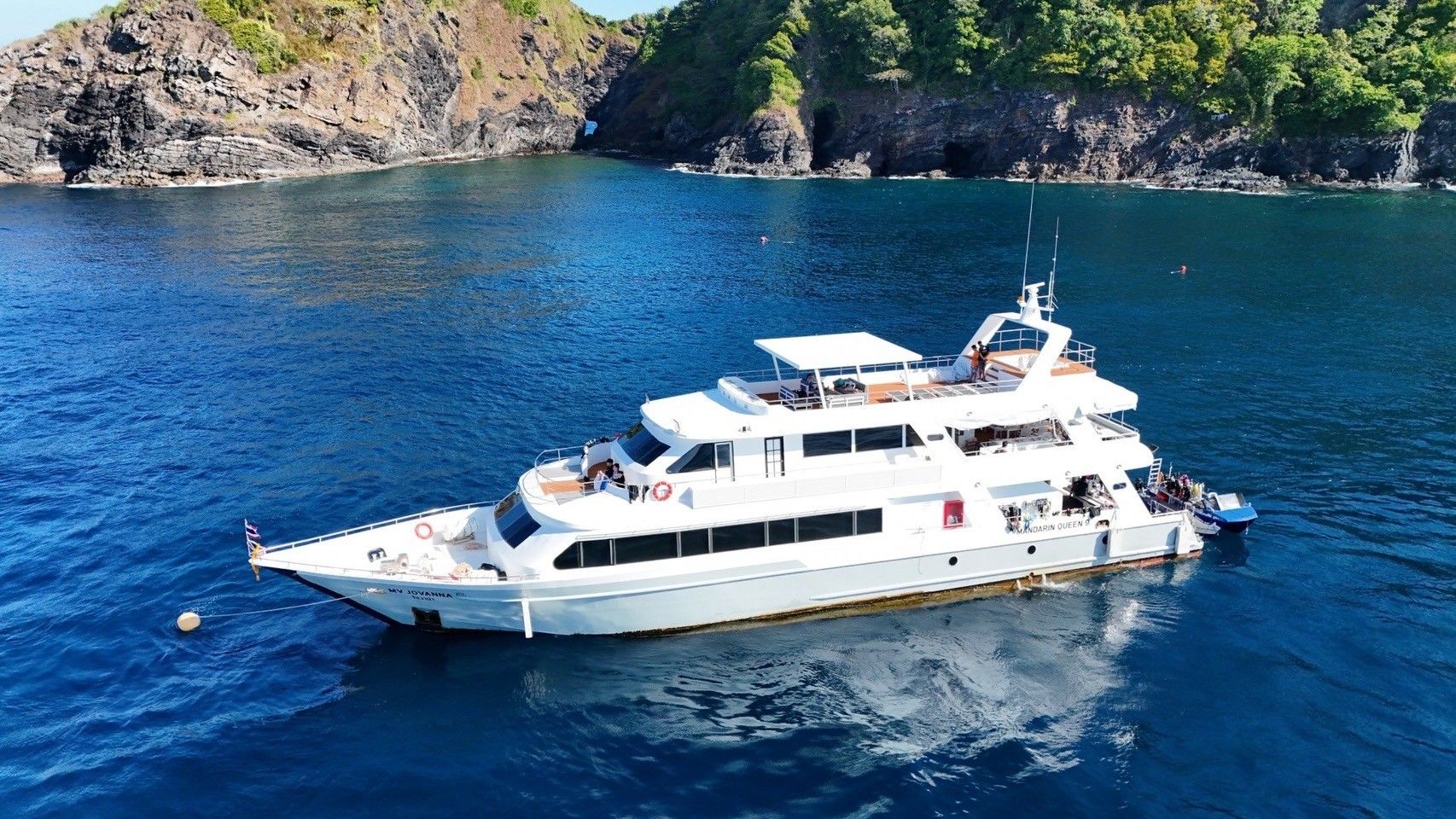
Mandarin Queen 9
Thailand
26 guests37.5 m
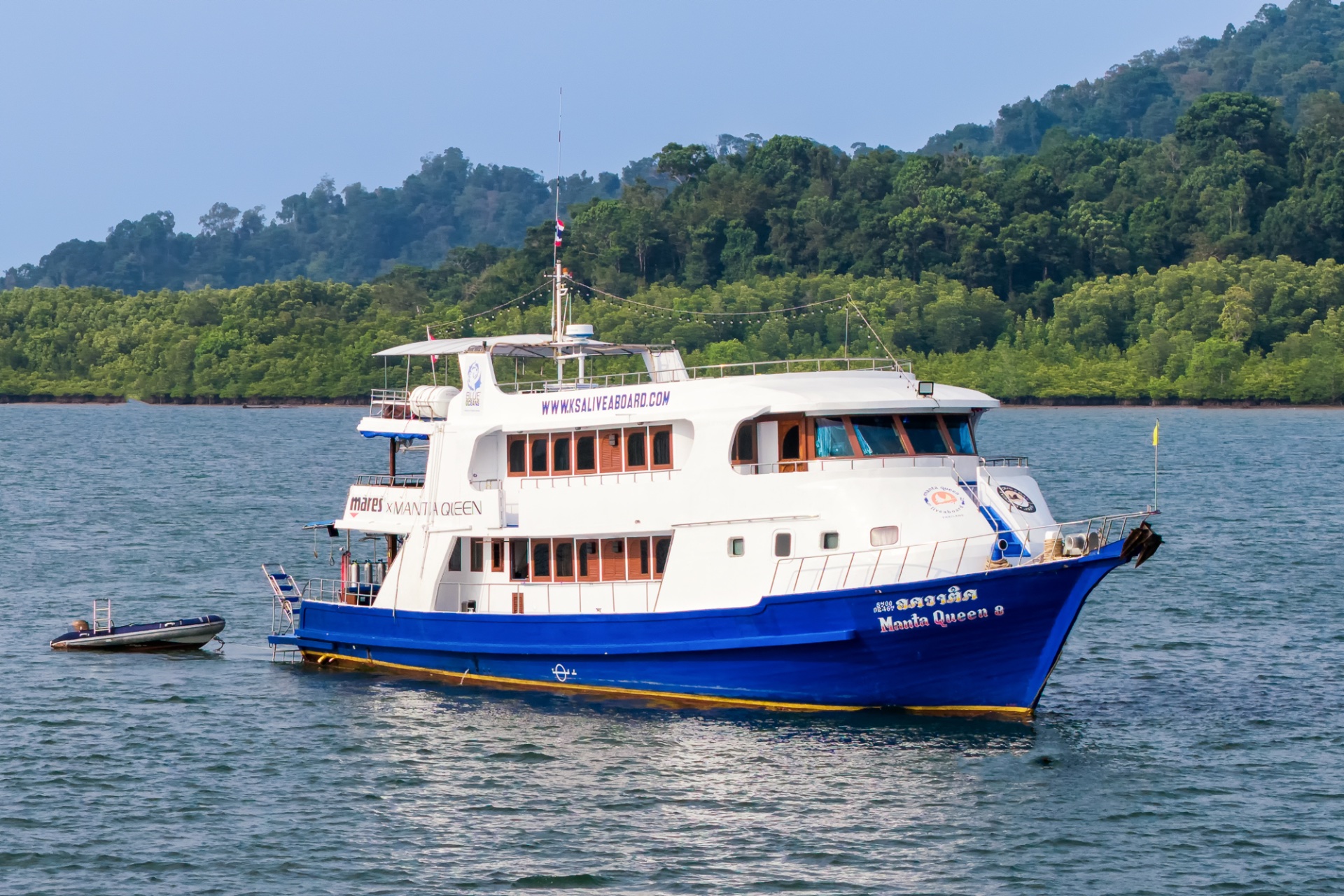
Manta Queen 8
Thailand
24 guests
$127/day
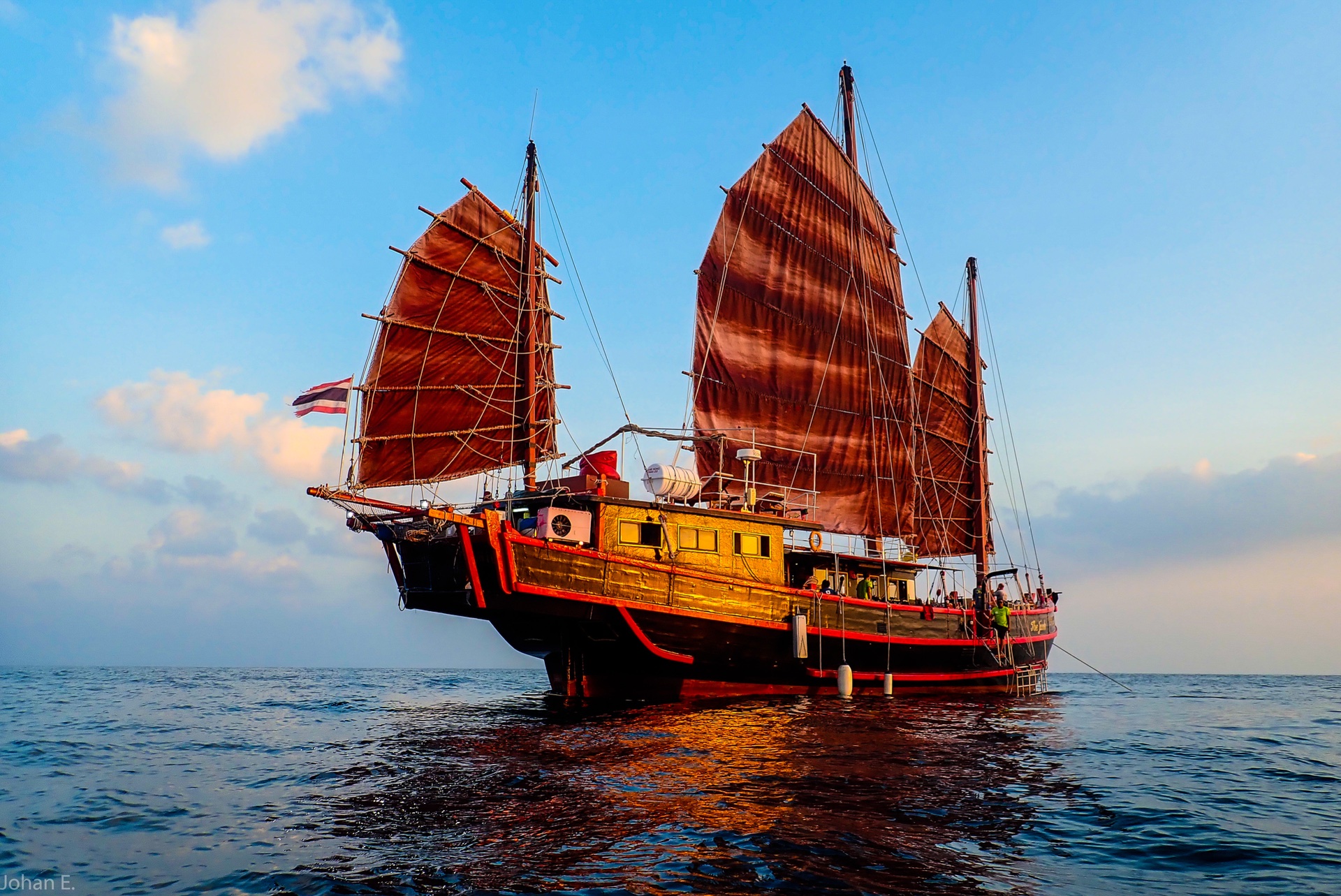
The Junk
Thailand
18 guests33 m
$163/day
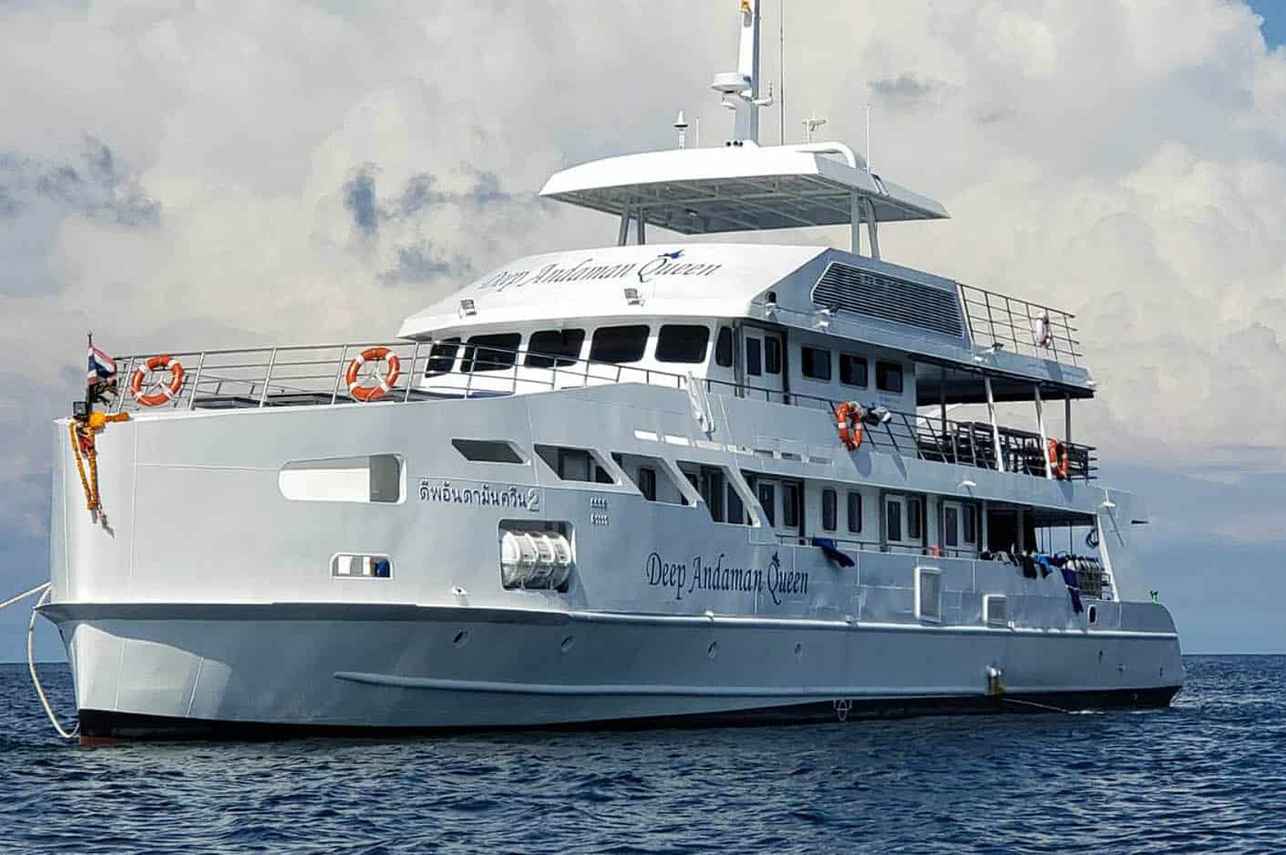
Deep Andaman Queen
Thailand
23 guests30.5 m
$194/day
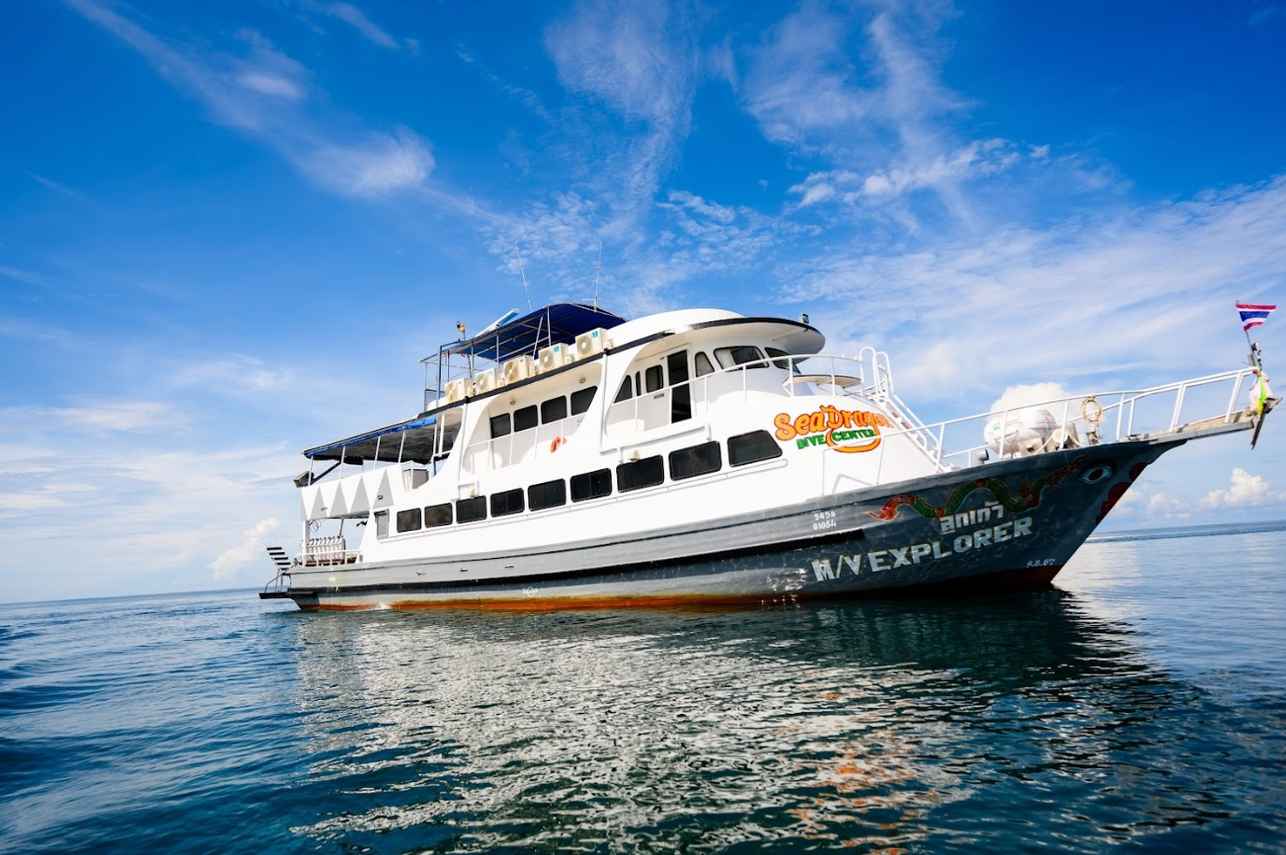
Explorer
Thailand
16 guests25 m
$150/day
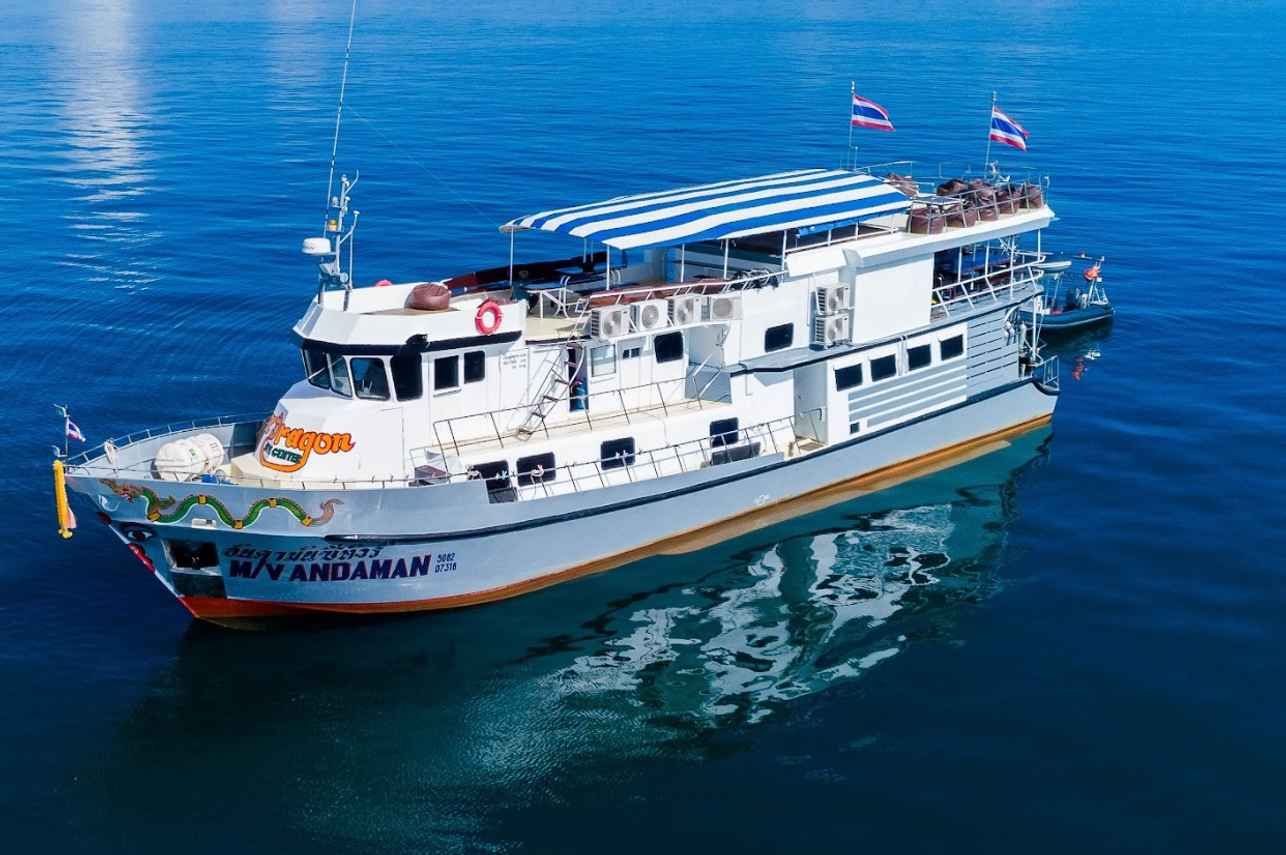
Andaman
Thailand
20 guests26 m
$108/day
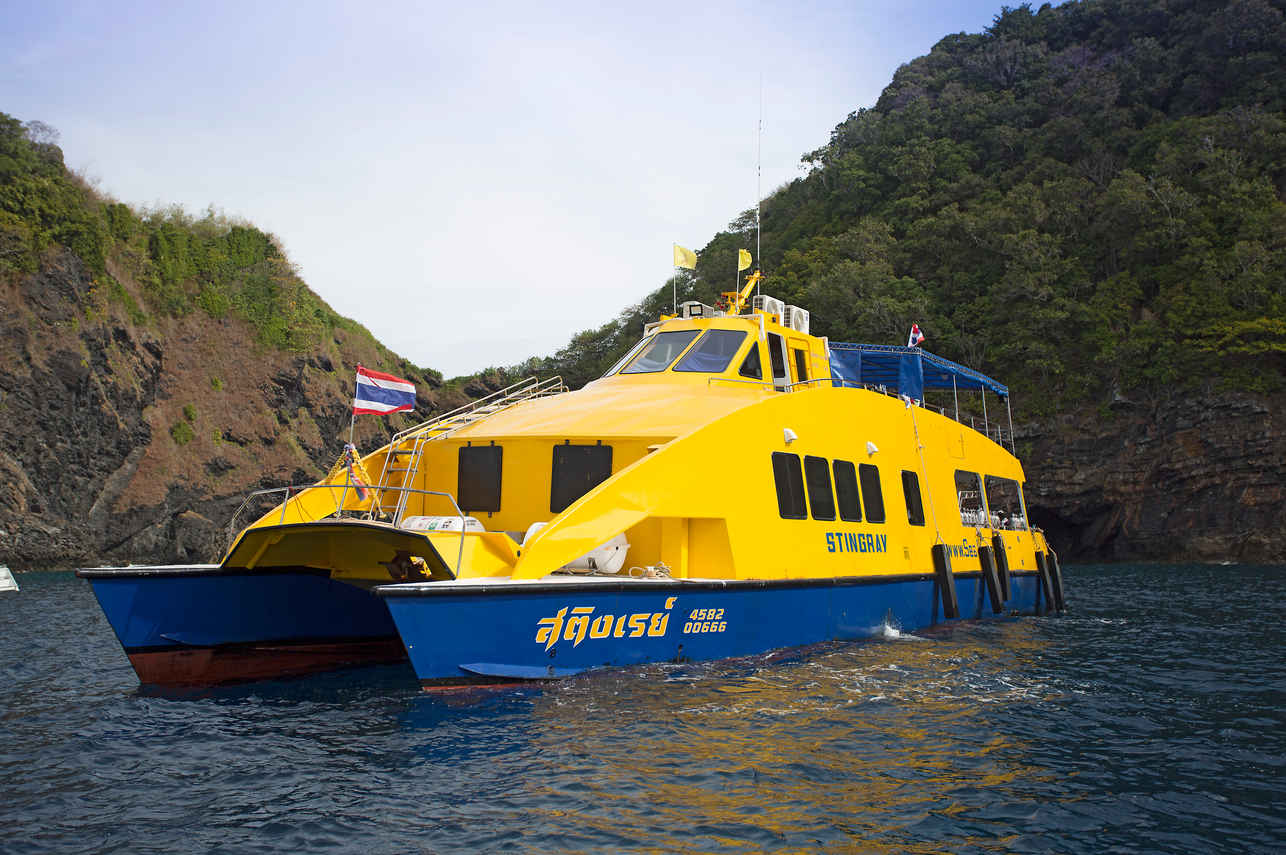
Stingray
Thailand
8 guests24 m
$245/day
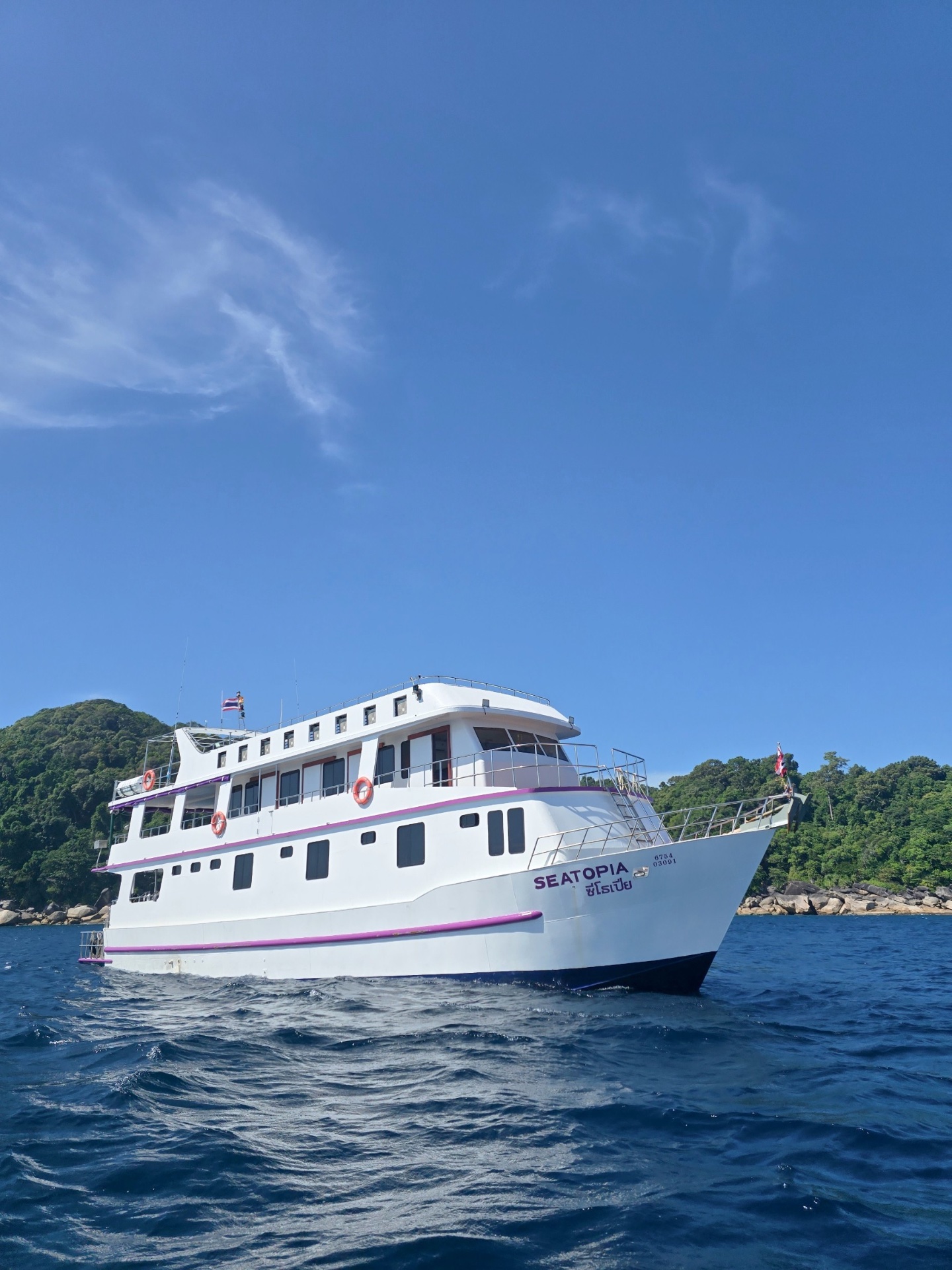
Seatopia
Thailand
24 guests24 m
Dive sites similar to Koh Tao — Green Rock
Same character, same waters — six more sites divers love for the exact same reasons.Compare seasons, access and liveaboard routes — then pick the site that fits your trip best.
Hin Raab is a prominent dive site located in the eastern Gulf of Thailand, near Koh Chang, offering an exceptional underwater experience with its rich coral biodiversity and thriving marine life.
- Suitable for
- Intermediate
- Current
- Moderate
- Access
- Dayboat
- Depth
- 5–22 m
- Theme
- Reef / Pinnacle
© Esri — Maxar, Earthstar, GIS
Christmas Point
Thailand
Christmas Point, located on Similan Island number 9 (Koh Ba-Ngu), stands out as one of the Similan Islands' most iconic dive sites.
- Suitable for
- Intermediate
- Current
- Strong
- Access
- Liveaboard or dayboat
- Depth
- 2–40 m
- Theme
- Pinnacle
© Esri — Maxar, Earthstar, GIS
Koh Tao — Twins
Thailand
Twins, a highly popular dive site near Koh Tao, Thailand, is renowned for its accessibility and rich marine life.
- Suitable for
- Beginner
- Current
- Mild
- Access
- Liveaboard or dayboat
- Depth
- 5–18 m
- Theme
- Pinnacle
© Esri — Maxar, Earthstar, GIS
Southwest Pinnacle
Thailand
Southwest Pinnacle, located approximately 45 minutes by boat from Koh Tao's Mae Haad pier, is a renowned dive site in the Gulf of Thailand.
- Suitable for
- Intermediate
- Current
- Strong
- Access
- Liveaboard or dayboat
- Depth
- 8–26 m
- Theme
- Pinnacle / Wall
© Esri — Maxar, Earthstar, GIS
Hin Luk Bat
Thailand
Hin Luk Bat is a renowned dive site located off the coast of Koh Chang, celebrated for its unique geological formations and abundant marine life.
- Suitable for
- Intermediate
- Current
- Mild
- Access
- Dayboat
- Depth
- 5–25 m
- Theme
- Reef / Pinnacle
© Esri — Maxar, Earthstar, GIS
Shark Point
Thailand
Shark Point, also known as Hin Musang, is a celebrated dive site located midway between Phuket and Phi Phi Islands in the Andaman Sea.
- Suitable for
- Intermediate
- Current
- Strong
- Access
- Liveaboard or dayboat
- Depth
- 5–24 m
- Theme
- Pinnacle