About Sail Rock
Sail Rock, known as Hin Bai in Thai, stands as the premier dive site in the Gulf of Thailand, located strategically between Koh Phangan and Koh Tao. This isolated pinnacle rises dramatically from the seafloor at 40 meters, piercing the surface by about 10 meters, creating a unique and self-contained ecosystem. Its position in a deep channel ensures a constant flow of nutrient-rich currents, making it a biological hotspot that attracts an incredible array of marine species. The rock's topography offers diverse habitats, from shallow shelves around 5-6 meters, perfect for juvenile fish and anemones, to vertical walls and deeper sandy slopes stretching beyond 30 meters. This varied depth profile supports a wide range of marine life, from vibrant coral formations and sponges to large pelagic predators. The site is particularly famous for its signature vertical swim-through, "The Chimney," which offers an exciting ascent from 18 meters to 6 meters, surrounded by schooling fish. Divers at Sail Rock can anticipate encountering massive schools of barracudas, trevallies, and fusiliers, which often form swirling tornadoes of silver. The site is also renowned for frequent whale shark sightings, especially during peak plankton blooms. The combination of its unique structure, strong currents, and abundant food sources makes Sail Rock an exhilarating dive destination for both experienced and advanced divers looking for dynamic underwater encounters. Access to Sail Rock is typically via boat trips, with shorter travel times from Koh Phangan and longer journeys from Koh Tao or Koh Samui. Despite its popularity, the sheer size and diversity of the site ensure that every dive offers new discoveries. The conditions here, ranging from mild to strong currents, offer an engaging challenge and a rewarding experience for those ready to explore this underwater marvel.
Highlights
Vertical pinnacle from 40m to surfaceThe Chimney swim-throughFrequent whale shark sightingsMassive schools of barracudasRich coral and sponge coverageIsolated biological hotspotBigeye trevally tornadoes
Season calendar
Best months to dive here
Jan
Feb
Mar
Apr
May
Jun
Jul
Aug
Sep
Oct
Nov
Dec
Excellent
Good
Dive site facts: Sail Rock
- Depth
- 5–40 m
- Current
- Mild to strong, variable
- Visibility
- 10–25 m
- Water temperature
- 27–30°C
- Entry
- Boat
- Level
- Advanced recommended, Open Water with experience
- Dive type
- Wall, pinnacle, pelagic
- Region / port
- Gulf of Thailand
- Coordinates
- 9.7234, 100.0567
Conditions & Currents
Sail Rock is situated in open water within a channel that generates consistent open-water currents, ranging from mild to strong depending on the day and specific location around the pinnacle. These currents are a primary reason for the site's rich marine life, pushing nutrients and plankton upwards. Divers should be prepared for variable current conditions, which can be particularly noticeable on different sides of the rock. Entry is always by boat, and negative entry might be necessary on days with stronger currents to quickly reach the shelter of the pinnacle. Exiting the dive will also require careful planning with your guide, often involving a surface swim or being picked up by the boat after deploying an SMB. Due to these dynamic conditions and the potential for strong currents, an Advanced Open Water certification is recommended, and divers should have prior experience managing cur
Marine life & sighting chances

Whale shark
March–September · occasional

Bigeye Trevally
common
Batfish
common
Malabar Grouper
commonHoneycomb Grouper
common
Moray eel
common
Snapper
common
Fusilier (Yellowtail)
common
Sea anemone
common
Anemonefish
common
Nudibranch
common
Wart slug
common
Scorpionfish
occasionalDive profile & how the dive runs
Your dive at Sail Rock typically begins with a descent along the main pinnacle, often entering on the sheltered side depending on the current. The dive plan usually involves circumnavigating the main rock, exploring its vibrant walls covered in soft corals and sponges. A highlight is the vertical swim-through known as "The Chimney," with an entrance at 18 meters and an exit at 6 meters, showcasing groupers and soldierfish within. After exiting, you can explore the shallower parts of the pinnacle, which are rich with anemones and schooling juveniles. Divers often venture to satellite pinnacles found to the south, east, and west of the main rock, which extend to depths of 30-40 meters, offering opportunities for deeper exploration and spotting larger pelagics in the blue. The turn point for your dive will be based on air consumption and no-decompression limits, allowing ample time to ascend slowly and complete a safety stop at 5 meters, often surrounded by a multitude of schooling fish near the main rock or an SMB deployment in open water if currents are strong.
Underwater photography
Sail Rock offers fantastic opportunities for both wide-angle and macro photography due to its diverse marine life. For wide-angle shots, a fisheye or wide lens is essential to capture the scale of the pinnacle, the massive schools of barracudas and trevallies, and any passing whale sharks. Pay attention to positioning yourself against the current to allow the fish schools to engulf you for dramatic shots. For "The Chimney" swim-through, a wide lens is also beneficial, and consider using artificial light to illuminate the interior and bring out the colors of the corals and crustaceans. For macro enthusiasts, explore the cracks and crevices of the rock walls for nudibranchs, wart slugs, shrimp, and camouflaged scorpionfish; a macro lens and strobes will be crucial here. Buoyancy control is paramount, especially within "The Chimney" and when currents are present, to avoid disturbing the delicate marine ecosystem and to maintain stable shots.
Combine with nearby dive sites
- Chumphon Pinnacle
Chumphon Pinnacle is a renowned deep dive site situated approximately 12 kilometers northwest of Koh Tao in the Gulf of Thailand.
- Shark Point
Shark Point is an exceptional dive site located within the highly protected Jardines de la Reina Marine Park off Cuba's southern coast.
- Koh Tao — Japanese Garden
Japanese Garden is Koh Tao's premier shallow reef dive site, located in a sheltered bay on the eastern side of Koh Nang Yuan island.
- Koh Tao — Twins
Twins, a highly popular dive site near Koh Tao, Thailand, is renowned for its accessibility and rich marine life.
- Koh Tao — Green Rock
Green Rock, situated off the west coast of Koh Tao near Koh Nang Yuan, is a unique dive site characterized by a striking cluster of granite…
Getting there & logistics
Sail Rock is most frequently accessed from Koh Phangan, which is the closest island, with boat trips typically lasting about an hour each way for a half-day excursion. From Koh Tao, it's a slightly longer journey of 1.5 to 2 hours, usually organized as a full-day, two-dive trip including lunch. Although Koh Samui is further, operators often use speedboats to make the travel time comparable to Koh Tao, though this tends to be the most expensive option. Most dive centers include all necessary fees in their package price. It is common for liveaboards and day trips from these islands to combine Sail Rock with other local dive sites, although its isolated nature often means it's the primary focus of a dedicated trip. There are no specific marine park fees for this site.
Safety & environment
Diving at Sail Rock requires careful attention to safety protocols due to potentially strong and variable currents. Always listen to your dive guide's briefing regarding current conditions and entry/exit procedures. Ensure you are comfortable with drift diving and maintaining excellent buoyancy control, especially if attempting "The Chimney" swim-through. Carrying an SMB (Surface Marker Buoy) is highly recommended for signaling the boat, particularly if you surface away from the main pinnacle. The nearest recompression chamber is located in Koh Samui, so evacuation in a dive emergency can be time-consuming. It is crucial to have comprehensive dive insurance that covers emergency medical treatment and evacuation. Always dive within your training and comfort limits, and communicate any concerns to your dive leader before and during the dive.
Who it suits — and who it doesn't
Suited for
- Experienced Open Water divers
- Advanced Open Water divers
- Divers seeking pelagic encounters
- Underwater photographers (wide-angle & macro)
- Divers comfortable with currents
Less suited for
- First-time divers
- Beginner Open Water divers without current experience
- Divers prone to seasickness on longer boat rides
- Those who prefer calm, current-free diving
- Divers uninterested in large marine life
FAQ
Sail Rock FAQ
What is 'The Chimney' at Sail Rock?
'The Chimney' is a unique vertical swim-through within the main pinnacle of Sail Rock. Divers can enter at a depth of 18 meters and ascend to exit at 6 meters. Inside, you'll find various marine life such as groupers and soldierfish, making it an exciting and memorable part of the dive.
Are whale shark sightings common at Sail Rock?
Sail Rock is renowned as one of the best places in the Gulf of Thailand for whale shark sightings, especially when plankton levels are high. While not guaranteed, encounters are frequent, particularly between March and September. Its isolated location and nutrient-rich currents attract these majestic creatures to the site.
What kind of currents can I expect at Sail Rock?
Currents at Sail Rock can vary from mild to strong, depending on the day and location around the pinnacle. The site's position in an open-water channel contributes to these dynamic conditions. Divers should be prepared for potential drift diving and excellent buoyancy control, and your dive guide will provide a briefing on the expected conditions.
What kind of marine life is most abundant at Sail Rock?
Sail Rock is famous for its massive schools of pelagic fish, including barracudas (Chevron and Pickhandle), bigeye trevallies, and fusiliers, which often create swirling formations. You can also expect to see malabar and honeycomb groupers, batfish, snappers, and moray eels, alongside a variety of macro life like nudibranchs and shrimp.
Which island is best to depart from for Sail Rock?
Koh Phangan is generally the most convenient departure point for Sail Rock due to its closer proximity, resulting in shorter boat travel times of about an hour. Koh Tao also offers many trips, though the journey is longer at 1.5 to 2 hours. While possible from Koh Samui, it's the furthest and typically the most expensive option.
Why dive Sail Rock from a liveaboard?
Sail Rock is one of Thailand's signature dive sites. A liveaboard sleeps you on the water and puts you in the water for three to four guided dives per day, including dawn and night dives that day-boat operators rarely offer. You skip the daily commute back to port and reach quieter, less-crowded sites in the same region on a single trip.
Below are the liveaboards that include Sail Rock on their Thailand itineraries.
Liveaboards diving Sail Rock
These liveaboards may visit Sail Rock on selected itineraries — the exact dive sites depend on departure, weather and conditions.
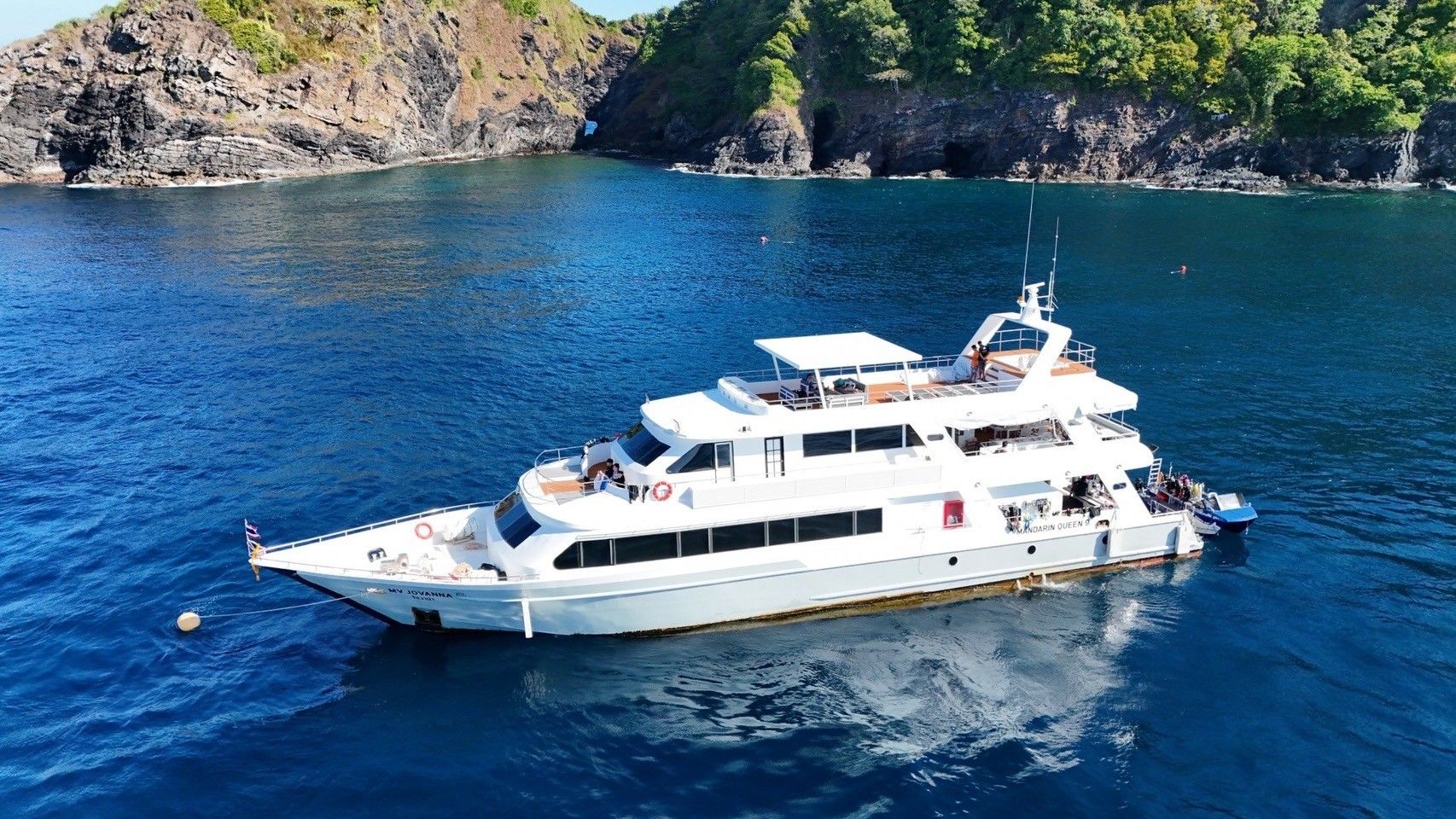
Mandarin Queen 9
Thailand
26 guests37.5 m
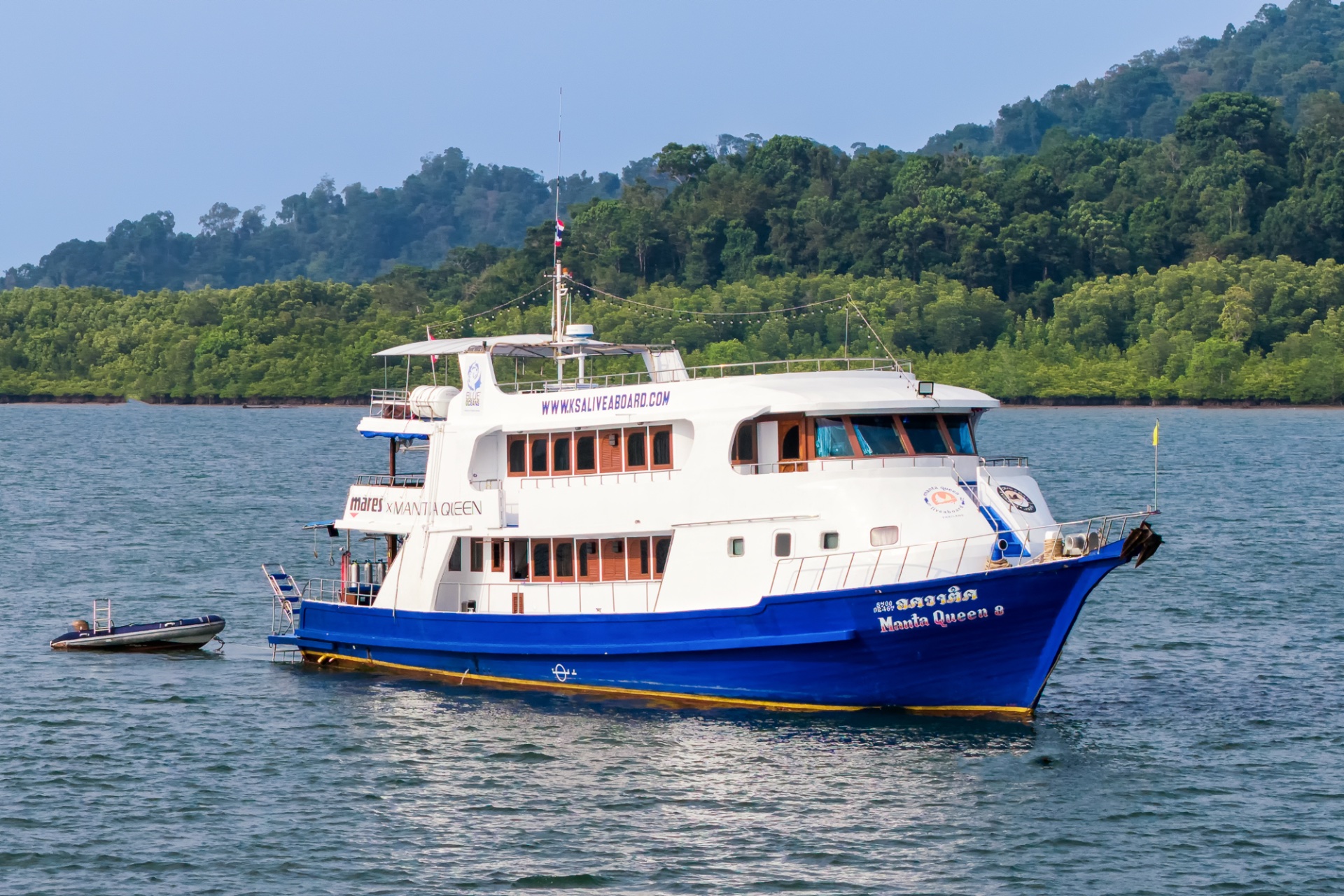
Manta Queen 8
Thailand
24 guests
$127/day
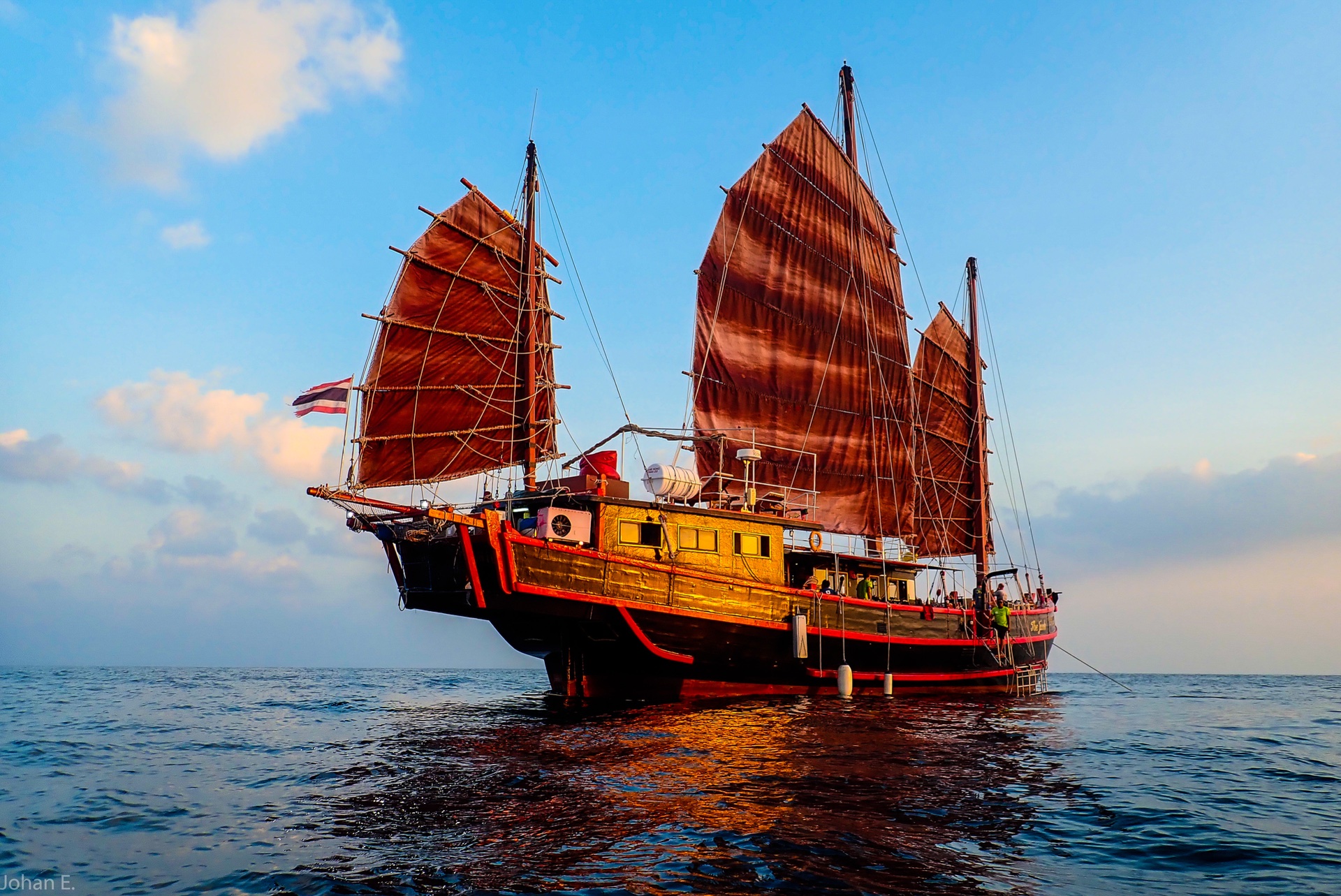
The Junk
Thailand
18 guests33 m
$163/day
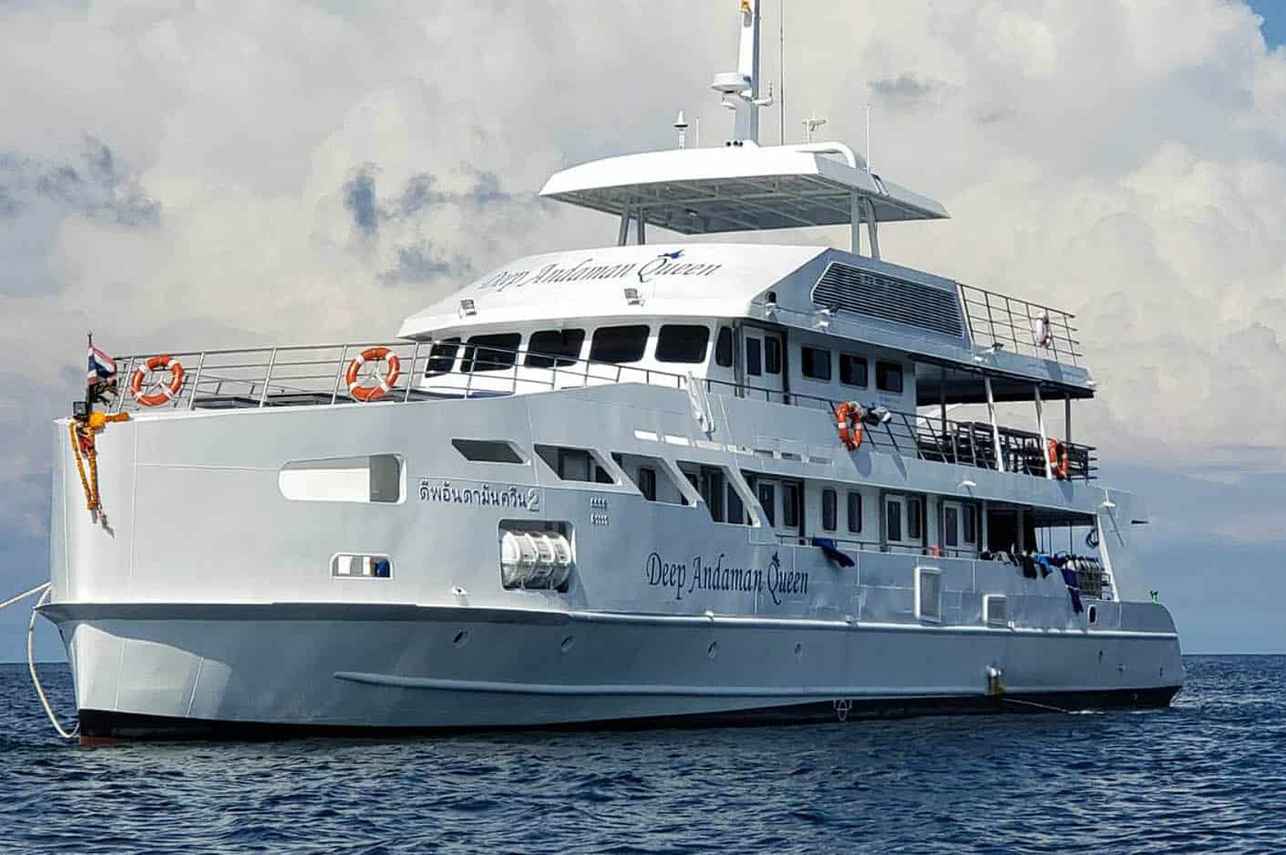
Deep Andaman Queen
Thailand
23 guests30.5 m
$194/day
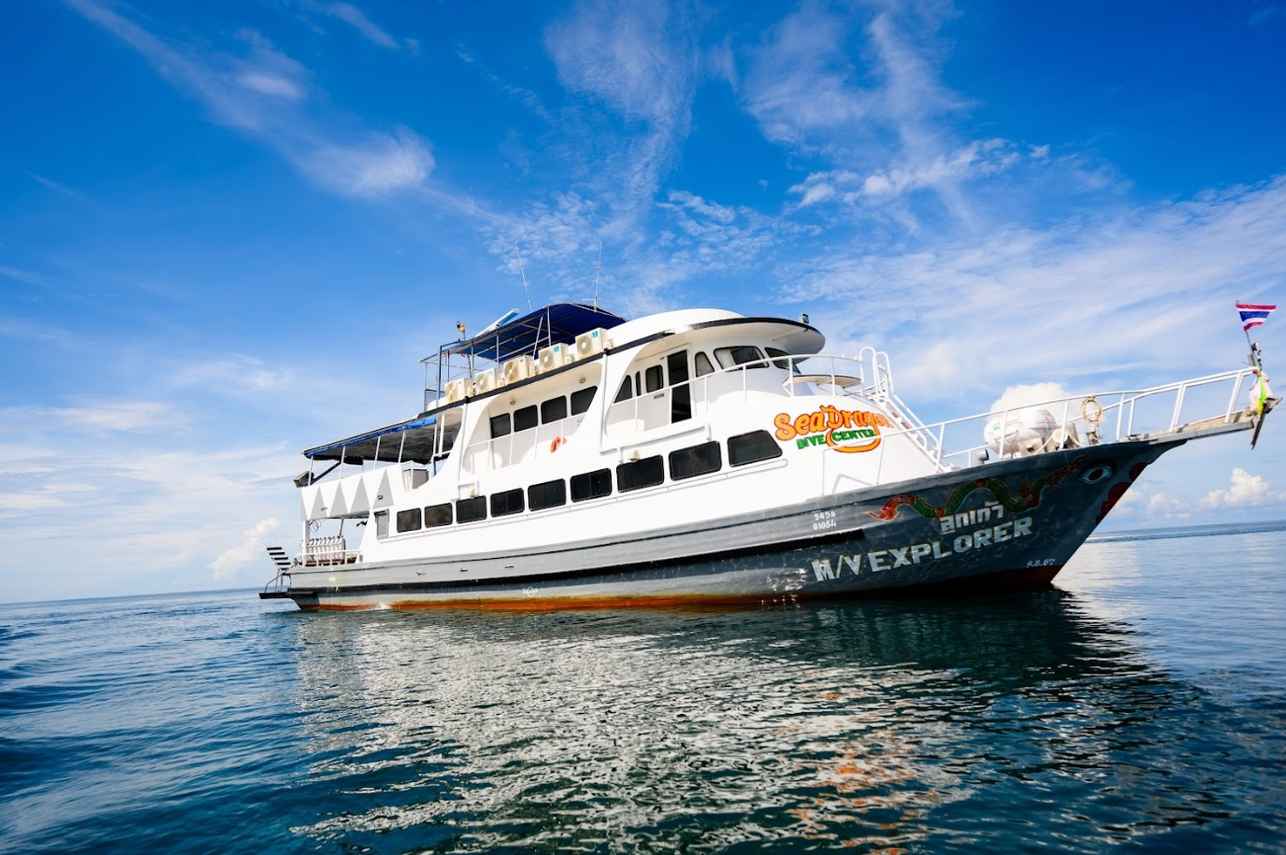
Explorer
Thailand
16 guests25 m
$150/day
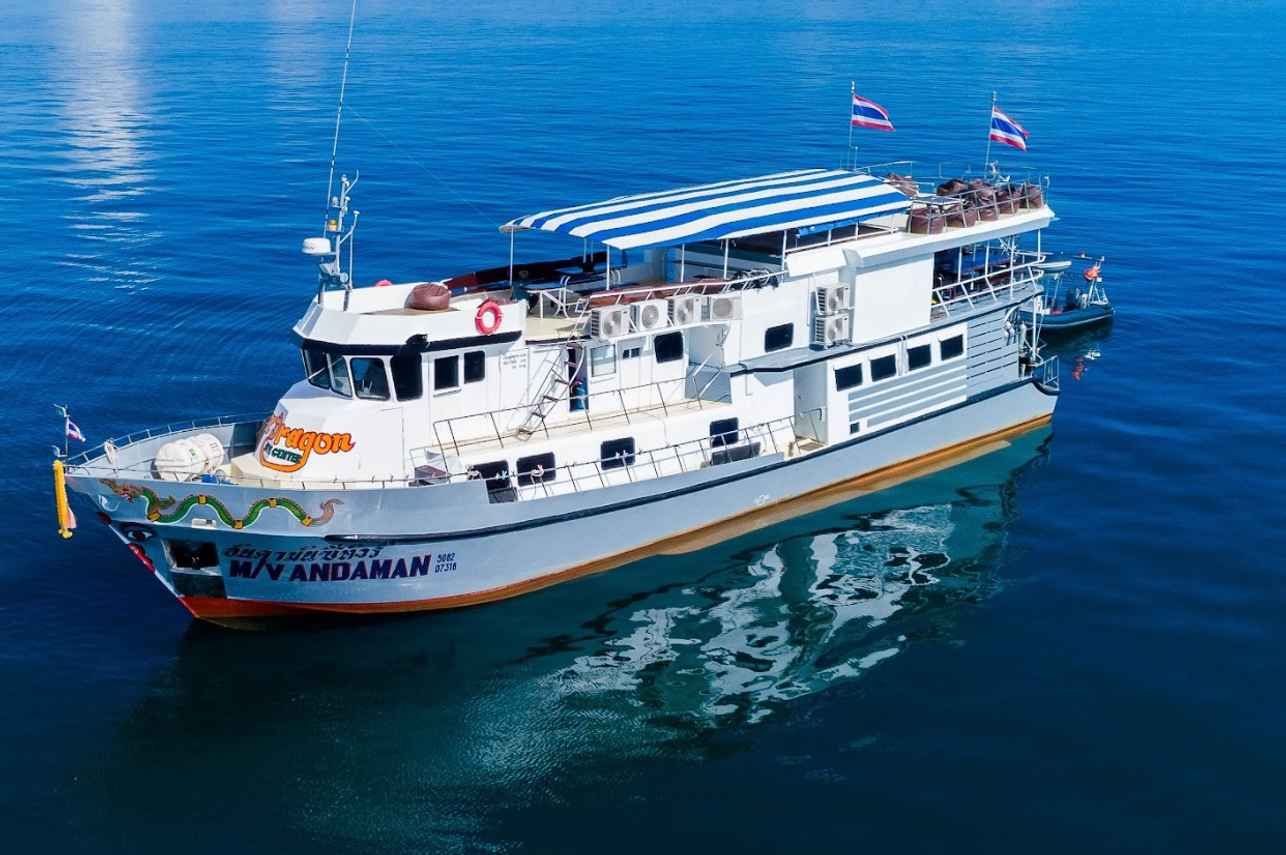
Andaman
Thailand
20 guests26 m
$108/day
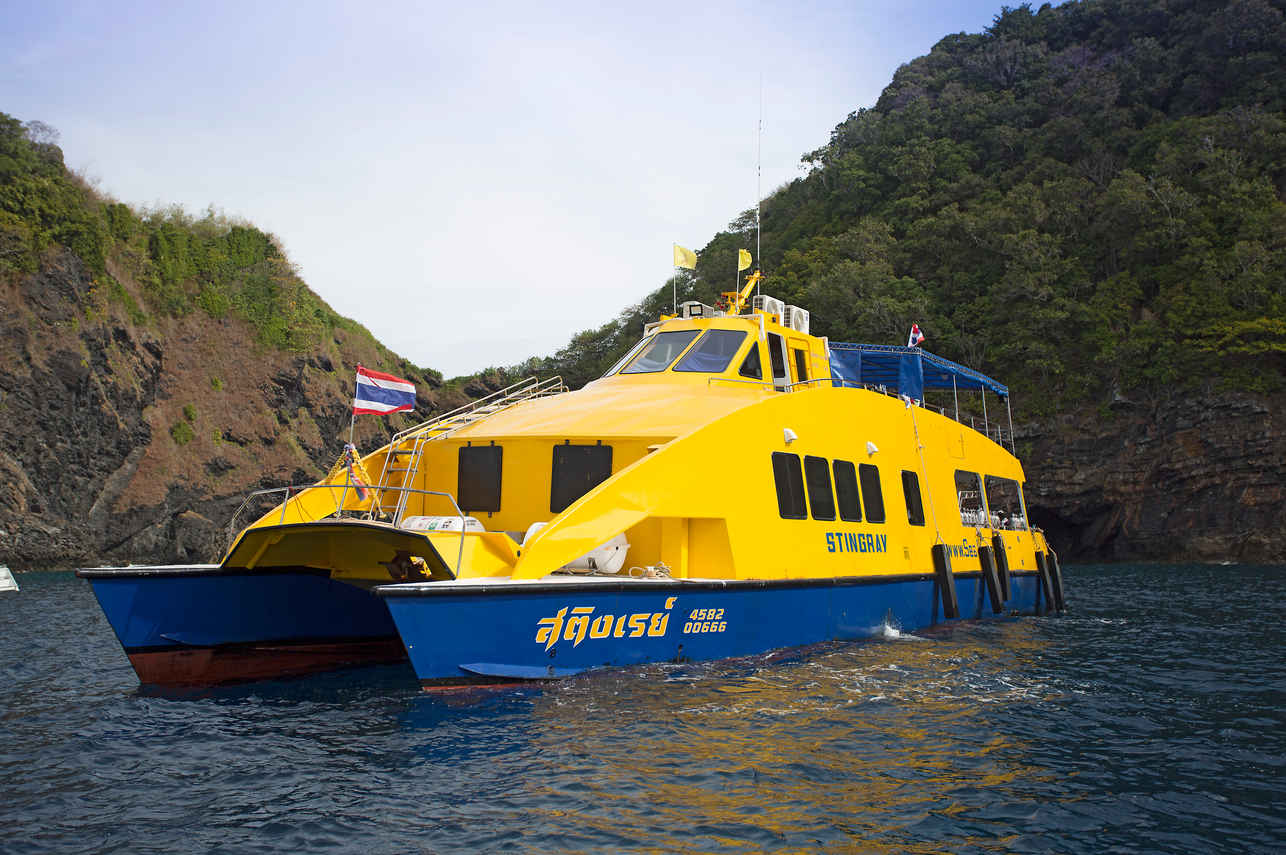
Stingray
Thailand
8 guests24 m
$245/day
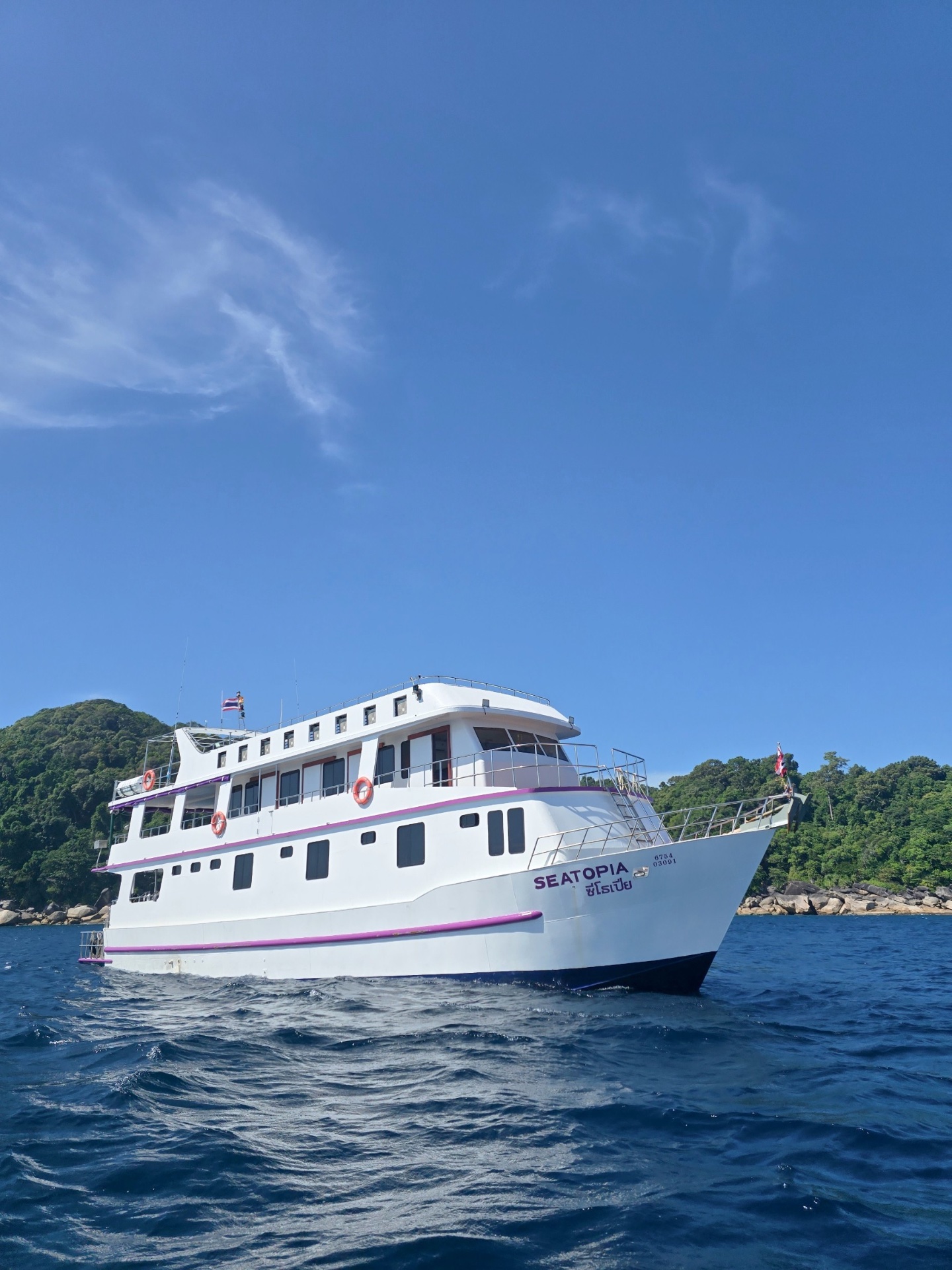
Seatopia
Thailand
24 guests24 m
Dive sites similar to Sail Rock
Same character, same waters — six more sites divers love for the exact same reasons.Compare seasons, access and liveaboard routes — then pick the site that fits your trip best.
Hin Raab is a prominent dive site located in the eastern Gulf of Thailand, near Koh Chang, offering an exceptional underwater experience with its rich coral biodiversity and thriving marine life.
- Suitable for
- Intermediate
- Current
- Moderate
- Access
- Dayboat
- Depth
- 5–22 m
- Theme
- Reef / Pinnacle
© Esri — Maxar, Earthstar, GIS
Christmas Point
Thailand
Christmas Point, located on Similan Island number 9 (Koh Ba-Ngu), stands out as one of the Similan Islands' most iconic dive sites.
- Suitable for
- Intermediate
- Current
- Strong
- Access
- Liveaboard or dayboat
- Depth
- 2–40 m
- Theme
- Pinnacle
© Esri — Maxar, Earthstar, GIS
Koh Haa — Lagoon
Thailand
Koh Haa Lagoon is a picturesque and protected dive site formed by islands #2, #3, and #4 of the Koh Haa archipelago, approximately 1.45 hours by boat from Koh Lanta.
- Suitable for
- Beginner
- Current
- Moderate
- Access
- Liveaboard or dayboat
- Depth
- 2–25 m
- Theme
- Reef / Wall
© Esri — Maxar, Earthstar, GIS
Koh Tao — Twins
Thailand
Twins, a highly popular dive site near Koh Tao, Thailand, is renowned for its accessibility and rich marine life.
- Suitable for
- Beginner
- Current
- Mild
- Access
- Liveaboard or dayboat
- Depth
- 5–18 m
- Theme
- Pinnacle
© Esri — Maxar, Earthstar, GIS
Southwest Pinnacle
Thailand
Southwest Pinnacle, located approximately 45 minutes by boat from Koh Tao's Mae Haad pier, is a renowned dive site in the Gulf of Thailand.
- Suitable for
- Intermediate
- Current
- Strong
- Access
- Liveaboard or dayboat
- Depth
- 8–26 m
- Theme
- Pinnacle / Wall
© Esri — Maxar, Earthstar, GIS
Koh Dok Mai
Thailand
Koh Dok Mai, meaning 'Flower Island,' is a distinctive limestone outcrop located in Thailand's Andaman Sea, between Phuket and Phi Phi Islands.
- Suitable for
- Intermediate
- Current
- Moderate
- Access
- Dayboat
- Depth
- 5–30 m
- Theme
- Wall / Drift