About Shark Point
Shark Point is an exceptional dive site located within the highly protected Jardines de la Reina Marine Park off Cuba's southern coast. This area is globally recognized as one of the Caribbean's most pristine and healthiest coral reef systems, largely due to minimal human impact and beneficial cold-water upwellings that deliver essential nutrients. The site itself features dramatic wall formations, intricate coral canyons, and mysterious caves, offering a diverse and captivating underwater topography. Depths here range from 10 to 30 meters, accommodating intermediate divers with options for shallower reef exploration and deeper wall dives. The well-preserved environment supports a rich array of marine species, including numerous fish populations and a significant presence of sharks, making it a key destination for wildlife enthusiasts. Divers can anticipate encountering flourishing coral reefs adorned with colorful soft corals, sponges, and sea fans. The thriving smaller fish, such as jacks and tarpons, attract larger predators like silky sharks and various reef sharks, providing thrilling encounters. Visibility is consistently excellent, especially during the dry season, which greatly enhances both underwater photography and the overall diving experience. Access to Shark Point is exclusively via liveaboard, ensuring its remote and protected status. The strict limitation on annual visitor numbers helps maintain the ecological integrity of this unique ecosystem. Each dive at Shark Point offers a rare opportunity to witness a truly vibrant Caribbean reef, largely untouched by human activity, making every descent an extraordinary natural encounter.
Highlights
Abundant shark encountersHealthy coral reef systemDramatic wall formationsPristine marine environmentExceptional underwater visibilityIntricate coral canyons
Season calendar
Best months to dive here
Jan
Feb
Mar
Apr
May
Jun
Jul
Aug
Sep
Oct
Nov
Dec
Excellent
Good
Dive site facts: Shark Point
- Depth
- 10–30 m
- Typical dive
- 12–25 m, 50–60 min
- Current
- Mild to moderate
- Visibility
- 20–40 m
- Water temperature
- 25–30°C
- Entry
- Liveaboard tender
- Level
- Intermediate
- Dive type
- Wall, reef, pelagic
- Night dive
- Possible in sheltered areas
- Region / port
- Jardines de la Reina, Cuba
- Coordinates
- 20.72, -78.805
Conditions & Currents
Currents at Shark Point are generally manageable, making it suitable for intermediate divers. However, conditions can vary, and divers should be prepared for potential drift dives, especially along the walls. Visibility remains consistently high, often exceeding 30 meters, contributing to an enhanced sense of current impact. Entry and exit are typically conducted via tender from a liveaboard, with dive guides providing briefings on prevailing currents and appropriate techniques. Although thermoclines are not frequently noted as a major factor, water temperatures fluctuate seasonally, which can influence diver comfort and buoyancy control. Always pay close attention to your dive leader's instructions regarding current strength and direction to ensure a safe and enjoyable dive.
Marine life & sighting chances

Silky Shark
Year-round · common
Caribbean Reef Shark
Year-round · common
Tarpon
Year-round · common
Jack
Year-round · common
Stingray
Year-round · occasional
Grouper
Year-round · common
Angelfish
Year-round · common
Parrotfish
Year-round · common
Black Coral
Year-round · common
Giant Gorgonian
Year-round · common
Sponge
Year-round · common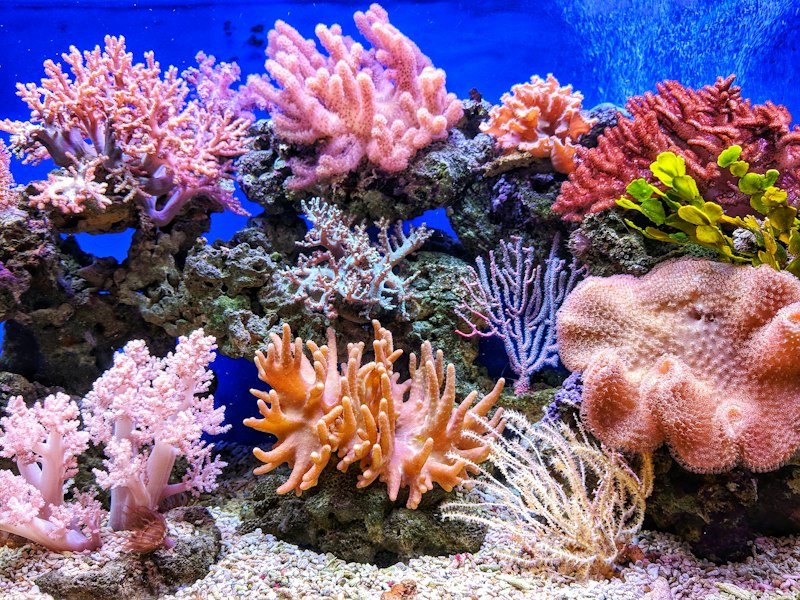
Soft Coral
Year-round · commonDive profile & how the dive runs
Your dive at Shark Point typically begins with a tender drop-off directly onto the reef wall, allowing for a negative entry to quickly descend and minimize surface current exposure. The initial descent takes you to approximately 18-20 meters to explore the vibrant coral formations and look for schooling fish. You will then drift along the dramatic wall, maintaining a depth of 15-25 meters, where pelagic encounters are common. Your guide will lead you through canyons and past small caves, always keeping an eye out for sharks patrolling the deeper blue. The dive progresses along the wall, gradually ascending to shallower sections, around 10-12 meters, to extend bottom time and enjoy the colorful reef top. The turn point is determined by air consumption and current, usually around the 30-minute mark. Your safety stop will be conducted at 5 meters, often utilizing a secure line deployed from the tender or by hovering over a shallow coral garden, before surfacing near the liveaboard or an awaiting tender.
Underwater photography
Shark Point is a wide-angle photographer's paradise, with expansive reef walls, schooling fish, and frequent shark encounters. A wide-angle rectilinear lens is ideal for capturing the grandeur of the topography and the pelagic action. When approaching sharks, move slowly and avoid sudden movements to prevent startling them. Use dual strobes to evenly illuminate large reef scenes and bring out the vibrant colors of the healthy corals and sponges. For macro opportunities, particularly for nudibranchs or small reef inhabitants on the wall, switch to a macro lens or use a diopter, paying close attention to buoyancy to avoid damaging the delicate ecosystems. Given the excellent visibility, natural light photography can also be very rewarding in the shallower sections.
Combine with nearby dive sites
- Farallón
A stunning wall dive with impressive overhangs and swim-throughs, often featuring large schools of tarpon and snapper.
- Black Coral Wall
Known for healthy, colorful coral formations, including giant gorgonians and extensive black coral colonies, with frequent shark sightings.
- Cayo Anclitas
Features shallow coral gardens ideal for night diving, where divers can encounter octopus, lobster, and nurse sharks.
Getting there & logistics
Access to Shark Point is exclusively via liveaboard, typically departing from Jucaro, Cuba, after travelers have arranged transport from Havana. International flights arrive at José Martí International Airport (HAV) in Havana. Most liveaboard trips to Jardines de la Reina range from 7 to 10 days. There are strict conservation policies in place, and visitor numbers are limited, making advance booking essential. You will need to obtain Cuban Convertible Pesos (CUC) upon arrival, with Euros, Canadian Dollars, or Pounds sterling recommended for exchange. Park fees are usually included in the liveaboard package, but confirm this beforehand.
Safety & environment
Diving at Shark Point requires adherence to standard safety protocols and a keen awareness of your surroundings due to the presence of larger marine life. Always dive with a reputable liveaboard operator and follow your dive guide's instructions. Ensure your dive insurance covers emergency evacuation and recompression, as the nearest recompression chamber is located in Havana, a significant distance from Jardines de la Reina. Evacuation procedures typically involve transfer by the liveaboard to the nearest medical facility, followed by air transport if necessary. Maintain excellent buoyancy control to protect the pristine coral formations and avoid disturbing marine life. Stay within your certification limits and monitor your air consumption closely, especially on deeper wall dives. Always carry a surface marker buoy (SMB) for safety in case of separation from the group.
Who it suits — and who it doesn't
Suited for
- Intermediate divers seeking pelagic encounters
- Photographers interested in wide-angle reef and shark shots
- Divers passionate about pristine marine ecosystems
- Liveaboard enthusiasts
- Divers comfortable with wall and drift diving
Less suited for
- Beginner divers without current experience
- Divers uncomfortable with deep blue encounters
- Those seeking shore-based diving options
- Travelers on a tight budget
- Divers with limited physical mobility for liveaboard transfers
FAQ
Shark Point FAQ
What kind of sharks can I expect to see at Shark Point?
Shark Point lives up to its name, offering frequent encounters with various species. You can commonly expect to see silky sharks and Caribbean reef sharks patrolling the walls and deeper areas. Occasionally, other reef shark species may also be sighted, making each dive an exciting possibility for pelagic encounters.
Is Shark Point suitable for less experienced divers?
Shark Point is generally recommended for intermediate divers due to its depth range of 10-30 meters and the potential for moderate currents. While conditions can be calm, some experience with wall and drift diving is beneficial. Beginners should consult with their dive operator to ensure their skill level is appropriate for the site's conditions.
How is the coral health at Shark Point?
The coral health at Shark Point is exceptional, benefiting from its location within the highly protected Jardines de la Reina Marine Park. Divers will find thriving soft corals, sponges, and sea fans in a variety of vibrant colors. The pristine nature of the reef is a testament to the stringent conservation efforts in the area.
What is the best way to access Shark Point?
Shark Point, like other prime sites in Jardines de la Reina, is exclusively accessible via liveaboard. These multi-day trips typically depart from Jucaro, Cuba, providing the only means to reach this remote and protected marine reserve. This controlled access helps maintain the ecological integrity of the dive site.
What kind of visibility can I expect when diving Shark Point?
Visibility at Shark Point is consistently excellent, often ranging from 20 to 40 meters, particularly during the dry season from October to May. This crystal-clear water enhances the diving experience, allowing for expansive views of the reef, marine life, and underwater topography, making it ideal for photography.
Are there any specific conservation rules I need to be aware of?
Yes, as part of the Jardines de la Reina Marine Park, strict conservation rules apply to protect its pristine ecosystem. Divers must maintain excellent buoyancy control, avoid touching any marine life or corals, and refrain from collecting souvenirs. Fishing is strictly prohibited, and respecting all local regulations is paramount to preserving this unique environment.
Why dive Shark Point from a liveaboard?
Shark Point is one of Cuba's signature dive sites. A liveaboard sleeps you on the water and puts you in the water for three to four guided dives per day, including dawn and night dives that day-boat operators rarely offer. You skip the daily commute back to port and reach quieter, less-crowded sites in the same region on a single trip.
Below are the liveaboards that include Shark Point on their Cuba itineraries.
Liveaboards diving Shark Point
These liveaboards may visit Shark Point on selected itineraries — the exact dive sites depend on departure, weather and conditions.
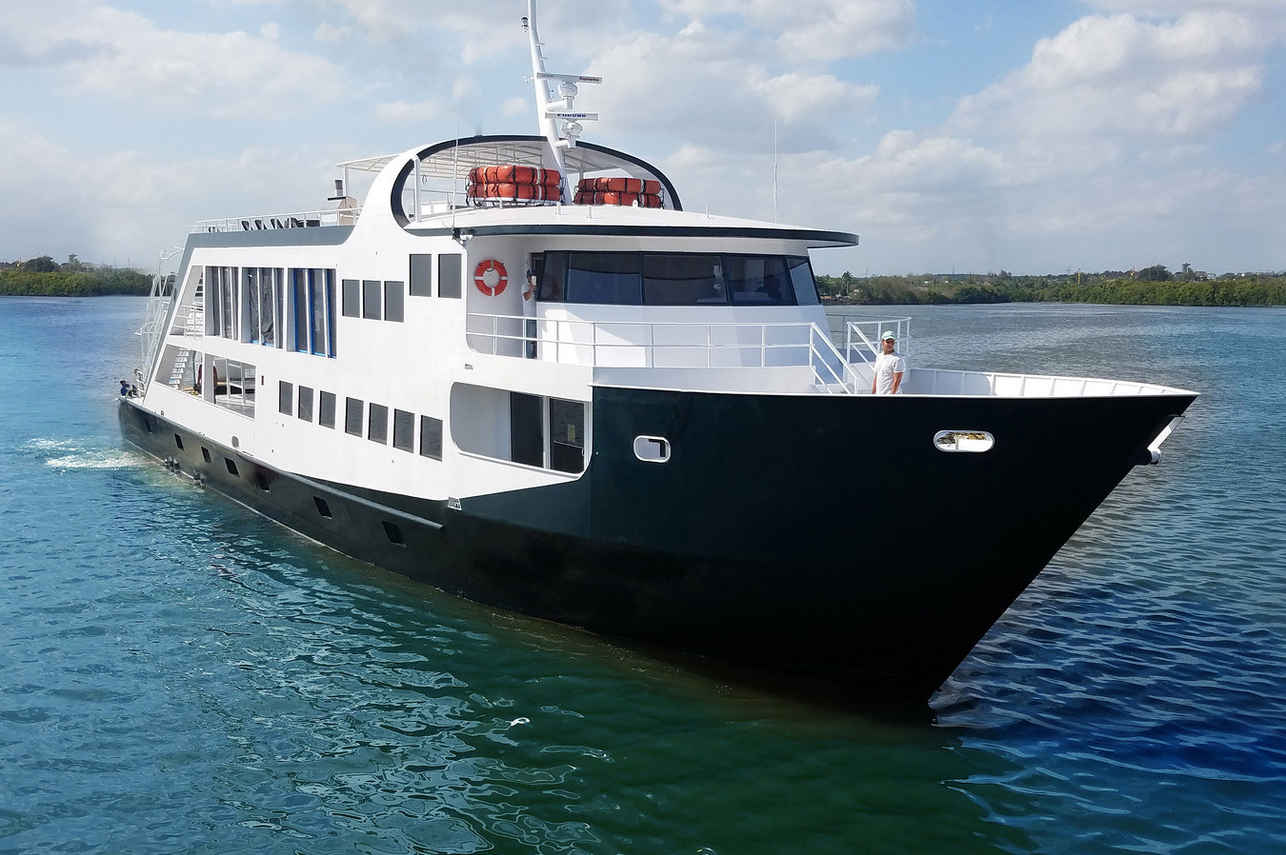
Jardines Avalon Fleet
Cuba
20 guests35.05 m
$494/day
Dive sites similar to Shark Point
Same character, same waters — six more sites divers love for the exact same reasons.Compare seasons, access and liveaboard routes — then pick the site that fits your trip best.
© Esri — Maxar, Earthstar, GIS
El Almirante
Cuba
El Almirante is an advanced dive site located off the shores of Maria la Gorda, on Cuba's Guanahacabibes Peninsula.
- Suitable for
- Advanced
- Current
- Moderate
- Access
- Dayboat
- Depth
- 27–30 m
- Theme
- Wall / Reef
La Patana is a prominent dive site within the protected marine park of Jardines de la Reina, a vast archipelago stretching 150 kilometers off Cuba's southern coast.
- Suitable for
- Intermediate
- Current
- Mild
- Access
- Liveaboard only
- Depth
- 15–30 m
- Theme
- Reef / Wall
© Esri — Maxar, Earthstar, GIS
Black Coral Wall
Cuba
Black Coral I and II are prominent dive sites within Cuba's renowned Jardines de la Reina marine reserve, an area celebrated for its healthy reefs and crystal-clear waters.
- Suitable for
- Advanced
- Current
- Mild
- Access
- Liveaboard or dayboat
- Depth
- 15–40 m
- Theme
- Wall
La Corona is a captivating dive site situated within the expansive 35-kilometer barrier reef off Playa Santa Lucía in Cuba's Camagüey province.
- Suitable for
- Beginner
- Current
- Mild
- Access
- Dayboat
- Depth
- 5–40 m
- Theme
- Reef / Wall
© Esri — Maxar, Earthstar, GIS
Sueño de Pescador, meaning 'Fisherman's Dream', is an advanced dive site situated within Coiba National Park in Panama.
- Suitable for
- Advanced
- Current
- Strong
- Access
- Liveaboard only
- Depth
- ≤ 42 m
- Theme
- Reef / Wall
© Esri — Maxar, Earthstar, GIS
Danger Point
Cuba
Danger Point is a notable location within the Gansbaai region of South Africa, characterized by its rugged coastline and the perilous reef system lying beneath the ocean's surface.
- Suitable for
- Intermediate
- Current
- Mild
- Access
- Dayboat
- Depth
- 5–30 m
- Theme
- Reef / Wall