About Farallón
Farallón is a notable dive site renowned for its distinctive rocky topography and abundant marine life. Located in the Costa Cálida region, it stands out for its dramatic underwater structures, including edges, cracks, and overhangs that provide shelter for various species. While offering an adventurous feel compared to shallower areas, it remains accessible for guided dives under suitable conditions. The dive site spans a depth range of 8 to 25 meters, accommodating divers from Open Water level and above, depending on the planned route and prevailing conditions. Visibility can range from 8 to 20 meters, influenced by the sea state and current. The bottom composition is primarily rocky reef, interspersed with walls and occasional sand patches, creating a varied environment to explore. Conditions are crucial for planning dives at Farallón, with calmer days providing excellent visibility and optimal marine life encounters. The site is particularly favored for guided boat dives, where local expertise ensures the best route is chosen based on diver certification and daily conditions. This careful approach maximizes the enjoyment and safety of the dive, allowing divers to fully appreciate the unique underwater landscape and its inhabitants. While not specifically located in Cuba, the Farallón described here offers a distinct Mediterranean diving experience, characterized by its structural complexity and the typical array of marine life found in that region. It caters to those seeking an engaging reef dive with opportunities to observe common Mediterranean species in a dynamic setting.
Highlights
Dramatic rocky formationsUnderwater cracks and overhangsLively Mediterranean ecosystemGuided boat divesExcellent visibility on calm daysVaried bottom topography
Best Season
The best time to dive Farallón is during calmer conditions, which allow for excellent visibility and a full appreciation of the site's unique structures. While specific months are not detailed, generally stable weather periods would be ideal.
Dive site facts: Farallón
- Depth
- 8–25 m
- Current
- Mild to moderate
- Visibility
- 8–20 m
- Entry
- Boat
- Level
- Open Water and above
- Dive type
- Rocky reef, marine life
- Region / port
- Costa Cálida
- Coordinates
- 20.7700° N, 78.8850° W
Conditions & Currents
Farallón experiences mild to moderate currents, which are highly dependent on the daily conditions. Dive planning takes these currents into account, with guides selecting routes that ensure diver safety and maximize enjoyment. On days with stronger currents, alternative entry or exit points may be utilized, or the dive plan adjusted to drift with the flow. Visibility at the site can range from 8 to 20 meters, often improving significantly on calmer days when sediment is less disturbed. Divers should be prepared for varying conditions and rely on the local dive center's assessment for the most suitable dive plan for their certification level.
Marine life & sighting chances


Dive profile & how the dive runs
Dives at Farallón typically begin with a boat entry, allowing direct access to the rocky reef. The route is flexible and determined by the guide based on daily conditions and diver experience, often exploring the various rocky formations, overhangs, and cracks. Divers generally progress through the 8-25 meter depth range, focusing on areas known for marine life aggregations. The turn point is usually dictated by air consumption and bottom time, with the ascent initiated gradually. Safety stops are performed in the shallower sections of the reef, allowing for final observations of the vibrant Mediterranean ecosystem before surfacing to the dive boat.
Underwater photography
Farallón's dramatic rocky structures and vibrant Mediterranean reef life offer excellent photographic opportunities. Wide-angle lenses are ideal for capturing the expansive rock formations and the interplay of light and shadow in the clear waters, especially on days with good visibility. For macro enthusiasts, the cracks and overhangs are rich with smaller subjects like octopus, moray eels, and various invertebrates, benefiting from a macro lens and external strobes to highlight details and true colors. Buoyancy control is paramount to avoid disturbing delicate marine life and stirring up sediment. Patience and a keen eye will reward photographers with captivating images of this dynamic underwater landscape.
Getting there & logistics
Farallón is accessed via boat dives, typically organized by local dive centers in the Costa Cálida region. Divers usually depart from nearby ports, with Los Alcázares being a common point of origin for guided trips. Specific trip durations depend on the dive center's itinerary, but most boat dives involve a morning or afternoon excursion. There are no explicit permits or park fees mentioned for this particular site, indicating a straightforward diving experience once booked through a local operator. Travel to the Costa Cálida region would involve flying into a regional airport and then arranging ground transportation to the dive center's location.
Safety & environment
Diving at Farallón requires adherence to standard dive safety protocols and an awareness of the site's characteristics. All guided dives are conducted with SSI guides who assess conditions and plan routes appropriate for the group's certification level. While no specific hyperbaric chamber location is detailed for the immediate vicinity, divers should always carry comprehensive dive insurance that covers medical emergencies and evacuation. Site-specific hazards primarily involve potential currents, which are managed by experienced guides. Divers are advised to maintain good buoyancy control to navigate the rocky formations safely and protect the marine environment.
Who it suits — and who it doesn't
Suited for
- Open Water certified divers (with guide)
- Divers seeking dramatic rocky topography
- Marine life observers
- Underwater photographers
- Divers comfortable with mild to moderate currents
Less suited for
- Beginners without adequate supervision
- Divers expecting large pelagic encounters
- Those who prefer purely sandy bottom dives
FAQ
Farallón FAQ
What kind of marine life can I expect to see at Farallón?
At Farallón, you can commonly encounter a variety of Mediterranean reef life. This includes octopus, moray eels, wrasse, and sea bream. Occasional sightings of cuttlefish and spider crabs also add to the diversity of the site's inhabitants.
What are the typical diving conditions at Farallón?
Farallón offers visibility ranging from 8 to 20 meters, with the clearest conditions found on calmer days. Currents are generally mild to moderate, but can vary, so dive plans are adjusted daily by experienced guides to ensure safety and enjoyment for all divers.
Is Farallón suitable for beginner divers?
Farallón is accessible to Open Water certified divers and above, especially when diving with a knowledgeable guide. The guide will tailor the dive route to match the group's experience level and the day's conditions, ensuring a safe and rewarding experience for newer divers.
How deep are the dives at Farallón?
The dive site at Farallón spans a depth range of 8 to 25 meters. This allows for varied exploration of its rocky reefs and structures, accommodating different certification levels and interests within the dive group.
How do I get to the Farallón dive site?
Access to Farallón is exclusively by boat. Dive trips are typically arranged through local dive centers in the Costa Cálida region, such as those operating from Los Alcázares, which will transport divers directly to the site.
Why dive Farallón from a liveaboard?
Farallón is one of Cuba's signature dive sites. A liveaboard sleeps you on the water and puts you in the water for three to four guided dives per day, including dawn and night dives that day-boat operators rarely offer. You skip the daily commute back to port and reach quieter, less-crowded sites in the same region on a single trip.
Below are the liveaboards that include Farallón on their Cuba itineraries.
Liveaboards diving Farallón
These liveaboards may visit Farallón on selected itineraries — the exact dive sites depend on departure, weather and conditions.
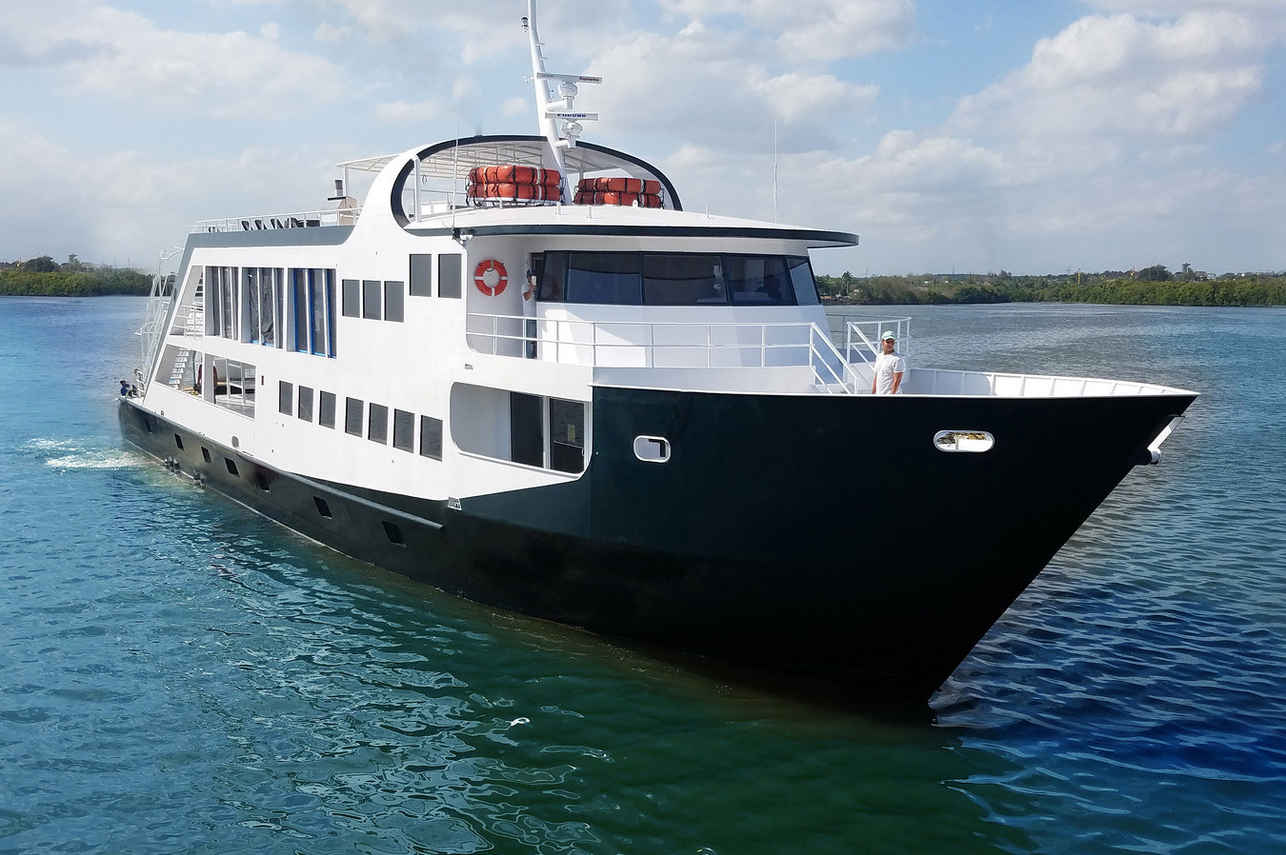
Jardines Avalon Fleet
Cuba
20 guests35.05 m
$494/day
Dive sites similar to Farallón
Same character, same waters — six more sites divers love for the exact same reasons.Compare seasons, access and liveaboard routes — then pick the site that fits your trip best.
© Esri — Maxar, Earthstar, GIS
El Almirante
Cuba
El Almirante is an advanced dive site located off the shores of Maria la Gorda, on Cuba's Guanahacabibes Peninsula.
- Suitable for
- Advanced
- Current
- Moderate
- Access
- Dayboat
- Depth
- 27–30 m
- Theme
- Wall / Reef
La Patana is a prominent dive site within the protected marine park of Jardines de la Reina, a vast archipelago stretching 150 kilometers off Cuba's southern coast.
- Suitable for
- Intermediate
- Current
- Mild
- Access
- Liveaboard only
- Depth
- 15–30 m
- Theme
- Reef / Wall
© Esri — Maxar, Earthstar, GIS
Black Coral Wall
Cuba
Black Coral I and II are prominent dive sites within Cuba's renowned Jardines de la Reina marine reserve, an area celebrated for its healthy reefs and crystal-clear waters.
- Suitable for
- Advanced
- Current
- Mild
- Access
- Liveaboard or dayboat
- Depth
- 15–40 m
- Theme
- Wall
La Corona is a captivating dive site situated within the expansive 35-kilometer barrier reef off Playa Santa Lucía in Cuba's Camagüey province.
- Suitable for
- Beginner
- Current
- Mild
- Access
- Dayboat
- Depth
- 5–40 m
- Theme
- Reef / Wall
© Esri — Maxar, Earthstar, GIS
Sueño de Pescador, meaning 'Fisherman's Dream', is an advanced dive site situated within Coiba National Park in Panama.
- Suitable for
- Advanced
- Current
- Strong
- Access
- Liveaboard only
- Depth
- ≤ 42 m
- Theme
- Reef / Wall
© Esri — Maxar, Earthstar, GIS
Danger Point
Cuba
Danger Point is a notable location within the Gansbaai region of South Africa, characterized by its rugged coastline and the perilous reef system lying beneath the ocean's surface.
- Suitable for
- Intermediate
- Current
- Mild
- Access
- Dayboat
- Depth
- 5–30 m
- Theme
- Reef / Wall