About Danger Point
Danger Point is a notable location within the Gansbaai region of South Africa, characterized by its rugged coastline and the perilous reef system lying beneath the ocean's surface. Situated 162 kilometers southeast of Cape Town, this area is part of a larger ecosystem renowned for its abundant marine life and, historically, its treacherous waters. The geological makeup of the seabed contributes to strong currents and wave action, which have led to numerous shipwrecks over centuries, making it an area of significant historical and ecological interest. The dive experience at Danger Point is primarily focused on observing great white sharks, often through cage diving. The topography includes the channel between Dyer Island and Geyser Rock, known as "Shark Alley," where 60,000 fur seals on Geyser Rock and 5,000 African penguins on Dyer Island provide a consistent food source for these apex predators. While direct scuba diving with sharks is not the primary activity at this specific point, the broader Gansbaai area offers specialized shark encounters where divers descend into cages attached to boats. Marine life encounters are highly probable, with great white sharks being the main attraction year-round, peaking between April and September. Other species in the wider region include southern right whales from June to December, as well as bottlenose dolphins, Cape fur seals, and African penguins. Visibility can vary, and the focus is typically on the pelagic spectacle rather than intricate reef ecosystems. Dives are generally conducted from charter boats that chum the water to attract sharks. Due to the nature of shark encounters and the potentially strong currents and waves characteristic of this coastal environment, divers should be prepared for dynamic conditions. The primary experience is observation, often from a cage, which allows for close proximity to the sharks in a controlled environment. The area's status as a "Great White Capital of the World" ensures a high likelihood of shark sightings.
Highlights
Great white shark encountersShark Alley observationDyer Island penguin colonyGeyser Rock fur seal colonyDanger Point Lighthouse history
Season calendar
Best months to dive here
Jan
Feb
Mar
Apr
May
Jun
Jul
Aug
Sep
Oct
Nov
Dec
Excellent
Good
Off-Season
Nov – May (Dry Season)
Best visibility 30–40m, calm seas. Peak season for Jardines de la Reina. Whale sharks, silky sharks, crocodiles.
Jun – Jul & Oct (Shoulder)
Warm water, occasional rain. Good shark diving continues. Fewer tourists.
Aug – Sep (Hurricane Season)
Peak hurricane risk. Some operators pause. Rough seas and reduced visibility when storms pass.
Dive site facts: Danger Point
- Depth
- 5–30 m
- Typical dive
- 12–25 m, 50–60 min
- Current
- Mild
- Visibility
- 20–30 m
- Entry
- Boat / Giant stride
- Level
- Open Water Diver
- Dive type
- Reef, wall, coral garden, macro
- Night dive
- Possible
- Region / port
- Cienfuegos, Cuba
- Coordinates
- 21.6797° N, 80.4676° W
Conditions & Currents
Currents at Danger Point are generally mild, particularly compared to more exposed oceanic sites, allowing for relaxed exploration of the reef. However, occasional gentle surges can be felt closer to the surface, especially after a period of moderate winds. Divers can anticipate a boat entry, often a giant stride, followed by a descent onto the reef slope. Exits are typically back onto the boat, with surface conditions usually calm enough for an easy return. Visibility is consistently good, often ranging from 20 to 30 meters, though it can be affected by plankton blooms or recent weather events. There are no significant thermoclines reported at typical recreational depths, maintaining a stable water temperature throughout the dive. Divers should plan their gas consumption factoring in the leisurely pace encouraged by the mild currents, allowing for extended bottom time.
Marine life & sighting chances

Schooling snappers
common
Fusiliers
common
Gorgonians
common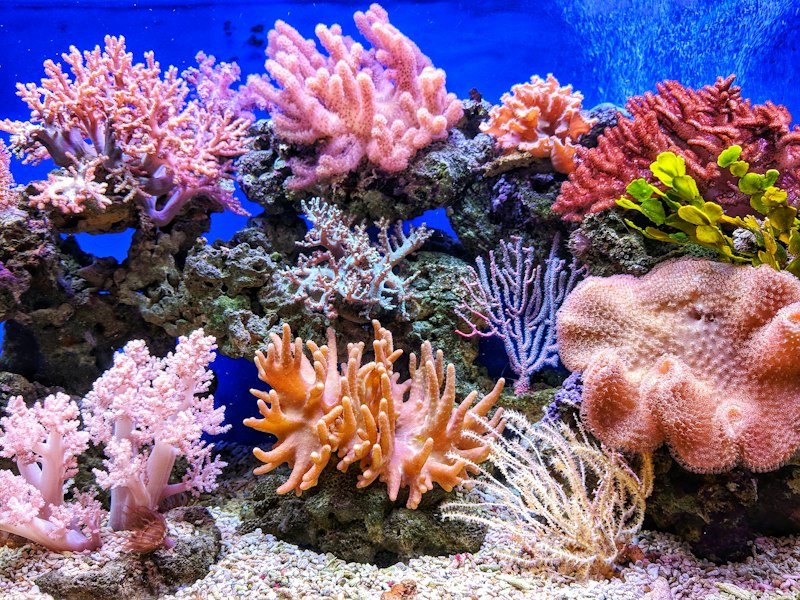
Soft corals
common
White-tip reef sharks
common
Groupers
common
Sea turtles
common
Moray eels
occasional
Bull sharks
occasional
Hammerhead sharks
occasional
Eagle rays
occasional
Whale sharks
rareDive profile & how the dive runs
Dives at Danger Point typically begin with a brief boat ride from the shore, culminating in a giant stride entry into the clear waters. Upon descent, divers will find themselves on a gently sloping reef, usually starting around 5 to 10 meters, rich with hard and soft corals. The dive often proceeds along this slope, allowing for exploration of abundant reef fish and macro life nestled within the coral formations. As the dive progresses, the slope transitions into a vibrant wall that drops to depths of up to 30 meters. Divers can choose to explore the upper sections of the wall or descend deeper to encounter larger marine species such as groupers or even occasional sharks. The route is often an out-and-back or a gentle drift depending on the mild currents, turning before reaching minimum air pressure. The safety stop is typically conducted at 5 meters over the shallower part of the reef, providing an excellent opportunity for observing schooling fish before ascending to the surface for boat pickup.
Underwater photography
Danger Point offers diverse photographic opportunities, from wide-angle reefscapes to intricate macro subjects. For capturing the expansive coral gardens and schooling fish, a wide-angle lens is recommended. The generally excellent visibility and mild currents create ideal conditions for well-lit, vibrant reef shots. Macro lenses are perfect for documenting the numerous smaller inhabitants like nudibranchs, crustaceans, and juvenile fish hiding in the corals. Consider using strobes to bring out the true colors of the reef at depth. Practicing good buoyancy control is crucial to avoid contact with the delicate coral structures while positioning for shots. Subjects are often plentiful and unperturbed by divers, allowing for patient composition.
Combine with nearby dive sites
- El Almirante
El Almirante is an advanced dive site located off the shores of Maria la Gorda, on Cuba's Guanahacabibes Peninsula.
- Black Coral Wall
Black Coral I and II are prominent dive sites within Cuba's renowned Jardines de la Reina marine reserve, an area celebrated for its…
- Moñtana Rusa
Montaña Rusa is an advanced dive site located within Coiba National Park, Panama, aptly named for its undulating underwater landscape.
- Yemayá
Yemayá is a prominent dive site located in the María La Gorda region of Cuba, renowned for its exceptional wall diving experiences.
- El Farallon
El Farallon is a notable dive site located within Cuba's protected Jardines de la Reina marine park, an archipelago renowned for its…
Getting there & logistics
Access to Danger Point is typically facilitated by dive operators based out of Cienfuegos. Divers usually fly into international airports like Havana (HAV) or Varadero (VRA) and then transfer to Cienfuegos, a journey that can take several hours by road. Day trips are common for this site, often combined with one or two other nearby locations. Liveaboard options are also available, which typically include Danger Point as part of a broader itinerary exploring the southern coast of Cuba. There are no specific marine park fees mentioned for this particular site, but it's always advisable to confirm with your dive operator. Trip lengths can vary from single-day excursions to multi-day liveaboard adventures.
Safety & environment
While diving at Danger Point is generally safe due to mild conditions, all divers should carry personal dive insurance covering emergency medical treatment and evacuation. The nearest recompression chamber is likely located in Havana, which entails a significant evacuation time by road or air in case of a serious incident. Divers should always maintain proper buddy procedures, monitor their depth and bottom time, and adhere strictly to dive computer limits. Although currents are typically mild, it's prudent to stay aware of any subtle changes and communicate regularly with the dive guide. Avoiding contact with marine life and respecting the pristine environment are crucial for both diver safety and reef conservation.
Who it suits, and who it doesn't
Suited for
- Open Water certified divers comfortable with boat entries
- Divers interested in healthy coral reef ecosystems
- Underwater photographers seeking diverse subjects
- Divers looking for uncrowded dive experiences
- Those who appreciate leisurely reef exploration
Less suited for
- Brand new divers without supervised experience
- Divers seeking extreme drift diving conditions
- Those looking exclusively for large pelagic action
- Individuals sensitive to boat travel
- Divers unwilling to adhere to conservation practices
FAQ
Danger Point FAQ
What kind of marine life can I expect to see at Danger Point?
Danger Point boasts a rich variety of marine life, including abundant schooling snappers and fusiliers, which are common sightings. You can also expect to encounter white-tip reef sharks, large groupers, and various species of sea turtles. Moray eels are occasionally spotted, adding to the diversity of the reef.
Are the currents strong at Danger Point?
The currents at Danger Point are generally mild, making it a comfortable dive for most experience levels. This allows divers to explore the reef at a relaxed pace without the challenge of strong water movement. However, occasional gentle surges may be present closer to the surface.
What is the typical visibility at this dive site?
Visibility at Danger Point is typically excellent, often ranging between 20 to 30 meters. This clear water provides fantastic conditions for observing the vibrant coral formations and diverse marine life. While usually very good, visibility can occasionally be affected by natural factors like plankton blooms.
What depth does Danger Point reach?
Danger Point offers a varied depth profile, starting with shallower reef sections around 5 meters and gradually descending to a maximum depth of approximately 30 meters. This range allows for different types of exploration, from shallow coral gardens to deeper wall environments, accommodating various dive certifications.
Is Danger Point suitable for beginner divers?
Danger Point is generally suitable for Open Water certified divers who are comfortable with boat entries. Its mild currents and good visibility make it accessible, but beginners should have some experience beyond their certification dive. It's an excellent site for those looking to expand their experience in a controlled and beautiful environment.
Why dive Danger Point from a liveaboard?
Danger Point is one of Cuba's signature dive sites. A liveaboard sleeps you on the water and puts you in the water for three to four guided dives per day, including dawn and night dives that day-boat operators rarely offer. You skip the daily commute back to port and reach quieter, less-crowded sites in the same region on a single trip.
Below are the liveaboards that include Danger Point on their Cuba itineraries.
Liveaboards diving Danger Point
These liveaboards may visit Danger Point on selected itineraries, the exact dive sites depend on departure, weather and conditions.

Jardines Avalon Fleet
Cuba
20 guests35 m
Dive sites similar to Danger Point
Same character, same waters, six more sites divers love for the exact same reasons.Compare seasons, access and liveaboard routes, then pick the site that fits your trip best.
© EsriMaxar, Earthstar, GIS
3 Fathom Wall
Cayman Islands
3 Fathom Wall is an exciting and fish-filled dive site located in the Cayman Islands, specifically at the intersection of the renowned Bloody Bay Wall.
- Suitable for
- Intermediate
- Current
- Mild
- Access
- Liveaboard only
- Depth
- ≤ 3000 m
- Theme
- Reef
While specific details for a dive site named "3 Riff" are not present in the provided sources, general diving conditions and characteristics for the Dominican Republic…
- Suitable for
- Advanced
- Current
- Mild
- Access
- Dayboat
- Depth
- 30–55 m
- Theme
- Reef
The dive site known as 3 Rocks is located off the coast of Sosúa in Puerto Plata, Dominican Republic, offering an accessible and lively underwater experience.
- Suitable for
- Beginner
- Current
- Mild
- Access
- Dayboat
- Depth
- 2–8 m
- Theme
- Reef
4 Amigos is a notable dive site located in the Bay Islands of Honduras, an area renowned for its extensive Mesoamerican Barrier Reef System, which is the world's second-longest.
- Suitable for
- Intermediate
- Current
- Moderate
- Access
- Liveaboard or dayboat
- Depth
- 9–40 m
- Theme
- Reef
© EsriMaxar, Earthstar, GIS
6 Toed Cat
Mexico
The dive site known as "6 Toed Cat" is not a recognized dive location in Mexico; rather, it refers to the polydactyl felines, many with six toes, that inhabit the Ernest Hemingway Home and Museum in Key West, Florida.
- Suitable for
- Beginner
- Current
- Mild
- Access
- Liveaboard or dayboat
- Depth
- —
- Theme
- Reef
© EsriMaxar, Earthstar, GIS
Aaron's Backyard
Honduras
Aaron's Backyard is a noted dive site within the Roatan Marine Park in Honduras, part of the extensive Mesoamerican Barrier Reef System.
- Suitable for
- Intermediate
- Current
- Moderate
- Access
- Liveaboard or dayboat
- Depth
- 9–40 m
- Theme
- Reef