About Chumphon Pinnacle
Chumphon Pinnacle is a renowned deep dive site situated approximately 12 kilometers northwest of Koh Tao in the Gulf of Thailand. This massive granite pinnacle, surrounded by smaller clusters, ascends from depths of 30-40 meters to within 14-16 meters of the surface, creating an impressive underwater mountain. Its isolated open-ocean position acts as a magnet for marine life, drawing in rich nutrients that support a vibrant ecosystem, making it a prime location for encounters with large pelagic species and frequent whale shark sightings. The site is characterized by its main pinnacle, stretching around 40 meters long, and features include 'Barracuda Rock,' a large swim-through at the base of the central mooring line, and a significant fissure towards its southern end. The top of the pinnacle is extensively covered with anemones, home to numerous pink anemonefish, while deeper crevices and ledges host a variety of macro life. The site's dynamic environment, influenced by currents, ensures a constant flow of life and keeps divers engaged. Divers can anticipate superior visibility, often ranging from 15 to 30 meters, though plankton blooms can occasionally reduce it while simultaneously increasing the chances of whale shark encounters. Water temperatures remain consistently warm, between 28-30°C, making for comfortable diving conditions year-round. However, the site's depth and potential for strong currents necessitate advanced diving skills. A typical dive involves descending along the buoy line, exploring the main pinnacle and its surrounding structures, often encountering massive schools of barracuda, trevally, and snapper. The dive plan usually includes exploring different depth levels, searching for both large pelagics and intricate macro life, before a slow ascent and safety stop entertained by reef squid and fusiliers.
Highlights
Whale shark encountersMassive granite pinnacleLarge pelagic schoolsBarracuda Rock featureVast anemone bedsExcellent visibilityOffshore biodiversityDeep dive experience
Season calendar
Best months to dive here
Jan
Feb
Mar
Apr
May
Jun
Jul
Aug
Sep
Oct
Nov
Dec
Excellent
Good
Dive site facts: Chumphon Pinnacle
- Depth
- 14–36 m
- Typical dive
- 14–22 m, 45-60 min
- Current
- Moderate to strong
- Visibility
- 15–30 m
- Water temperature
- 28–30°C
- Entry
- Live drop from boat
- Level
- Advanced Open Water Diver
- Dive type
- Pinnacle, pelagic, macro
- Region / port
- Koh Tao, Gulf of Thailand
- Coordinates
- 10.1234, 99.7567
Conditions & Currents
Chumphon Pinnacle typically experiences moderate to strong currents, which are a key factor in attracting the abundant marine life to the site. Divers should be prepared for variable current strength, which can shift throughout the day and seasonally, making good buoyancy control and experience with currents essential. Entry is usually via a live drop from the boat, and dive plans are carefully briefed by the divemaster to account for current direction and strength, often involving a drift around the pinnacle. While conditions are generally manageable for experienced divers, strong currents can occasionally lead to challenging surface conditions and surge, particularly during certain monsoon periods. Visibility can range widely from 10 to 40 meters, though an average of 20-25 meters is common, with plankton blooms sometimes reducing visibility but increasing chances of whale shark sighti
Marine life & sighting chances

Whale shark
March to October · common
Chevron Barracuda
commonGiant Barracuda
common
Batfish
common
Giant Grouper
common
Trevally
common
Pink Anemonefish
common
Green Sea Turtle
occasional
Banded Boxing Shrimp
common
Banded Pipefish
occasionalJann's Pipefish
occasional
Snapper
common
Fusilier
common
Reef Squid
occasionalDive profile & how the dive runs
Divers typically begin by descending along the main buoy line, often positioned over the southern part of the pinnacle near Barracuda Rock. The initial descent takes you to around 30 meters, where schools of fusiliers and rainbow runners are abundant. From there, you might explore the base for schools of one-spot snapper and yellowtail barracuda, and search for razorfish near the ocean floor. The dive then progresses by slowly ascending along the rock wall of Barracuda Rock, exploring crevices for macro life such as ghost shrimp and banded boxing shrimp. A common route involves following the contours of the main granite pinnacle, navigating through or around large schools of pickhandle barracuda and other pelagics. As the dive continues and depth decreases, focus shifts to observing banded and Jann’s pipefish in deeper cracks and the vibrant anemone gardens at shallower depths. The safety stop is usually conducted on the buoy line, often accompanied by fusiliers and reef squid, before surfacing.
Underwater photography
Chumphon Pinnacle offers incredible opportunities for both wide-angle and macro photography due to its diverse marine life. For wide-angle shots, a fisheye or wide-angle lens is ideal to capture the grandeur of the granite pinnacle, vast schools of barracuda and trevally, and the dramatic backdrop of whale shark encounters. Good strobes are essential to bring out the vibrant colors of the anemone beds and schooling fish in the deeper sections. For macro enthusiasts, a dedicated macro lens will be invaluable for capturing the intricate details of banded boxing shrimp, pipefish, and nudibranchs hidden in the crevices and on the anemone-covered rocks. Due to potential currents, maintaining excellent buoyancy is crucial for sharp images and to avoid stirring up sediment. Patience is key, especially when waiting for shy macro subjects or positioning for the perfect shot of passing pelagics.
Combine with nearby dive sites
- Koh Tao — Japanese Garden
A sheltered, shallow site perfect for beginners and snorkelers, contrasting with Chumphon's deep pelagic environment.
- Koh Tao — Twins
A popular site with three granite pinnacles, offering varied topography and rich reef life, suitable for all diver levels.
- Koh Tao — Green Rock
Known for its unique rock formations, swim-throughs, and abundant marine life, providing a different experience than Chumphon's open-ocean feel.
- HTMS Sattakut Wreck
An artificial reef and wreck dive, offering a historical and structural diving experience distinct from natural pinnacles.
Getting there & logistics
To dive Chumphon Pinnacle, you will typically travel from Koh Tao, which is the nearest and most convenient departure point. Koh Tao is accessible by ferry from Surat Thani or Chumphon on the mainland, or from the larger islands of Koh Samui and Koh Phangan. The nearest major airports are Koh Samui (USM) for direct flights or Surat Thani (URT) and Chumphon (CJM) for budget flights followed by a bus and ferry transfer. Dive trips to Chumphon Pinnacle usually involve a 40-45 minute boat journey from Koh Tao. Many dive operators schedule specific days for Chumphon dives, often as a two-tank trip, and sometimes offer Nitrox for extended bottom time due to its depth. No specific park fees are usually required for this site, as it is part of standard dive excursions from Koh Tao.
Safety & environment
Diving at Chumphon Pinnacle requires a high level of diver competence, with Advanced Open Water Diver certification strongly recommended due to the depth and potential for strong currents. All divers should carry valid dive insurance, as emergency evacuation from this offshore site can be complex and expensive. The nearest recompression chamber is located in Koh Samui. It is crucial to strictly adhere to dive plans provided by experienced divemasters, paying close attention to current conditions and maintaining good buoyancy control. Group separation can occur in strong currents, so effective buddy communication and a surface marker buoy (SMB) are essential. Divers should be mindful of boat traffic, especially during surface intervals, and maintain adequate air consumption given the site's depth profile.
Who it suits — and who it doesn't
Suited for
- Advanced Open Water Divers
- Divers seeking large pelagic encounters
- Underwater photographers (wide-angle and macro)
- Experienced divers comfortable with currents
- Deep Diver specialty training
Less suited for
- Open Water Divers without deep dive experience
- Beginners or newly certified divers
- Divers uncomfortable with strong currents
- Those prone to seasickness on longer boat rides
- Divers without good buoyancy control
FAQ
Chumphon Pinnacle FAQ
What kind of marine life can I expect to see at Chumphon Pinnacle?
Chumphon Pinnacle is renowned for its diverse marine life, particularly large pelagics. You can frequently encounter whale sharks, massive schools of barracuda, trevally, and snapper. The site also hosts giant groupers, various species of pipefish and shrimp, and vibrant anemonefish among extensive anemone beds on the pinnacle's top.
Is Chumphon Pinnacle suitable for beginner divers?
Chumphon Pinnacle is generally not recommended for beginner divers. Its depths, ranging from 14 to 36 meters, and potential for moderate to strong currents require an Advanced Open Water Diver certification or equivalent experience. Good buoyancy control and comfort in dynamic conditions are essential for a safe and enjoyable dive.
When is the best time of year to dive Chumphon Pinnacle?
The optimal time to dive Chumphon Pinnacle is from March to October, which offers the best visibility, calmest sea conditions, and highest chances of spotting whale sharks. February also provides excellent conditions with clear water and mild currents. While diving is possible year-round, the monsoon season from November to January can bring rougher seas and reduced visibility.
How far is Chumphon Pinnacle from Koh Tao, and how do I get there?
Chumphon Pinnacle is located approximately 12 kilometers northwest of Koh Tao. Dive operators in Koh Tao typically organize trips to the site, which involves a boat journey of about 40 to 45 minutes. Koh Tao itself is accessible by ferry from various mainland ports or neighboring islands like Koh Samui.
What are the typical diving conditions like at Chumphon Pinnacle?
Visibility at Chumphon Pinnacle usually ranges from 15 to 30 meters, often exceeding 20 meters, though plankton blooms can temporarily reduce it. Water temperatures are consistently warm at 28-30°C. You should anticipate moderate to strong currents, which are a characteristic feature of this site and contribute to its rich marine biodiversity.
Why dive Chumphon Pinnacle from a liveaboard?
Chumphon Pinnacle is one of Thailand's signature dive sites. A liveaboard sleeps you on the water and puts you in the water for three to four guided dives per day, including dawn and night dives that day-boat operators rarely offer. You skip the daily commute back to port and reach quieter, less-crowded sites in the same region on a single trip.
Below are the liveaboards that include Chumphon Pinnacle on their Thailand itineraries.
Liveaboards diving Chumphon Pinnacle
These liveaboards may visit Chumphon Pinnacle on selected itineraries — the exact dive sites depend on departure, weather and conditions.
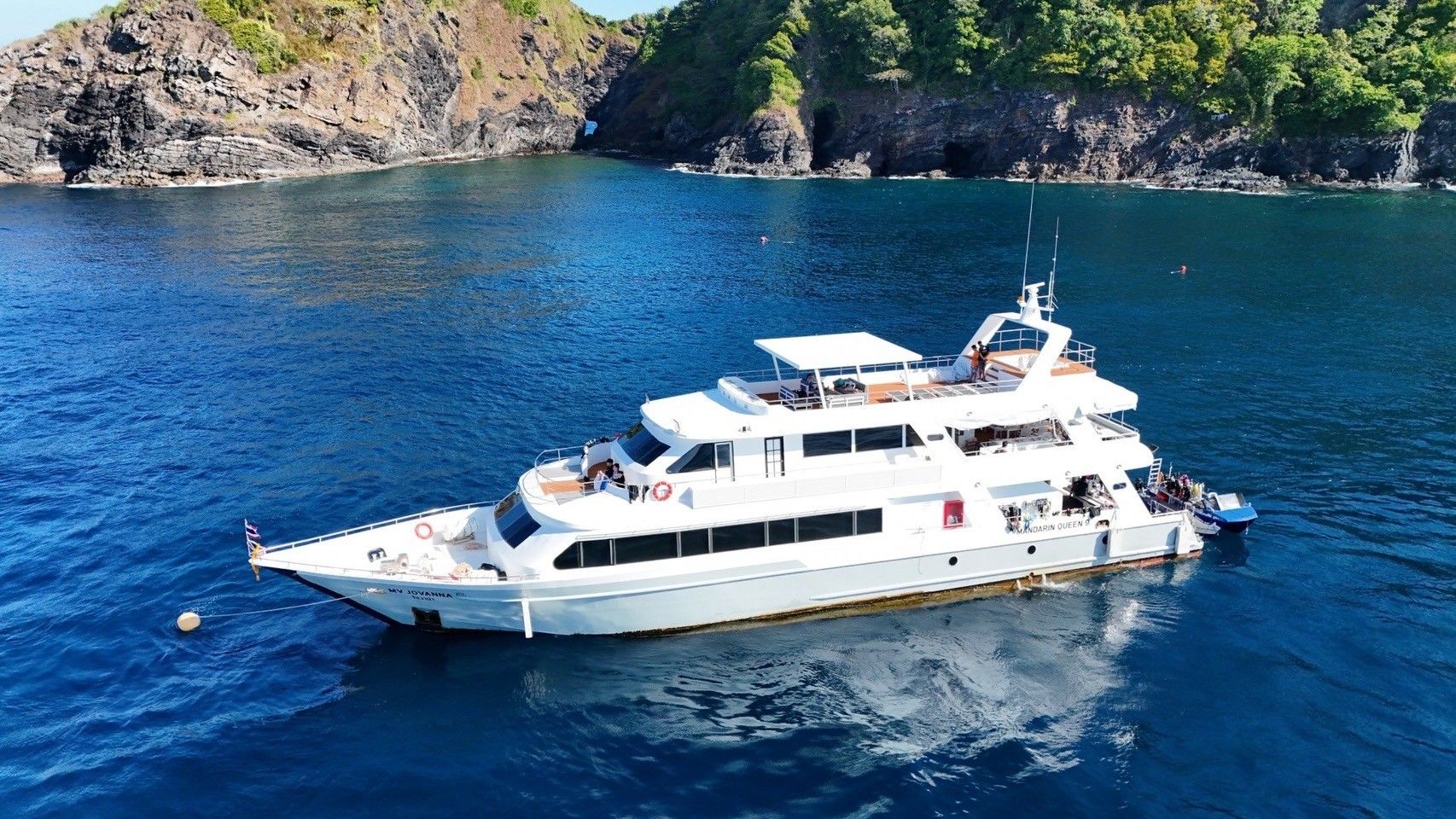
Mandarin Queen 9
Thailand
26 guests37.5 m
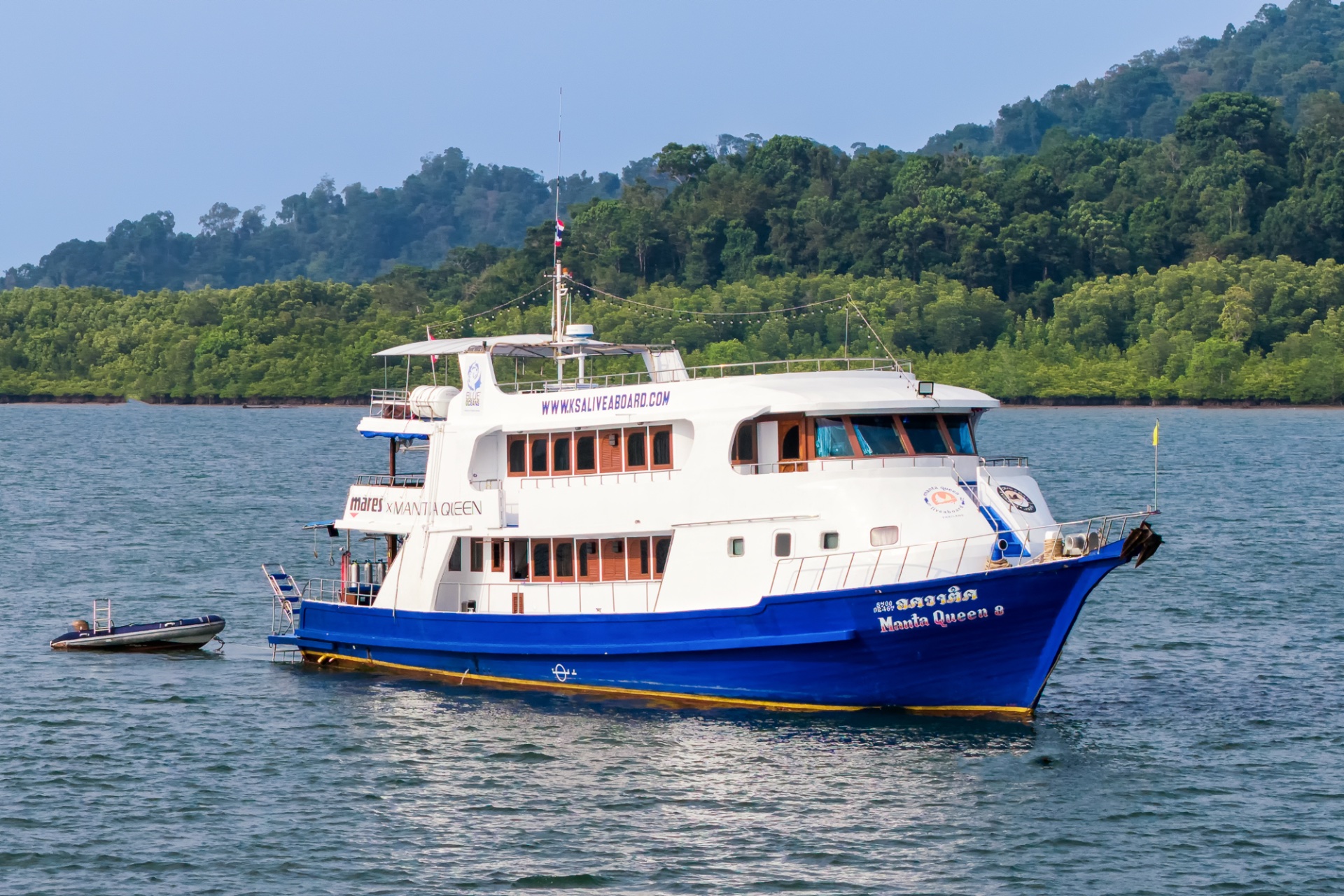
Manta Queen 8
Thailand
24 guests
$127/day
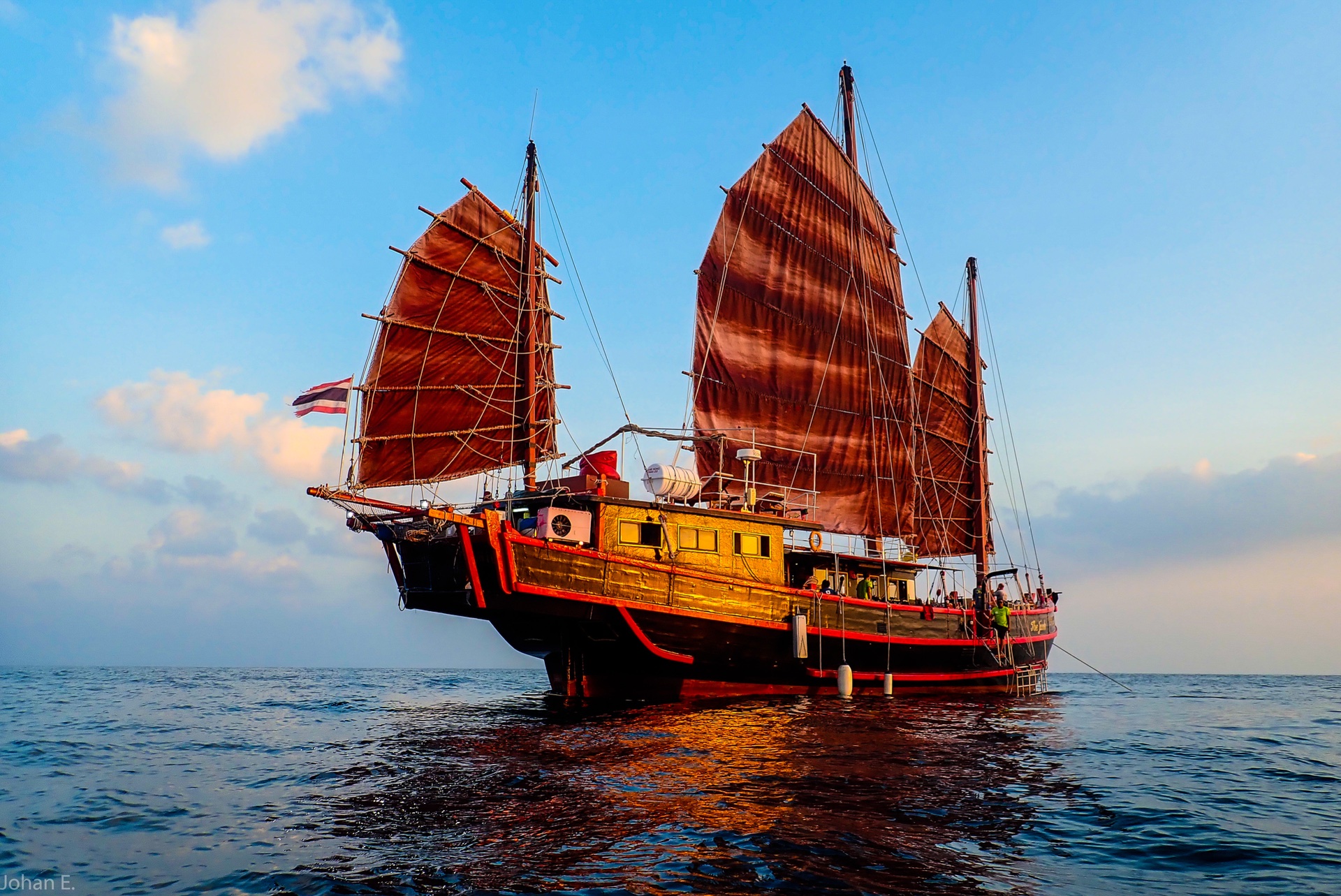
The Junk
Thailand
18 guests33 m
$163/day
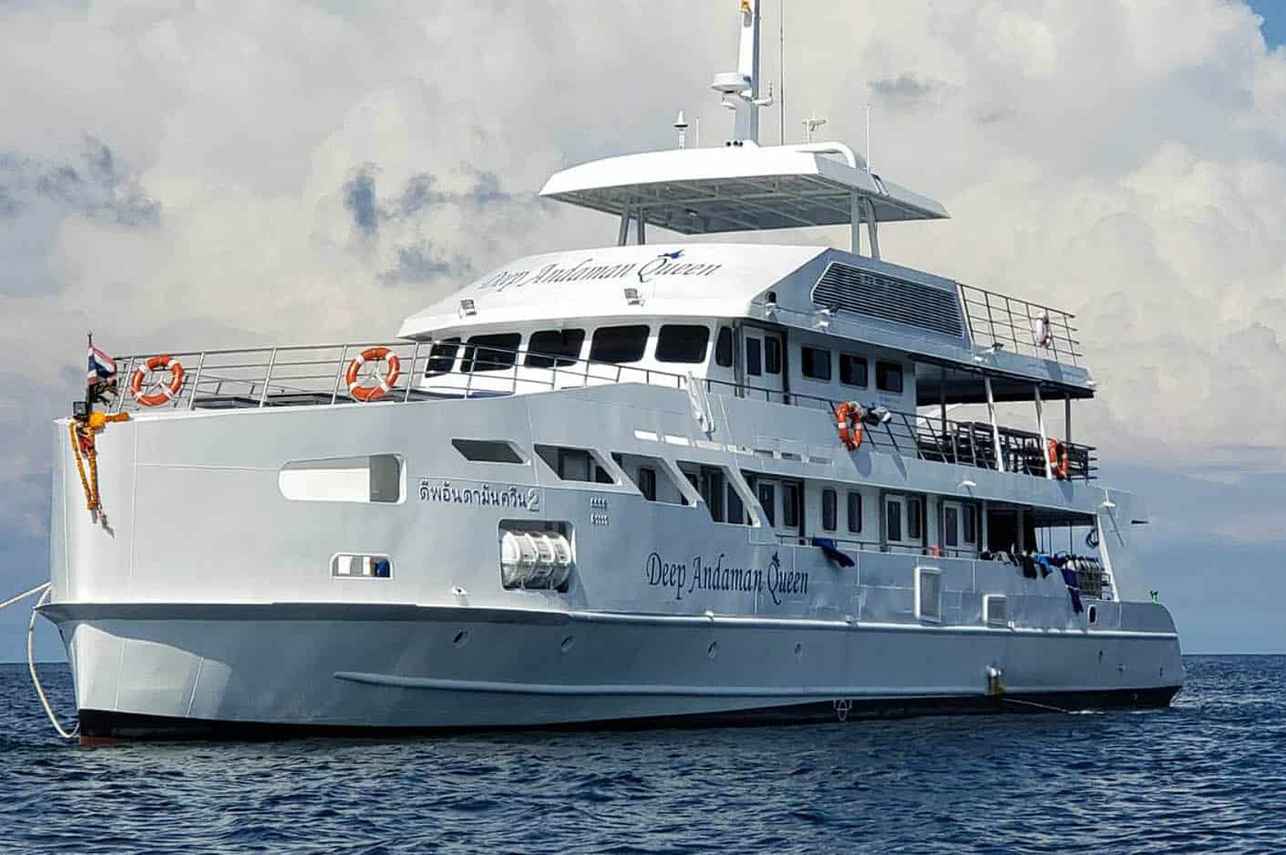
Deep Andaman Queen
Thailand
23 guests30.5 m
$194/day
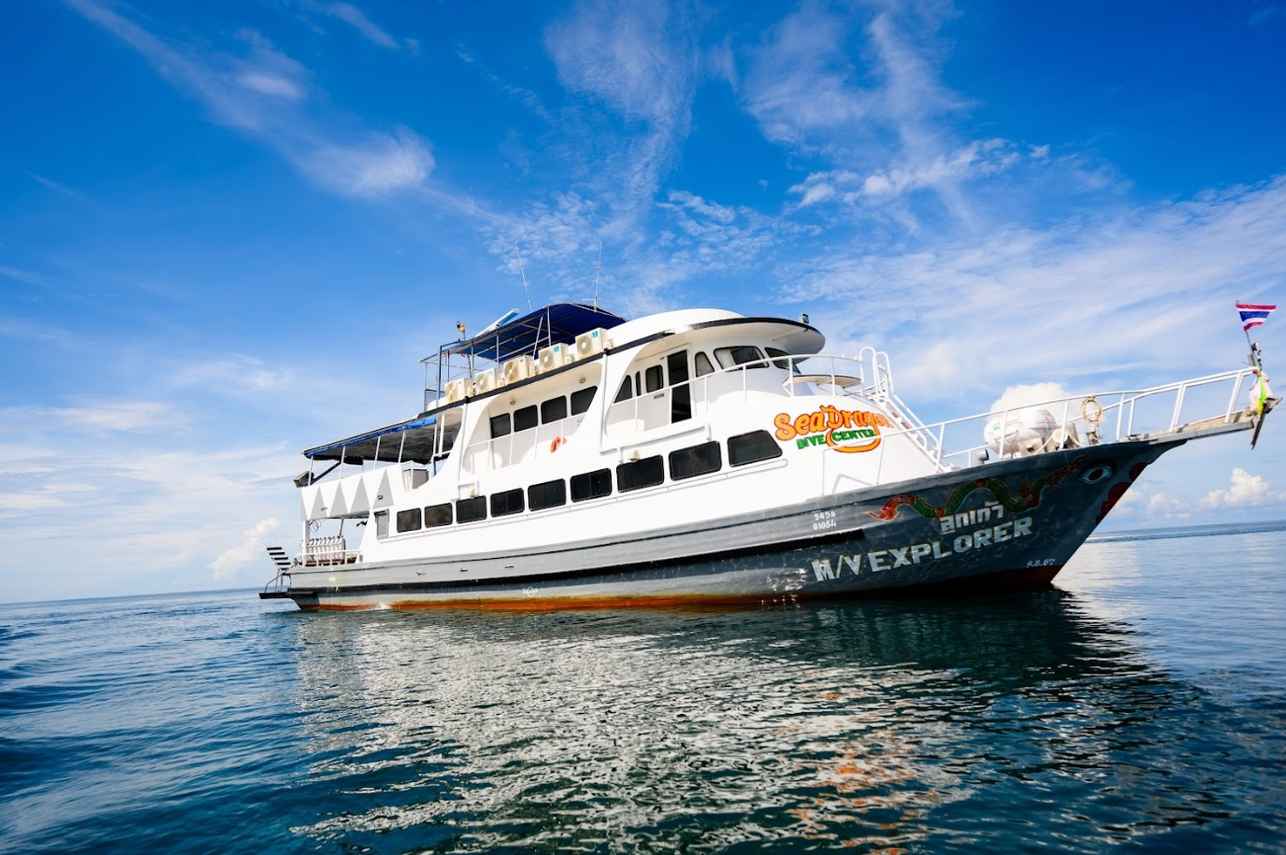
Explorer
Thailand
16 guests25 m
$150/day
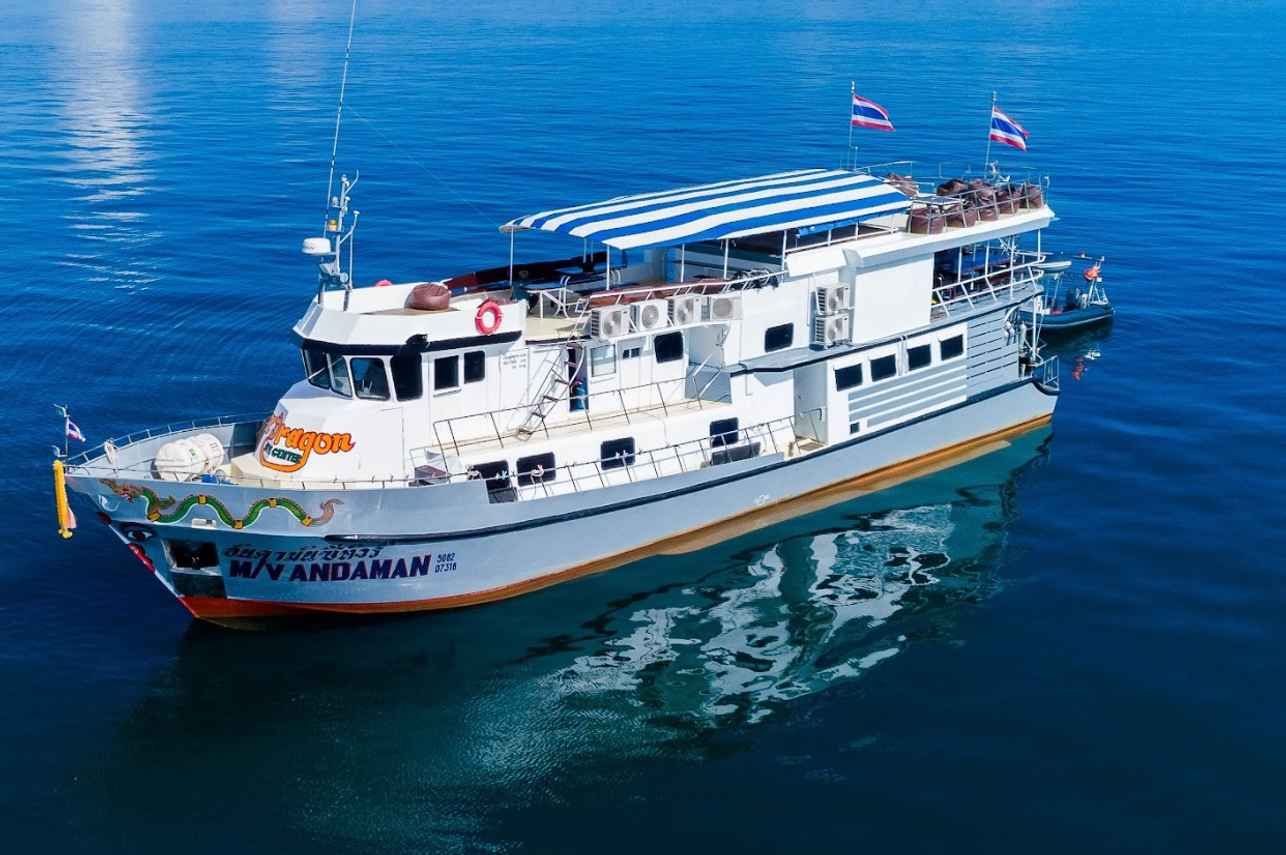
Andaman
Thailand
20 guests26 m
$108/day
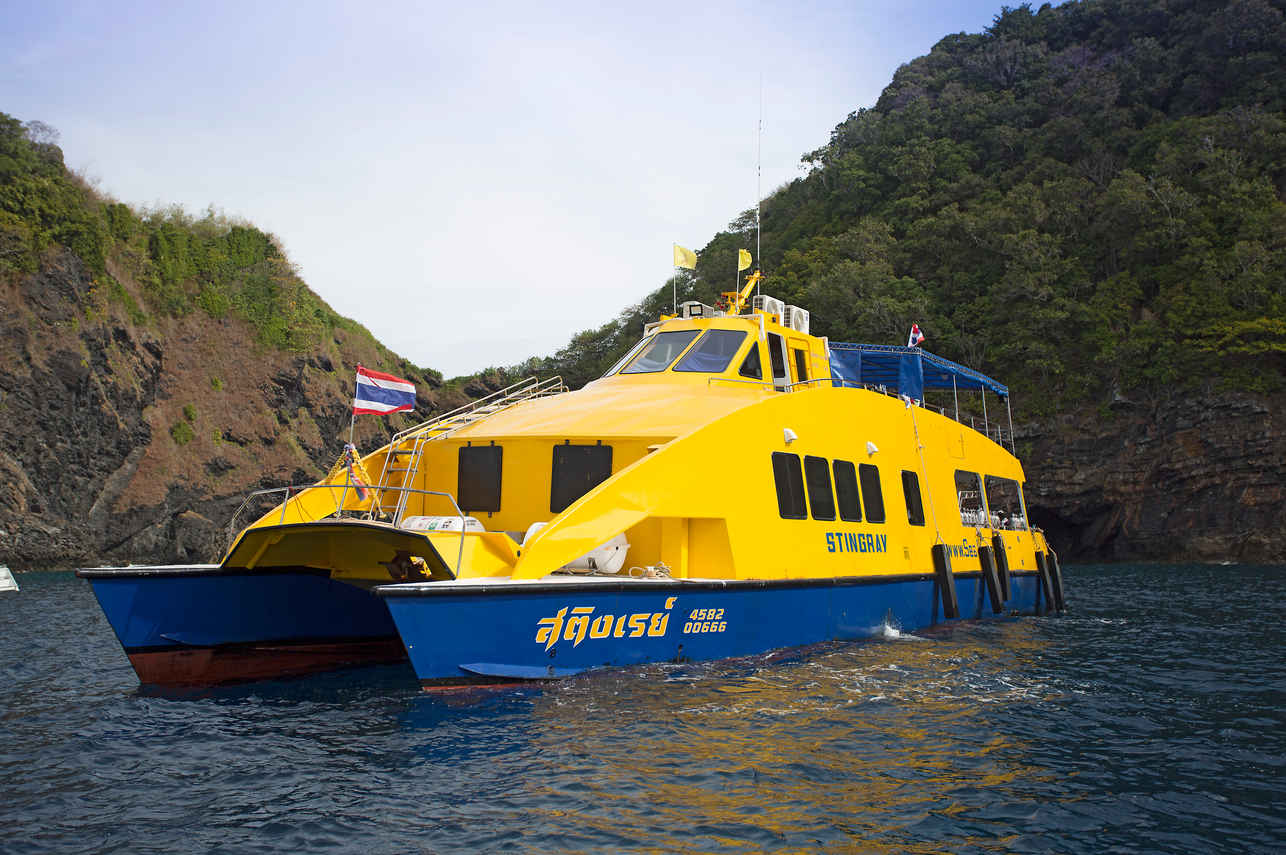
Stingray
Thailand
8 guests24 m
$245/day
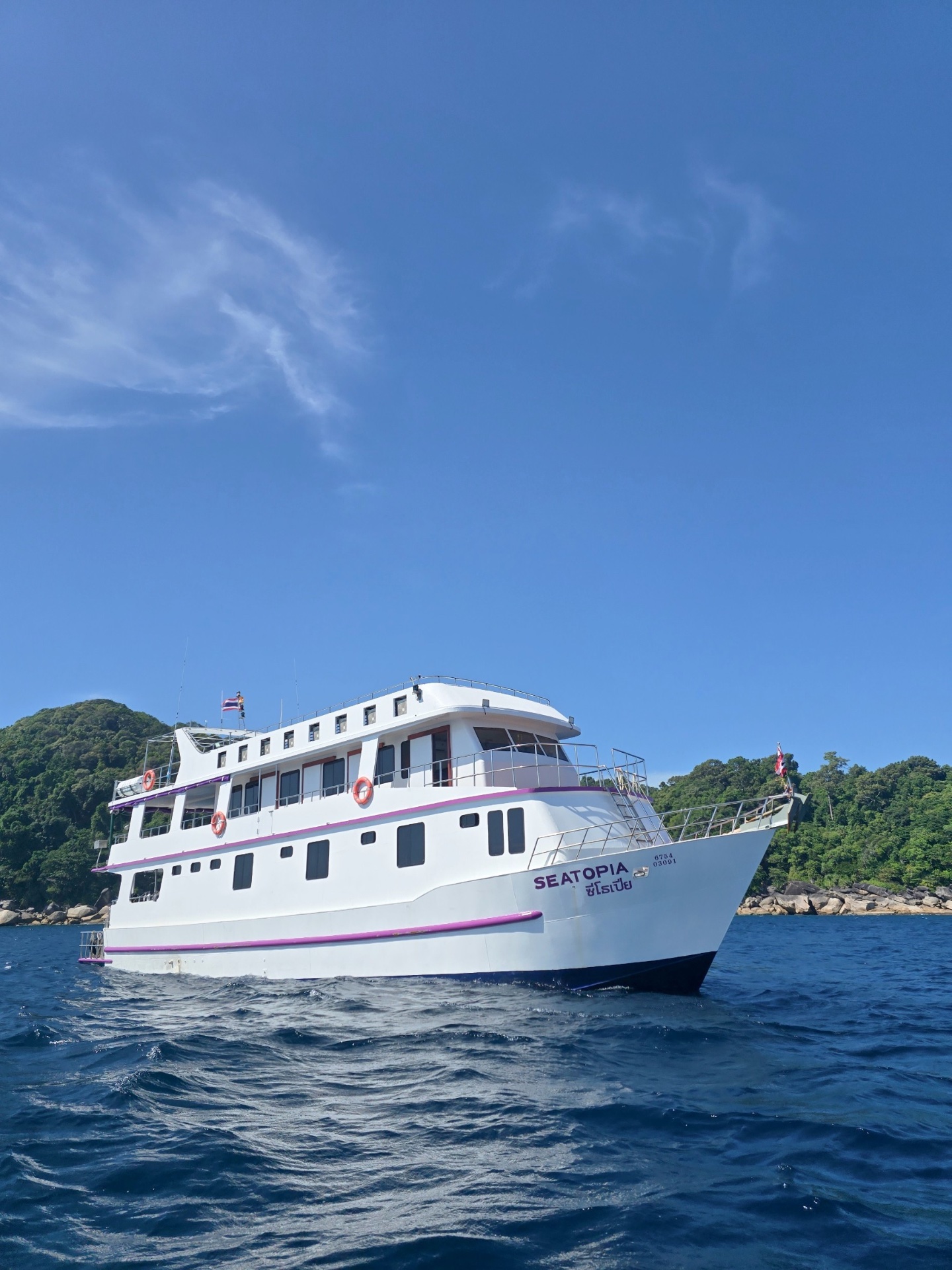
Seatopia
Thailand
24 guests24 m
Dive sites similar to Chumphon Pinnacle
Same character, same waters — six more sites divers love for the exact same reasons.Compare seasons, access and liveaboard routes — then pick the site that fits your trip best.
Hin Raab is a prominent dive site located in the eastern Gulf of Thailand, near Koh Chang, offering an exceptional underwater experience with its rich coral biodiversity and thriving marine life.
- Suitable for
- Intermediate
- Current
- Moderate
- Access
- Dayboat
- Depth
- 5–22 m
- Theme
- Reef / Pinnacle
© Esri — Maxar, Earthstar, GIS
Christmas Point
Thailand
Christmas Point, located on Similan Island number 9 (Koh Ba-Ngu), stands out as one of the Similan Islands' most iconic dive sites.
- Suitable for
- Intermediate
- Current
- Strong
- Access
- Liveaboard or dayboat
- Depth
- 2–40 m
- Theme
- Pinnacle
© Esri — Maxar, Earthstar, GIS
Koh Tao — Twins
Thailand
Twins, a highly popular dive site near Koh Tao, Thailand, is renowned for its accessibility and rich marine life.
- Suitable for
- Beginner
- Current
- Mild
- Access
- Liveaboard or dayboat
- Depth
- 5–18 m
- Theme
- Pinnacle
© Esri — Maxar, Earthstar, GIS
Southwest Pinnacle
Thailand
Southwest Pinnacle, located approximately 45 minutes by boat from Koh Tao's Mae Haad pier, is a renowned dive site in the Gulf of Thailand.
- Suitable for
- Intermediate
- Current
- Strong
- Access
- Liveaboard or dayboat
- Depth
- 8–26 m
- Theme
- Pinnacle / Wall
© Esri — Maxar, Earthstar, GIS
Hin Luk Bat
Thailand
Hin Luk Bat is a renowned dive site located off the coast of Koh Chang, celebrated for its unique geological formations and abundant marine life.
- Suitable for
- Intermediate
- Current
- Mild
- Access
- Dayboat
- Depth
- 5–25 m
- Theme
- Reef / Pinnacle
© Esri — Maxar, Earthstar, GIS
Shark Point
Thailand
Shark Point, also known as Hin Musang, is a celebrated dive site located midway between Phuket and Phi Phi Islands in the Andaman Sea.
- Suitable for
- Intermediate
- Current
- Strong
- Access
- Liveaboard or dayboat
- Depth
- 5–24 m
- Theme
- Pinnacle