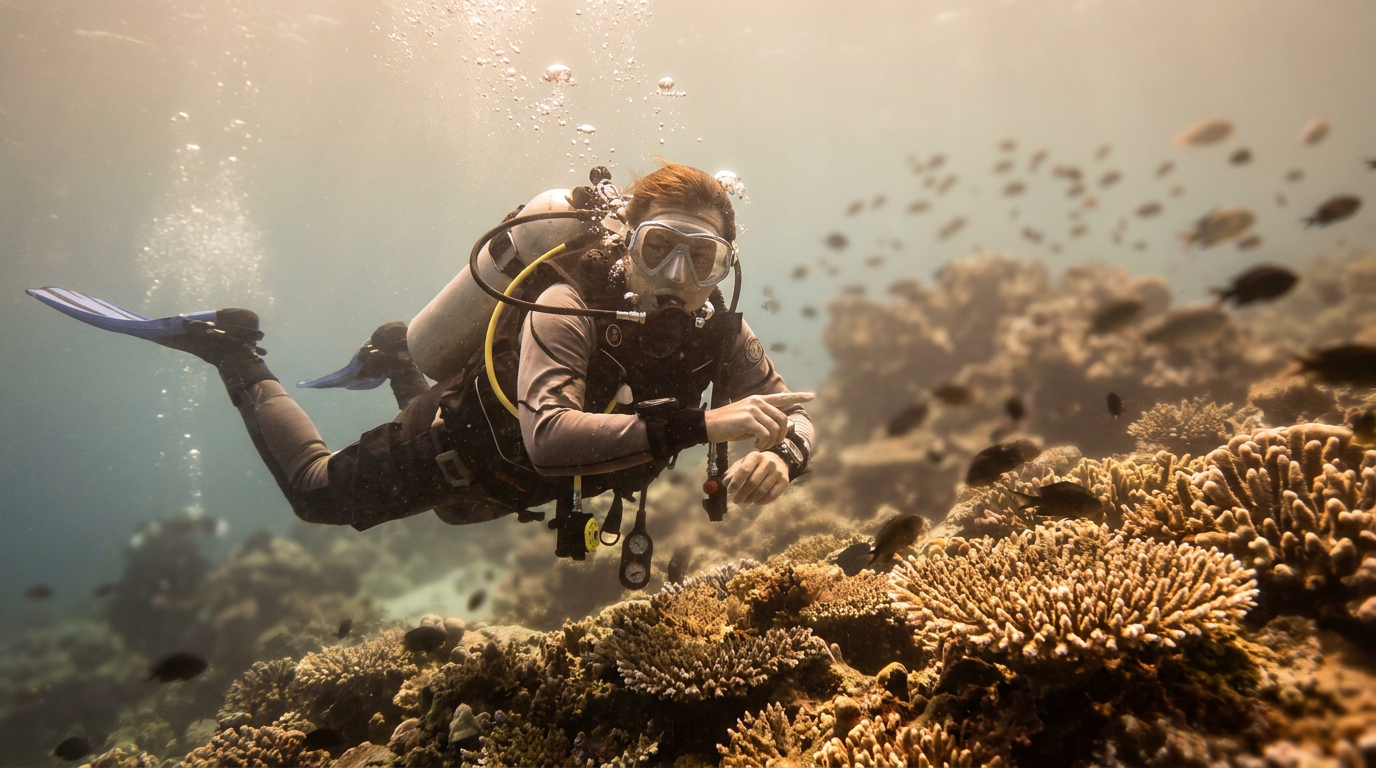
Why jet lag matters for divers specifically
Diving demands sharp judgement, slow controlled breathing, and good cardiovascular function — all of which are impaired by jet lag and the dehydration that comes with long-haul flights. Studies have shown reaction times after a long-haul flight are similar to mild alcohol intoxication. On a 4-dive liveaboard day, you cannot afford a foggy first dive.
Before the flight: prepare
Start shifting your sleep schedule 2–3 days before departure — go to bed 1–2 hours closer to destination time each night. Hydrate aggressively for 24 hours before the flight: aim for clear urine. Avoid alcohol and heavy meals the night before. Pre-book a window seat if you want to sleep, an aisle seat if you want to walk and hydrate. Pack: eye mask, ear plugs, compression socks, refillable water bottle, melatonin (1–3mg).
During the flight: minimise damage
Drink 250ml of water every hour you're in the air (cabin air is bone-dry, ~10% humidity). Skip the alcohol and skip the coffee after the first cup — both dehydrate you and disrupt sleep. Set your watch to destination time the moment you board and try to eat / sleep / wake in sync with it. Walk the aisle every 2 hours to reduce DVT risk and stay loose. Eat light: airline meals are heavy and salty.
After landing: reset fast
Get bright sunlight on your face within 1 hour of arrival — this is the single most powerful jet-lag reset. Stay awake until at least 21:00 local time on arrival day, no matter how tired you feel. A short 20-minute power nap is OK, longer naps will wreck your sleep cycle. Take 1–3mg melatonin 30 minutes before local bedtime for the first 2–3 nights. Continue aggressive hydration: a 12-hour flight loses you about 1.5L of body water. Avoid the welcome drink at the dive resort — alcohol slows jet-lag recovery by days.
Pre-trip overnight: arrive a day early
Whenever budget allows, arrive at the embarkation port ONE day before boarding the liveaboard. This gives you: a full night of sleep on land, a buffer against missed luggage or flight delays, time to assemble and test your gear, and one fewer reason for a bad first dive. Most experienced liveaboard divers will tell you this is the single best money you'll spend on the trip.
