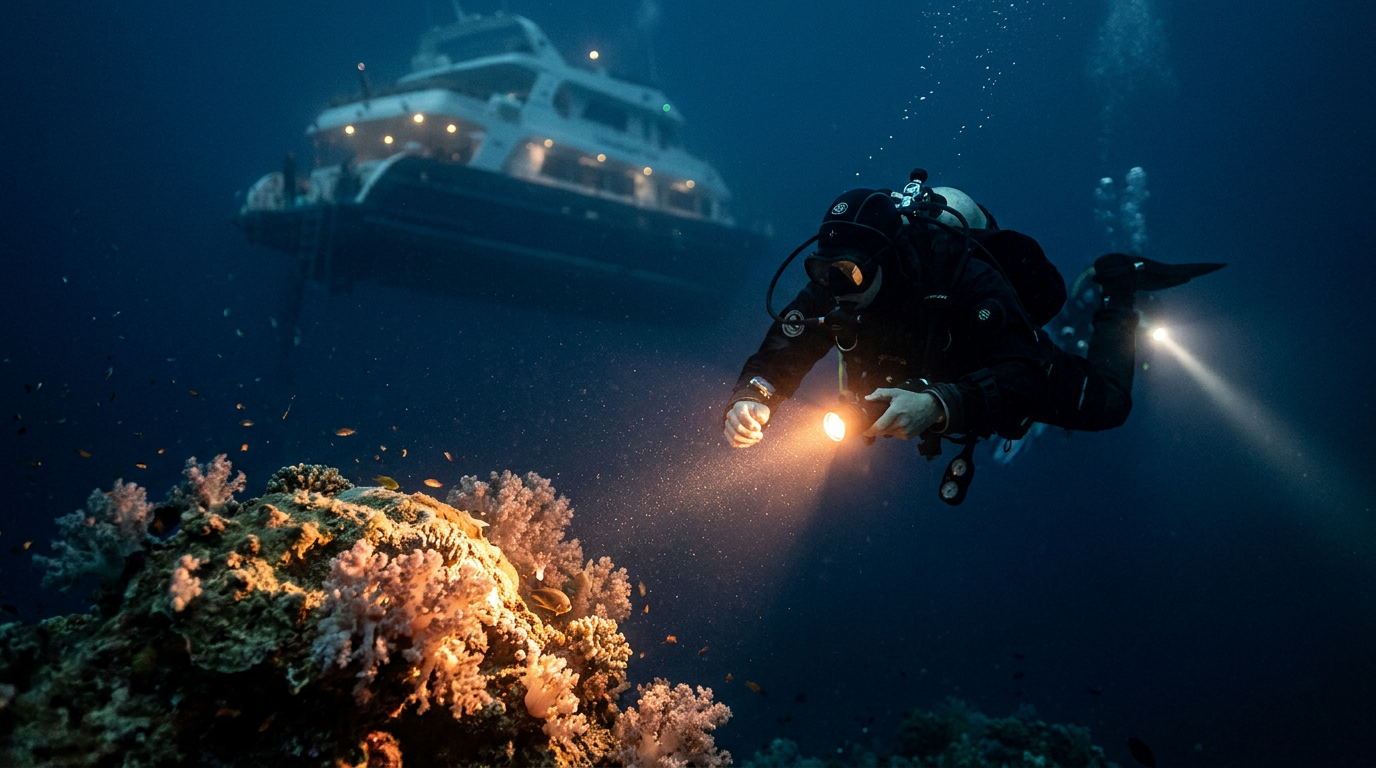
Before the dive: gear and briefing
Bring a primary light (1000+ lumens, narrow beam), a backup light, and a tank marker light or chemical glowstick so your buddy can find you. Listen carefully to the briefing — entry/exit point, max depth, time, and how the dive guide will signal recall (usually waving the light in a circle).
Buoyancy is everything
Without visual references on the bottom, divers tend to either crash into coral or float up unnoticed. Use small fin kicks, watch your computer constantly, and stay 1–2 meters above the reef. Hovering motionless is a learned skill — practice it on the day dive before going at night.
How to use your light
Don't shine your light directly at marine life — it stresses them and ruins others' night vision. Instead, illuminate around the edges, then ease the beam onto the subject. Never point your light at another diver's face. To signal a buddy, sweep the beam in slow circles on the reef in front of them.
What to look for
Octopuses, lobsters, moray eels, parrotfish in mucus cocoons, hunting reef sharks, and bioluminescent plankton when you turn your light off briefly. Slow down — night dives reward patience over distance covered.
Safety considerations
Stick close to your buddy (within touch range), agree on light signals before entering the water, and surface with at least 70 bar. If your primary light fails, deploy your backup immediately and signal your buddy to end the dive.