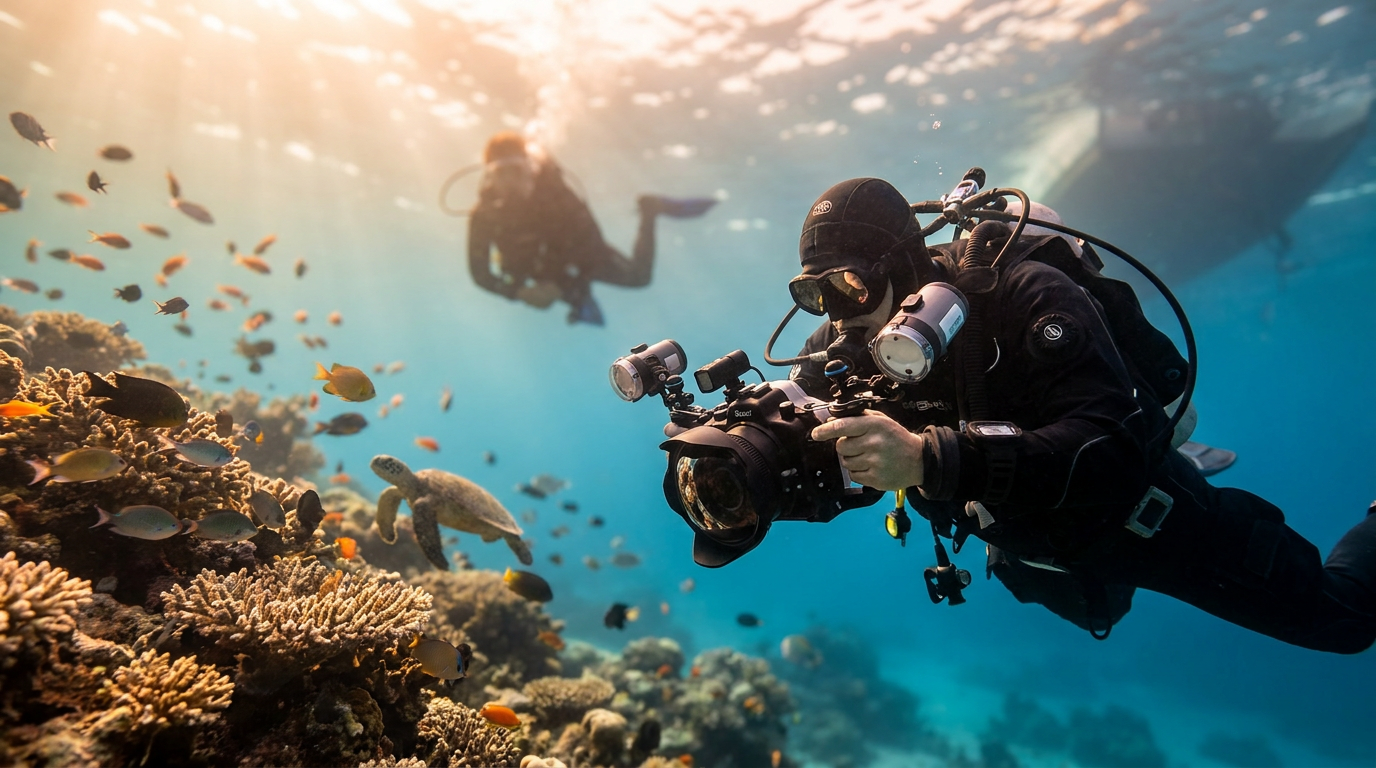
Pre-trip camera setup
Test your housing in fresh water before the trip — under pressure, never during the trip. Bring spare o-rings (2–3 sets) and silicone grease. Pack lenses, ports, and strobes in a hard, padded carry-on bag — never check fragile gear.
Charging on board: the politics
Most boats have 4–6 outlets per charging zone — for 12+ guests with cameras, lights, GoPros and phones, this is a war zone. Bring a 4-port USB hub and labeled cables. Charge during meals (everyone's away from cabins). Never leave gear charging unattended overnight.
The camera rinse station
Boats have a dedicated camera rinse tank, separate from gear rinse — never mix. Soak housings 5+ minutes; gently move buttons under water. Dry in shade, not sun. Open housing only in a dry, salt-free environment (your cabin).
Wide-angle vs macro: when to switch
Pick a setup the night before based on tomorrow's dive site. Don't switch lenses between dives in the same day — saltwater on the sensor ruins more cameras than anything else. If a site might have both, pre-decide your priority subject.
Working with the dive guide
Tell the guide you're shooting and what species you want. Ask to be at the back of the group (so you can pause without blocking others). Never chase: settle, wait, let the subject come closer. The dive guide is your wildlife scout — tip them well at the end.
Backing up daily
Bring 2× SD cards and a portable SSD (1TB+). Back up every evening — boats sink rarely, but corrupted cards are common. Don't rely on cloud uploads — boat satellite is too slow.