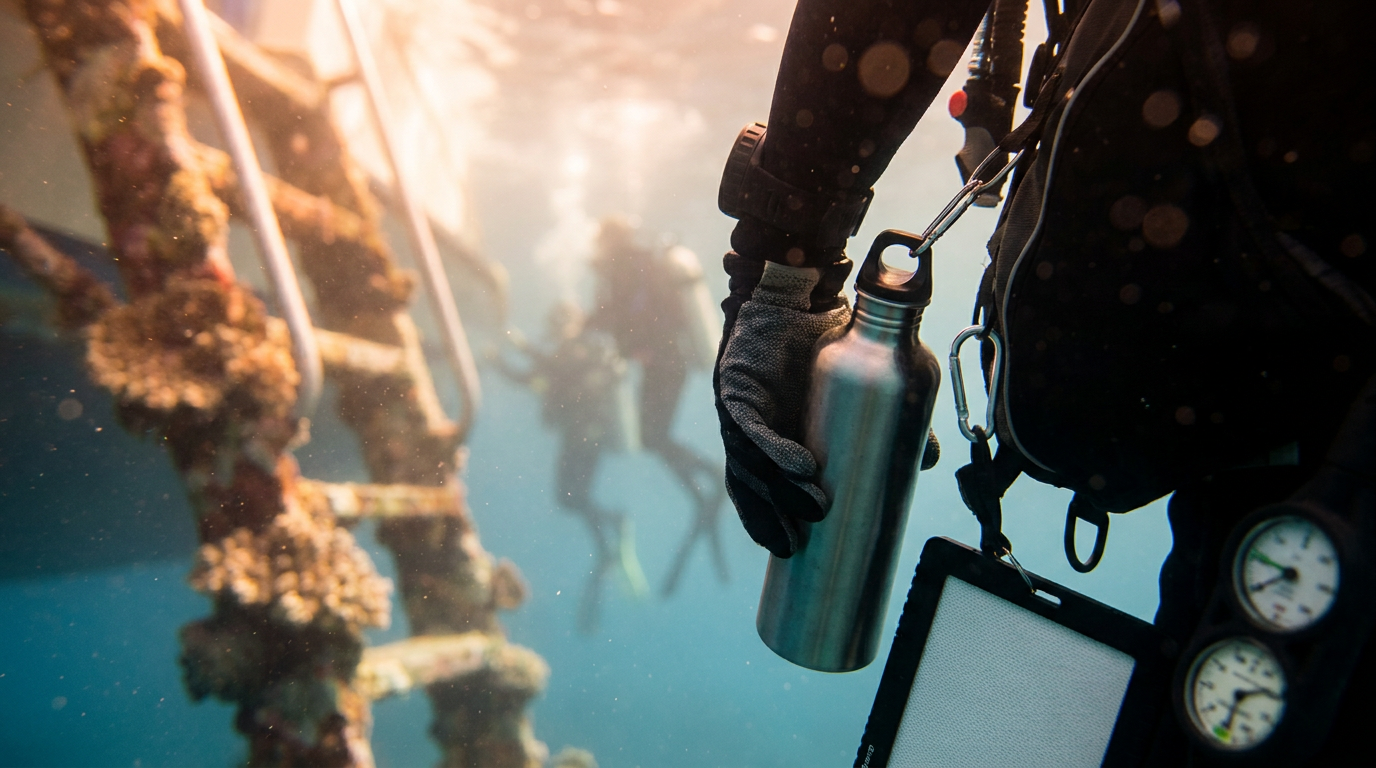
Why dehydration causes DCS
Your blood volume drops with dehydration. Less blood means slower nitrogen off-gassing during ascent and on the surface. The same dive profile that's safe well-hydrated can produce bubbles in dehydrated tissue. DAN (Divers Alert Network) data: dehydrated divers are 3–4× more likely to suffer DCS, even on conservative profiles.
Why liveaboards are the worst environment
You're in 30°C heat, dry compressed air strips moisture from your lungs every breath, salt water dries your skin, alcohol at dinner, coffee at breakfast — and you forget to drink between briefings and dives. Most divers lose 1L per dive day just to breath alone. Multiply by 4 dives = 4L lost before you even sweat.
Hydration strategy for a 7-day trip
Aim for 3–4L water per day, starting 24 hours before your first dive. Drink 500ml in the morning before breakfast, 500ml between each dive, 500ml with each meal. Add electrolytes (Liquid IV, Nuun, dilute juice) — pure water alone flushes salts and makes you pee constantly without truly hydrating.
What NOT to drink
Alcohol (diuretic), coffee (mild diuretic but ok in moderation), energy drinks (caffeine + sugar = bad combo), high-sugar fruit juice (osmotic dehydration). One beer at sunset is fine; three with dinner before next-morning's deep dive is not. Skip the post-dive cocktail.
Warning signs you're already dehydrated
Dark yellow urine (you should see pale straw colour), headaches, dizzy on standing up, dry mouth, fatigue beyond normal post-dive tiredness, muscle cramps. If you spot any of these, drink 1L immediately and skip your next dive — do not let DCS catch you up.
Hydration tips that actually work
Bring a 1L reusable bottle and refill it 4× a day — visible target = better compliance. Carry electrolyte tablets in your day bag. Eat soup at lunch (broth + salt = double hydration). Watch coffee intake to <2 cups/day. Re-hydrate IMMEDIATELY after each dive — your body loses most water during compression.