About Landslide
Landslide, known locally as El Derrumbe, is a renowned dive site situated off Wolf Island in the remote northern Galápagos archipelago. This site is particularly significant for its consistent and abundant shark encounters, establishing it as a premier destination for divers seeking large marine predators. The topography of Landslide is characterized by drift diving conditions, where the currents dictate the dive's flow. Depths at Wolf Island sites typically range from 9 to 37 meters, with walls, caverns, and tunnels providing complex underwater landscapes. While specific structural details for Landslide are not extensively detailed, the site is recognized for its unique geological formations. Marine life at Landslide is exceptionally rich, with a high probability of encountering large schools of scalloped hammerhead sharks and numerous Galápagos sharks. Whale sharks are also frequently sighted, especially between June and October. Other common species include silky sharks, green sea turtles, various rays like eagle rays and stingrays, and occasionally dolphins. The waters here support a massive shark biomass, making thrilling encounters highly likely. Diving at Landslide requires advanced skills due to consistently strong currents and often choppy surface conditions, typical of Wolf Island. Entry and exit often involve negative buoyancy drops and live boat pickups. Visibility generally ranges from 12 to 24 meters, but cold water temperatures necessitate a 7mm wetsuit with a hood and gloves. Divers should plan for multiple dives at this site as part of a liveaboard itinerary.
Highlights
Large schools of hammerhead sharksGalápagos shark encountersFrequent whale shark sightingsGreen sea turtlesEagle and sting raysAbundant silky sharksStrong drift current diving
Season calendar
Best months to dive here
Jan
Feb
Mar
Apr
May
Jun
Jul
Aug
Sep
Oct
Nov
Dec
Excellent
Good
Off-Season
Jun – Nov
Cool season with whale sharks at Darwin and Wolf. Strongest currents bring abundant marine life.
Apr – May & Dec
Transition periods with good diversity. Hammerhead sharks present year-round.
Jan – Mar
Warm season with calmer seas. Less pelagic activity but better for snorkelling and land excursions.
Dive site facts: Landslide
- Depth
- 9–37 m
- Current
- Ripping
- Entry
- Liveaboard only
- Level
- Advanced
- Dive type
- Wall, Drift
- Region / port
- Galápagos
- Coordinates
- 0.7830° S, 90.7850° W
Conditions & Currents
Landslide is consistently characterized by strong, turbine-like currents, which make it a challenging drift dive site. Divers should expect to navigate significant water movement and be proficient in advanced drift diving techniques. The dive typically involves a negative entry and a live boat pickup due to the strong currents. Visibility can vary from 12 to 24 meters, but thermoclines can be present, causing temperature fluctuations. Water temperatures range from 14°C to 24°C, with colder periods (June to December) requiring robust exposure protection like a 7mm wetsuit, hood, and gloves. These conditions mean the site is suitable only for experienced divers with excellent buoyancy control and comfort in strong currents.
Why dive Landslide from a liveaboard?
Landslide is one of Galápagos's signature dive sites. A liveaboard sleeps you on the water and puts you in the water for three to four guided dives per day, including dawn and night dives that day-boat operators rarely offer. You skip the daily commute back to port and reach quieter, less-crowded sites in the same region on a single trip.
Below are the liveaboards that include Landslide on their Galápagos itineraries.
Liveaboards diving Landslide
These liveaboards may visit Landslide on selected itineraries, the exact dive sites depend on departure, weather and conditions.
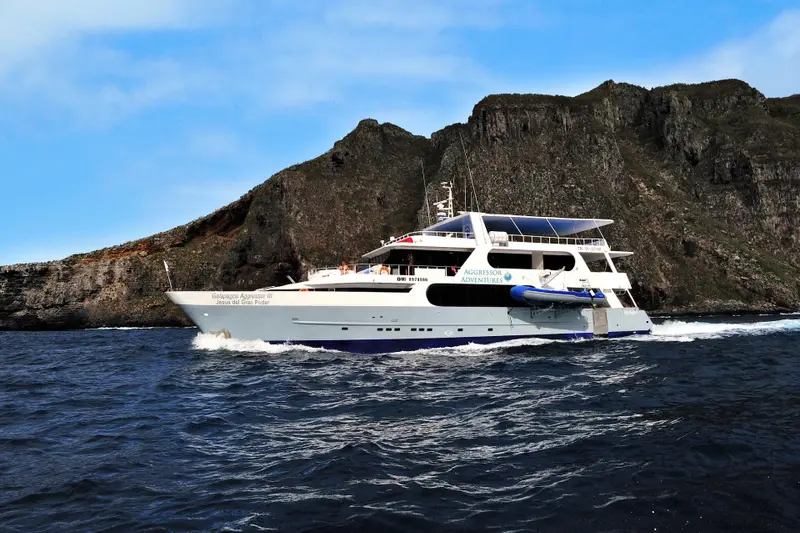
Galapagos Aggressor III
Galápagos
16 guests31 m
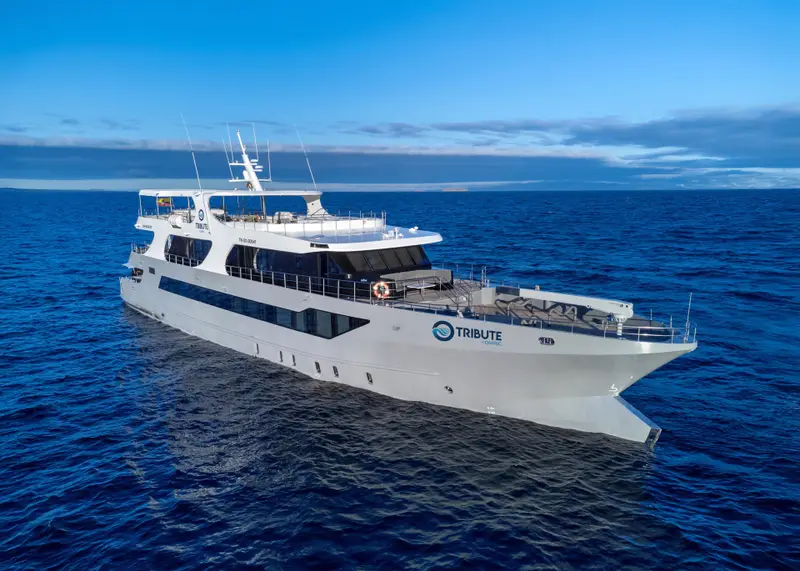
Tribute
Galápagos
16 guests42 m
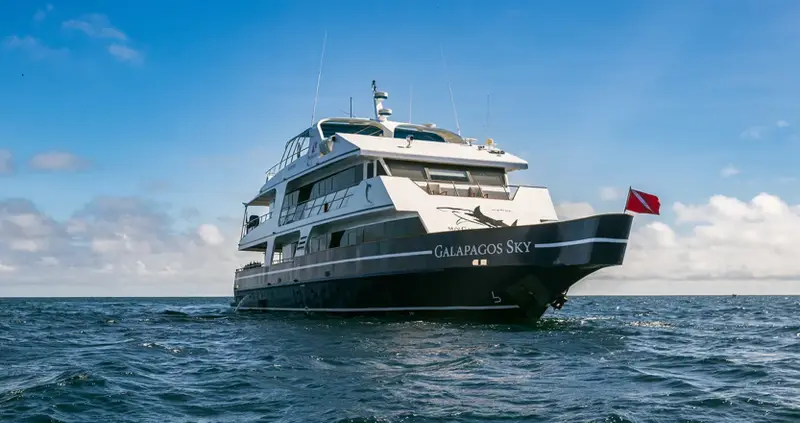
Galapagos Sky
Galápagos
16 guests
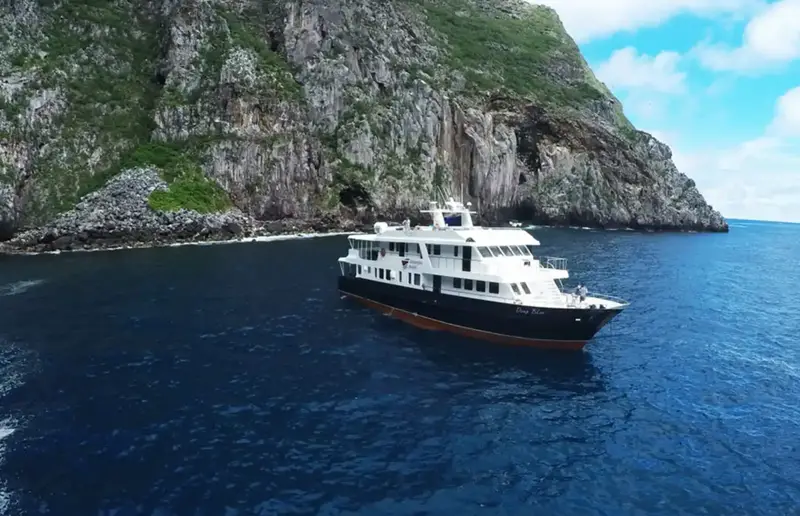
Galapagos Master
Galápagos
16 guests
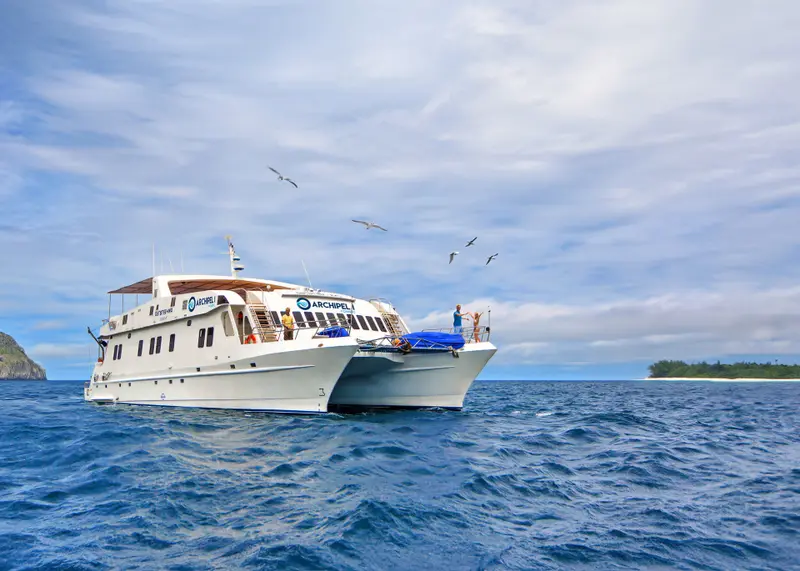
Archipel I
Galápagos
16 guests27 m

Humboldt Explorer
Galápagos
16 guests
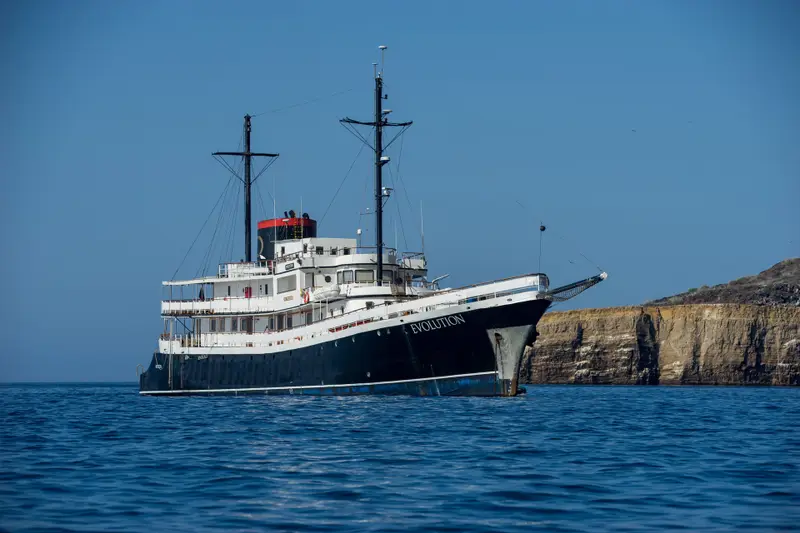
Evolution
Galápagos
32 guests60 m
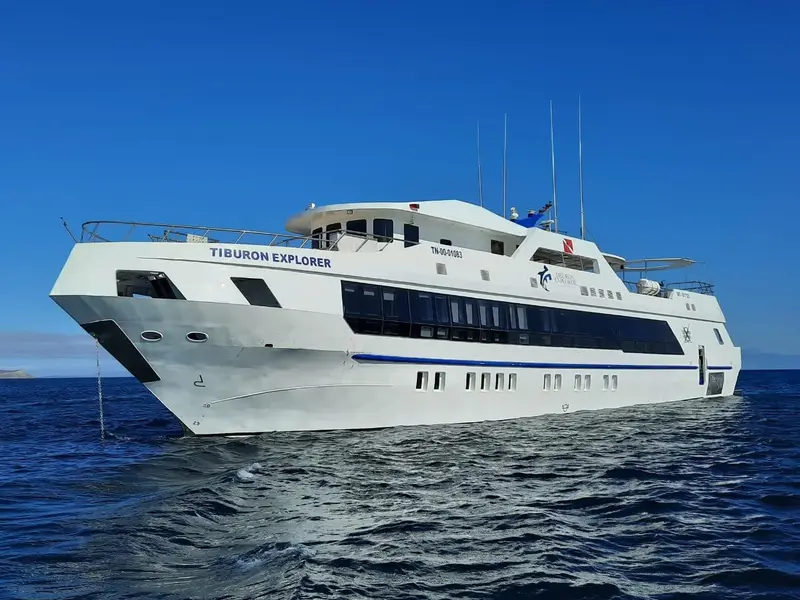
Tiburon Explorer
Galápagos
16 guests
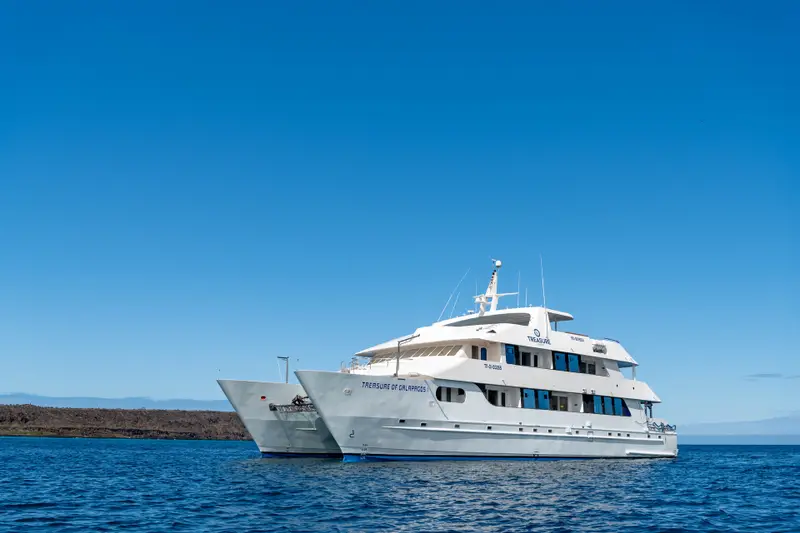
Treasure of Galapagos
Galápagos
16 guests32 m
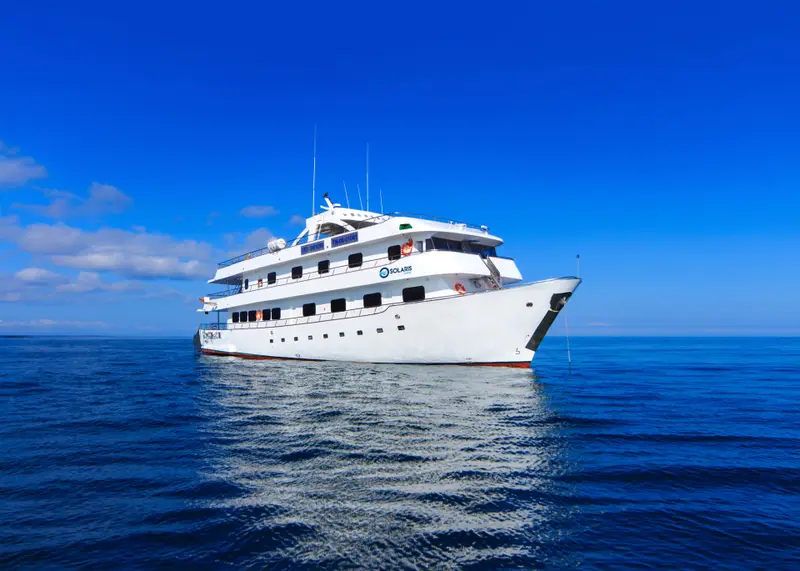
Solaris
Galápagos
16 guests36 m
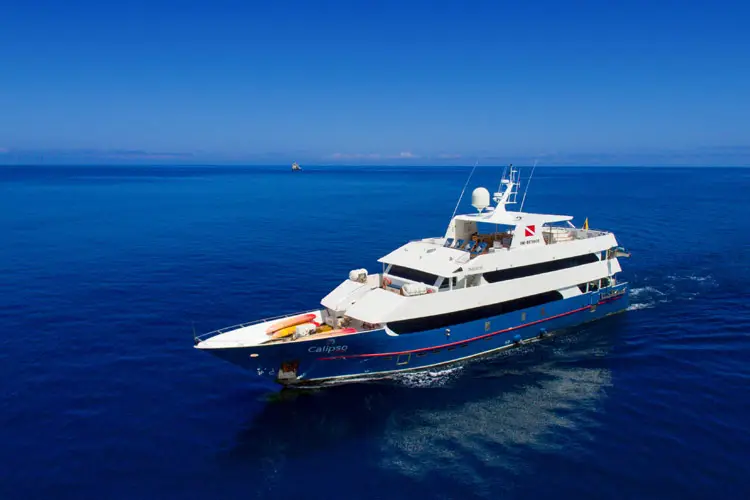
Calipso
Galápagos
16 guests
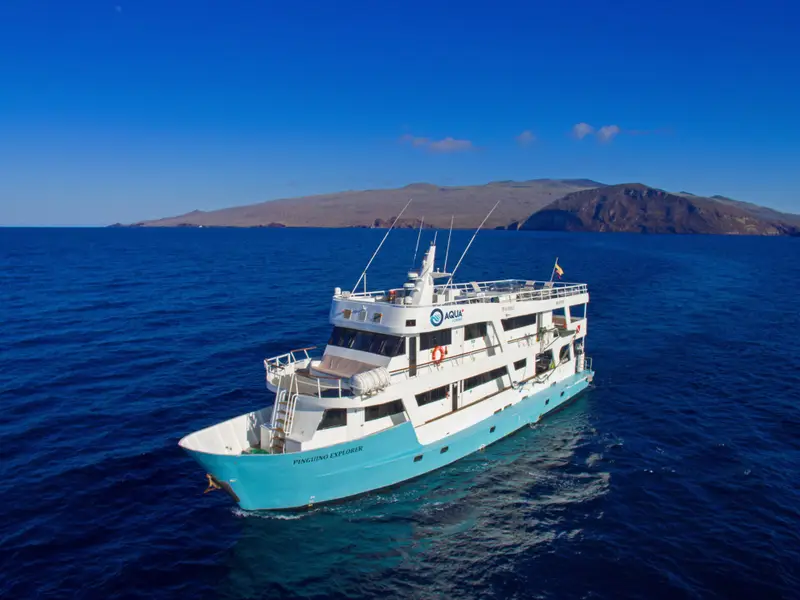
Aqua
Galápagos
16 guests26 m
Dive sites similar to Landslide
Same character, same waters, six more sites divers love for the exact same reasons.Compare seasons, access and liveaboard routes, then pick the site that fits your trip best.
© EsriMaxar, Earthstar, GIS
Agustín Melgar shipwreck
Mexico
The Agustín Melgar, also known as the C-54, is a 56-meter (185-foot) former minesweeper that rests on a sandy bottom at 24 meters (80 feet) south of Puerto Escondido within the Loreto Bay National Park.
- Suitable for
- Intermediate
- Current
- Mild
- Access
- Liveaboard only
- Depth
- 12–24 m
- Theme
- Wreck
Arco Iris, or "Rainbow" in Spanish, is a prominent dive site located near Brumel Island (Penahuaste), approximately 8km north of Playa Potrero in Costa Rica.
- Suitable for
- Beginner
- Current
- Moderate
- Access
- Dayboat
- Depth
- 9–30 m
- Theme
- Reef
© EsriMaxar, Earthstar, GIS
Bahía de La Paz
Mexico
Bahía de La Paz serves as the capital of Baja California Sur and the primary gateway to the Sea of Cortez, a region famously dubbed the "world's aquarium" by Jacques Cousteau due to its exceptional biodiversity.
- Suitable for
- Advanced
- Current
- Mild
- Access
- Dayboat
- Depth
- 17–27 m
- Theme
- Big animals / Reef
© EsriMaxar, Earthstar, GIS
Bahía de los Ángeles
Mexico
Bahía de los Ángeles, nestled in the northern Sea of Cortez, is a remarkable dive destination primarily known for its seasonal aggregations of whale sharks.
- Suitable for
- Intermediate
- Current
- Moderate
- Access
- Liveaboard only
- Depth
- 3–15 m
- Theme
- Reef
© EsriMaxar, Earthstar, GIS
Bajo Alcyone
Costa Rica
Bajo Alcyone, a submerged seamount near Cocos Island, stands as a world-renowned dive site.
- Suitable for
- Advanced
- Current
- Strong
- Access
- Liveaboard only
- Depth
- 25–40 m
- Theme
- Drift / Seamount
© EsriMaxar, Earthstar, GIS
Bajo de la Ballena
Mexico
El Bajo, often referred to as Bajo de la Ballena, is a prominent seamount situated approximately eight miles northeast of La Paz, Mexico.
- Suitable for
- Advanced
- Current
- Strong
- Access
- Liveaboard or dayboat
- Depth
- 18–35 m
- Theme
- Pinnacle